Your Travel Partner
SINCE 1989
Your Travel Partner
SINCE 1989
For most of the year, Kolkata moves at a particular pace – busy, but with the slightly worn, lived-in quality of a city that's been a major centre for centuries and doesn't feel any particular need to prove it. Then Durga Puja arrives, and for roughly a week, the city transforms into something that's difficult to compare to anything else in India – thousands of elaborate temporary structures, each housing an idol of the goddess Durga, appearing across neighbourhoods, lit and decorated to themes that range from traditional to genuinely avant-garde.
Durga Puja is Bengal's biggest festival, and in Kolkata specifically, it's become something close to a city-wide art exhibition combined with a religious festival combined with an enormous, days-long street party – an experience that, for travellers who time a visit around it, offers a window into Bengali culture that's hard to replicate at any other time of year.
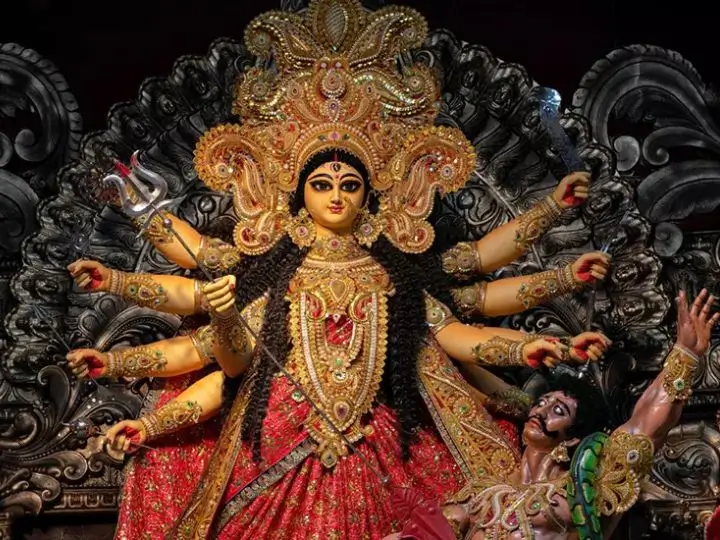
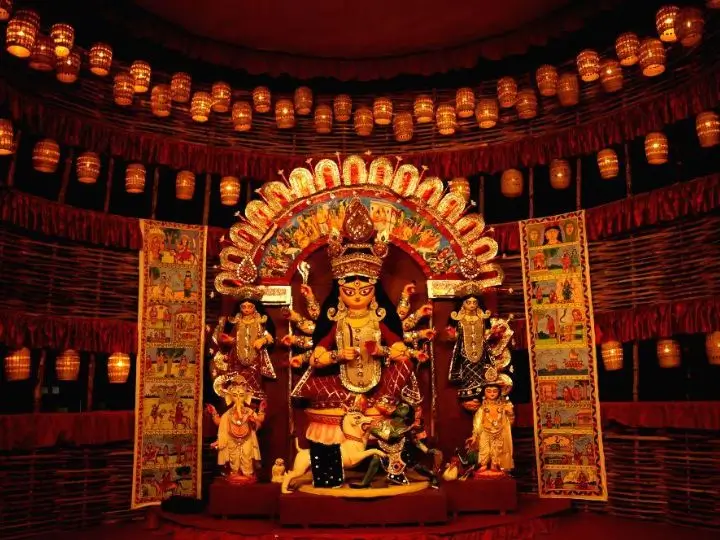
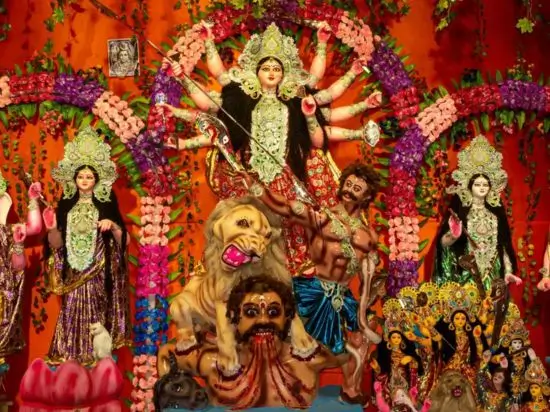
Durga Puja celebrates the goddess Durga's victory over the buffalo demon Mahishasura – a story of good triumphing over evil that recurs, in various forms, across many of India's major festivals. Durga is depicted in her iconic form during the festival: riding a lion, multiple arms each holding a weapon, in the act of slaying Mahishasura, often accompanied by her children – Lakshmi, Saraswati, Ganesha, and Kartik – each represented alongside her.
The festival's main days – Shashthi through Dashami – follow a sequence of rituals marking the goddess's arrival, her worship over several days, and finally her departure, when idols are carried in procession to the Hooghly River (a branch of the Ganges) for immersion, a moment that's both the festival's emotional climax and, for many Kolkatans, a genuinely bittersweet farewell after days of celebration.
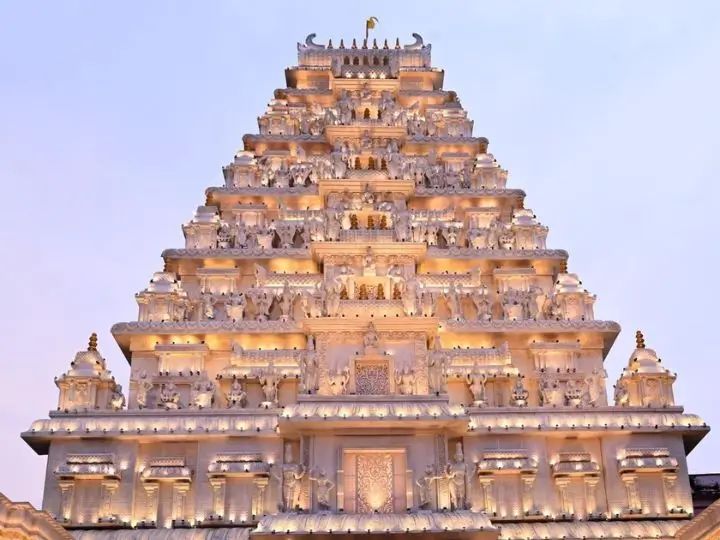
The defining feature of Durga Puja in Kolkata is the pandal – a temporary structure, built fresh each year, housing the Durga idol and elaborately decorated according to a theme chosen by the organising committee. While pandals exist in other parts of Bengal and India, Kolkata's are on a different scale entirely – some neighbourhoods compete fiercely for the most striking, most talked-about pandal each year, with themes ranging from recreations of famous buildings and temples to abstract art installations addressing social or environmental issues, built using everything from traditional materials to recycled plastic, bamboo, and increasingly experimental media.
Visiting pandals – "pandal hopping," as it's commonly known – is the central activity of Durga Puja for most Kolkatans and visitors alike. With thousands of pandals across the city, each neighbourhood essentially running its own competing production, a single evening might involve visiting half a dozen or more, each offering something completely different from the last.
Beyond the pandals' architecture and themes, the Durga idols themselves are works of considerable craftsmanship. Kumartuli, a neighbourhood in North Kolkata, is where many of the city's idols are made – a area of workshops where artisans, working for months in advance, sculpt clay figures that are then painted, dressed, and adorned before being transported to pandals across the city.
Visiting Kumartuli in the weeks before the festival, when idols are in various stages of completion, offers a different perspective on Durga Puja – the craft and labour behind the festival's central images, before they're installed and the festival itself begins.
Durga Puja is also, unmistakably, about food – street food stalls multiply across the city during the festival, and Bengali specialities, from various forms of fish curry to an enormous range of sweets (rosogolla and sandesh among the most famous), become even more central to daily life than usual. Many people eat out for most meals during the festival period, with restaurants and stalls extending their hours to match the festival's late-night rhythm.
The crowds during Durga Puja are genuinely substantial – popular pandals can see queues stretching for hours, particularly in the evenings, and the city's streets become considerably more crowded than usual as people move between neighbourhoods. For travellers, this means pandal hopping benefits from a degree of planning – prioritising a few standout pandals rather than attempting to see everything, and being prepared for genuinely large crowds, particularly during the festival's peak evenings.
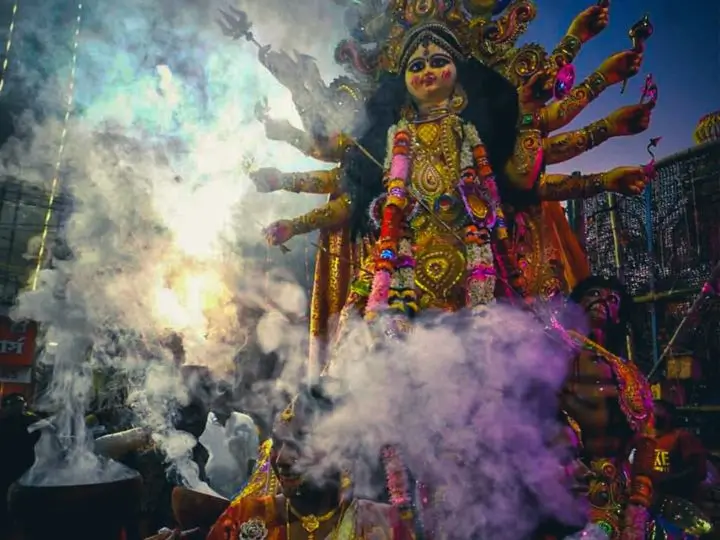
On the festival's final day, Vijayadashami (Dashami), a ritual called Sindoor Khela sees married women applying vermilion (sindoor) to the goddess's idol and to each other, in a colourful and emotionally charged ceremony that marks both a celebration and the beginning of the goodbyes.
Later, idols are carried in procession to the Hooghly River for immersion – a moment that's simultaneously festive (with music, dancing, and crowds accompanying the processions) and melancholic, as the goddess, having been welcomed and celebrated for days, departs. For travellers, witnessing an immersion procession – even without following an idol all the way to the river – offers a sense of the festival's emotional arc in a way that the earlier, more purely celebratory days don't fully convey.
Kolkata's character – shaped by its history as the capital of British India, its association with Bengali intellectual and artistic life, and its particular blend of grandeur and decay – is worth experiencing beyond the festival as well. Colonial-era buildings, including the Victoria Memorial and various institutions along and around the Maidan, sit alongside neighbourhoods that retain a distinctly older character, and the city's coffee houses, bookshops, and cultural institutions reflect a strand of Bengali identity that's quite distinct from much of the rest of India.
During Durga Puja, this everyday Kolkata is, in a sense, amplified – the same neighbourhoods that have their own character throughout the year become the settings for the festival's pandals, and the contrast between the city's older architecture and the temporary, often startlingly modern pandal designs is part of what makes the experience distinctive.
Durga Puja is one of the busiest periods of the year for Kolkata – accommodation can be in high demand, and the city's transport infrastructure, while extensive, can become considerably more congested than usual given the volume of people moving between neighbourhoods for pandal hopping. Booking accommodation well in advance, and approaching each evening with a realistic sense of how many pandals can comfortably be visited, makes for a considerably smoother experience.
For travellers with a particular interest in art, design, or contemporary culture, Durga Puja offers something genuinely unusual – an entire city's worth of temporary, large-scale art installations, built and dismantled within the space of a couple of weeks, viewed by millions of people during the brief period they exist.
If you'd like to experience Durga Puja in Kolkata, we can build a private itinerary around the festival – including visits to standout pandals, Kumartuli's idol-making workshops, the city's colonial-era architecture, and Bengali food experiences, timed around the main festival days. Share your travel dates, and we'll design a tour around this festival.
Find the answers to all of our most frequently asked questions
The main days, Shashthi through Dashami, run from approximately 17 to 21 October 2026.
A temporary, elaborately decorated structure housing a Durga idol, built fresh each year according to a theme chosen by the organising committee.
The practice of visiting multiple pandals across Kolkata's neighbourhoods during the festival to see their idols and themed decorations.
A neighbourhood in North Kolkata where many of the city's Durga idols are sculpted by artisans in the weeks before the festival.
A ritual on the festival's final day in which married women apply vermilion to the goddess's idol and to each other.
They're carried in procession to the Hooghly River for immersion, marking the goddess's symbolic departure.
Bengali specialities including various fish curries and sweets such as rosogolla and sandesh, widely available from street stalls during the festival.
Yes, particularly during evenings at popular pandals, where queues can stretch for hours.
Yes – it's one of the busiest periods of the year for Kolkata, and advance booking is advisable.
Colonial-era architecture including the Victoria Memorial, the Maidan, and the city's traditional coffee houses and bookshops.
A realistic number is a handful – attempting to see too many in one evening, given the crowds, can be exhausting rather than enjoyable.
Share your travel dates, and an itinerary combining standout pandals, Kumartuli, and Kolkata's heritage sites can be arranged around the festival days.