Your Travel Partner
SINCE 1989
Your Travel Partner
SINCE 1989
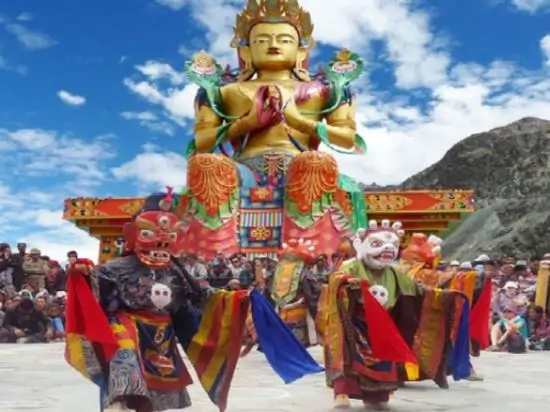
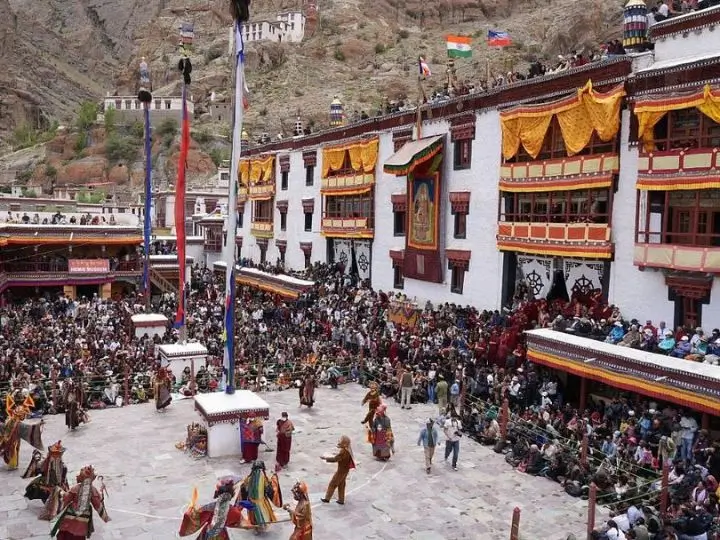
Hemis Monastery sits in a fold of the mountains south of Leh, reached by a road that climbs steadily through landscape so stark – brown rock, thin air, a sky that seems to start closer to the ground than it does elsewhere – that arriving at the monastery's courtyard, suddenly filled with colour, drums, and masked dancers, can feel almost like stepping through into a different world entirely.
This is the Hemis Festival, held each summer in the courtyard of Ladakh's largest and wealthiest monastery, and built around the kind of masked dance performances – cham – that are central to Tibetan Buddhist monastic tradition. For travellers who time a Ladakh visit around it, the festival adds a layer of cultural depth to a region already known for some of the most dramatic high-altitude landscapes in the world.
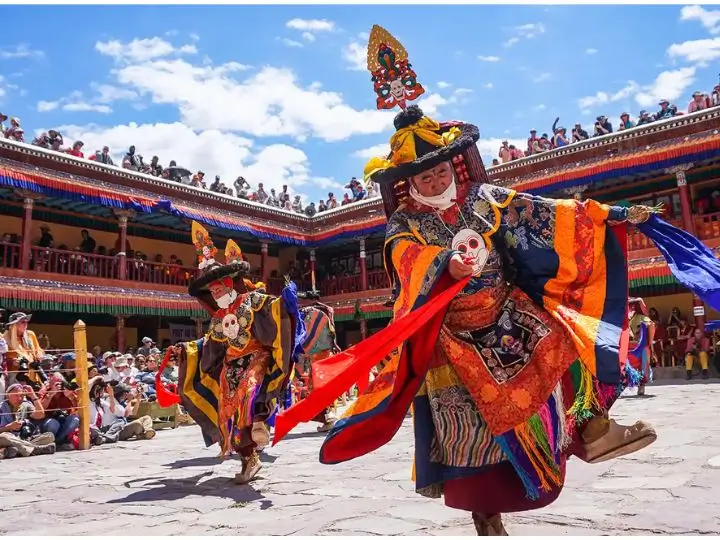
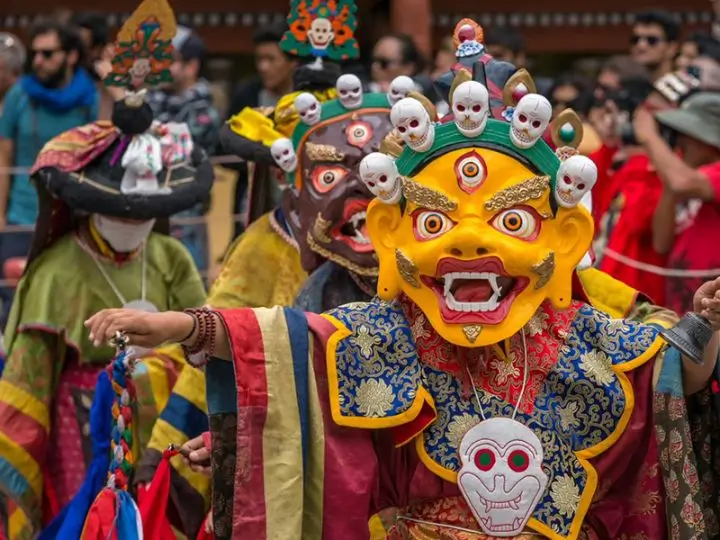
At the centre of the Hemis Festival are the cham dances – monks dressed in elaborate costumes and large, often fearsome masks representing deities, protectors, and figures from Buddhist mythology, performing slow, deliberate movements to the accompaniment of long horns, cymbals, and drums. The dances aren't simply performance in the conventional sense – they're considered a form of spiritual practice, a way of representing the triumph of good over evil and of generating merit for those who witness them.
The festival is held to mark the birth anniversary of Guru Padmasambhava, the figure credited with bringing Buddhism to Tibet, and the dances depict episodes connected to his life and teachings. The courtyard of Hemis Monastery becomes the stage – monks in costume moving through the crowd and across the open space, while local Ladakhis, in their own traditional dress, gather alongside the steadily growing number of visitors who've made the journey specifically for the festival.
Every twelve years, on a date determined by the Tibetan calendar, Hemis Monastery displays its most sacred thangka – an enormous appliquéd cloth depicting Guru Padmasambhava, said to be one of the largest of its kind in the region. Outside of these special years, the festival's masks themselves carry deep significance – many are old, some considered to house the presence of the deities they represent, and are treated with a degree of reverence that goes well beyond theatrical costume.
For visitors unfamiliar with Tibetan Buddhist iconography, the masks can appear startling – wide eyes, exaggerated expressions, sometimes multiple faces or animal features – but each design carries specific meaning within the tradition, and a guide with knowledge of Tibetan Buddhism adds considerable depth to what would otherwise be, for most visitors, simply a colourful spectacle without context.
Hemis Monastery sits roughly 45 kilometres from Leh, Ladakh's main town, and most visitors base themselves there for the duration of their trip. Leh itself, with its old palace overlooking the town and its bazaar selling Tibetan and Ladakhi crafts, sits at an altitude of around 3,500 metres – high enough that acclimatisation matters, and most itineraries build in at least a day or two of rest before any significant activity.
Beyond Leh, Ladakh's valleys offer some of the most dramatic high-altitude scenery anywhere in India – Nubra Valley, with its sand dunes and double-humped Bactrian camels at over 3,000 metres, feels almost surreal in its juxtaposition of desert and mountain. Pangong Tso, a vast lake that shifts through shades of blue depending on the light, sits close to the border with China and has become one of the region's most photographed locations.
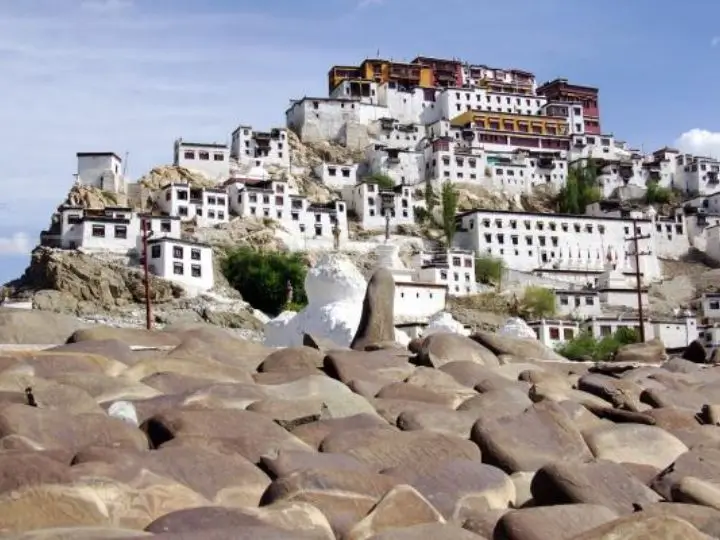
Other monasteries – Thiksey, with its multi-storied architecture often compared to the Potala Palace in Lhasa, and Shey, the former summer palace of Ladakh's kings – offer additional context for the Buddhist culture that Hemis Festival celebrates, and most itineraries combine several of these sites alongside the festival itself.
Ladakh's altitude is, for many travellers, the single most important practical consideration. Leh sits at around 3,500 metres, and many of the region's key sights – including some monastery routes and mountain passes – go considerably higher. Altitude sickness is a genuine risk for visitors who don't allow time to acclimatise, and most sensible itineraries build in rest days early in the trip, with more demanding excursions – to Nubra Valley or Pangong Tso, both of which involve crossing high passes – scheduled only after a few days of adjustment.
The region's accessibility is also seasonal – many of Ladakh's roads, including routes to some of its more remote valleys, are closed for much of the year due to snow, opening only for a relatively narrow window each summer. The Hemis Festival's timing, in late June or July, falls within this window, making it a practical time to combine the festival with broader exploration of the region – though it's also, for the same reason, one of the busier periods for Ladakh tourism generally.
Most visitors reach Leh by flying from Delhi – a flight that, on clear days, offers genuinely spectacular views of the Himalayan range as the plane descends toward Leh's airport, one of the highest commercial airports in the world. The alternative – overland routes from Manali or Srinagar – are popular among travellers with more time, offering a gradual ascent that helps with acclimatisation, but these routes are also entirely dependent on seasonal road openings and can take two days or more of driving through high-altitude terrain.
For travellers specifically timing a visit around the Hemis Festival, flying into Leh tends to be the more practical option, allowing for a few days of acclimatisation in and around the town before the festival itself and any onward excursions to the valleys.
Ladakh's culture – Buddhist, Tibetan-influenced, and shaped by centuries of relative isolation due to its terrain – is distinct from almost anywhere else in India, and the Hemis Festival is, in many ways, a concentrated expression of that culture. Beyond the festival itself, Ladakhi food – thukpa (noodle soup), momos, and butter tea among the more accessible introductions – and the region's monasteries, many of which are active religious institutions rather than historical sites alone, offer a window into a way of life that's shaped as much by altitude and isolation as by religion.
For travellers who've spent time in Rajasthan, Delhi, or South India, Ladakh can feel like an almost entirely different country – the landscape, the architecture, the food, and the pace of life all shift noticeably, and the Hemis Festival, for those who time their visit around it, adds a cultural anchor to what's already one of India's most visually distinct regions.
Because the festival is held at a specific monastery on specific dates, most itineraries are built around Leh as a base, with the festival itself forming one day – or part of one day – within a broader exploration of the region. A typical structure might include several days of acclimatisation and sightseeing around Leh, including Thiksey and Shey monasteries, before the festival day at Hemis, followed by excursions to Nubra Valley and Pangong Tso once acclimatisation allows.
Given the relatively short window each year when both the festival and Ladakh's higher routes are accessible, and the genuine importance of allowing time to acclimatise, planning a Hemis Festival visit benefits from a degree of advance preparation that's less critical for lower-altitude destinations elsewhere in India.
If the Hemis Festival and the landscapes of Ladakh appeal to you, we can build a private itinerary around the festival dates – including time in Leh for acclimatisation, visits to Thiksey, Shey, and other monasteries, the festival itself at Hemis, and excursions to Nubra Valley and Pangong Tso as altitude allows. Share your travel dates, and we'll design a tour around this region and its festival.
Find the answers to all of our most frequently asked questions
It follows the Tibetan lunar calendar and typically falls in late June or early July; exact 2027 dates will be confirmed closer to the time
Monks perform masked cham dances in the monastery courtyard, depicting episodes from the life of Guru Padmasambhava, accompanied by traditional music
No – Hemis Monastery's largest sacred thangka is displayed only once every twelve years, on a date set by the Tibetan calendar.
Roughly 45 kilometres, making it accessible as a day visit from Leh during the festival
Yes – Leh sits at around 3,500 metres, and most itineraries include rest days for acclimatisation before higher-altitude excursions.
Most visitors fly from Delhi; overland routes from Manali or Srinagar are also possible for those with more time and seasonal road access
Thiksey and Shey monasteries, Nubra Valley, and Pangong Tso are commonly combined with a festival visit
No – many roads and routes are closed for much of the year due to snow, opening only for a narrow summer window that includes the festival period
Thukpa, momos, and butter tea are accessible introductions to Ladakhi and Tibetan-influenced cuisine
It draws a steady number of visitors, both Ladakhi locals and international travellers, though it remains considerably less crowded than major festivals elsewhere in India
A week to ten days allows for acclimatisation, the festival itself, and excursions to the surrounding valleys
Share your travel dates, and an itinerary covering Leh, the festival, and the surrounding valleys can be arranged, factoring in acclimatisation time