Your Travel Partner
SINCE 1989
Your Travel Partner
SINCE 1989
There's a moment during Onam when entire households in Kerala step outside, gather flowers from gardens and roadsides, and spend an hour or more arranging them, petal by petal, into elaborate circular patterns on the ground in front of their homes. These are pookalams – flower carpets – and by the time Onam reaches its main day, doorsteps and courtyards across the state are covered in colour, each design slightly different, each one taken down and remade fresh the following morning.
Onam is Kerala's biggest festival – a harvest celebration with roots in agricultural tradition and a story involving a beloved mythical king, that's grown into something closer to a state-wide cultural showcase, spanning ten days and touching almost every aspect of Kerala life, from food to sport to dance.
Onam commemorates the legendary King Mahabali, a ruler whose reign is remembered in Kerala folklore as a golden age of prosperity and equality. According to the story, Mahabali was sent to the underworld by the god Vishnu, but was granted permission to return to Kerala once a year to see his people – and Onam marks this annual homecoming, with the festival's preparations understood, in part, as Kerala welcoming its former king back for his visit.
This story gives Onam a particular emotional register – it's not a festival built around fear, sacrifice, or atonement, but around hospitality, abundance, and a kind of collective effort to present the best possible version of home to a returning guest. That spirit runs through almost every element of the festival.
The pookalam is one of Onam's most visually distinctive traditions – intricate circular designs made entirely from flower petals, laid out at the entrance to homes and built up over the festival's ten days, starting small and growing more elaborate as Onam approaches its peak. Different flowers are used for different layers and colours, and the designs range from simple geometric patterns to genuinely complex artworks involving dozens of varieties.
Competitions for the best pookalam are held in many areas, and during the festival period, travelling through Kerala's towns and villages means passing a continuous sequence of these flower carpets – each household's effort on display, each one slightly different in scale and ambition depending on the resources and creativity of the people who made it.
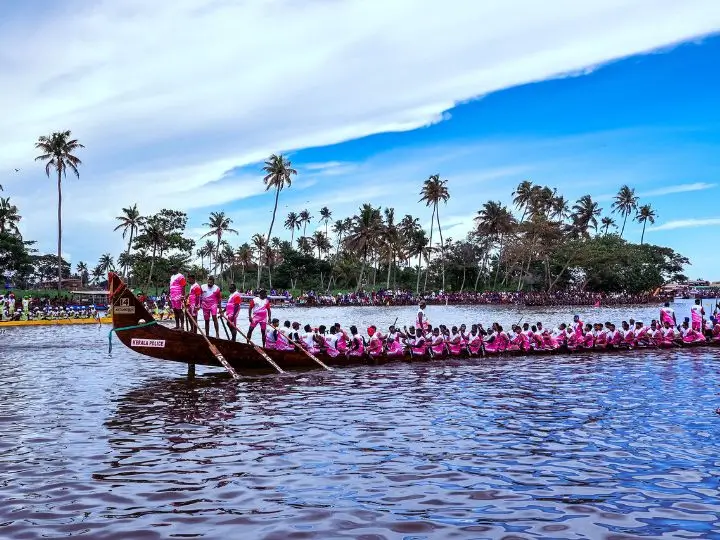
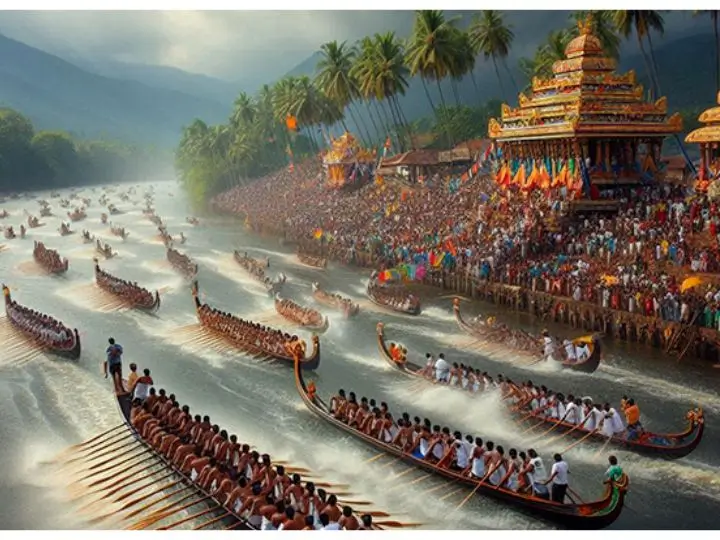
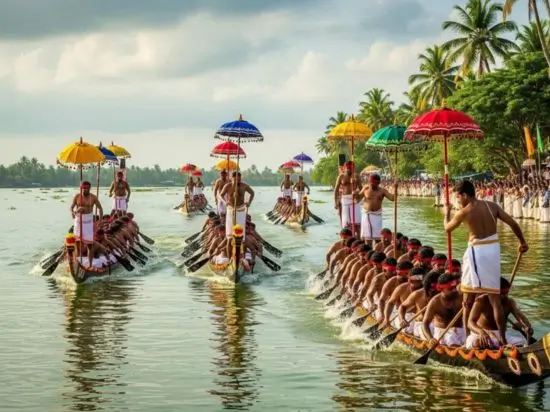
If pookalams represent Onam's quieter, more domestic side, the snake boat races – vallamkali – represent its loudest and most competitive. Held on Kerala's backwaters, these races feature enormous boats, some over 100 feet long, crewed by dozens of rowers paddling in unison to the rhythm of chanted boat songs, racing along stretches of river or lake while crowds gather along the banks to watch.
The Nehru Trophy Boat Race, held on Punnamada Lake near Alappuzha, is among the most famous of these events, drawing substantial crowds and a genuinely electric atmosphere – the boats themselves, decorated and crewed by teams representing different villages or regions, become objects of considerable local pride, with rivalries that, in some cases, stretch back generations.
For travellers, the boat races offer a dimension of Onam that's distinctly different from the festival's more contemplative elements – noisy, competitive, and deeply tied to Kerala's identity as a land shaped by its waterways.
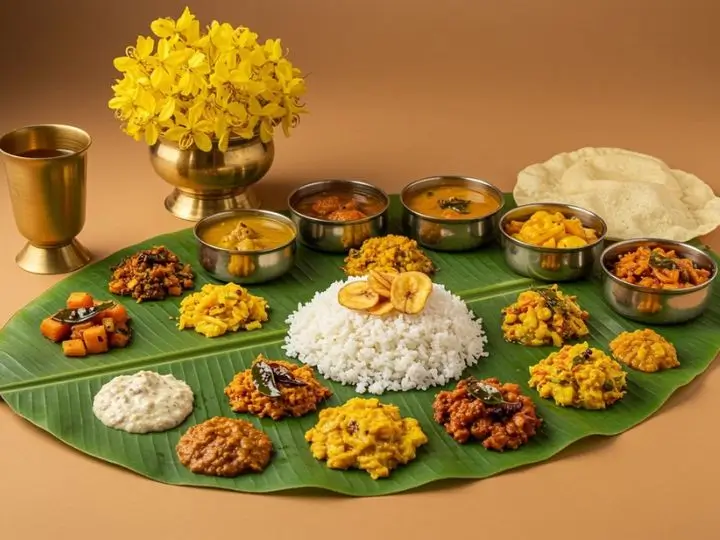
Food is central to Onam, and the Onam Sadhya – a elaborate vegetarian feast served on a banana leaf – is its culinary centrepiece. A full sadhya can include twenty or more dishes, served in a specific arrangement on the leaf, encompassing a range of curries, rice, pickles, chips, and payasam (a sweet dessert) to close the meal.
The sadhya is traditionally eaten with the hands, seated on the floor, and the combination of dishes – some sweet, some sour, some spicy, served together rather than in sequence – reflects a particular approach to flavour that's distinct to Kerala and South Indian cuisine more broadly. For travellers, experiencing an Onam Sadhya, ideally in a traditional setting, is one of the more accessible and memorable ways to engage with the festival, and many hotels and homestays in Kerala offer special Onam Sadhya experiences during the festival period.
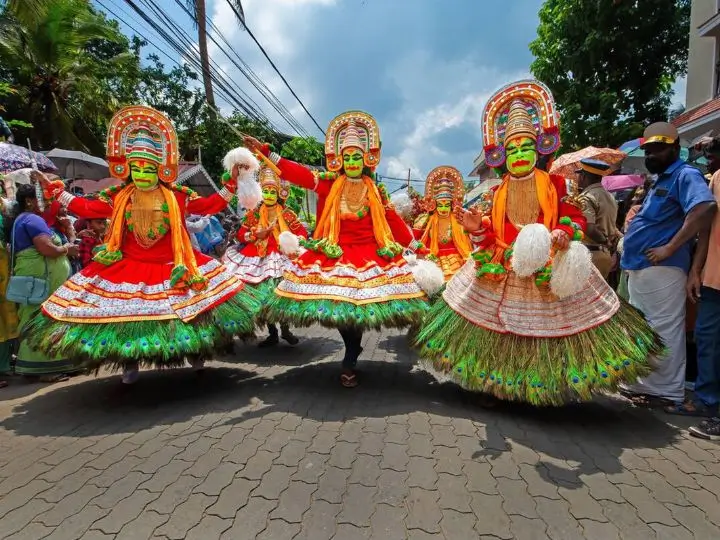
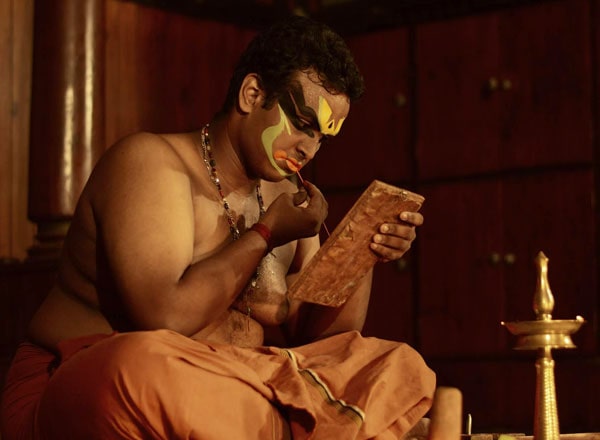
Onam is also a significant period for Kerala's performing arts. Kathakali – the state's distinctive form of dance-drama, recognisable by its elaborate costumes, dramatic makeup, and highly stylised movements – sees increased performances during the festival period, and Onam is, for many visitors, an introduction to an art form that's otherwise less commonly encountered outside dedicated cultural centres.
Thiruvathira, a graceful group dance traditionally performed by women, and Pulikali – a folk art form in which performers paint their bodies as tigers and perform energetic routines through the streets, particularly associated with Thrissur – add further variety to Onam's cultural programme, each offering a different window into Kerala's artistic traditions.
Onam is celebrated across Kerala, but certain places offer particularly memorable versions of specific elements. Alappuzha, on the backwaters, is the place to be for the snake boat races, particularly around the Nehru Trophy event. Thrissur, known more broadly for its own major festival (Thrissur Pooram, held separately), also hosts notable Pulikali performances during Onam.
For travellers wanting a broad introduction to Onam's various elements – pookalams, sadhya, cultural performances – a stay at a traditional Kerala homestay or heritage property, particularly around the backwaters near Alappuzha or Kumarakom, often provides the most rounded experience, combining Onam's festive activities with Kerala's broader appeal of houseboats, backwater scenery, and Ayurvedic traditions.
Onam's timing, in late August or early September, falls just after the monsoon season in Kerala – the landscape is at its greenest, the backwaters are full, and while some rain is still possible, the worst of the monsoon has typically passed by the time Onam's main days arrive. This makes it a genuinely good time to combine the festival with broader Kerala exploration – backwater houseboat stays, hill station visits to Munnar's tea plantations, and time on Kerala's beaches around Kovalam or Varkala.
Because Onam spans ten days, there's considerable flexibility in how a visit is structured – arriving for the earlier days to see pookalams being built and developing, then timing the main day and the boat races for the festival's peak, before continuing on to other parts of Kerala.
What distinguishes Onam from many of India's other major festivals is its tone – there's no element of penance, no association with darker themes of the kind that run through some other festivals. Onam is, fundamentally, about welcome, abundance, and a kind of collective civic pride – the flower carpets, the feast, the boat races, and the performances all contribute to an atmosphere that's celebratory in a particularly warm, communal way.
For travellers, this tone comes through clearly – Onam doesn't require navigating complex ritual significance or approaching sensitive sites with particular caution in the way some festivals do. It's an invitation, in the most literal sense the story behind it suggests, to be part of Kerala's effort to welcome a guest – whether that guest is a mythical king returning for his annual visit, or simply a traveller who happens to be in Kerala during these ten days.
If you'd like to experience Onam as part of your Kerala journey, we can build a private itinerary around the festival – combining backwater stays near Alappuzha for the boat races, an Onam Sadhya experience, and time to see pookalams and cultural performances, alongside Kerala's broader attractions such as Munnar's tea estates or the beaches of Varkala. Share your travel dates, and we'll design a tour around this festival.
Find the answers to all of our most frequently asked questions
Onam spans roughly ten days, with the main day, Thiru Onam, falling around 4 September 2026, based on the Malayalam calendar.
Onam commemorates the legendary King Mahabali's annual return to visit his former kingdom, and celebrates his homecoming with abundance and hospitality.
An intricate flower carpet laid out at the entrance of homes during Onam, growing more elaborate over the festival's ten days.
Vallamkali – races involving long, narrow boats crewed by dozens of rowers, held on Kerala's backwaters, with the Nehru Trophy near Alappuzha being the most famous.
An elaborate vegetarian feast of twenty or more dishes served on a banana leaf, traditionally eaten with the hands while seaton the floor.
Kathakali dance-drama, Thiruvathira group dance, and Pulikali (tiger-themed body painting performances), particularly associated with Thrissur.
Alappuzha, particularly for the Nehru Trophy Boat Race on Punnamada Lake
Yes – timing falls just after the monsoon, when the backwaters are full and the landscape is at its greenest
Yes – Munnar's tea plantations and other hill destinations can be combined with an Onam-focused itinerary.
It has roots in mythology but is celebrated broadly across Kerala society as a cultural and harvest festival rather than a strictly religious observance.
A week to ten days allows time for the festival's main events plus backwater stays, hill stations, or beach time
Share your travel dates, and an itinerary combining the festival's main events with Kerala's backwaters, hills, or beaches can be arranged