Your Travel Partner
SINCE 1989
Your Travel Partner
SINCE 1989

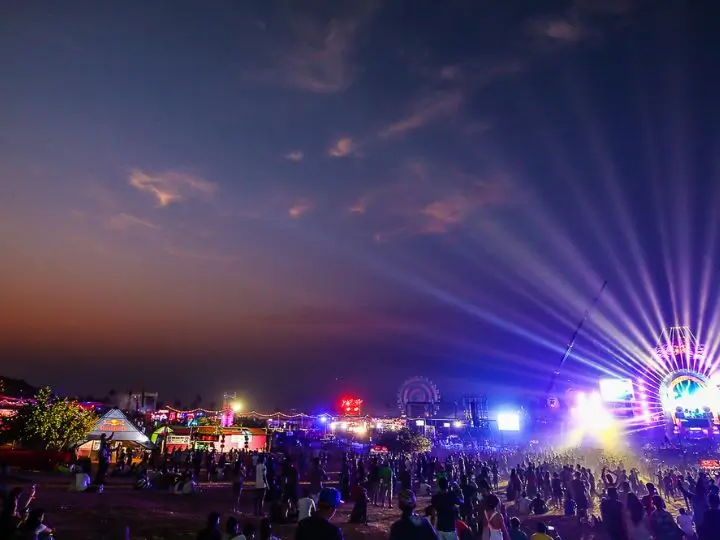
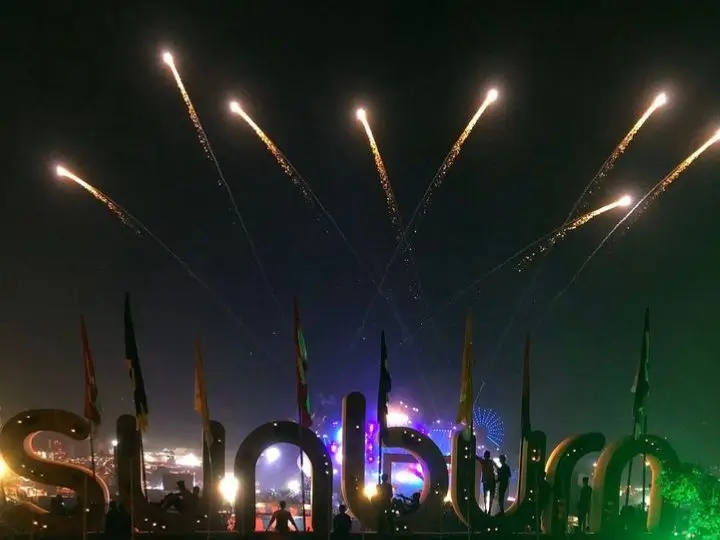
Goa's December calendar already has a particular energy – the peak tourist season is in full swing, beaches are busy, and the run-up to New Year brings a steady stream of visitors looking to combine sun, sand, and celebration. Sunburn Festival, held each year around this period, adds a specific focal point to that energy – a multi-day electronic music festival that's grown into one of the largest events of its kind in Asia, drawing international DJs and tens of thousands of attendees to a beachside venue in North Goa.
For travellers whose interests lean toward music festivals and nightlife alongside beach relaxation, Sunburn offers a way to combine Goa's established appeal with an event that's become, for a particular segment of travellers, a destination in its own right.
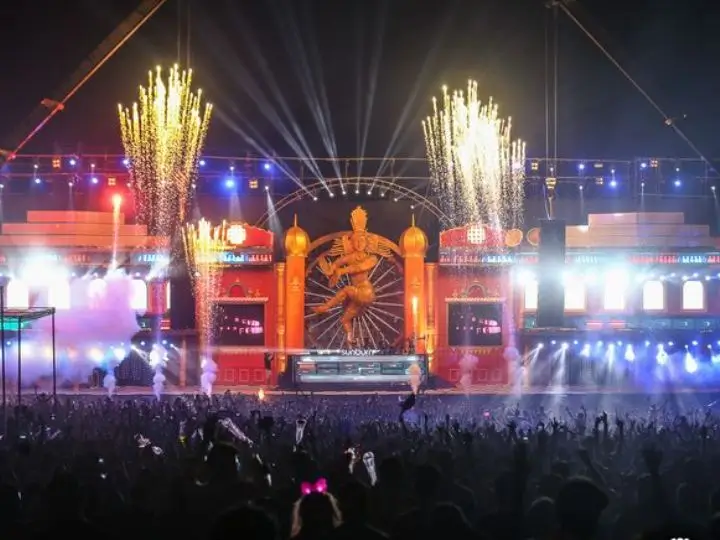
Sunburn Festival typically runs over three days, featuring multiple stages with line-ups spanning various electronic music genres – from more mainstream commercial dance music to deeper house and techno, depending on the stage and the specific year's programming. International and Indian DJs perform across the festival's duration, with headline acts typically scheduled for evening and night-time slots.
The festival site itself – generally a large open area near the beach – includes stages, food and drink vendors, and various amenities designed to accommodate the scale of the crowd, which over a full festival can run into the tens of thousands across its different days and stages.
Sunburn's atmosphere is, unsurprisingly, high-energy – large crowds, loud music, and an environment that's considerably more akin to major international music festivals than to most other events on this list. For travellers who've attended similar festivals elsewhere in the world, Sunburn offers a recognisable format, transplanted to a beach setting in Goa, with the specific addition of Goa's broader holiday atmosphere surrounding the festival days themselves.
The festival draws a predominantly younger crowd, both Indian and international, and the days surrounding the main festival dates – given Goa's late-December timing, often overlapping with New Year celebrations – tend to see increased activity across Goa's nightlife scene more broadly, beyond the festival site itself.
Sunburn's timing places it within Goa's busiest period of the year – late December, when the state's tourist season reaches its peak, driven by both domestic and international visitors taking advantage of the holiday period around Christmas and New Year. Beaches across Goa, particularly in the more developed northern areas, are at their most crowded during this period, and the general atmosphere across the state – markets, restaurants, nightlife – reflects this heightened activity.
For travellers attending Sunburn, this means the festival isn't really an isolated event within an otherwise quiet period – it's one element within what's already Goa's most intense tourist season, and planning around it should account for the broader demand on accommodation, transport, and services during this window.
Given Sunburn's scale and Goa's already-heightened late-December demand, accommodation – particularly anywhere within reasonable distance of the festival site – should be booked well in advance. Festival tickets themselves are sold separately from accommodation and travel, and given the festival's popularity, securing tickets ahead of time is advisable for travellers planning specifically around the event.
Transport to and from the festival site, particularly in the evenings when large crowds are arriving or departing, can involve considerable congestion, and travellers should factor this into planning for each festival day – allowing more time than might otherwise seem necessary for relatively short distances.
For travellers attending Sunburn, the festival itself typically occupies evenings and nights across its three days, leaving daytime hours available for Goa's broader attractions – beach time, exploration of Old Goa's churches, or visits to Panaji's Fontainhas neighbourhood, all of which remain accessible regardless of the festival's schedule.
Some travellers choose to extend their Goa stay beyond the festival itself, using the days before or after Sunburn for a more relaxed pace – particularly given the festival's high-energy, late-night character, which can make the festival days themselves considerably more tiring than a typical beach holiday day.
It's worth being direct about Sunburn's audience and atmosphere – this is a festival built around electronic music, late nights, and large crowds, and its appeal is, naturally, strongest for travellers who specifically enjoy this kind of event. For travellers whose primary interest in Goa is its beaches, heritage, and relaxed pace, Sunburn's dates – and the broader crowds and intensity that accompany Goa's late-December peak season – might actually be a period to plan around rather than toward, depending on personal preference.
For those drawn to it, though, Sunburn offers a genuinely large-scale festival experience, set within a beach destination, during a period when Goa's energy is already at its highest – a combination that, for the right traveller, is part of the appeal rather than something to navigate around.
Sunburn stands apart from most other entries on this list in a fairly obvious way – it's not rooted in religious tradition, mythology, or centuries of cultural history, but is a contemporary, commercially organised music festival, in the mould of major international electronic music events. For travellers building a broader India itinerary that includes some of the country's more traditional festivals – Holi, Diwali, Gangaur, that are mainly covered during Rajasthan Tours unlike that Sunburn offers a genuinely different kind of experience, reflecting a different, more globally connected strand of contemporary Indian youth culture, set against the backdrop of one of the country's most internationally oriented states.
If you'd like to attend Sunburn Festival as part of your Goa trip, we can help arrange accommodation suited to the festival dates – booked well in advance given the season's demand alongside time for Goa's beaches and heritage sites during the daytime hours surrounding the festival. booking a Golden triangle tour with Goa is another great idea that remains always in high demand because of its vividness in coverage of destinations. Share your travel dates, and we'll put together a trip around this event.
 4.83 Based on 430 reviews
My South India trip with friends was an unforgettable experience filled with vibrant culture, lush landscapes, and delicious food. We explored beautiful places like Coorg, Ooty, and Mysore, enjoying the serene beauty of the Western Ghats and the rich heritage of temples and palaces. Traveling with friends made it even more fun—late-night chats, spontaneous detours, and shared laughter added magic to the journey. The accommodations were comfortable and clean, especially the homestays that offered a warm, local touch. We booked a travel package that included transportation, guided tours, and daily breakfasts, which made everything hassle-free. The service throughout was excellent—friendly staff, prompt responses, and well-planned itineraries. This trip gave us not just memories but also a deeper appreciation for South India’s charm. I’d definitely go again!
...Read More
My trip to Rajasthan was an amazing experience, full of colorful markets, imposing forts, and a thriving culture. Every place captivated me, from the tranquil lakes of Udaipur to the imperial palaces of Jaipur. The tour was really made better by our guide, Mr. Manoj. His extensive historical knowledge, friendly demeanor, and narrative brought each monument to life. All of our inquiries were patiently addressed, and he recommended uncrowded local locations. Mukesh, our driver, was just as remarkable. We had a comfortable and secure trip thanks to his cool, competent driving through the congested cities and twisting desert roads. Mr. Manoj and Mukesh both contributed to the trip's ease, comfort, and enjoyment. I was able to enjoy Rajasthan's splendor worry-free because of them. I highly recommend Travel Plan for their services.
...Read More
Our Golden Triangle tour was planned by Travel Plan. It was a fantastic way to experience India's cultural core. We started in Delhi and saw busy markets and historic forts. Jaipur astonished us with its palaces and vibrant streets, while Agra's magnificent Taj Mahal left us in awe. What particularly impressed me was Travel Plan's outstanding service. With accuracy and consideration, they made all the arrangements, from cozy lodgings to knowledgeable local guides. The driver was kind and accommodating, and the car was spotless and consistently on time. The whole trip was well-planned, with every aspect contributing to a seamless and unforgettable experience. Their staff was helpful and always willing to help. If you want to book your Golden Triangle trip with a trustworthy and knowledgeable travel company.
...Read More
I visited Rajasthan with my friends last month. It was one of the unique experiences for as. As we stepped on the “land of kings” Rajasthan, we were amazed by the rich culture and hospitality. We explored the top attractions of the cities like Jaipur, Jodhpur, Udaipur and Jaisalmer. From exploring exquisite forts in Jaipur to spending one night in the desert of Jaisalmer, our trip was completely effortless. I appreciate our guide, Shankar, for guiding us throughout the trip and helping us to interact with locals and to learn about the culture of Rajasthan. Our driver, Shyam, was a skilled driver. Both of them gave their best to make our trip comfortable and cosy. I am glad that I chose Travel Plan as my travel partner. I highly recommend them for their services.
...Read More
I was very impressed with the services provided by Travel Plan for my short trip to Jaipur. They arranged a great guide (Mr. Kamlendra) and driver (Mr. Ajit) who took as to see the main sites and were flexible based on our interests. The car they provide is excellent and clean. The guide was knowledgeable and answered all of our many questions and, of course, knew the best places to take pictures for us! Travel Plan also booked the leopard safari for us - unfortunately we didn't see any leopards but that's all up to luck anyway. It was still a nice experience, showing the natural side of Jaipur. Make sure to bring warm clothing as it is in the early morning when it is cold. All in all, these guys are a top class tour operator and I would trust them for any travel arrangements in Rajasthan. They aren't expensive but also not cheap - you get a high level of service for a reasonable price. Do it!
...Read More
We had an amazing Rajasthan trip (Jaipur, Jodhpur, Jaisalmer) through Travelplan with our driver Mr.Ganesh Rao. It was a very informative, exciting and an eye-opening experience.
Our driver Mr Rao was especially very helpful, friendly and went above and beyond to accommodate us. He spoke English well, was quite interesting and made the long drive between the cities feel instant.
I highly recommend Travelplan if planning a Rajasthan trip.
...Read More
Having used Travel Plan on a previous occasion we contacted them again when planning our return visit to Jaipur. All our arrangements were honoured and as expected punctual. The cars were spotlessly clean with good safe drivers and of course AC. From meeting us at the airport to final drop off we were completely satisfied and can wholeheartedly recommend this company. We will be back!
...Read More
Very nice tour with travel plan. They provide good tour Guides, hotels and the car also. And Enjoy the food also at recommended restaurant.
...Read More
Thanks to Travel Plan India for arranging trip to Manwar Desert Camp including jeep & camel ride at dunes.They also arranged very nice cultural evening with folk dance & music.We enjoyed a lot.
...Read More
It was a great experience to travel by TRAVEL PLAN INDIA to down town, Jodhpur. They arranged a very good cycling tour for us through the narrow lanes of blue city with hustle & bustle in the colourful market in clock tower area, also had some street snacks & sweets with lassi.
...Read More
We all friends travelled through Travel Plan India to Ranakpur & had wonderful time as Travel Plan India booked us at nice beautiful Orchard which was away from city & no noise pollution with clean swimming pool.staff was very friendly,food quality & service was excellent.Orchard really worth for outing with friends & family
We will recommend Travel Plan India to our friends
Vinod was really nice with us, recommending good place to eat, explaining us the story of the place. He took us the all afternoon to visit the palaces. We totally recommend him.
...Read More
I booked my visit to udaipur and khumbhalgrah. All the services were very professional . I was also upgraded at both the hotels i stayed. Would highly recommend them for a memorable trip
...Read More
Travel Plan India has nice fleet of transport in Bikaner.
Our driver was very punctual and well behaved.
Guide was very knowledgeable and polite.
Many thanks to Travel Plan India for making our trip memorable.
Travel Plan India provided excellent services in Kolkata.
Enjoyed the tour of city. Guide was excellent and very good Driver.
Enjoyed a lot.
I was very impressed with the services provided by Travel Plan for my short trip to Jaipur. They arranged a great guide (Mr. Kamlendra) and driver (Mr. Ajit) who took as to see the main sites and were flexible based on our interests. The car they provide is excellent and clean. The guide was knowledgeable and answered all of our many questions and, of course, knew the best places to take pictures for us! Travel Plan also booked the leopard safari for us - unfortunately we didn't see any leopards but that's all up to luck anyway. It was still a nice experience, showing the natural side of Jaipur. Make sure to bring warm clothing as it is in the early morning when it is cold. All in all, these guys are a top class tour operator and I would trust them for any travel arrangements in Rajasthan. They aren't expensive but also not cheap - you get a high level of service for a reasonable price. Do it!
...Read More
Having used Travel Plan on a previous occasion we contacted them again when planning our return visit to Jaipur. All our arrangements were honoured and as expected punctual. The cars were spotlessly clean with good safe drivers and of course AC. From meeting us at the airport to final drop off we were completely satisfied and can wholeheartedly recommend this company. We will be back!
...Read More
Very nice tour with travel plan. They provide good tour Guides, hotels and the car also. And Enjoy the food also at recommended restaurant.
...Read More
We all friends travelled through Travel Plan India to Ranakpur & had wonderful time as Travel Plan India booked us at nice beautiful Orchard which was away from city & no noise pollution with clean swimming pool.staff was very friendly,food quality & service was excellent.Orchard really worth for outing with friends & family
We will recommend Travel Plan India to our friends
Vinod was really nice with us, recommending good place to eat, explaining us the story of the place. He took us the all afternoon to visit the palaces. We totally recommend him.
...Read More
Hi myself my wife and two teenage kids planned a trip to Jaipur through Travel Plan. We just let them know what we want and left everything on them and we were not disappointed. Their selection of guides, car,driver, monuments,restaurants and different activities like city tour and walking tour was exceptionally managed.
Thank you Travel Plan and their team.
we have enjoyed the view of the city from Nahargarh fort at Sunset by travel plan india.
wax museum is anazing.
Find the answers to all of our most frequently asked questions
Typically over three days in late December, with the 2026 edition expected during this period in North Goa.
Electronic music across various genres, from mainstream commercial dance music to deeper house and techno, depending on the stage and line-up.
Yes – it's one of Asia's largest electronic music festivals, drawing tens of thousands of attendees across its stages and days.
Yes – it falls within Goa's busiest tourist period, and accommodation near the festival site should be booked well ahead.
Yes – tickets are purchased separately and should be secured in advance given the festival's popularity.
Yes – the festival typically runs in the evenings, leaving daytime hours free for beaches, Old Goa, or Panaji's Fontainhas neighbourhood..
A predominantly younger crowd, both Indian and international, drawn to electronic music and festival nightlife.
Yes – late December is Goa's peak season regardless of the festival, with increased activity across beaches and nightlife generally.
It may not align with that preference – travellers seeking a quieter experience might consider visiting outside this period.
Carnival is a traditional pre-Lent cultural celebration in February, while Sunburn is a contemporary commercial music festival in December, with a very different atmosphere.
Congestion around the festival site, particularly in the evenings, so allow extra time for travel to and from venues.
Share your travel dates, and we can help arrange accommodation and a broader Goa itinerary around the festival.