Your Travel Partner
SINCE 1989
Your Travel Partner
SINCE 1989
Mumbai – Jodhpur – Ranakpur – Udaipur – Chittorgarh – Bundi – Ranthambore – Jaipur – Mumbai
Starting a Rajasthan journey from Mumbai creates a route that enters the state from the west rather than following the more common Delhi–Agra approach. The 11 Days Rajasthan Tour from Mumbai moves through Jodhpur, Ranakpur, Udaipur, Chittorgarh, Bundi, Ranthambore and Jaipur, combining royal cities with Jain architecture, an immense Mewar fortress, the quieter heritage of Hadoti and two nights beside one of India's best-known tiger reserves.
The first Rajasthan base is Jodhpur, where two nights introduce the historic Marwar region through Mehrangarh Fort, Jaswant Thada and the old quarters beneath the fortress. The city makes a powerful opening because its architectural identity is immediately visible: Mehrangarh rises directly from a rocky escarpment while the densely built neighbourhoods below create the famous Blue City panorama.
Travelling south from Jodhpur brings the route through the Aravalli landscape to Ranakpur Jain Temple. Instead of adding another hotel change, Ranakpur is incorporated naturally into the drive towards Udaipur. Its carved marble interiors introduce a religious and artistic tradition completely different from the military architecture of Mehrangarh.
Two nights in Udaipur allow the Mewar capital to be explored through City Palace, historic streets, temples and its distinctive relationship with lakes and surrounding hills. Udaipur changes the visual rhythm of the itinerary: after Jodhpur's rugged fort and dry landscape, the architecture becomes closely connected with water, gardens and the greener Aravalli environment.
The route then moves to Chittorgarh, where an overnight stay gives the enormous fort complex proper attention. Chittorgarh is not simply one palace surrounded by walls; it is an extensive fortified landscape containing historic gateways, temples, towers, palace remains and reservoirs. Spending the night avoids reducing one of Rajasthan's most significant historical sites to a rushed stop between cities.
From Chittorgarh, the itinerary reaches Bundi, a smaller heritage town with a very different personality. Its hillside palace, old neighbourhoods and historic stepwells introduce the architectural traditions of the Hadoti region. Bundi is particularly valuable within this route because it creates a quieter cultural interval between Mewar's monumental history and Ranthambore's wildlife landscape.
Two nights in Ranthambore shift the journey from architecture to nature. A scheduled safari provides the opportunity to enter the national park according to the confirmed permit, zone and vehicle arrangements. Ranthambore is known for its tiger habitat, but wildlife remains unpredictable and tiger sightings can never be guaranteed. The experience should be valued as a visit to a complex natural environment rather than only as a search for one species.
The final two nights are spent in Jaipur, allowing sufficient time for Amber Fort, City Palace, Jantar Mantar, Hawa Mahal and the traditional Pink City markets. Ending in Jaipur creates a strong architectural finish after the wildlife section, bringing travellers back to Rajasthan's royal history before the onward journey to Mumbai.
This Rajasthan tour package from Mumbai for 11 days is particularly suitable for travellers who want a varied itinerary rather than a route dominated entirely by desert cities. Forts, palaces, marble temples, lakes, stepwells, wildlife and Jaipur's planned royal city all appear within a logical progression, with multiple two-night stays preventing the journey from becoming a continuous cycle of hotel check-ins and check-outs.
Begin from Mumbai according to the confirmed travel arrangements and proceed towards Jodhpur. Since Mumbai is listed as an en-route or day-visit starting point rather than an overnight stay, the day's timing should be coordinated with the actual flight, train or other confirmed connection to Rajasthan.
On arrival in Jodhpur, meet the driver or representative and transfer to the selected hotel for a two-night stay. The city provides the first introduction to Rajasthan and to the historic Marwar region, whose political and architectural identity developed around the powerful Rathore kingdom.
Depending on arrival time, spend the later afternoon on a gentle orientation rather than beginning immediately with the full Mehrangarh visit. Head towards the historic district around Clock Tower and Sardar Market, where traditional shops, spices, textiles and busy lanes provide an accessible first impression of the city.
From various parts of the old quarter, the immense profile of Mehrangarh Fort can be seen above the surrounding buildings. Its position makes the relationship between fortress and city immediately clear even before entering the monument.
Return to the hotel and spend the evening at leisure. The principal fort and royal heritage programme is reserved for the following morning.
Overnight stay in Jodhpur.
Begin with Mehrangarh Fort, rising dramatically from a rocky elevation above Jodhpur. Its walls and gateways communicate the military strength of the former Marwar kingdom, while the royal spaces inside reveal a considerably more decorative architectural tradition.
Move through the fort's principal accessible courtyards and palace sections. Carved stone screens, projecting balconies, ceremonial chambers and former royal rooms demonstrate how sophisticated residential and courtly spaces were created inside a heavily defended fortress.
From the upper viewpoints, look across Jodhpur's Blue City. The tightly packed neighbourhoods below provide one of Rajasthan's most recognisable urban panoramas and show how closely the historic settlement developed around the fort.
Continue to Jaswant Thada, the elegant marble memorial situated close to Mehrangarh. Its pale stone, smaller proportions and relatively peaceful surroundings offer a marked contrast to the massive defensive architecture visited earlier.
Spend the later afternoon around the old city or return to the market district according to interest. The second Jodhpur night means there is no requirement to combine the full sightseeing programme with an onward intercity drive.
Overnight stay in Jodhpur.
Leave Jodhpur after breakfast and travel south towards Ranakpur. As the road approaches the Aravalli region, the landscape becomes greener and increasingly undulating, providing a visible change from the drier surroundings of Marwar.
Stop at the celebrated Ranakpur Jain Temple, renowned for the extraordinary detail of its marble architecture. Numerous carved pillars, domes and ceilings create a complex interior in which changing natural light continually alters the appearance of the stonework.
Take time to appreciate the temple as a religious space as well as an architectural landmark. Ranakpur remains active, so visitors should follow current regulations concerning clothing, footwear, photography and permitted belongings. Access is also subject to the temple's prevailing visitor timings.
The visit provides an important architectural bridge between Jodhpur and Udaipur. Instead of royal fortifications or palace architecture, Ranakpur demonstrates the sophistication achieved through Jain religious patronage and stone craftsmanship.
Continue afterwards towards Udaipur and check into the selected hotel for a two-night stay. The evening can remain free or be used for a gentle introduction to the lakefront according to arrival time.
Overnight stay in Udaipur.
Begin the morning at Udaipur City Palace, the extensive royal complex overlooking Lake Pichola. Built and expanded over generations of Mewar rulers, the palace contains interconnected courtyards, gateways, terraces and former royal chambers positioned at different levels.
Walk through the principal accessible sections and observe the decorative stonework, balconies, ornamental windows and architectural details created during different phases of construction. Elevated areas provide broad views across Lake Pichola and the historic city.
Continue to Jagdish Temple, located within the old quarter close to City Palace. The surrounding streets contain traditional buildings, small shops, workshops and cafés, allowing travellers to encounter the compact historic fabric of Udaipur away from the grand scale of its royal complex.
Later, visit Saheliyon Ki Bari, where landscaped gardens, fountains and pavilions introduce another aspect of Udaipur's historical character. The garden environment provides a quieter contrast to the dense palace and market areas.
Spend the evening around the lakefront or return to the hotel. Optional boating can be arranged subject to operating conditions and confirmed inclusions, but it should not be treated as automatically included in the package.
Overnight stay in Udaipur.
After breakfast, leave Udaipur and travel towards Chittorgarh. The relatively direct journey connects Mewar's later royal capital with its earlier fortified centre, making this one of the most historically coherent road sectors of the itinerary.
On arrival, check into the hotel and proceed to Chittorgarh Fort. Spread across an extensive elevated plateau, the fortress should be understood as a fortified settlement rather than as a single monument. Historic gateways lead towards palace remains, temples, towers, reservoirs and other structures distributed across the hilltop.
Visit selected principal landmarks while learning about the fort's relationship with the rulers and historical traditions of Mewar. The scale of the complex is one of its defining characteristics, and sufficient time should be allowed for moving between different areas.
Architectural remains across the plateau illustrate several aspects of fortified life, from royal residence and religious practice to water management and defence. This diversity makes Chittorgarh significantly different from the more compact palace-fort complexes encountered elsewhere.
Spend time at appropriate viewpoints before returning to the hotel. Staying overnight in Chittorgarh allows the fort to be explored without immediately continuing on another long drive.
Overnight stay in Chittorgarh.
Leave Chittorgarh after breakfast and travel towards Bundi, entering the Hadoti region of Rajasthan. The destination has a noticeably smaller scale than Jodhpur or Udaipur, yet its historic architecture gives it a distinctive place within the route.
After checking into the selected hotel, begin exploring the old town. Bundi developed beneath a dramatic hillside palace and fortification system, with traditional neighbourhoods spreading through the lower settlement.
Visit selected areas of Bundi Palace according to current accessibility. The palace is particularly associated with decorative painting traditions, and surviving murals provide a different artistic experience from the stone-dominated forts visited earlier.
Continue to one of Bundi's historic stepwells, subject to local access. These structures were created around the practical need to reach and store water, yet their descending stairways and geometric construction transformed them into distinctive architectural spaces.
Use the later afternoon to walk through selected streets or enjoy views towards the palace and surrounding hills. Bundi's quieter atmosphere makes it an important cultural pause before the itinerary turns towards wildlife.
Overnight stay in Bundi.
After breakfast, leave Bundi and travel towards Ranthambore. The character of the itinerary now changes significantly as the focus moves away from palaces and historic urban settlements towards forests, wildlife habitat and the natural landscape of eastern Rajasthan.
On arrival, check into the selected wildlife resort or hotel for a two-night stay. The exact location and category should follow the confirmed booking, with sufficient time allowed for safari reporting procedures and permit arrangements.
Depending on arrival time and the confirmed safari schedule, the remainder of the day may be kept at leisure. Wildlife programmes should not be improvised without valid bookings because entry to Ranthambore is regulated through designated vehicles, zones and permits.
Use the afternoon to rest after the road journey and enjoy the surroundings of the property. A quieter arrival day is particularly useful before an early safari departure if the confirmed park entry is scheduled for the following morning.
The next day is dedicated to the Ranthambore wildlife experience.
Overnight stay in Ranthambore.
Prepare for the scheduled Ranthambore safari according to the reporting time stated on the confirmed permit. Safari timings vary by season, and the vehicle category, entry zone and availability depend on the official booking arrangements.
Enter the park with the authorised safari vehicle and naturalist or guide as applicable. Ranthambore's landscape combines dry deciduous forest, open areas, rocky ridges and water bodies, creating habitat for a range of wildlife species.
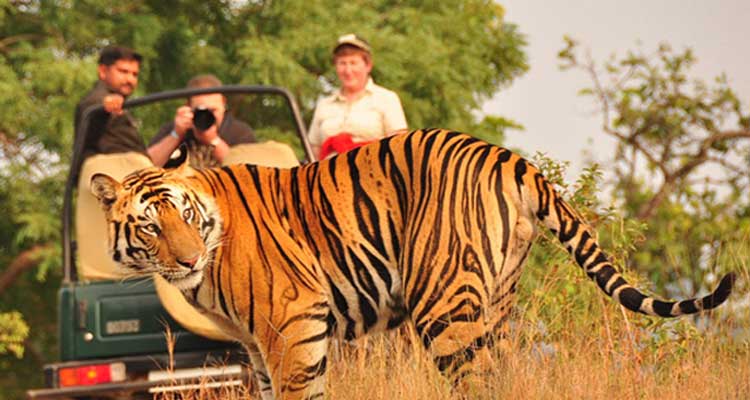
The reserve is particularly famous for its Bengal tigers, but no responsible itinerary should promise a tiger sighting. Wildlife moves freely, and sightings depend on natural behaviour, weather, habitat conditions, safari zone and chance. The forest experience remains worthwhile even when a tiger is not encountered.
During the safari, watch for other wildlife and birdlife according to what is naturally present in the assigned area. The historic landscape visible in and around the reserve also distinguishes Ranthambore from many purely wilderness-focused destinations.
Return to the resort after the scheduled safari. Any additional safari must be separately booked and remains subject to permit availability. Spend the rest of the day relaxing before the following morning's journey to Jaipur.
Overnight stay in Ranthambore.
After breakfast, leave Ranthambore and travel towards Jaipur. The journey moves from forest and wildlife country back into Rajasthan's urban royal heritage, creating another major change in the character of the itinerary.
On arrival, check into the selected hotel for a two-night stay. After time to refresh, begin with an introductory visit to the historic Pink City rather than immediately attempting the full Amber Fort programme.
Spend time around Hawa Mahal, whose elaborate façade faces one of Jaipur's busiest traditional streets. The structure provides an immediate visual introduction to the architectural identity of the walled city.
Continue through selected bazaars, where jewellery, gemstones, textiles, handicrafts and traditional commercial activity remain important parts of Jaipur's old-city character. The organised street pattern also distinguishes Jaipur from the more organically developed historic towns visited earlier.
Return to the hotel after the orientation. The principal royal monuments are reserved for the next day, allowing Jaipur to be explored at a comfortable pace.
Overnight stay in Jaipur.
Begin with Amber Fort, the former royal seat located among the hills outside Jaipur. The fort's elevated position above Maota Lake and its surrounding defensive walls reflect the strategic priorities of the earlier Kachwaha capital.
Move through the main gateways and courtyards into the royal palace sections. Defensive architecture gradually gives way to ornamental spaces, balconies and former ceremonial chambers, demonstrating how the complex combined military security with courtly life.
Return towards Jaipur and pause near Jal Mahal where traffic and local stopping conditions allow. Continue into the historic city to visit City Palace, the royal complex positioned at the centre of Jaipur's planned urban layout.
Walk afterwards to Jantar Mantar, where large astronomical instruments illustrate the scientific interests of Maharaja Sawai Jai Singh II. The observatory adds a distinctive intellectual dimension to the city's royal and architectural history.
Complete the day with additional time around the old city according to interest. After travelling through Marwar, Mewar, Hadoti and Ranthambore, Jaipur provides a fitting final Rajasthan destination through its combination of fort, palace, science and urban planning.
Overnight stay in Jaipur.
After breakfast, enjoy the final hours in Jaipur according to the confirmed onward schedule. Depending on departure timing, the morning may remain at leisure or allow a short local visit or shopping period before hotel check-out.
The completed route has presented Rajasthan through several distinct regional identities. Jodhpur introduced Marwar through Mehrangarh and the Blue City, while Ranakpur brought intricate Jain architecture into the journey before reaching the lakes and palaces of Udaipur.
Chittorgarh and Bundi then shifted the focus towards Mewar's fortified history and the smaller-scale heritage of Hadoti. Ranthambore replaced architecture with a regulated wildlife experience before Jaipur returned the itinerary to Rajasthan's royal urban heritage.
Transfer to Jaipur Airport, railway station or the appropriate departure point for the confirmed journey towards Mumbai. The precise flight, train or other ticketed connection should follow the final booking rather than being assumed within the road itinerary.
Upon arrival in Mumbai, continue according to the confirmed arrangements. The scheduled 11 Days Rajasthan Tour from Mumbai concludes after connecting back to the starting city.

09 Nights / 10 Days
Delhi - Jaipur - Ranthambore - Bharatpur - Agra - Delhi
05 Nights / 06 Days
Jaipur – Jodhpur – Ranakpur – Udaipur
09 Nights / 10 Days
Delhi – Samode – Jaipur – Jodhpur – Narlai – Ranakpur – Udaipur