Your Travel Partner
SINCE 1989
Your Travel Partner
SINCE 1989
Delhi – Neemrana – Sariska – Bhangarh – Jaipur – Ranthambore – Bharatpur – Agra – Orchha – Khajuraho – Panna – Bandhavgarh – Kanha – Delhi
India's forts and wildlife reserves tell very different stories, yet both are deeply connected with landscape. The Rajasthan Tour Package 26 Nights 27 Days with Central India Tiger Safari brings these two sides together in an extended journey beginning with the historic architecture of Rajasthan and ending among some of Central India's most important forest habitats.
The itinerary begins in Delhi before travelling to Neemrana, creating a gradual entry into Rajasthan rather than moving immediately to Jaipur. From Neemrana, the route reaches Sariska, where two nights introduce the first wildlife landscape of the tour.
A visit to Bhangarh connects Sariska with Jaipur and adds a distinctive historic stop before three nights in Rajasthan's capital. Jaipur's generous allocation allows Amber Fort, City Palace, Jantar Mantar, Hawa Mahal and traditional markets to be experienced without compressing everything into one demanding day.
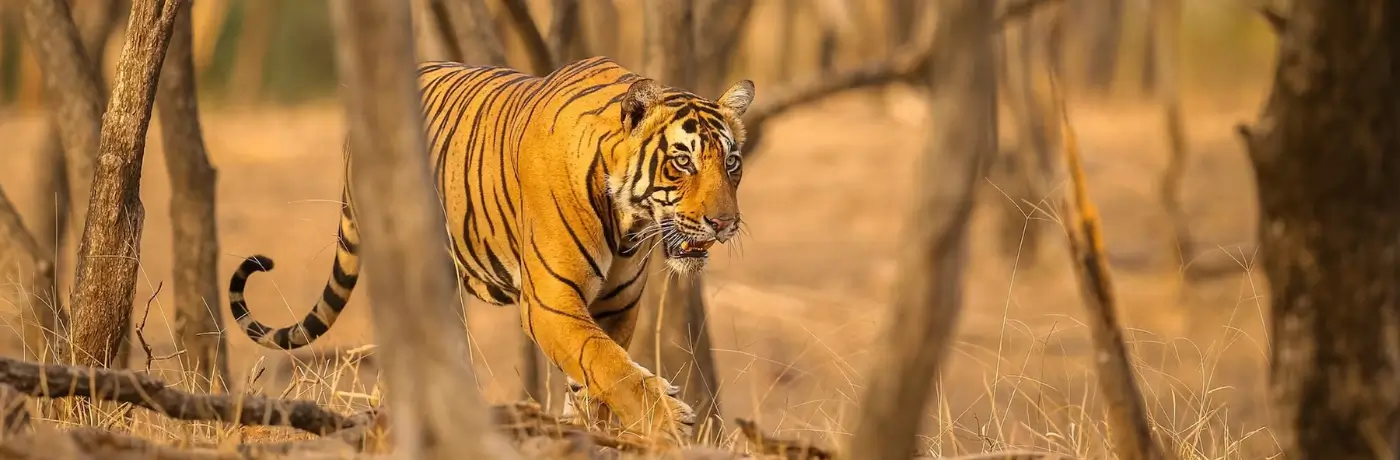
Three nights in Ranthambore create a substantial wildlife section. The reserve's dry forests, rocky terrain, lakes and historic ruins form a dramatic environment for safaris, but all wildlife encounters remain natural. Tiger sightings cannot be guaranteed at Ranthambore, Sariska or any other reserve on this route.
The journey then moves to Bharatpur, providing two nights in a landscape particularly associated with birdlife. Seasonal movement and natural conditions determine what can be observed, so individual bird or wildlife species should never be promised.
Two nights in Agra give the Taj Mahal and Mughal heritage sufficient time before the route turns towards Central India. Orchha introduces a historic riverside setting of palaces, temples and cenotaphs, followed by two nights in Khajuraho.
The celebrated temples of Khajuraho form the architectural bridge into the wildlife-rich landscapes of Madhya Pradesh. From here, two nights at Panna begin the Central India safari section in earnest.
Three nights each in Bandhavgarh and Kanha form the wildlife core of the latter journey. These reserves are renowned tiger habitats, but safari experiences depend on official permits, assigned zones, vehicle availability, weather, seasonal park operations and the unpredictable movement of wild animals.
The route is therefore designed for travellers interested in much more than ticking a tiger sighting off a checklist. Forest landscapes, birdlife, deer, other mammals, vegetation and the experience of travelling through protected habitats are all important components of the safari programme.
After Kanha, the journey concludes with an overnight in Delhi before departure. The complete circuit moves from Rajasthan's forts and royal cities through Mughal Agra, medieval Central Indian heritage and multiple wildlife reserves.
For travellers seeking a Rajasthan and Central India tiger safari tour, this itinerary provides unusual depth. It combines Neemrana, Sariska, Bhangarh, Jaipur, Ranthambore and Bharatpur with the Taj Mahal, Orchha, Khajuraho, Panna, Bandhavgarh and Kanha in one carefully paced twenty-seven-day journey.
Arrive in Delhi at the international airport, domestic terminal, railway station or another confirmed meeting location. Meet the representative or private driver and transfer to the selected hotel for the opening night.
The first day remains intentionally flexible because arrival times can vary considerably. Travellers reaching India after a long international flight can use the day to recover before beginning an itinerary that crosses several states and very different landscapes.
If arrival is early enough, a light orientation through selected parts of Delhi may be arranged according to the confirmed programme. The capital's broad avenues, historic areas and contemporary cityscape provide an urban starting point before the route heads towards Rajasthan.
Extensive monument sightseeing is avoided on the arrival day. The itinerary ahead contains forts, palaces, Mughal monuments, medieval temples and numerous wildlife areas, so beginning with a comfortable schedule helps maintain a better overall pace.
Return to the hotel and prepare for the first road journey towards Neemrana the following morning.
Overnight stay in Delhi.
After breakfast, leave Delhi and travel towards Neemrana. The relatively manageable first road sector creates a gradual transition from the national capital into Rajasthan.
Arrive and check into the selected accommodation. Neemrana is associated with its historic fortified setting and provides a considerably smaller-scale experience than Jaipur, which appears later in the itinerary.
Spend time exploring appropriate heritage areas according to the confirmed programme and current access conditions. The town's position along an old route between Delhi and Rajasthan gives it an interesting historical context within the opening section of the journey.
The afternoon is intentionally not overloaded with sightseeing. This provides time to enjoy the heritage surroundings and settle into the rhythm of a long overland itinerary.
Spend the evening at leisure. The following morning leaves Neemrana for Sariska, where the focus changes from built heritage to Rajasthan's natural landscape.
Overnight stay in Neemrana.
After breakfast, leave Neemrana and travel towards Sariska. The route moves away from the heavily urbanised Delhi corridor and towards the Aravalli landscape surrounding the wildlife reserve.
Arrive in the Sariska region and check into the selected wildlife accommodation for a two-night stay. The change in surroundings is immediately noticeable, with hills, dry forest and open natural landscapes replacing the architecture that shaped the opening days.
Depending on arrival time and confirmed arrangements, the remainder of the day can be used to relax or become familiar with the surrounding environment. Any safari or protected-area activity is dependent on the specific permit and service included in the final package.
Sariska Tiger Reserve is an important wildlife habitat, but no particular animal encounter can be guaranteed. Tigers and other wildlife move naturally, and sightings depend on numerous factors including season, weather, vegetation and the route allocated for a safari.
Spend the evening at the accommodation and prepare for the scheduled wildlife programme.
Overnight stay in Sariska
Begin according to the reporting time stated on the confirmed Sariska safari permit. Enter the designated wildlife area in the authorised vehicle and follow the route allocated under current reserve regulations.
The landscape itself is an important part of the experience. Dry deciduous vegetation, rocky Aravalli hills and open areas create habitats for a range of wildlife and provide a natural contrast to the forts and cities that dominate many conventional Rajasthan itineraries.
Sariska is known as tiger habitat, but a safari must never be presented as a guaranteed tiger-viewing activity. Tiger sightings are not guaranteed, and the presence of any individual animal depends entirely on natural movement within the reserve.
Depending on conditions and luck, visitors may observe deer, antelope, monkeys, birdlife and other wildlife. A successful safari should therefore be understood as an opportunity to experience the wider ecosystem rather than a search for only one species.
Return to the accommodation after the scheduled safari. Any second drive or additional wildlife activity requires separate confirmation unless specifically included in the final package.
Overnight stay in Sariska.
After breakfast, leave Sariska and travel towards Bhangarh, included as an en-route heritage visit before continuing to Jaipur. The day shifts the focus from wildlife back towards Rajasthan's historic built environment.
Explore the accessible Bhangarh heritage complex according to official opening hours and current regulations. The site contains the remains of a historic settlement, with gateways, temples and structural ruins spread beneath the surrounding hills.
Bhangarh has accumulated numerous popular legends over time, but the visit is best approached as a historic archaeological and architectural site rather than presenting folklore as verified history.
After completing the visit, continue towards Jaipur. Arrive in Rajasthan's capital and check into the selected hotel for a generous three-night stay.
Spend the evening at leisure or take a gentle orientation through the historic Pink City if time permits. The major royal monuments are reserved for the following days.
Overnight stay in Jaipur.
Begin the morning at Amber Fort, situated among the hills outside the modern centre of Jaipur. The complex represents the earlier royal seat before the development of the planned Pink City.
Enter through the historic gateways and explore the accessible courtyards, palace spaces and ceremonial areas. The architecture moves gradually from defensive elements towards more refined royal apartments, balconies and decorative interiors.
Return towards Jaipur and pause near Jal Mahal for exterior views where traffic and local stopping conditions allow. Its position within Man Sagar Lake provides a distinctive visual contrast with Amber's elevated fortifications.
Continue into the old city to visit City Palace and Jantar Mantar. The palace represents the royal centre of the later capital, while Jantar Mantar's monumental instruments demonstrate the scientific and astronomical interests associated with Maharaja Sawai Jai Singh II.
Finish the day around Hawa Mahal and the surrounding market streets. Jaipur's jewellery, textiles, gemstones and handicrafts provide another dimension to the city's historical identity.
Overnight stay in Jaipur.
The third day in Jaipur deliberately reduces the pace after the previous day's concentrated sightseeing. With no intercity transfer scheduled, travellers have time to experience the capital beyond its most famous monuments.
Begin with additional heritage sightseeing according to the confirmed programme and personal interests. Museums, gardens, architectural sites or craft-oriented areas can complement Amber Fort and City Palace without repeating the same experiences.
Spend time within selected Jaipur bazaars, where jewellery, gemstones, block-printed textiles, pottery and traditional handicrafts remain central to the city's commercial life. These active market districts connect Jaipur's historical identity with contemporary craftsmanship.
The afternoon may remain free for shopping, photography or independent exploration. Such flexible time becomes increasingly valuable within a twenty-seven-day journey, allowing travellers to maintain a comfortable rhythm rather than following an intensive schedule every day.
Return to the hotel for the third Jaipur night. The following morning leaves the capital and travels towards Ranthambore for one of the major wildlife stages of the itinerary.
Overnight stay in Jaipur.
After breakfast, leave Jaipur and travel towards Ranthambore. The journey shifts the itinerary away from royal architecture and traditional markets towards one of Rajasthan's most recognised wildlife landscapes.
Arrive in the Ranthambore region and check into the selected wildlife resort or hotel for a three-night stay. The longer allocation gives the national park a more substantial role within this Rajasthan and Central India wildlife circuit.
Spend the remainder of the day relaxing and preparing for the confirmed safari programme. Reporting times vary according to the safari session, season and official park schedule.
Safari vehicles and zones are allocated according to applicable regulations and permit availability. The exact route inside the reserve cannot always be chosen in advance and may differ between individual safari drives.
Although Ranthambore National Park is renowned for Bengal tigers, tiger sightings are never guaranteed. Every encounter depends on natural animal movement, weather, vegetation, assigned zone and chance.
Overnight stay in Ranthambore.
Begin the day according to the reporting time mentioned on the confirmed Ranthambore wildlife safari permit. Meet the authorised safari vehicle and enter the national park through the designated gate for the zone assigned under the official booking system.
Ranthambore's landscape is one of its greatest attractions. Dry deciduous forest, rocky ridges, grassland, seasonal streams and water bodies create varied habitats, while historic ruins scattered through parts of the reserve add an unusual architectural dimension to the wilderness.
During the safari, remain alert not only for tigers but also for the wider ecosystem. Depending entirely on natural conditions, the reserve may offer opportunities to observe sambar deer, spotted deer, nilgai, wild boar, monkeys, crocodiles and numerous resident or migratory birds.
Although Ranthambore is internationally recognised as Bengal tiger habitat, a tiger sighting can never be guaranteed. Animal movement is unpredictable, and the experience varies according to season, vegetation, weather, assigned zone and simple chance.
Return to the wildlife accommodation after the safari. The extended three-night stay means the reserve is treated as a major destination rather than a brief wildlife diversion within the Rajasthan itinerary.
Overnight stay in Ranthambore.
The third day in the Ranthambore region provides additional time around the reserve. If another safari has been specifically included in the confirmed package, report according to the official permit timing and enter the assigned zone in the authorised vehicle.
A second drive can produce a completely different experience from the first. Changing light, animal movement and the allocation of another route or zone may reveal landscapes and wildlife that were not encountered previously.
Rather than evaluating the safari solely by whether a tiger appears, observe the signs and sounds of the forest. Alarm calls, tracks, bird activity, water sources and the behaviour of herbivores all form part of understanding a natural predator habitat.
Where no additional safari has been booked, the day can remain available for relaxation or other locally confirmed activities. Additional park entry should never be assumed because permits are limited and subject to official availability.
Enjoy the final evening in Ranthambore before the journey continues towards Bharatpur. Tiger and other wildlife sightings remain entirely natural and are never guaranteed.
Overnight stay in Ranthambore.
After breakfast, leave Ranthambore and travel towards Bharatpur. The itinerary remains focused on natural heritage, but the ecological character changes significantly as the journey moves from tiger country towards an environment internationally associated with birdlife.
Arrive and check into the selected hotel for a two-night stay. The additional night provides time to appreciate Bharatpur without combining arrival, nature exploration and departure into a single hurried schedule.
Depending on arrival time, use the afternoon for a gentle introduction to the local surroundings or simply relax after the road journey. The principal nature-oriented programme can be undertaken the following morning.
Bharatpur's birdlife changes according to season, water conditions, migration and other ecological factors. No particular bird species or wildlife encounter should therefore be considered guaranteed.
Spend the evening at leisure. After several days of vehicle-based safari experiences, Bharatpur introduces a different style of observing nature.
Overnight stay in Bharatpur.
Begin the morning with the nature programme confirmed for Bharatpur. Entry arrangements, permitted transportation and guiding services depend on current regulations and the services specifically included in the package.
The wetland environment supports diverse birdlife, particularly during favourable seasonal conditions. Water bodies, vegetation and open areas create habitats markedly different from the dry forests experienced in Sariska and Ranthambore.
Observe the landscape patiently rather than approaching the visit with a fixed checklist of species. Resident and migratory birds vary according to season, rainfall, water levels and broader migration patterns.
The visit also demonstrates why a comprehensive Rajasthan wildlife and heritage tour can include several protected landscapes without becoming repetitive. Sariska, Ranthambore and Bharatpur each present a distinctly different ecological environment.
Return to the hotel and enjoy the remainder of the day at a comfortable pace. The following morning leaves Rajasthan for Agra and the monumental Mughal architecture of the Taj Mahal.
Overnight stay in Bharatpur.
After breakfast, check out and travel towards Agra. The journey leaves Rajasthan and enters Uttar Pradesh, while the focus shifts sharply from wildlife landscapes towards Mughal architecture.
Arrive in Agra and check into the selected hotel for a two-night stay. The extended allocation means the city can be explored without combining every important monument into the same day.
According to arrival time and official opening schedules, begin with an appropriate heritage visit or use the afternoon for a relaxed introduction to the city. The Taj Mahal can be scheduled at the most suitable confirmed visiting time.
Agra's architectural language creates a striking contrast with Jaipur's Rajput palaces and the wilderness experienced during the previous days. Red sandstone, white marble, geometric planning and formal gardens introduce the imperial aesthetic associated with the Mughal period.
Return to the hotel for the evening. The following day is dedicated to Agra's principal monuments and the architectural legacy that makes the city one of the most significant heritage destinations in India.
Overnight stay in Agra.
Begin the day with a visit to the Taj Mahal according to its official opening schedule. Enter through the monumental gateway and follow the formal garden axis towards the white marble mausoleum.
Take time to observe the building's symmetry, marble inlay work, calligraphic decoration and carefully balanced relationship with the surrounding structures. Changes in daylight can subtly alter the appearance of the marble, adding another dimension to the experience.
Continue to Agra Fort, subject to the confirmed sightseeing programme. The massive red sandstone complex contains gateways, defensive walls, courtyards and palace sections connected with different phases of Mughal rule.
The contrast between the Taj Mahal and Agra Fort makes the day particularly rewarding. One is primarily associated with funerary architecture and controlled symmetry, while the other combines military, administrative and residential functions.
Return to the hotel after completing the scheduled sightseeing. Two nights in Agra provide a more balanced transition before the journey moves into the historic landscapes of Madhya Pradesh.
Overnight stay in Agra.
After breakfast, leave Agra and continue towards Orchha according to the transportation arrangements confirmed for the package. The journey introduces Bundelkhand and a very different architectural environment from Mughal Agra.
Arrive in Orchha and check into the selected hotel for the night. Situated near the Betwa River, the historic town is recognised for its palaces, temples and cenotaphs, many of which rise dramatically above the surrounding landscape.
Begin exploring the principal Orchha heritage complex according to available time and current access conditions. Fortified palace structures and elevated pavilions demonstrate a regional architectural tradition shaped by the Bundela rulers.
The riverside setting adds another dimension to the town. Temple towers and historic cenotaphs create an atmospheric skyline that differs considerably from the formal imperial planning encountered in Agra.
Return to the hotel after sightseeing. The following morning continues to Khajuraho, one of Central India's most important temple destinations.
Overnight stay in Orchha.
After breakfast, spend any remaining scheduled time in Orchha before beginning the journey towards Khajuraho. The route continues through Madhya Pradesh and further develops the Central Indian section of the itinerary.
Arrive in Khajuraho and check into the selected hotel for a two-night stay. The additional night allows the temple complexes to be approached with greater depth rather than as a rushed stop between long road transfers.
Depending on arrival time, begin with a light orientation or visit an appropriate local area. The principal temple sightseeing can be reserved for the following morning when more time is available.
Khajuraho's surviving temples are renowned for their architectural proportions and extensive sculptural programmes. Their artistic identity differs dramatically from Rajasthan's forts and the Mughal monuments encountered earlier.
Spend the evening at leisure. The next day is dedicated to understanding the temple architecture and sculpture that have made Khajuraho internationally significant.
Overnight stay in Khajuraho.
Begin the day exploring the principal Khajuraho temple groups according to the confirmed programme and official opening schedules. The surviving monuments are associated with the Chandela period and represent an extraordinary achievement in medieval Indian temple architecture.
Study the architectural composition before focusing on individual sculptural details. Elevated platforms, carefully proportioned towers, entrance spaces and richly decorated exterior surfaces create a sophisticated visual rhythm across the complexes.
The sculpture encompasses a much broader range of themes than the erotic imagery for which Khajuraho is popularly known. Divine figures, musicians, dancers, everyday activities, decorative motifs and numerous aspects of courtly and symbolic life appear throughout the surviving carvings.
Allow sufficient time to appreciate the workmanship without reducing the temples to a checklist of individual panels. Their architectural setting and overall sculptural programme are central to understanding their importance.
Return to the hotel after sightseeing. Khajuraho forms the final major architectural chapter before the itinerary moves deeply into the forests of Panna, Bandhavgarh and Kanha.
Overnight stay in Khajuraho.
After breakfast, leave Khajuraho and travel towards Panna. The comparatively short transition is significant because the focus changes from medieval temple architecture to the forests and natural habitats of Central India.
Arrive in the Panna region and check into the selected wildlife accommodation for a two-night stay. The surrounding environment introduces the first major Central Indian reserve of this itinerary.
Use the remainder of the day to relax and become familiar with the natural setting. If a safari has been confirmed for the arrival day, follow the official reporting time and permit details supplied with the booking.
Panna Tiger Reserve supports diverse wildlife, but no specific sighting can be promised. Tigers, leopards, deer and other animals move freely through large natural habitats, and encounters depend on conditions inside the reserve.
Spend the evening at the wildlife accommodation and prepare for the next day's scheduled safari programme.
Overnight stay in Panna.
Report at the required time for the confirmed Panna wildlife safari and enter the reserve in the authorised vehicle. Safari access remains dependent on official permits, assigned zones, seasonal park operations and applicable regulations.
Panna presents a different ecological character from the Rajasthan reserves visited earlier. Forests, rocky terrain and riverine environments contribute to a varied landscape that is worth observing independently of individual animal sightings.
Remain attentive to the wider ecosystem. Depending on natural conditions, opportunities may arise to see deer, antelope, monkeys, birdlife and other species associated with the reserve.
Panna is recognised as tiger habitat, but tiger sightings are never guaranteed. Even in areas supporting a healthy predator population, animals can remain hidden by vegetation or move far from authorised safari routes.
Return to the accommodation after the scheduled drive. Additional safaris require separate confirmation and permits unless already included in the package.
Overnight stay in Panna.
After breakfast, leave Panna and begin travelling towards Bandhavgarh. The route continues through Madhya Pradesh and takes the wildlife section deeper into Central India's forest landscapes.
Arrive in the Bandhavgarh region and check into the selected wildlife lodge or resort for a three-night stay. The longer allocation reflects the importance of the reserve within this itinerary.
Spend the remainder of the day resting after the road journey and preparing for the safari schedule. Permit reporting times and assigned zones should be checked carefully because they are controlled through official park procedures.
Bandhavgarh is widely known for its tiger habitat, but reputation must never be interpreted as a guarantee of sightings. Wildlife observation remains unpredictable regardless of the number of nights spent near the reserve.
Enjoy the evening at the lodge. The following days provide opportunities to experience the forest through the safaris specifically confirmed in the booking.
Overnight stay in Bandhavgarh.
Begin according to the official reporting time for the confirmed Bandhavgarh safari. Enter the reserve in the authorised vehicle and proceed through the zone allocated under the applicable permit.
Observe the changing vegetation, open meadows, forest tracks and natural water sources encountered along the route. These environmental features are as important to understanding the reserve as any individual wildlife sighting.
Depending on natural movement and luck, visitors may encounter deer, langurs, wild boar, birdlife and other forest species. Guides and drivers may also interpret tracks, alarm calls and other signs that indicate recent animal activity.
Bengal tiger sightings cannot be guaranteed. Even experienced naturalists cannot control the movement of wild animals, and a tiger may remain concealed despite being present within the general area.
Return to the lodge after the safari and spend the remaining time at leisure. The three-night stay provides a more meaningful opportunity to experience Bandhavgarh's environment.
Overnight stay in Bandhavgarh.
A further day in Bandhavgarh allows the wildlife experience to develop beyond a single drive. If an additional safari is included, report according to the permit timing and proceed to the assigned zone.
Every safari can differ considerably. Weather, temperature, time of day and wildlife movement influence what happens, while a different zone may reveal landscapes that were not encountered previously.
Use the drive to observe the forest as an interconnected ecosystem. Predator tracks, herbivore behaviour, bird calls and changes in vegetation all provide valuable clues about life within the reserve.
If no additional safari is included, use the day for relaxation or other activities specifically confirmed with the accommodation. Safari entry should never be assumed without an official permit.
Spend the final evening in Bandhavgarh before travelling towards Kanha. All wildlife encounters, including tiger sightings, remain subject to natural conditions and cannot be promised.
Overnight stay in Bandhavgarh.
After breakfast, leave Bandhavgarh and travel towards Kanha. This road sector connects two of Madhya Pradesh's best-known wildlife landscapes and forms an important part of the Central India section.
Arrive in the Kanha region and check into the selected wildlife lodge or resort for another three-night stay. The extended allocation allows the final safari destination to be experienced without rushing.
The environment around Kanha differs from the historical cities visited during the first half of the itinerary. Forests, meadows and wildlife habitat now completely replace the forts, palaces and temple complexes that defined Rajasthan and the earlier Central Indian stages.
Use the afternoon to relax and confirm the reporting details for the scheduled safari. Zone allocation, entry gate and vehicle arrangements remain subject to official permit procedures.
Spend the evening at the lodge surrounded by the quieter natural environment.
Overnight stay in Kanha.
Begin early or at the confirmed reporting time for the scheduled Kanha wildlife safari. Enter the reserve in the authorised vehicle and follow the officially allocated route.
Kanha is characterised by an attractive combination of forest and open meadow environments. The changing habitats provide opportunities to understand how different species use the landscape throughout the day.
Depending on natural conditions, visitors may encounter deer, langurs, wild boar, gaur, birdlife and other animals. Wildlife sightings vary constantly and no species should be treated as certain.
The reserve is an important tiger habitat, but seeing a tiger is never guaranteed. A rewarding safari can consist of landscapes, animal behaviour, tracks, bird calls and numerous smaller encounters even when the largest predator remains unseen.
Return to the lodge after the drive. Spend the remaining hours relaxing and absorbing the atmosphere of one of Central India's celebrated natural environments.
Overnight stay in Kanha.
The final full day in Kanha provides another opportunity to appreciate the reserve's natural environment. If a further safari is specifically included, follow the official permit schedule and enter through the assigned gate.
A repeat drive should not be expected to reproduce the previous day's experience. Animal movement changes continuously, and even familiar areas can appear different according to light, weather and seasonal conditions.
Focus on the broader ecology of the reserve. Meadows, forest edges and water sources support complex relationships between herbivores, predators, birds and vegetation, making the landscape itself central to the safari experience.
If no additional safari is confirmed, spend the day at leisure at the lodge or participate in other services expressly included in the final booking. No protected-area activity should be presumed without appropriate permission.
Enjoy the last evening in Central India's wilderness. The following stage returns to Delhi for the final night of the journey.
Overnight stay in Kanha.
After breakfast, check out from the Kanha accommodation and begin the onward journey towards Delhi using the transportation arrangements specifically confirmed for the package. Depending on the final operational plan, this sector may involve an appropriate combination of road transfer and separately arranged domestic transport.
The day marks a major geographical transition. After several nights among the forests of Panna, Bandhavgarh and Kanha, the itinerary returns to India's national capital.
On reaching Delhi, meet the arranged transfer where applicable and proceed to the selected hotel for the final overnight stay.
Use the remainder of the day to rest after the long journey. Keeping one night in Delhi before final departure provides a practical buffer after an extensive itinerary involving multiple road sectors and wildlife destinations.
The evening remains free unless another service has specifically been confirmed.
Overnight stay in Delhi.
Enjoy breakfast according to the hotel schedule and prepare for departure. Depending on flight or train timing, the morning can remain free or include only those services specifically confirmed in the final programme.
The journey began with Delhi, Neemrana and Sariska before moving through Bhangarh and three nights in Jaipur. These opening stages combined Rajasthan's Aravalli landscapes with royal forts, palaces, astronomical heritage and traditional city markets.
Ranthambore and Bharatpur then expanded the natural dimension of the tour before two nights in Agra introduced the Taj Mahal and Mughal architecture. Orchha and Khajuraho subsequently created a historical bridge into Central India.
Panna, Bandhavgarh and Kanha formed the final wildlife sequence, offering three different protected landscapes rather than treating the safari experience as a single isolated excursion. Throughout these reserves, wildlife encounters remained governed by natural behaviour and official park regulations.
At the appropriate time, transfer to the airport, railway station or other confirmed departure point, completing the Rajasthan Tour Package 26 Nights 27 Days with Central India Tiger Safari..
18 Nights / 19 Days
Delhi-Agra-Jaipur-Pushkar-Udaipur-Jodhpur-Jaisalmer-Bikaner-Mandawa-Delhi

09 Nights / 10 Days
Delhi – Samode – Jaipur – Jodhpur – Narlai – Ranakpur – Udaipur