Your Travel Partner
SINCE 1989
Your Travel Partner
SINCE 1989
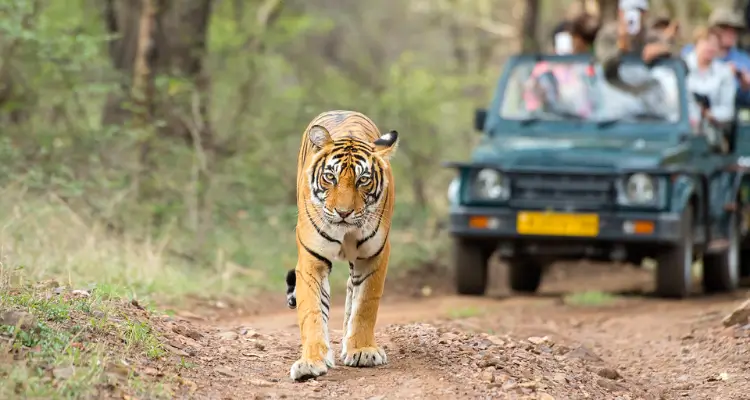
An India tiger safari private tour requires a very different approach from a conventional journey through Delhi, Agra and Rajasthan. Hotels and private transportation remain important, but wildlife travel introduces another critical element: access to the national park. A luxurious lodge outside a tiger reserve does not automatically give its guests unlimited access to the forest. Safari drives operate according to the rules, permits, vehicles, zones and entry procedures applicable to the individual reserve.
For international travelers, this distinction is important. Someone may reserve an expensive wildlife lodge and assume that tiger safaris can simply be arranged after arrival. In popular reserves, that approach can lead to disappointment. Safari access can be limited, and the availability of preferred dates, vehicle types or tourism zones may become restricted. The safari component therefore needs to be treated as a core part of the journey rather than an optional activity added after the hotels have been selected.
India has several important tiger landscapes, but they do not all fit into the same itinerary. Ranthambore is particularly convenient for travelers combining wildlife with Delhi, Agra and Rajasthan. Central India offers reserves that can suit guests who want a more wildlife-intensive journey, while other tiger habitats can be incorporated into longer regional itineraries. The right choice depends on how important wildlife is compared with cultural sightseeing, the number of available nights and the amount of internal travel the guest is willing to undertake.
A private journey also needs to acknowledge the unpredictability of wildlife. No ethical tour operator, guide, naturalist or lodge can guarantee a tiger sighting. Tigers are wild animals moving through large natural habitats. Even an excellent safari can produce extraordinary birdlife, deer, monkeys, crocodiles, landscapes and signs of predator activity without a tiger appearing in front of the vehicle.
For this reason, a well-designed private tiger safari in India usually includes several safari drives rather than depending on one attempt. The journey should also provide enough rest between early mornings, afternoon drives and road transfers. Travel Plan can coordinate wildlife sectors with private chauffeur transportation, selected lodges, safari arrangements and cultural destinations, but the strongest itinerary begins with realistic expectations about how Indian wildlife tourism actually works.
Selecting the reserve should come before selecting the most attractive lodge. India's tiger reserves differ in geography, vegetation, access, tourism structure and their relationship with other destinations on a wider itinerary. The most famous reserve is not automatically the best choice for every traveler.
Ranthambore is particularly attractive to first-time international visitors because it can be integrated into a broader North India and Rajasthan journey. A traveler can combine Delhi, Agra, Ranthambore and Jaipur without creating an enormous geographical detour. Rajasthan can then continue through destinations such as Jodhpur and Udaipur if sufficient time is available.
The landscape also gives Ranthambore a distinctive visual character. Historic structures and rugged terrain form part of the setting, making the reserve feel quite different from a purely forested wildlife destination.
For a guest taking a Ranthambore private tiger safari, two nights should generally be viewed as a short wildlife stop rather than an extensive safari experience. Three nights can be more comfortable because it provides greater scope for multiple drives while allowing time to rest at the lodge.
Travelers whose main purpose is wildlife rather than Rajasthan may consider reserves in Central India. Areas associated with tiger tourism in Madhya Pradesh and neighboring regions can form part of a more dedicated wildlife circuit. Such journeys require closer attention to flight connections, road transfers and the location of suitable lodges.
A serious wildlife traveler may prefer spending three or four nights at one reserve before moving to another rather than collecting one-night stays across multiple parks. Repeated drives allow guests to become familiar with the landscape and appreciate more than a single target species.
This matters because an Indian safari contains much more than tigers. Depending on the reserve, travelers may encounter different deer species, antelope, wild boar, langurs, crocodiles, a wide variety of birds and, with luck, other predators. Tracks, alarm calls and animal behavior can become part of the experience when the safari is led by knowledgeable naturalists.
Travelers should also consider the rest of their India itinerary. If a couple has ten nights and wants Delhi, the Taj Mahal, Jaipur, Udaipur and a tiger safari, Ranthambore may fit far more naturally than a distant Central Indian reserve.
If the same couple has three weeks and wildlife is one of the principal reasons for visiting India, dedicating a larger section of the journey to Central India can make sense.
A luxury India wildlife tour should therefore be built around the traveler's actual priorities, not around the idea that every famous tiger reserve must be visited in one holiday.
Safari access is one of the most important operational details of an India wildlife journey. National parks do not function like ordinary sightseeing attractions where a private driver can simply arrive at the gate and purchase unrestricted access.
Tiger reserves use regulated entry systems. The precise procedures vary by park, and rules can change. Travelers should therefore confirm the current permit structure for their chosen reserve at the time of booking.
Safari vehicles are also different from the private chauffeur vehicle used between cities.
The chauffeur-driven car takes guests from an airport, railway station, city or hotel to the wildlife lodge. Entry into the reserve generally takes place in an authorized safari vehicle according to the arrangements applicable to that park.
At some reserves, travelers may encounter different safari vehicle formats. The availability and private or shared nature of the safari should be clearly stated in the itinerary.
This is especially important for travelers expecting a private jeep safari in India. A private overall tour does not automatically mean that every safari seat or vehicle is exclusively reserved for the couple. The safari booking itself must reflect that requirement where such an arrangement is available.
Zones create another source of confusion. Certain reserves divide tourism areas into designated zones or routes. A permit may relate to a particular zone rather than allowing unrestricted movement throughout the entire reserve.
Travelers sometimes become overly focused on obtaining one supposedly “best” zone. Wildlife movement does not follow tourist expectations, and historical sighting patterns cannot guarantee what will happen on a particular morning.
Multiple drives can be more valuable than betting the entire wildlife experience on one safari.
Morning and afternoon drives also feel different. Early departures can be cold during some periods, especially in open safari vehicles, while afternoon conditions may be considerably warmer. Guests should pack appropriate layers and follow lodge advice for the specific destination.
Passport information may be required for permit arrangements, particularly for international travelers. Names and document details should be supplied accurately according to the booking requirements.
This is one reason wildlife itineraries benefit from earlier confirmation. The hotel room may still be available even when the preferred safari arrangements are not.
Travelers should ask the operator how many safari drives are included, whether they are private or shared, which reserve entry arrangements apply and whether safari charges are already included in the quoted price.
The wording “Ranthambore stay” or “wildlife hotel” is not enough. A guest needs to know whether actual park entry has been arranged.
A tiger safari is not a scheduled performance. There is no curtain time at which a tiger appears because visitors have paid for a permit.
This basic fact should shape the itinerary.
A traveler who spends one night near a reserve and takes a single safari has only one opportunity to experience that particular part of the forest. If the tiger remains hidden, the wildlife section may end before the guest has settled into the rhythm of safari travel.
Three or four drives create a very different experience.
The first safari introduces the reserve, its vegetation and the way naturalists interpret signs. Later drives allow guests to recognize landscapes and become more attentive to alarm calls, tracks and the behavior of prey animals.
Each drive can also produce different wildlife.
One morning may be dominated by birds and deer. Another may produce fresh tiger tracks without a direct sighting. An afternoon may suddenly deliver the close tiger encounter that the travelers hoped for.
Even then, responsible guides should never harass wildlife simply to create a better photograph.
For travelers booking an India tiger tour for photography, patience is particularly important. Wildlife photography depends on light, animal position, distance and behavior, none of which can be controlled by the tour company.
The best approach is to provide enough safari time and then allow nature to determine the result.
Multiple drives also justify choosing a better lodge.
If guests are spending three nights near the reserve, they will have periods between morning and afternoon safaris when the accommodation matters. A comfortable room, good food, peaceful surroundings and knowledgeable lodge staff can significantly improve the overall wildlife experience.
By contrast, a traveler arriving late, taking one early safari and leaving immediately afterward has little opportunity to benefit from an expensive lodge.
Safari days can be tiring. Early starts followed by several hours in an open vehicle require rest. Afternoon drives may then continue until evening.
A private itinerary should not automatically place a long intercity road transfer immediately after every safari.
The objective is not simply to count how many activities can fit into twenty-four hours. It is to create enough time for the wildlife experience to feel worthwhile.
A luxury tiger safari in India can involve some of the most distinctive accommodation of an India journey. Wildlife lodges and tented camps operate differently from city hotels because their location, natural setting, meal structure and guiding environment form part of the experience.
Travelers should therefore compare them differently from conventional five-star accommodation.
In Delhi or Mumbai, guests may judge a hotel partly by city location, room size, restaurants and access to sightseeing. Near a tiger reserve, the relationship between the lodge and the wildlife experience becomes more important.
High-end lodges may provide spacious accommodation, refined dining, naturalist interaction, attractive common areas and a strong sense of place. Some offer villas or luxury tents rather than conventional hotel rooms.
The quality of naturalists can also matter greatly to serious wildlife travelers. An informed conversation over dinner about the day's animal behavior may become as memorable as the room itself.
Location deserves careful attention. A lodge described as being near a national park may still require a transfer to the relevant entry gate. The relationship between lodge location and the assigned safari access should therefore be understood.
Meal arrangements are often more comprehensive at wildlife lodges than at city hotels. This makes sense because guests may leave before normal breakfast hours and return between safari drives. Remote locations can also have limited independent dining alternatives.
A premium lodge may prepare early tea or coffee, packed refreshments or meals around safari timings. Exact arrangements vary by property.
Luxury accommodation does not improve the statistical certainty of seeing a tiger. A guest at an expensive lodge enters the same natural ecosystem as everyone else. The higher price pays for accommodation, hospitality, setting and service, not ownership of the wildlife.
This distinction is important when comparing luxury wildlife lodges in India.
Travelers should select a lodge because they value the complete stay, not because someone implies that paying more guarantees a predator sighting.
A mixed hotel strategy can also control the overall trip budget. Travelers might use strong five-star hotels in Delhi and Jaipur, spend more heavily on the wildlife lodge and then select a palace property in Udaipur.
This can create a more memorable journey than spending the same amount in every city.
The safari vehicle and private chauffeur serve completely different purposes.
A private driver for an India tiger safari tour handles the road sectors outside the protected wildlife area. This may include airport collection, hotel transfers and transportation between cultural cities and the wildlife lodge.
For a route involving Delhi, Agra, Ranthambore and Jaipur, a chauffeur-driven vehicle can provide continuity through much of the journey. The guests keep their luggage with the private touring vehicle during road transfers and avoid arranging a new taxi every time they change destinations.
Once the guests reach the wildlife lodge, safari transportation operates according to the reserve's system.
After the wildlife stay, the private chauffeur can continue with the travelers toward Jaipur or another road-connected destination.
This works particularly well for Ranthambore because the reserve can fit into a broader Rajasthan route.
Other tiger reserves may require a combination of flights and private road transfers. A traveler visiting a Central Indian reserve may fly to the most practical available airport and then use a chauffeur-driven vehicle for the remaining overland journey.
Travel times should be treated realistically. Wildlife lodges are often located away from major metropolitan areas, so a journey that looks straightforward on a national map may involve a substantial road transfer.
Vehicle comfort therefore matters.
For two international travelers with luggage, an Innova-class vehicle can provide useful space for longer road sectors. Higher-category vehicles can be arranged when appropriate, while families and private groups may need larger transportation.
The chauffeur should not be expected to act as the safari naturalist. Wildlife interpretation inside the reserve belongs with the professionals associated with the safari operation.
Similarly, the safari vehicle is not intended to replace the private road vehicle for the rest of the India journey.
Keeping these services separate produces a much smoother experience.
The cost of a private tiger safari in India varies more than a conventional city itinerary because the total depends on the reserve, number of safari drives, lodge category, transportation method and wider route.
For two international travelers, an upscale private journey combining quality hotels, private chauffeur transportation, selected guides and several safari drives can reasonably be budgeted at approximately US$400 to US$650 per person per day on a higher-side basis.
A stronger five-star wildlife journey with premium lodges can move toward approximately US$650 to US$1,000 per person per day.
Travelers choosing exceptional wildlife lodges, premium suites or villas, private safari arrangements where available and high-end hotels before and after the reserve can spend approximately US$1,000 to US$1,800+ per person per day.
The wildlife portion can be disproportionately expensive compared with an ordinary city stay because safari access, specialized accommodation and remote logistics add costs.
A 10-night private journey combining Delhi, Agra, Ranthambore and Jaipur might reasonably require around US$8,000 to US$13,000 for two travelers at an upscale level depending on hotels and safari arrangements.
A stronger five-star version could move toward approximately US$13,000 to US$20,000+ for the couple.
A premium wildlife and palace itinerary can exceed US$20,000, especially when expensive lodges, suites and multiple safari drives are included.
A more dedicated multi-reserve wildlife journey can cost considerably more because domestic flights, long transfers and repeated safari arrangements may be required.
These figures are broad budgeting references rather than guaranteed package rates.
The number of safari drives should always be examined when comparing quotations. A lower-priced package containing one safari cannot fairly be compared with another containing four or six drives.
The lodge category also matters. A conventional hotel outside the reserve and a high-end wilderness lodge are fundamentally different products.
Transportation inclusions should be checked as well. Airport transfers, chauffeur vehicle, fuel, tolls and driver expenses may be incorporated into the price or listed separately.
For a first-time visitor, one of the strongest combinations is a cultural journey through North India with a carefully timed wildlife section.
Delhi can provide the international arrival point and several days of historical sightseeing. Agra introduces the Taj Mahal and Mughal architecture. Ranthambore then changes the rhythm completely by moving the traveler from monuments into a natural landscape.
After the safari stay, Jaipur can return the journey to Rajasthan's royal architecture.
Travelers with additional time can continue to Jodhpur and Udaipur. This creates a varied private journey without requiring constant domestic flights.
A two-week itinerary provides far more comfort than attempting to fit the same destinations into eight or nine nights.
For travelers whose principal interest is wildlife, the priorities should be reversed. Instead of building a Rajasthan holiday and adding one safari, they can devote several nights to one or more reserves and use Delhi or another major city primarily as an arrival and departure gateway.
Photography-focused guests may want even more safari drives.
Couples taking a luxury holiday may prefer a balanced structure containing both wildlife and palace hotels.
Families can also enjoy tiger safaris, but the age of children, safari regulations, early starts and long periods in open vehicles should all be considered before confirmation.
Travel Plan can combine a Ranthambore tiger safari private tour with Delhi, Agra, Jaipur and a wider Rajasthan journey so that the road route remains coherent.
The wildlife section should still retain its own pace. A morning safari followed immediately by an exhausting road journey and late hotel arrival can reduce the value of both experiences.
The first question should be how many actual safari drives are included.
A hotel stay near a national park is not the same thing as a confirmed safari program.
Travelers should know the reserve, number of drives and the private or shared nature of the safari arrangement where applicable.
The itinerary should identify the lodge and room category. Meal arrangements should be clear because wildlife properties may operate differently from city hotels.
Passport details should be supplied accurately when required for safari reservations.
Travelers should also ask how the reserve connects with the rest of the itinerary. If a flight is necessary, the airfare and baggage allowance should be checked. If a long road transfer is involved, the approximate journey structure should be understood before booking.
The chauffeur vehicle category should be appropriate for passenger count and luggage.
Guests should receive a clear explanation of what happens if a particular safari option is unavailable. The answer should be based on legitimate alternatives rather than promises that access can always be created at the last moment.
The quotation should state whether monument admissions, professional city guides, domestic flights and other non-wildlife services are included.
Most importantly, no written itinerary should guarantee a tiger sighting.
A credible India wildlife tour operator can arrange access, accommodation, transportation and experienced professionals. It cannot control the movements of a wild tiger.
That uncertainty is part of what makes a genuine safari meaningful.
Ranthambore is particularly convenient for a broader North India and Rajasthan itinerary because it can be connected with Agra and Jaipur without creating the type of geographical jump required by more distant reserves.
Several drives are preferable when wildlife is an important part of the journey. Three or four safari drives provide more opportunities and a richer wildlife experience than relying on a single entry.
No. Tigers are wild animals, and sightings can never be guaranteed responsibly. Multiple safaris can provide additional opportunities, but nature determines the result.
No. Your chauffeur-driven touring vehicle handles transportation outside the reserve. Safari drives inside the protected area use authorized vehicles according to the reserve's applicable system.
Private safari arrangements may be available depending on the reserve, vehicle type, permit availability and current rules. A private overall itinerary should not be assumed to include an exclusive safari vehicle unless this is specifically confirmed.
Two nights provide a relatively short wildlife stop, while three nights can offer a more comfortable experience with greater scope for multiple safari drives and rest between them.
An upscale journey can reasonably be budgeted around US$400–US$650 per person per day for two travelers. Strong five-star wildlife travel may reach US$650–US$1,000 per person per day, while high-end lodge and safari arrangements can exceed US$1,000–US$1,800 per person per day.
They can be when travelers value the complete stay, including accommodation, food, setting, hospitality and naturalist interaction. The higher lodge price does not guarantee better tiger sightings.
Yes. A journey can combine wildlife at Ranthambore with palace or luxury hotels in Jaipur, Jodhpur and Udaipur, creating a mix of safari experiences and Rajasthan heritage.
Yes. Travel Plan can coordinate an India tiger safari private tour with safari arrangements, selected wildlife lodges, chauffeur-driven transfers, city hotels, professional guides and wider North India or Rajasthan routing. Safari availability remains subject to the applicable reserve rules and confirmed access for the requested travel dates.