Your Travel Partner
SINCE 1989
Your Travel Partner
SINCE 1989
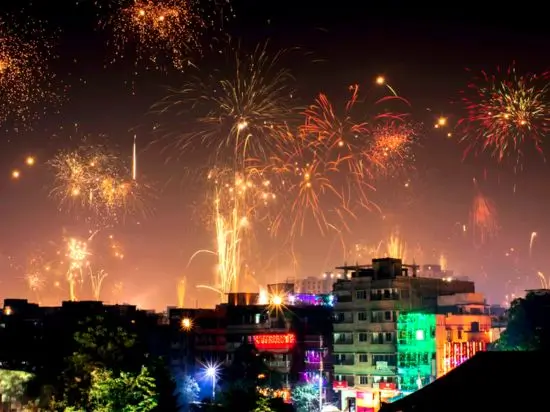
If Holi is loud, colourful, and physical, Diwali is something quieter but no less spectacular - a festival of light rather than colour, where entire cities are transformed after dark by oil lamps, candles, fairy lights, and fireworks. For many travellers, Diwali is the festival they’ve heard about without quite knowing what it involves, and seeing it in person tends to be one of those experiences that’s genuinely difficult to convey through photographs alone.
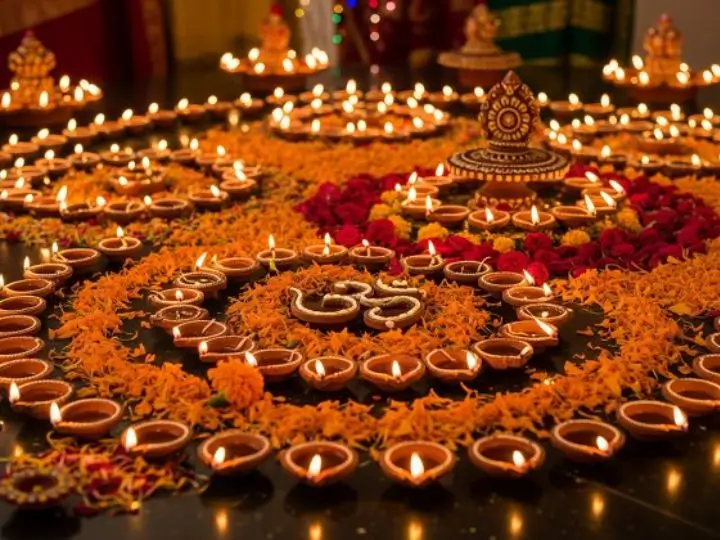
Diwali - sometimes written as Deepavali - means, roughly, “row of lights,” and that’s exactly what it looks like. Homes, shops, temples, and public buildings are lit with small clay lamps called diyas, alongside increasingly elaborate displays of string lights. The festival marks the return of Lord Rama to Ayodhya after defeating the demon king Ravana, and more broadly celebrates the victory of light over darkness and good over evil - themes that recur across many of India’s major festivals, each told through a different story.
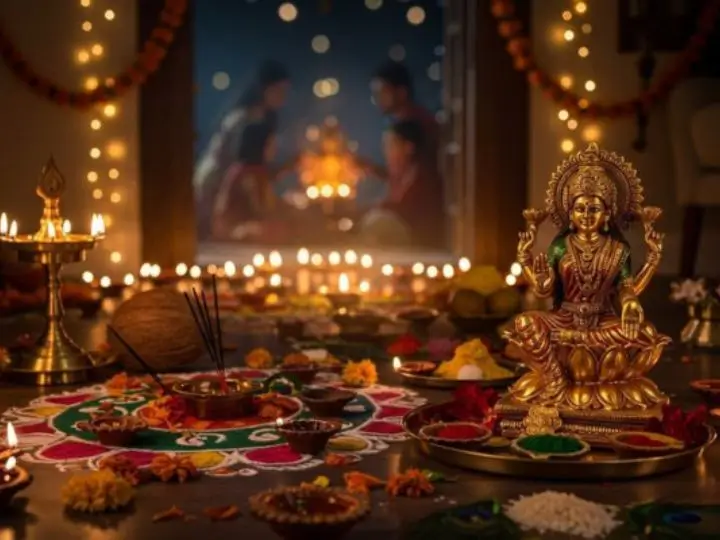
Diwali isn’t a single day - it’s typically a five-day festival, with each day carrying its own significance. The celebrations begin with Dhanteras, a day associated with wealth and prosperity, when many people purchase gold, silver, or new utensils. This is followed by Naraka Chaturdashi (sometimes called Choti Diwali), and then the main day - Lakshmi Puja - when homes are cleaned, decorated, and lit in preparation for Goddess Lakshmi’s visit, bringing prosperity for the year ahead.
The day after the main Diwali is Govardhan Puja, and the festival concludes with Bhai Dooj, a day celebrating the bond between brothers and sisters. For travellers, this means Diwali isn’t something you simply “attend” on one evening - it’s something that builds across nearly a week, with the atmosphere intensifying as the main day approaches and continuing afterwards in a different register.
Diwali is celebrated across the entire country, but a few places offer particularly memorable versions of the festival for visitors.
Jaipur during Diwali is genuinely striking - the city’s markets, already known for their colour and energy, become even more so as shops compete with elaborate lighting displays, and the famous bazaars stay open later than usual, filled with people shopping for the festival. Many heritage hotels in Jaipur host their own Diwali celebrations, combining traditional lighting with music and festive meals.
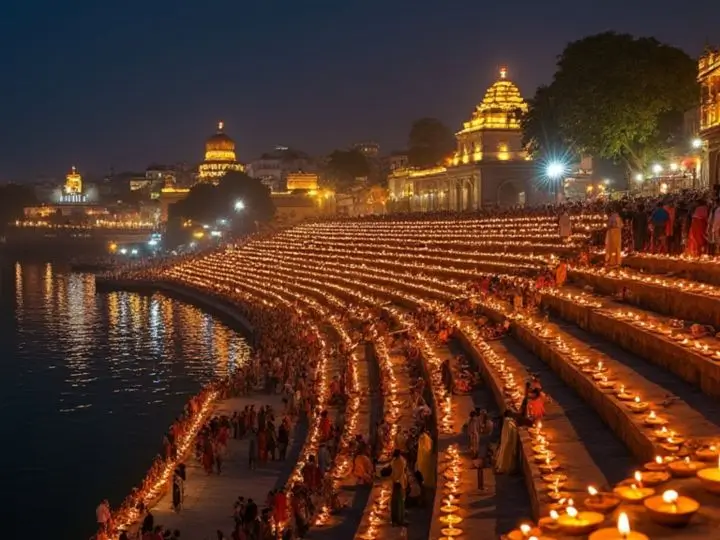
Varanasi offers a completely different kind of Diwali experience, centred on the ghats along the Ganges. While Varanasi is known year-round for its evening Ganga Aarti ceremony, during Diwali - and particularly during Dev Deepawali, which falls about two weeks after the main festival - the ghats are lit with thousands of lamps, creating a scene that’s become one of the most photographed sights in India.
Delhi, as the capital, sees Diwali on a massive scale - markets like Chandni Chowk and Connaught Place become particularly vibrant in the days leading up to the festival, with shopping, sweets, and decorations everywhere.
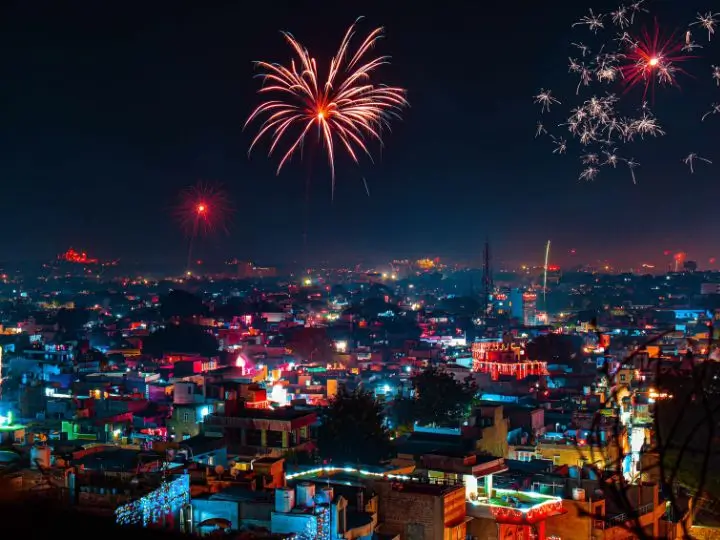
Fireworks have traditionally been a major part of Diwali celebrations, and in many areas they remain so - the main Diwali night can be genuinely loud, with fireworks continuing for hours in residential areas across cities. In recent years, however, several Indian states have introduced restrictions on fireworks, partly due to concerns about air quality, particularly in cities like Delhi where pollution is already a significant issue around this time of year.
For travellers, this means the fireworks experience varies considerably depending on location and timing, and it’s worth being aware that air quality in some northern cities can be noticeably poorer during the days immediately around Diwali. Travellers with respiratory sensitivities may want to factor this into their planning, particularly for time spent in Delhi.
Diwali is, among other things, a festival built around sweets. In the weeks leading up to the festival, sweet shops across India ramp up production of an enormous range of mithai - traditional Indian sweets, many specific to particular regions, exchanged between family, friends, neighbours, and colleagues as gifts.
For travellers, this is one of the more accessible and enjoyable ways to engage with Diwali - sampling sweets that might not be available, or not made with the same care, at other times of year. Savoury snacks also feature heavily, often homemade and shared generously. A guided food experience during Diwali season - visiting sweet shops, trying regional specialities - can be a genuinely memorable addition to a trip.
A few practical points are worth knowing. Diwali is one of India’s most significant holidays, and many businesses - including some shops, offices, and services - close or operate on reduced hours around the main festival days, particularly Lakshmi Puja itself. This isn’t usually disruptive for tourist-facing services like hotels and transport, which continue to operate, but it’s worth factoring in if specific shops, markets, or experiences are part of your plans.
Accommodation in popular destinations can also be in higher demand around Diwali, as it’s a significant travel period for domestic tourism as well - many Indians travel to be with family, or take advantage of the holiday period for their own trips. Booking ahead is sensible, particularly for heritage properties in cities like Jaipur or Varanasi.
Diwali’s timing - generally late October to mid-November - falls right at the start of India’s most comfortable travel season, after the monsoon has cleared and before the coolest months of winter set in. This makes it a genuinely good time to travel more broadly, and Diwali can work well as part of a longer itinerary rather than the sole focus of a trip.
A Golden Triangle tour timed so that the Jaipur leg coincides with Diwali allows travellers to experience the festival’s lighting and markets in one of India’s most visually striking cities, while still covering Delhi and Agra’s major sights. Alternatively, a Diwali-focused itinerary built around Varanasi - particularly if timed to include Dev Deepawali about two weeks later - offers a more spiritually-focused experience centred on the Ganges.
It would be easy to describe Diwali purely in terms of its visual impact - and it is, undeniably, visually spectacular. But underneath the lights and fireworks, Diwali is fundamentally a family festival, built around home, hospitality, and the marking of a new beginning (in several parts of India, Diwali also coincides with the start of the new financial or calendar year).
For travellers, experiencing even a small part of this - being invited into a home’s Diwali celebration, sharing a meal, watching a family light diyas together - tends to leave a deeper impression than the fireworks themselves, however impressive those might be. It’s a festival that, more than most, rewards a bit of openness to the people around you, not just the spectacle in front of you.
If you’d like Diwali to form part of your India journey, we can build a private itinerary around the festival dates - whether that means experiencing the lit-up bazaars and palaces of Jaipur, the riverside lamp celebrations of Varanasi, or a broader trip that takes in Diwali as part of a longer exploration of North India. Let us know your travel dates and what you’d like to see, and we’ll design a tour built around this festival.
Find the answers to all of our most frequently asked questions
The main Diwali day (Lakshmi Puja) falls on 8 November 2026, with the broader five-day festival running from around 6-10 November.
Diwali is typically a five-day festival, beginning with Dhanteras and concluding with Bhai Dooj, with the main celebration on Lakshmi Puja day.
Jaipur offers spectacular lit-up bazaars and palaces, while Varanasi’s ghats - especially during Dev Deepawali about two weeks later - offer a uniquely atmospheric riverside experience.
Traditionally yes, though restrictions have been introduced in several states in recent years due to air quality concerns, so the experience varies by location.
Air quality in northern cities, particularly Delhi, can be noticeably poorer around Diwali. Travellers with respiratory sensitivities may want to plan accordingly.
Mithai (traditional Indian sweets) are central to Diwali, with a huge variety of regional specialities available in the weeks surrounding the festival.
Some do, particularly around the main festival day, though hotels, transport, and tourist services generally continue operating.
Yes - Diwali is a significant domestic travel period as well, so accommodation in popular cities can fill up ahead of the festival.
Yes - the festival’s timing fits well with a Delhi-Agra-Jaipur itinerary, particularly if the Jaipur leg coincides with the main festival days.
Dev Deepawali takes place around two weeks after the main Diwali, primarily celebrated in Varanasi with thousands of lamps lit along the Ganges ghats.
Both - it has deep religious significance rooted in the story of Rama’s return to Ayodhya, while also functioning as a major cultural and family celebration across India.
Share your travel dates and preferred destinations, and an itinerary can be designed around the festival, factoring in accommodation and the best locations to experience it.