Your Travel Partner
SINCE 1989
Your Travel Partner
SINCE 1989
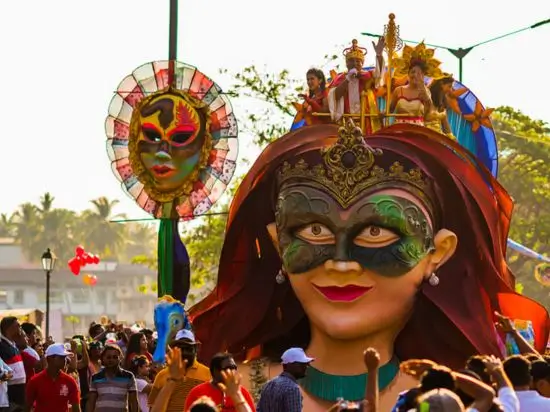
Goa's character – a blend of Indian and Portuguese influences that's visible in its churches, its food, and its general unhurried approach to life – comes into particularly sharp focus during Carnival. For four days each February, the streets of Panaji and several other towns fill with parades, floats, music, and an atmosphere that owes more to Rio or Lisbon than to anywhere else in India.
For travellers, the Goa Carnival offers something a little different from the more overtly religious or ritual-based festivals found elsewhere in the country – a celebration that's fundamentally about enjoyment, community, and a kind of organised, colourful chaos that fits naturally alongside Goa's beaches and relaxed pace.
Carnival's roots in Goa trace back to the period of Portuguese colonial rule, when the pre-Lent celebrations common across Catholic Europe were transplanted to Goa's coastal towns. Traditionally, Carnival marked a final period of indulgence before the fasting and restraint of Lent – food, drink, music, and general merriment before forty days of more austere observance.
In modern Goa, the religious association has loosened considerably, and Carnival has become more of a broad cultural celebration – still timed to the pre-Lent calendar, but embraced by Goans of various backgrounds as an expression of the state's distinct identity, neither entirely Indian in the way most of the country understands the term, nor straightforwardly European, but something that's evolved into its own particular blend.
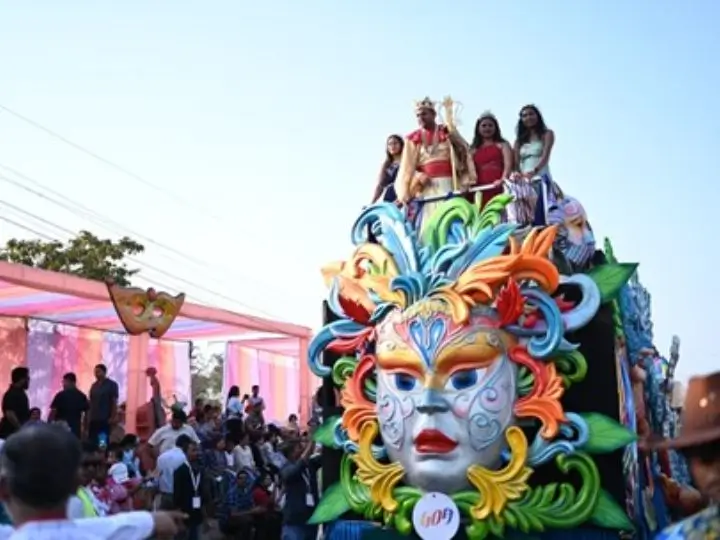
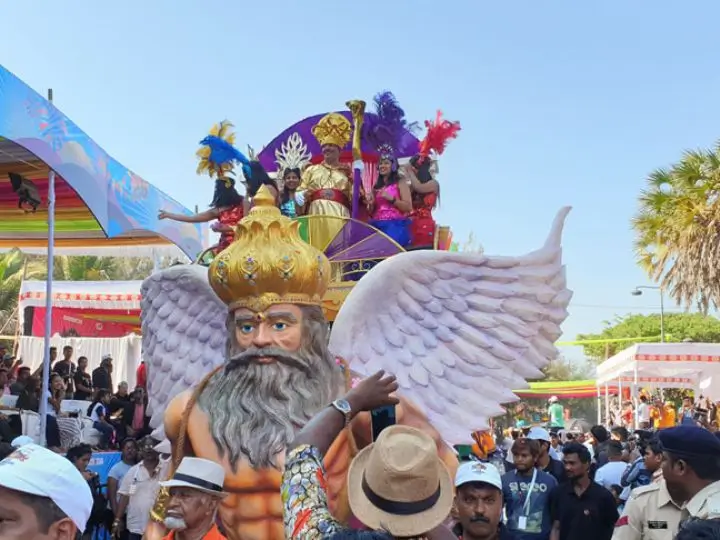
Carnival traditionally opens with the arrival of King Momo – a figure, often played by a local chosen for the role, who's declared ruler of the festivities for its duration, presiding with mock authority over the days of celebration that follow. The arrival of King Momo, accompanied by a parade through Panaji, sets the tone for what follows – playful, theatrical, and unmistakably festive.
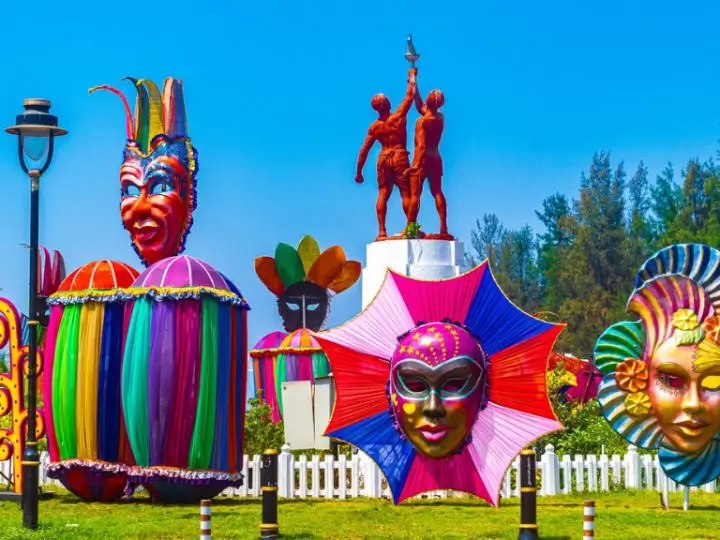
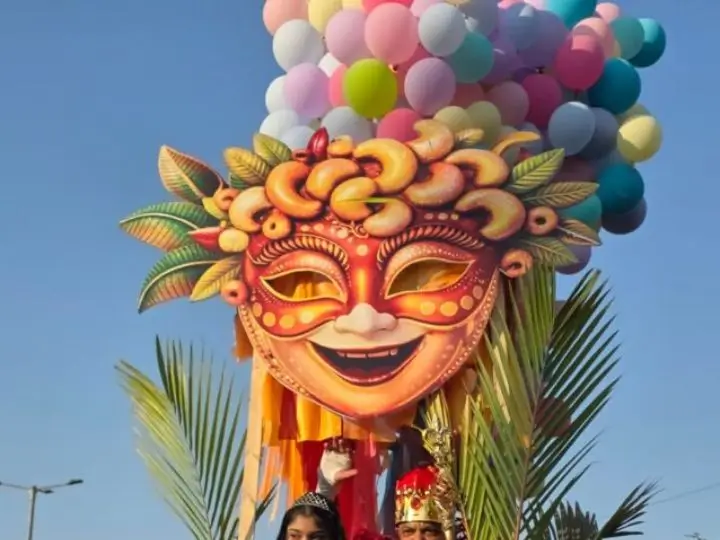
The parades themselves are the centrepiece – elaborately decorated floats, often built around a theme that changes from year to year, move through the streets accompanied by dancers, musicians, and performers in costume. Panaji's parade is generally the largest and most elaborate, though other towns – Margao, Vasco, and Mapusa among them – hold their own versions, each with a slightly different character depending on the town's size and local traditions.
Music runs through the entire event – brass bands, traditional Goan folk music, and a fair amount of contemporary sound as well, creating an atmosphere that shifts from formal parade to street party as the days progress.
Carnival in Goa is, among other things, a genuinely good time to eat. Stalls along the parade routes and in the towns hosting celebrations sell a mix of Goan specialities – pork vindaloo, sorpotel, and bebinca (a layered Goan dessert) among the dishes that tend to feature – alongside more general festival food, and the combination of good weather, music, and food stalls creates an atmosphere that's considerably more relaxed than the word "parade" might suggest.
Feni – Goa's distinctive local spirit, distilled from cashew or coconut – is a fixture of Carnival celebrations, and for travellers interested in Goa's distinct culinary identity, Carnival offers a particularly accessible way to encounter several of the state's specialities in one concentrated period.
February, when Carnival takes place, sits within Goa's most popular tourist season – the weather is warm but not yet at its most intense, and the state's beaches, from the more developed stretches around Calangute and Baga in the north to the quieter beaches further south near Palolem, are at their most pleasant for swimming and relaxing.
Goa's Portuguese-era heritage extends well beyond Carnival – Old Goa, a short distance from Panaji, is home to a cluster of churches and cathedrals, including the Basilica of Bom Jesus, which holds the remains of St. Francis Xavier and is recognised as a UNESCO World Heritage Site. Panaji itself, particularly its Fontainhas neighbourhood, retains a distinctly Portuguese character – narrow lanes, colourful houses, and a general architectural feel that's unlike anywhere else in India.
For travellers who want a mix of festival energy and beach relaxation, Carnival week offers both – daytime beach time, with the parades and street celebrations providing an evening and weekend focus.
Goa's character shifts noticeably between its northern and southern stretches, and this matters for travellers planning around Carnival. North Goa – including Panaji, where the largest Carnival parade takes place – tends to be busier, more developed, and offers easier access to the main Carnival events, alongside a livelier nightlife scene generally.
South Goa, around Palolem, Agonda, and other beaches, offers a quieter, more laid-back alternative – still within reach of Carnival celebrations in towns like Margao, but with a noticeably calmer atmosphere away from the main events. Many travellers base themselves in the south for relaxation and make a day trip north for the Panaji parade, combining both sides of Goa's character within a single trip.
Carnival week is a busy period for Goa tourism more broadly – February already sits within peak season, and Carnival adds a further reason for both domestic and international visitors to be in the state during this period. Accommodation, particularly in Panaji and nearby areas during the days of the main parade, can be in higher demand than an ordinary February week, and booking ahead is sensible.
The parades themselves draw substantial crowds, particularly along the main route in Panaji, and arriving with enough time to find a good vantage point – rather than trying to push through an already-formed crowd – makes for a considerably more comfortable experience.
What makes the Goa Carnival distinctive among India's festivals isn't really its scale – it's considerably smaller than events like Pushkar or the Kumbh Mela – but its character. There's a playfulness to it, a sense of organised fun rather than ritual intensity, that reflects something genuinely particular about Goa's identity within India – shaped by its history, its food, its architecture, and a pace of life that's noticeably different from much of the rest of the country.
For travellers building a Goa-focused trip, timing it around Carnival adds a layer of cultural and festive interest to what's already, for many visitors, primarily a beach destination – without requiring any compromise on the beach time itself.
If you'd like to experience the Goa Carnival as part of your trip, we can build a private Goa itinerary around the festival dates – combining the Panaji parade and street celebrations with beach time in North or South Goa, and visits to Old Goa's churches and Panaji's Fontainhas neighbourhood. Share your travel dates, and we'll put together a tour built around this festival.
Find the answers to all of our most frequently asked questions
It falls in mid-February 2027, over four days leading up to Ash Wednesday, following the pre-Lent calendar
Parades with decorated floats, music, and dancers take place in Panaji and other towns, opened by the arrival of the festival's mock ruler, King Momo
Panaji hosts the largest and most elaborate parade, though Margao, Vasco, and Mapusa also hold their own celebrations
It originated from pre-Lent Catholic traditions but has become a broader cultural celebration embraced across Goan society
Goan specialities such as pork vindaloo, sorpotel, and bebinca, along with feni, the local cashew or coconut spirit
Yes – February is within Goa's peak beach season, so Carnival evenings can be combined with daytime beach relaxation.
North Goa offers closer access to the main Panaji parade, while South Goa offers a quieter base with a day trip option to the celebrations
Old Goa's churches, including the Basilica of Bom Jesus, and Panaji's Fontainhas neighbourhood are notable additions
Yes – February is already peak season, and Carnival adds further demand, so booking ahead is advisable.
Yes – the parades and street celebrations are generally family-friendly, with a festive rather than intense atmosphere
It's smaller in scale but distinct in character – playful and celebratory, reflecting Goa's blended Indian and Portuguese heritage
Share your travel dates, and an itinerary combining the Carnival with Goa's beaches and heritage sites can be arranged