Your Travel Partner
SINCE 1989
Your Travel Partner
SINCE 1989
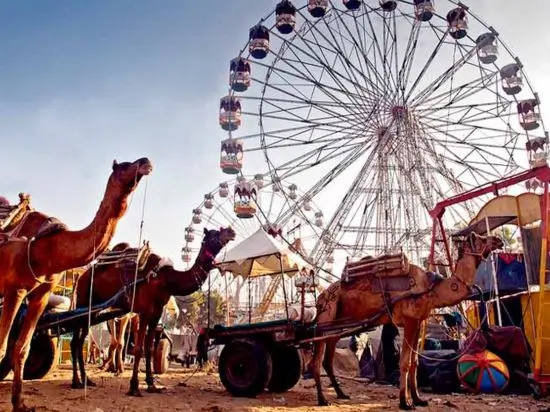
There’s a particular image that comes to mind when people picture Rajasthan - a vast, open landscape, camels silhouetted against a setting sun, and a sense of scale that’s hard to find elsewhere. The Pushkar Camel Fair is where that image becomes, for about a week each year, something you can actually walk through.
Held in the small lakeside town of Pushkar, the fair began as a practical event - a place for rural traders to buy, sell, and exchange livestock, primarily camels, but also cattle, horses, and other animals. Over the decades, it’s grown into something considerably larger: part livestock market, part cultural festival, and increasingly, part photography pilgrimage for visitors from around the world.
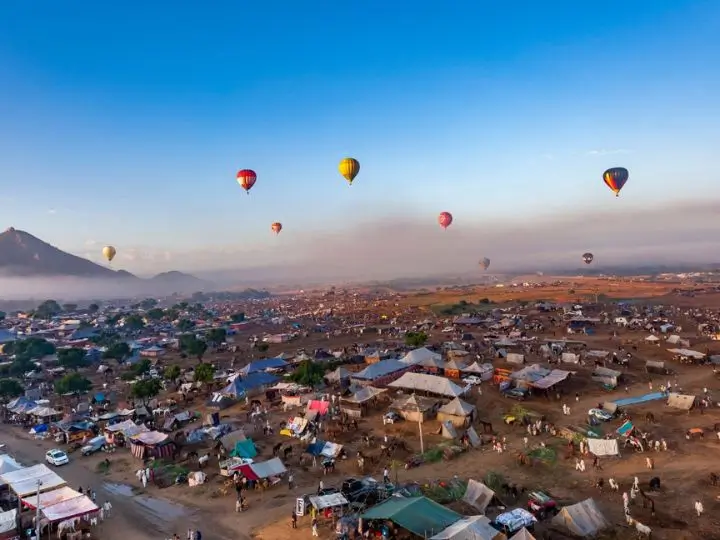
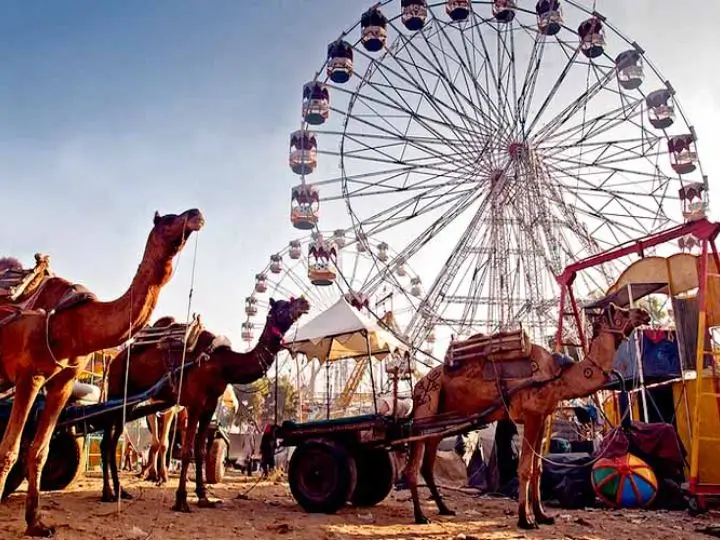
The Pushkar Camel Fair unfolds in two overlapping phases. In the earlier part of the week, the focus is genuinely on trade - tens of thousands of camels, along with horses and cattle, are brought in by herders from across rural Rajasthan, and the open desert areas around Pushkar fill with temporary camps, animals, and traders going about business that, in many cases, hasn’t changed dramatically in generations.
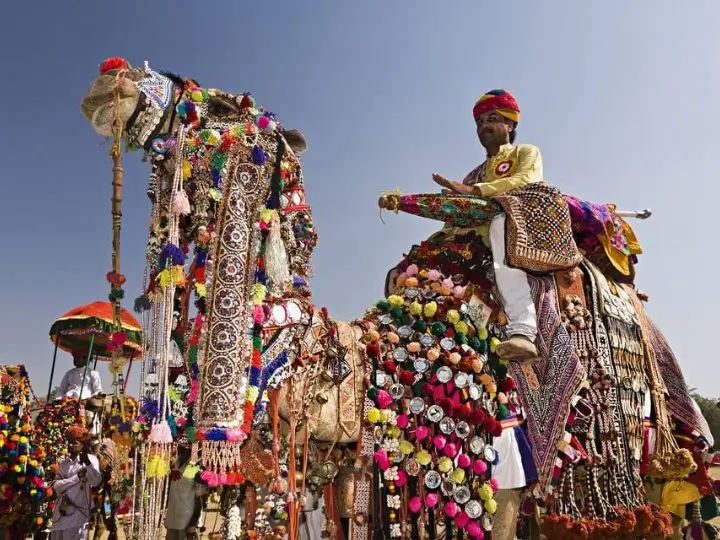
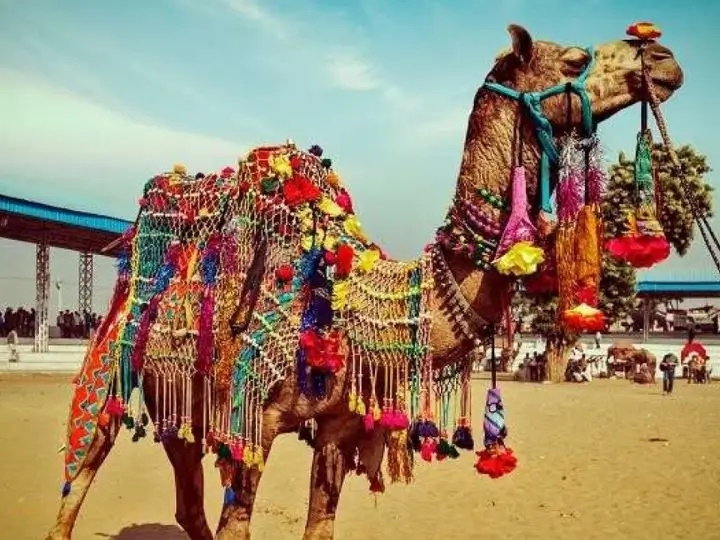
As the week progresses, the cultural programme becomes more prominent. This includes camel races, camel decoration competitions, and a series of folk events that have become particular favourites among visitors - the longest moustache competition and turban-tying contests being two of the more memorable ones. Music and dance performances take place in the evenings, often continuing well into the night.
The fair concludes around Kartik Purnima - a full moon considered particularly auspicious - when thousands of pilgrims also arrive in Pushkar to bathe in the sacred lake, adding a spiritual dimension to what’s otherwise a fairly secular spectacle of trade and festivity.
It’s worth pausing on Pushkar as a place, separate from the fair. Even outside fair season, Pushkar is one of Rajasthan’s more distinctive towns - built around a sacred lake said to have been created when Brahma dropped a lotus flower, and home to one of the very few temples in India dedicated to Brahma himself, a notable rarity in Hindu religious geography.
The town has a laid-back, slightly bohemian atmosphere that’s developed over decades of attracting travellers, with a main bazaar selling everything from silver jewellery to textiles, and a series of ghats around the lake where pilgrims bathe. During fair season, this already distinctive town becomes considerably more crowded and more vivid - but the underlying character of the place remains, if you know where to look for it.
It’s difficult to discuss the Pushkar Camel Fair without addressing its reputation among photographers, because that reputation is, by now, a significant part of why many international visitors come. The combination of dramatic desert light, traditionally dressed herders, decorated camels, and an enormous range of faces and activity makes it one of the most photographed events in India.
For travellers with a serious interest in photography, the fair rewards early starts - the morning light across the camel camps, before the day’s heat and crowds build, tends to produce the most striking results. It’s also worth approaching photography here with some sensitivity; many of the people at the fair are there for genuine trade, not as photographic subjects, and a friendly approach - sometimes simply asking, even without shared language - tends to be well received.
The Pushkar Camel Fair is, by most accounts, an intense experience - crowded, dusty, and at times overwhelming, particularly during the peak days around the cultural programme and Kartik Purnima. This isn’t a criticism so much as a fact worth knowing in advance, because it shapes how a visit should be planned.
Accommodation in Pushkar itself becomes scarce and expensive during the fair, with many visitors instead opting to stay in nearby Ajmer (about 15km away) or even further afield in Jaipur, visiting Pushkar for day trips during the fair period. Some visitors choose to stay in temporary luxury camps that are set up specifically for the fair season, offering a more comfortable base within reasonable reach of the festivities.
Dust is a near-constant presence given the desert setting and the sheer number of animals and people - bringing something to cover your face, along with sunglasses, isn’t excessive caution so much as practical preparation.
Not every day of the fair is equally worth experiencing, particularly for visitors with limited time. The early trading days, while authentic, can feel less eventful to visitors unfamiliar with what they’re looking at - vast numbers of animals and traders, but without the structured competitions and performances that come later.
The final two to three days of the fair, leading up to and including Kartik Purnima, tend to offer the richest experience for most visitors - this is when the camel races, decoration competitions, and cultural performances are concentrated, alongside the spiritual activity around the lake. For travellers with only a day or two to spare, timing a visit toward the end of the fair period generally makes sense.
Pushkar’s location - close to Ajmer, and within a reasonable distance of Jaipur - makes it a natural addition to a broader Rajasthan itinerary, rather than a standalone destination. A common approach combines the Golden Triangle (Delhi, Agra, Jaipur) with an extension to Pushkar timed around the fair, before continuing on to other parts of Rajasthan such as Udaipur or Jodhpur.
Given the fair’s specific dates each year - and the fact that it falls in November, right at the start of Rajasthan’s most comfortable travel season - it works particularly well as the centrepiece of a winter Rajasthan trip, with the desert landscapes, palace stays, and the fair itself all complementing each other.
It would be reasonable to ask whether a crowded, dusty livestock fair is really worth building travel plans around - and for some travellers, it genuinely isn’t. But for those drawn to it, the appeal isn’t really about comfort. It’s about scale and authenticity - tens of thousands of animals and traders gathering in a way that’s existed, in some form, for a very long time, with the cultural programme and tourist interest layered on top of something that was never originally designed for visitors at all.
That combination - genuine rural commerce alongside an increasingly elaborate visitor experience - is unusual, and it’s part of what makes the fair feel different from more curated cultural festivals. For travellers willing to embrace a bit of dust, crowds, and unpredictability, Pushkar during fair week offers something that’s difficult to find anywhere else in India, or arguably anywhere else in the world.
If the Pushkar Camel Fair is something you’d like to experience, we can build a private Rajasthan itinerary around it - combining the fair with the Golden Triangle, heritage stays in Jaipur, and onward travel to other parts of Rajasthan such as Udaipur or Jodhpur. Given how quickly accommodation around Pushkar fills up during fair season, early planning genuinely helps. Share your travel dates, and we’ll put together a tour built around this festival.
Find the answers to all of our most frequently asked questions
The 2026 fair runs from 17 to 24 November, with the cultural programme concentrated toward the end of this period.
Camels are the most famous element, but the fair also involves horses, cattle, and other livestock, alongside cultural events and a spiritual gathering around Kartik Purnima.
Accommodation in Pushkar itself becomes scarce and expensive during the fair. Many visitors stay in nearby Ajmer or Jaipur and visit Pushkar for day trips.
Yes, particularly during the final days around the main cultural events and Kartik Purnima - it’s an intense, busy experience by design.
The final two to three days, including the camel races, decoration competitions, and Kartik Purnima celebrations, tend to offer the richest experience.
Yes, it’s particularly popular among photographers, with early morning light over the camel camps considered especially rewarding.
A significant full moon in the Hindu calendar, marking the spiritual climax of the fair, when pilgrims bathe in Pushkar Lake.
Yes - it’s commonly added as an extension to a Delhi-Agra-Jaipur itinerary, given Pushkar’s relative proximity to Jaipur.
Yes, the desert setting and large numbers of animals mean dust is a constant presence - bringing face protection and sunglasses is advisable.
A quieter, lakeside town known for its sacred lake, the rare Brahma temple, and a relaxed bazaar atmosphere - quite different from the fair-week intensity.
Yes - many people at the fair are there for genuine trade, so a respectful, friendly approach to photography is appreciated.
Share your travel dates, and an itinerary combining the fair with a wider Rajasthan or Golden Triangle tour can be arranged - early booking is recommended given accommodation demand.