Your Travel Partner
SINCE 1989
Your Travel Partner
SINCE 1989
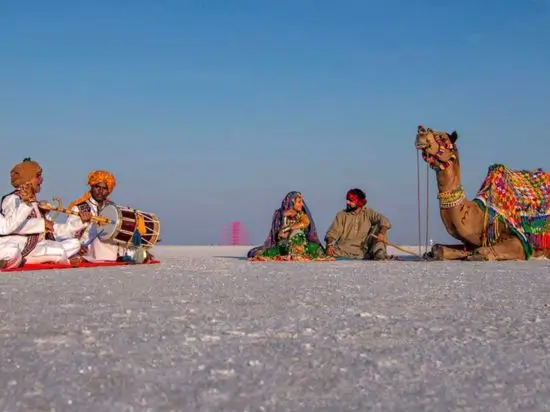
Some festivals are built around a single day, or a single ritual. Rann Utsav is built around a landscape - and it’s a landscape unlike almost anywhere else in the world. The Great Rann of Kutch, in Gujarat, is one of the largest salt deserts on earth - a flat, white expanse that stretches to the horizon, submerged under shallow water during the monsoon and left as a vast, cracked salt crust once the water evaporates.
For most of the year, this is a remote, largely empty landscape near India’s border with Pakistan. But for around four months each winter, a temporary town springs up at its edge - hundreds of tents, ranging from simple to genuinely luxurious, hosting visitors who come to experience a place that looks, particularly under a full moon, almost otherworldly.
Unlike most festivals on this list, Rann Utsav isn’t built around a single religious or cultural event - it’s a sustained tourism initiative by the Gujarat government, designed to showcase the Rann of Kutch and the broader culture of the Kutch region during the months when the white desert is most accessible and most visually striking.
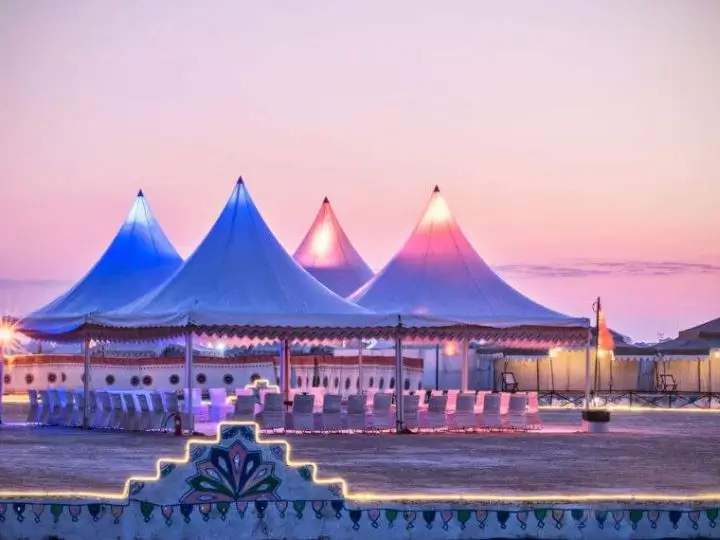
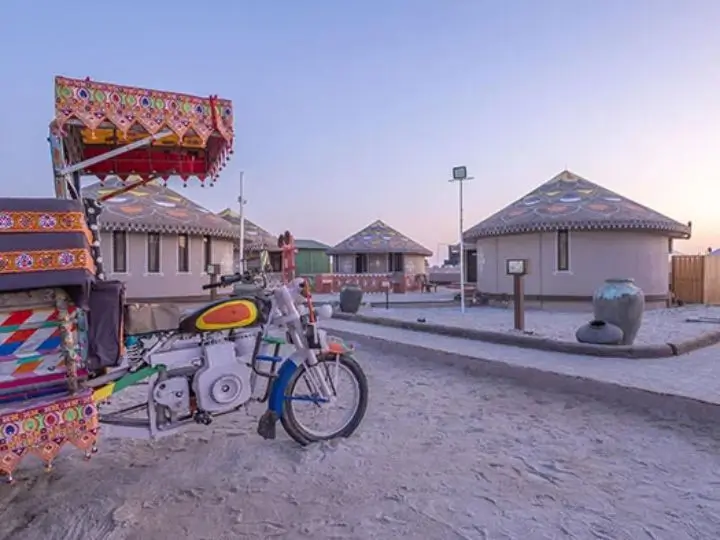
The centrepiece is “Tent City” - a temporary settlement near the village of Dhordo, offering accommodation ranging from simple non-AC tents to elaborate luxury cottages with private bathrooms, set up specifically for the season and dismantled afterwards. From here, visitors can access the white desert itself, typically timed for sunset or sunrise, when the salt flats take on colours that shift dramatically depending on the light.
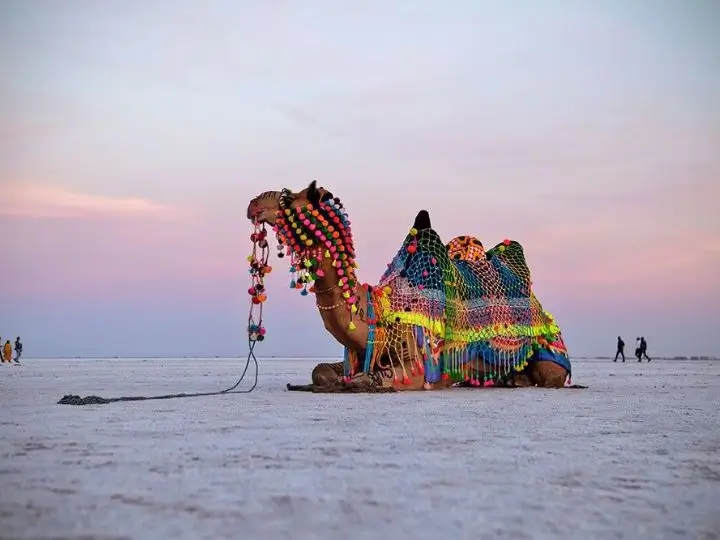
Walking onto the Rann itself is the experience most visitors come for. The ground - dried salt, cracked into a mosaic pattern - stretches in every direction with almost no reference points, creating a sense of scale that’s genuinely difficult to convey through photographs. During the day, the white surface reflects sunlight intensely. At sunset, it takes on shades of pink and orange. And under a full moon - which the festival’s organisers have specifically built much of the experience around - the Rann becomes luminous, the white salt seeming to glow under moonlight in a way that few other landscapes can replicate.
In recent years, large floodlights have also been installed across parts of the site, meaning the white desert can now be experienced after dark regardless of the lunar calendar - though many visitors still prefer to time their visit around the full moon for the most atmospheric experience.
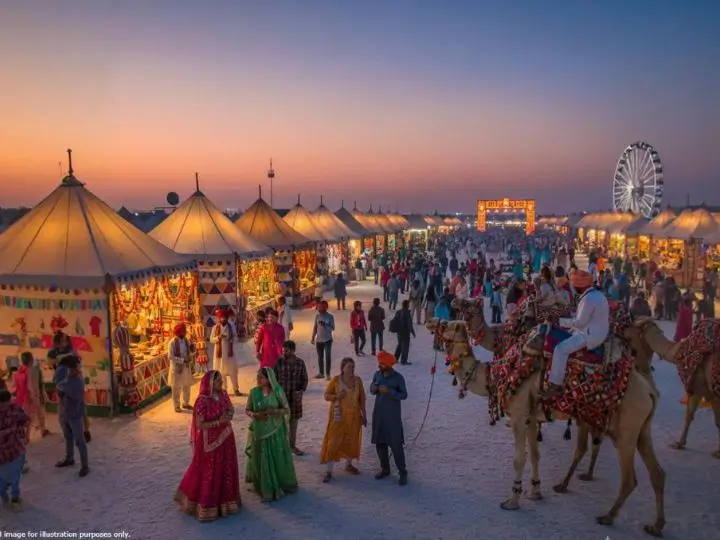
While the white desert itself is the headline attraction, Rann Utsav is also built around showcasing the broader culture of Kutch - a region known for some of India’s most distinctive textile and craft traditions. Within Tent City and the surrounding villages, visitors can see demonstrations of block printing, embroidery, pottery, and the intricate mirror-work that Kutch is particularly known for, often with opportunities to meet the artisans directly.
Banni embroidery, in particular, is a craft specific to this region - and seeing it produced, rather than simply purchasing the finished product elsewhere, adds a layer of context that’s easy to miss when these textiles are encountered in shops far from where they’re made.
Folk music and dance performances take place each evening within Tent City, drawing on Kutch’s distinctive musical traditions, and the overall atmosphere - particularly after dark, with performances under open skies near the desert’s edge - has a quality that’s difficult to find at more conventional cultural events.
Rann Utsav has expanded considerably over the years to include a range of additional activities. Camel safaris into the white desert are popular, as are ATV rides across parts of the terrain. For those interested in wildlife, the nearby Wild Ass Sanctuary - home to the Indian wild ass, found almost nowhere else - offers a genuinely different kind of experience from the desert itself.
Hot air balloon rides and paramotoring have also become part of the festival’s offerings in recent years, providing an aerial perspective on the white desert that’s, if anything, even more striking than the ground-level view.
One of the more notable aspects of Rann Utsav’s evolution is the range of accommodation now available within Tent City. At one end, there are straightforward non-AC tents, offering basic but functional accommodation close to the action. At the other end, “Rajwadi” and “Darbari” tents - and luxury cottages with private bathrooms and themed interiors - offer a considerably more comfortable base, with multi-cuisine dining halls, spa facilities, and the kind of amenities that wouldn’t typically be associated with a “tent” in the conventional sense.
For travellers prioritising comfort, booking into one of the higher categories of accommodation makes a meaningful difference - particularly given that nights in the desert, even during the relatively mild Gujarat winter, can be notably cold.
Rann Utsav is most commonly accessed via Bhuj, the main city in the Kutch district, which has its own airport with connections to major Indian cities. From Bhuj, it’s a drive of an hour or more to reach Tent City and the Rann itself, and transport is typically arranged as part of any tour package given the relative remoteness of the location.
Because the white desert sits close to an international border, a permit is required to access certain areas - this is generally handled as part of any organised visit, but it’s a reminder that this isn’t simply an open public space in the way most tourist destinations are.
The festival’s long duration - running across roughly four months - means there’s considerable flexibility in when to visit, though weekends and the period around the full moon tend to be busier, and the coldest winter months (December and January) bring genuinely chilly nights despite warm days.
Compared to festivals built around a single intense day - Holi, for instance, or the climax of the Pushkar Fair - Rann Utsav offers something more spacious, both in terms of timing and atmosphere. There’s no single moment that everything builds toward; instead, it’s an extended invitation to experience a genuinely unusual landscape, with culture, craft, and comfort built around it.
For travellers combining Rann Utsav with a broader Gujarat itinerary, the region offers considerably more beyond the Rann itself - from the temples and step-wells of Gujarat’s heritage sites to the wildlife of Gir National Park, home to Asiatic lions found nowhere else in the wild. Rann Utsav can function as either the centrepiece of a Gujarat-focused trip, or as an unusual addition to a longer India itinerary for travellers willing to make the journey to this less-visited corner of the country.
If the white salt deserts of Kutch and the cultural experience of Rann Utsav appeal to you, we can design a private Gujarat itinerary built around your preferred dates within the festival season - including Tent City accommodation, access to the white desert, and time to explore the broader culture and craft traditions of the Kutch region. Get in touch with your travel dates, and we’ll put together a tour around this festival.
Find the answers to all of our most frequently asked questions
A multi-month festival hosted by Gujarat Tourism near the white salt desert of the Great Rann of Kutch, combining the desert landscape with local culture, craft, and accommodation in a seasonal Tent City.
It typically runs from around early November to late February or March each year, spanning roughly 100 days.
The white salt desert itself - a vast, flat expanse that changes colour dramatically at sunrise, sunset, and under moonlight.
Tent City offers a range of options from simple non-AC tents to luxury cottages and themed “Rajwadi” tents with private bathrooms and modern amenities.
Most visitors fly into Bhuj, which has an airport with connections to major Indian cities, then travel by road to Tent City and the Rann.
Yes, due to its proximity to an international border - this is generally arranged as part of any organised visit.
Camel safaris, ATV rides, hot air balloon rides, paramotoring, and visits to the nearby Wild Ass Sanctuary are all popular additions.
Yes - despite warm days, desert nights, particularly in December and January, can be notably cold.
Banni embroidery, block printing, pottery, and mirror-work specific to the Kutch region, often with opportunities to meet artisans directly.
Many visitors prefer the full moon period for the most atmospheric desert experience, though floodlighting now allows night visits regardless of the lunar calendar.
Yes - Gir National Park, heritage temples, and step-wells elsewhere in Gujarat can be combined with a Rann Utsav visit for a broader itinerary.
Share your preferred travel dates within the festival season, and a private Gujarat itinerary including Tent City accommodation can be arranged.