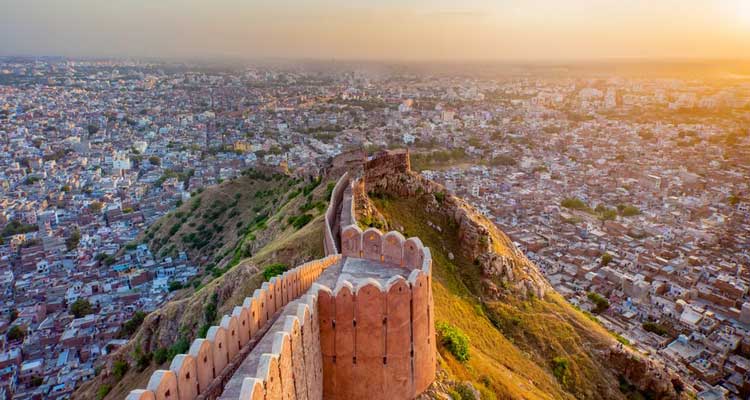
Your Travel Partner
SINCE 1989
Your Travel Partner
SINCE 1989
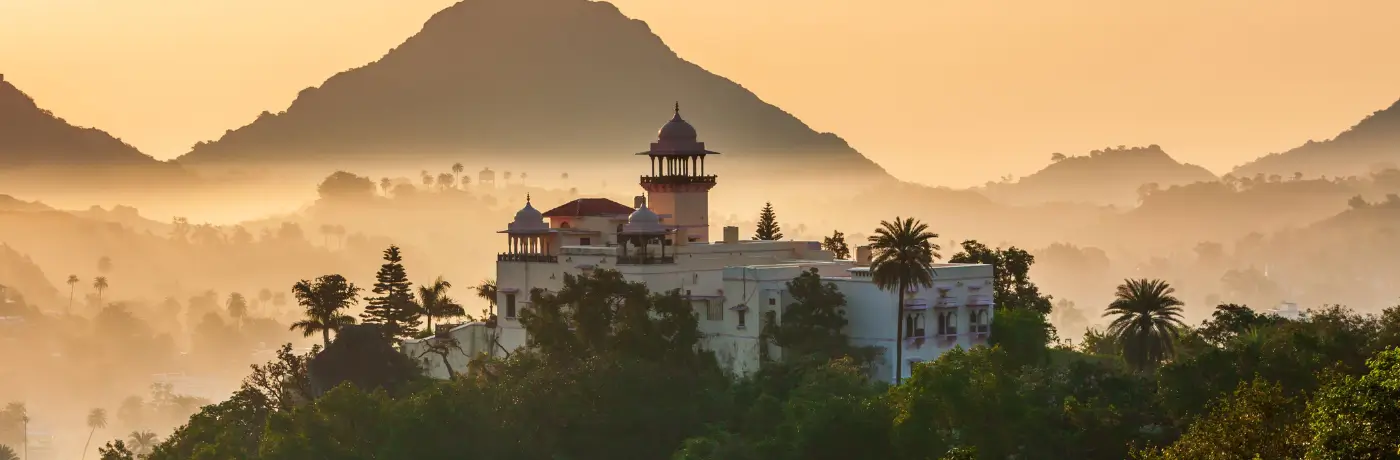
Delhi – Agra – Bharatpur – Ranthambore – Kota – Bundi – Chittorgarh – Deogarh – Udaipur – Dungarpur – Mount Abu – Ranakpur – Rohet – Jodhpur – Jaisalmer – Gajner – Bikaner – Mandawa – Jaipur – Delhi
Few itineraries reveal Rajasthan's geographical variety as completely as the Rajasthan Tour Package 27 Nights 28 Days – Grand Rajasthan Circuit with Wildlife. Instead of concentrating only on the familiar Jaipur-Jodhpur-Udaipur triangle, this route makes a wide journey through eastern Rajasthan, Hadoti, Mewar, the Aravalli hills, Marwar, the Thar Desert and Shekhawati before completing the circuit in Jaipur.
The first major heritage chapter takes place in Agra, where two nights provide time for the Taj Mahal and Mughal architecture before the route enters Rajasthan. This creates an interesting architectural starting point because travellers encounter the refinement and symmetry of Mughal design before moving into Rajasthan's fortified royal landscapes.
An overnight in Bharatpur introduces the natural side of the journey. The destination is especially associated with birdlife and wetland habitat, although sightings always depend on season, water levels, migration and other natural conditions.
The route then reaches Ranthambore for two nights. A scheduled safari, when confirmed, provides an opportunity to enter the reserve's dry forests, rocky terrain and historic landscape. Bengal tigers inhabit Ranthambore, but tiger sightings are never guaranteed and depend entirely on natural animal movement.
From the wildlife reserve, the itinerary moves into the Hadoti region with an overnight in Kota and an en-route exploration of Bundi. The journey then reaches Chittorgarh, where one of Rajasthan's most extensive hill forts introduces the monumental history of Mewar.
An overnight in Deogarh deliberately reduces the scale after Chittorgarh, providing a smaller heritage setting before three nights in Udaipur. The longer Udaipur stay allows the City of Lakes to be enjoyed through royal architecture, old-city streets and relaxed time around the waterfront.
The southern Rajasthan section continues through Dungarpur, followed by two nights in Mount Abu. This creates a strong geographical contrast as the itinerary climbs into the Aravalli hill environment before travelling onwards to Ranakpur.
Unlike many shorter itineraries, this route provides an overnight in Ranakpur, giving its Jain temple heritage greater importance. Rohet then introduces rural Marwar before two nights beneath the massive walls of Mehrangarh Fort in Jodhpur.
The journey continues west to Jaisalmer, where two nights are devoted to the Golden Fort, Jain temples, carved havelis and the architectural identity of the desert city. Gajner and Bikaner then form the route back across northern Rajasthan.
Two nights in Mandawa create sufficient time for the frescoed havelis and merchant heritage of Shekhawati before the final Rajasthan stay in Jaipur. Amber Fort, City Palace, Jantar Mantar and the historic bazaars provide an appropriately substantial ending to the royal circuit.
This 28 days Rajasthan tour package is therefore not simply a collection of famous monuments. Wetlands, wildlife habitat, hill country, lakes, rural settlements, desert landscapes, merchant towns and former royal capitals continually change the character of the journey.
For travellers with enough time to experience Rajasthan in depth, the route offers an unusually broad combination of Rajasthan heritage and wildlife, Mughal architecture, Rajput forts, Jain temples, stepwell traditions, historic havelis and contrasting regional landscapes.
Arrive in Delhi at the international airport, domestic terminal, railway station or another pre-confirmed meeting location. Meet the representative or private driver and transfer to the selected hotel for the first night of this extensive Rajasthan journey.
Because travellers may reach Delhi after a long international or domestic journey, the opening day remains intentionally comfortable. Rather than immediately beginning an intensive sightseeing schedule, time is provided to settle into the hotel and prepare for the long circuit ahead.
If arrival takes place early enough, a light orientation through selected parts of Delhi may be possible according to the confirmed programme. The capital's large-scale urban environment creates a useful contrast with the smaller historic towns and rural destinations appearing later.
Extensive monument visits are deliberately avoided unless they have been specifically added to the confirmed itinerary. The principal purpose of the first day is to establish a relaxed beginning before travelling to Agra.
Return to the hotel and rest. The following morning begins the road journey towards the Mughal heritage of Agra.
Overnight stay in Delhi.
After breakfast, check out and begin travelling towards Agra. The first major road sector of the itinerary moves south from Delhi towards one of India's most important historic cities.
Arrive in Agra and check into the selected hotel for a two-night stay. The additional night ensures that the city's principal monuments do not have to be compressed into a rushed arrival-and-departure schedule.
Depending on arrival time and official opening hours, begin with an appropriate heritage visit or use the afternoon for a relaxed introduction to Agra. The main Taj Mahal visit can be arranged for the most suitable confirmed time.
Agra introduces an architectural language very different from the Rajput forts and palaces that will dominate the later Rajasthan section. Formal gardens, red sandstone, white marble, geometric planning and elaborate surface decoration characterise much of its Mughal heritage.
Spend the evening at leisure and prepare for a full day of sightseeing.
Overnight stay in Agra.
Begin the day with the Taj Mahal, following official opening schedules and the confirmed sightseeing programme. Pass through the monumental entrance and proceed along the formal garden axis towards the white marble mausoleum.
Take time to observe the symmetry of the complex rather than viewing only the central structure. Gardens, water channels, flanking buildings, calligraphic decoration and carefully controlled sightlines contribute to the overall architectural composition.
Closer inspection reveals delicate marble inlay work and ornamental details. The monument's visual character can change subtly with daylight, demonstrating why time and viewing position strongly influence the experience.
Continue to Agra Fort according to the confirmed programme. The enormous red sandstone complex combines defensive walls with courtyards, former royal spaces and architectural additions associated with different phases of Mughal rule.
Return to the hotel after sightseeing. The second Agra night allows the Mughal heritage chapter to conclude comfortably before the route enters Rajasthan through Bharatpur.
Overnight stay in Agra.
After breakfast, leave Agra and travel towards Bharatpur. The relatively short transfer changes the focus from monumental architecture to one of northern India's best-known birding and wetland landscapes.
Arrive and check into the selected hotel for the night. Depending on arrival time and the confirmed programme, proceed with the scheduled nature-oriented visit or relax before exploring the area.
Bharatpur is especially associated with resident and migratory birdlife. The composition of species varies considerably according to season, water conditions, migration patterns and weather.
Visitors should therefore approach the experience as an opportunity to observe a functioning wetland ecosystem rather than expecting guaranteed sightings of particular species. Bird activity can differ even between different hours of the same day.
Return to the accommodation after the day's programme. The following morning leaves Bharatpur for Ranthambore, shifting from wetland habitat towards Rajasthan's famous dry-forest tiger landscape.
Overnight stay in Bharatpur.
After breakfast, check out and begin travelling towards Ranthambore. The journey crosses eastern Rajasthan and introduces another dramatic environmental change within the first week of the tour.
Arrive in the Ranthambore region and check into the selected wildlife resort or hotel for a two-night stay. Rocky hills, dry deciduous vegetation and the surrounding forest environment immediately distinguish the destination from Bharatpur.
Use the remaining hours to rest and prepare for the confirmed safari programme. Safari reporting times vary according to the official session, season and park operating schedule.
Vehicles and zones are assigned according to applicable reserve procedures and permit availability. Travellers should therefore understand that a particular route or area of the park cannot always be selected in advance.
Ranthambore is renowned for Bengal tigers, but tiger sightings are never guaranteed. The animals move freely through the reserve, and encounters depend on weather, vegetation, zone allocation and natural behaviour.
Overnight stay in Ranthambore.
Begin according to the reporting time printed on the confirmed Ranthambore safari permit. Meet the authorised vehicle and enter the reserve through the gate assigned for the scheduled safari.
The landscape combines dry forest, rocky escarpments, open areas and water bodies. Historic ruins visible in parts of the reserve create an unusual relationship between Rajasthan's architectural past and its natural environment.
During the drive, observe the broader ecosystem rather than focusing exclusively on tigers. Depending on natural conditions, the reserve may provide opportunities to encounter sambar deer, spotted deer, nilgai, wild boar, monkeys, crocodiles and varied birdlife.
Guides and drivers may also interpret tracks, alarm calls and other signs of wildlife activity. Such details are an important part of understanding how animals move through the landscape even when they are not directly visible.
Return to the accommodation after the safari. Tiger or other wildlife sightings cannot be promised, and any additional safari requires separate confirmation unless expressly included in the package.
Overnight stay in Ranthambore.
After breakfast, leave Ranthambore and travel towards Kota. The route moves away from the national park and into the Hadoti region of southeastern Rajasthan.
Arrive in Kota and check into the selected hotel for the night. The destination provides a transitional stage between Ranthambore's natural landscape and the architectural heritage of Bundi and Chittorgarh.
Depending on arrival time and the confirmed programme, explore selected local heritage areas or other appropriate attractions. The exact schedule can be adjusted according to road conditions and the timing required for the following day's route.
Kota's inclusion broadens the geographical coverage of this Grand Rajasthan Circuit, ensuring that the journey does not bypass the southeastern part of the state while travelling directly between the major tourism centres.
Spend the evening at leisure after the day's road journey. The following morning travels through Bundi before continuing to Chittorgarh.
Overnight stay in Kota.
After breakfast, leave Kota and travel towards Bundi, included as an en-route day visit. The smaller historic town provides one of Rajasthan's most distinctive combinations of palace architecture, old streets and traditional water structures.
Explore selected areas of Bundi according to the confirmed programme and available time. The palace and fort rise dramatically above the compact settlement, creating a very different visual character from the broad urban landscapes of Agra or Kota.
Visit an appropriate historic stepwell where included and accessible. The descending geometry demonstrates how water management in Rajasthan developed into an architectural form that was both practical and visually sophisticated.
After the Bundi visit, continue towards Chittorgarh. Arrive and check into the selected hotel for the night. The dedicated overnight allows the enormous fort complex to receive more attention than a brief roadside visit would permit.
Depending on arrival time, enjoy an introductory view of the historic landscape or rest before the main exploration of Chittorgarh Fort. The next stage of the journey moves deeper into Mewar through Deogarh and Udaipur.
Overnight stay in Chittorgarh.
Begin the morning with a detailed visit to Chittorgarh Fort, one of the most extensive fortified landscapes in Rajasthan. Spread across a broad elevated plateau, the complex is very different from compact urban forts and requires time to appreciate its scale.
Enter through the historic gateways and continue across the fort area to selected palaces, temples, towers, reservoirs and defensive structures. Rather than functioning as one isolated monument, Chittorgarh contains numerous architectural remains distributed across a vast historic landscape.
Elevated viewpoints provide an understanding of the fortress's commanding position above the surrounding plains. The relationship between geography and defence becomes particularly clear here, making Chittorgarh an important stop within this 28 days Rajasthan heritage tour.
After completing the scheduled sightseeing, leave Chittorgarh and travel towards Deogarh. The change from an enormous fortified centre to a smaller heritage town creates another deliberate shift in the scale of the journey.
Arrive and check into the selected heritage accommodation. Spend the evening enjoying the quieter surroundings after the extensive Chittorgarh visit.
Overnight stay in Deogarh.
Enjoy breakfast before spending any remaining scheduled time around Deogarh. The destination's smaller scale offers an opportunity to observe regional architecture and settlement patterns without the intensity of a major tourist city.
Where specifically confirmed, a local excursion or heritage-oriented activity may be incorporated before departure. Such experiences depend on the selected accommodation and final booking and should not automatically be assumed as part of the package.
Continue afterwards towards Udaipur, travelling through the landscapes of Mewar. The transition leads from a quieter heritage settlement towards one of Rajasthan's most celebrated former royal capitals.
Arrive in Udaipur and check into the selected hotel for a generous three-night stay. The longer allocation allows the City of Lakes to be explored at a considerably more comfortable pace.
Use the evening for a gentle orientation around an appropriate section of Lake Pichola or the old city. The principal palace and temple sightseeing begins the following morning.
Overnight stay in Udaipur.
Begin the day at Udaipur City Palace, the extensive royal complex rising above Lake Pichola. Built and expanded over generations, it combines courtyards, terraces, gateways, balconies and former royal apartments.
Walk through the accessible sections and observe decorative interiors, carved windows and elevated viewpoints. From different levels of the palace, views extend across Lake Pichola, the old city and the surrounding Aravalli hills.
Continue to Jagdish Temple, situated close to City Palace. As this remains an active religious site, visitors should follow current requirements concerning footwear, photography and respectful conduct.
Later, visit Saheliyon Ki Bari, where fountains, garden spaces and ornamental pavilions create a softer architectural environment after the scale of City Palace.
Spend the evening around the lakefront. A boat ride may be arranged separately where specifically confirmed and remains subject to weather and local operating conditions.
Overnight stay in Udaipur.
The third Udaipur day is deliberately less structured. A long Grand Rajasthan Circuit benefits from occasional days when travellers can experience a destination without immediately packing for another road journey.
Spend the morning exploring selected old-city neighbourhoods. Narrow streets reveal traditional shops, workshops, temples and residential buildings that provide a closer view of contemporary life within Udaipur's historic core.
Additional museums, gardens, viewpoints or heritage sites may be incorporated according to the confirmed programme and individual interests. The flexible schedule makes it possible to complement the previous day's principal sightseeing without unnecessary repetition.
Use the afternoon for photography, shopping, relaxation or time near the lakes. Udaipur's atmosphere depends as much on its relationship with water and surrounding hills as on individual monuments.
Enjoy the final evening in the City of Lakes before continuing into southern Rajasthan.
Overnight stay in Udaipur.
After breakfast, leave Udaipur and travel towards Dungarpur. This stage moves away from Rajasthan's most frequently travelled tourism routes and introduces another former princely centre in the southern part of the state.
The road passes through changing Aravalli landscapes and rural surroundings. This geographical variety is an important feature of the itinerary, demonstrating how dramatically Rajasthan changes beyond its desert image.
Arrive and check into the selected hotel or heritage accommodation. Depending on arrival time and current access, explore appropriate local heritage areas associated with Dungarpur.
The destination's appeal lies in its quieter atmosphere, regional architecture and relationship with the surrounding landscape. It provides a useful contrast with the scale and popularity of Udaipur.
Spend the evening at leisure. The following morning begins the journey towards Mount Abu and the highest hill-station environment encountered during the circuit.
Overnight stay in Dungarpur.
Leave Dungarpur after breakfast and travel towards Mount Abu. The route gradually climbs into the Aravalli hills, creating one of the clearest geographical transitions of the entire itinerary.
Vegetation and topography change noticeably during the ascent. After lakeside Udaipur and the landscapes of southern Rajasthan, Mount Abu introduces a cooler hill environment far removed from the Thar Desert that appears later in the journey.
Arrive and check into the selected hotel for a two-night stay. The additional night ensures that the hill station receives more than a brief stop between southern Rajasthan and Marwar.
Later, spend time around Nakki Lake or another suitable local area according to arrival time. The lake and surrounding rocky hills create a relaxed setting after the road journey.
Return to the hotel for the evening. Dilwara Jain Temples and the principal Mount Abu sightseeing are reserved for the following day.
Overnight stay in Mount Abu.
Begin with the celebrated Dilwara Jain Temples, subject to current opening schedules and religious regulations. Their extraordinary marble workmanship makes them one of the most refined architectural experiences on this Rajasthan circuit.
Within the areas open to visitors, observe elaborately carved ceilings, pillars, domes and ornamental surfaces. The delicacy of the marble craftsmanship provides a dramatic contrast with the powerful fortifications seen earlier at Chittorgarh.
Visitors must respect all current temple requirements concerning footwear, clothing, photography, mobile phones and restricted belongings. Access arrangements can change according to religious and administrative regulations.
Continue with additional Mount Abu sightseeing according to the confirmed itinerary. Appropriate viewpoints, gardens or other local attractions may be incorporated depending on weather, timing and access.
Spend the later afternoon at leisure around Nakki Lake or the central hill-station area.
Overnight stay in Mount Abu.
After breakfast, descend from Mount Abu and travel towards Ranakpur. The journey remains within the Aravalli landscape but exchanges the hill-station atmosphere for a quieter valley environment associated with important Jain heritage.
Arrive and check into the selected accommodation for the night. Providing Ranakpur with a dedicated overnight distinguishes this itinerary from shorter circuits that treat it only as a quick roadside visit.
Visit the Ranakpur Jain Temple according to current opening hours. Its marble interiors contain an extraordinary concentration of carved pillars, ceilings, domes and sculptural details.
Walk slowly through the permitted sections and notice how changing natural light alters the appearance of the marble. Religious-site rules concerning footwear, clothing, photography and restricted items should be followed carefully.
Return to the accommodation after the visit and enjoy the quieter Aravalli surroundings. The next stage moves into rural Marwar through Rohet.
Overnight stay in Ranakpur.
Leave Ranakpur after breakfast and travel towards Rohet. The route gradually moves from the Aravalli landscape into the drier surroundings associated with Marwar.
Arrive and check into the selected heritage accommodation. Rohet provides a deliberately smaller-scale experience before the itinerary reaches the major royal city of Jodhpur.
Where specifically included, locally organised village-oriented activities may provide insight into traditional occupations, settlement patterns and rural life. Exact activities depend on the final arrangements and are not automatically included.
Spend time enjoying the heritage surroundings and slower pace. Within such a long itinerary, these quieter overnight stops create valuable breaks between major monument-heavy destinations.
Enjoy the evening at leisure. Jodhpur and the monumental Mehrangarh Fort await the following morning.
Overnight stay in Rohet.
After breakfast, leave Rohet and travel towards Jodhpur, the historic capital of Marwar. As the city approaches, the immense outline of Mehrangarh Fort becomes increasingly dominant.
Arrive and check into the selected hotel for a two-night stay. Keeping the principal fort sightseeing for the following day allows the arrival schedule to remain comfortable.
Later, explore the Clock Tower and Sardar Market area. Spice shops, textile merchants, handicraft stores and busy local businesses create an energetic introduction to the old city.
Walk through selected surrounding streets where glimpses of blue-painted houses reveal the visual identity for which historic Jodhpur is famous.
Return to the hotel after the evening exploration. The next day is dedicated to Mehrangarh Fort, Jaswant Thada and the architectural heritage of Marwar.
Overnight stay in Jodhpur.
Begin the morning at Mehrangarh Fort, rising dramatically above Jodhpur from a rocky escarpment. Its massive walls and elevated position make it one of Rajasthan's most commanding royal strongholds.
Pass through the historic gateways and explore the accessible palace areas. Elegant courtyards, carved stone screens, balconies and former royal chambers reveal a refined interior world behind the formidable defensive exterior.
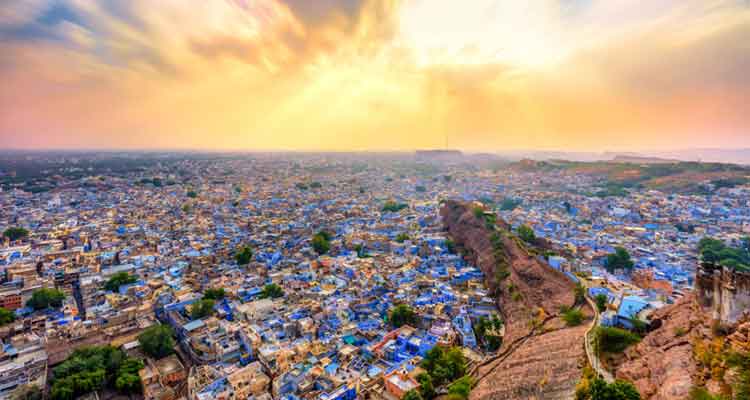
From the fort's viewpoints, look across the dense historic neighbourhoods of the Blue City. The panorama clearly demonstrates the relationship between the fortress and the settlement that developed beneath it.
Continue to Jaswant Thada, an elegant marble memorial located close to Mehrangarh. Its lighter architectural character and quieter setting provide a pleasing contrast after the scale of the fort.
Spend the later afternoon exploring the old city or markets at a relaxed pace.
Overnight stay in Jodhpur.
After breakfast, leave Jodhpur and travel west towards Jaisalmer. The road gradually enters increasingly arid landscapes, signalling the approach to the Thar Desert.
Open terrain and widely spaced settlements become important parts of the journey. The changing environment helps explain how geography influenced architecture, trade and settlement across western Rajasthan.
As Jaisalmer approaches, golden-yellow sandstone begins to dominate the built environment. The elevated silhouette of Jaisalmer Fort eventually appears above the city.
Arrive and check into the selected hotel for a two-night stay. The principal fort, Jain temple and haveli programme is reserved for the following morning.
If time permits, enjoy a short evening orientation through an appropriate market or heritage street.
Overnight stay in Jaisalmer.
Begin at Jaisalmer Fort, one of Rajasthan's most distinctive fortified settlements. Unlike many historic forts, it continues to contain residences, shops, temples and active lanes.
Walk through the winding passages and explore the accessible heritage areas. Golden sandstone unifies gateways, balconies, houses and religious structures into a remarkably consistent architectural landscape.
Visit the historic Jain temples within the fort according to current religious regulations and opening schedules. Their intricately carved interiors demonstrate exceptional stone craftsmanship.
Continue into the lower city for selected merchant havelis, whose elaborate façades, balconies and stone screens reflect the prosperity generated by Jaisalmer's historic trading connections.
Spend the later afternoon exploring the old city at a comfortable pace. Optional desert activities should be considered included only when specifically confirmed.
Overnight stay in Jaisalmer.
After breakfast, leave Jaisalmer and begin travelling towards Gajner. The route starts the long return across northern Rajasthan after reaching the western desert section of the circuit.
The road journey passes through broad arid landscapes and smaller settlements. After two nights in the busy heritage environment of Jaisalmer, Gajner provides a quieter overnight stage.
Arrive and check into the selected hotel or heritage accommodation. Depending on timing and the confirmed programme, explore the immediate surroundings or simply enjoy the property and landscape.
The value of Gajner within this itinerary lies partly in its contrast with the major cities. It provides a transitional stop between Jaisalmer and Bikaner rather than forcing an unnecessarily long transfer.
Spend the evening at leisure and prepare for the following day's journey into Bikaner.
Overnight stay in Gajner.
After breakfast, leave Gajner and continue towards Bikaner. Arrive in the historic desert city and proceed with the scheduled sightseeing according to timing and current opening conditions.
Visit Junagarh Fort, Bikaner's principal royal monument. Unlike many Rajasthan fortresses positioned on prominent hills, Junagarh stands on relatively level terrain and relies on massive walls and defensive planning for its imposing character.
Inside, explore the accessible courtyards, palace rooms and ceremonial spaces. Decorative interiors, carved balconies and architectural additions from different periods reveal the evolving tastes of Bikaner's rulers.
Later, spend time in an appropriate old-city or market area. Bikaner's active streets provide a contemporary setting around the royal heritage and help prevent the visit from becoming solely monument-focused.
Check into the selected hotel and enjoy the evening at leisure.
Overnight stay in Bikaner.
After breakfast, leave Bikaner and travel towards Mandawa in the Shekhawati region. The journey changes the architectural focus from royal forts and palaces to merchant residences.
Arrive and check into the selected hotel or heritage property for a two-night stay. The extended allocation gives sufficient time to explore the fresco tradition that makes Shekhawati distinctive.
Begin with a gentle walk through appropriate sections of Mandawa. Historic streets reveal havelis decorated with painted façades, carved entrances, balconies and internal courtyards.
These residences were closely connected with prosperous merchant families whose commercial networks extended far beyond Rajasthan. Their architecture provides a different perspective on patronage and wealth from the royal monuments visited throughout the journey.
Return to the accommodation for the evening. The following day remains dedicated to Mandawa and the broader Shekhawati heritage environment.
Overnight stay in Mandawa.
Begin the morning with a more detailed exploration of Mandawa's historic quarters. The heritage here is distributed across streets and individual residences rather than concentrated within one enormous palace complex.
Visit selected havelis according to current access arrangements. Painted surfaces may contain religious imagery, floral decoration, portraits and scenes reflecting changing lifestyles and outside influences.
Look beyond the frescoes to architectural details such as carved doors, projecting balconies and courtyard planning. Together, these features reveal how wealthy merchant residences functioned as both private homes and visible statements of status.
Where the confirmed programme allows, additional nearby Shekhawati heritage areas can be included. Access to individual properties may vary because some remain privately owned or occupied.
Return to Mandawa for a relaxed final evening before travelling to Jaipur.
Overnight stay in Mandawa.
After breakfast, leave Mandawa and travel towards Jaipur. The route connects Shekhawati's merchant towns with Rajasthan's largest and most celebrated historic capital.
Arrive and check into the selected hotel for a two-night stay. The principal fort-and-palace programme is kept for the following day, allowing the arrival afternoon to remain relaxed.
Later, take an introductory drive or walk through appropriate sections of the Pink City. See the exterior of Hawa Mahal and continue through selected historic market streets.
Jaipur's organised avenues and monumental façades provide a striking contrast with the compact lanes of Mandawa. Jewellery, gemstones, textiles and handicrafts remain important parts of the city's commercial identity.
Return to the hotel and prepare for the final full sightseeing day of this extensive Rajasthan circuit.
Overnight stay in Jaipur.
Begin the morning at Amber Fort, situated among the hills outside central Jaipur. The complex served as an important royal seat before the development of the planned capital.
Pass through the historic gateways and explore accessible courtyards, ceremonial spaces and former royal apartments. The progression from defensive architecture to elegant palace areas demonstrates Amber's combined military and residential character.
Return towards Jaipur, pausing near Jal Mahal for exterior views where traffic and stopping conditions permit. Continue into the old city to visit City Palace.
Walk to nearby Jantar Mantar, where monumental astronomical instruments reflect the scientific interests associated with Maharaja Sawai Jai Singh II. Continue around Hawa Mahal and the surrounding bazaars according to available time.
Enjoy the final Rajasthan evening in Jaipur. After nearly four weeks of travelling through different regions of the state, the Pink City provides an appropriately substantial final heritage destination.
Overnight stay in Jaipur.
After breakfast, check out from the Jaipur hotel and begin the journey towards Delhi. The final road sector closes an extensive circuit that has crossed Rajasthan from east to west and from its southern hill country to the northern merchant towns.
Agra introduced Mughal architecture before Bharatpur and Ranthambore brought wetland and forest environments into the journey. Kota, Bundi and Chittorgarh then revealed the distinct heritage of Hadoti and Mewar.
Deogarh, Udaipur, Dungarpur, Mount Abu and Ranakpur demonstrated the variety of southern Rajasthan and the Aravalli region. Rohet and Jodhpur subsequently shifted the journey into Marwar before Jaisalmer provided the great desert-city chapter.
Gajner, Bikaner and Mandawa carried the route back through northern Rajasthan, while Jaipur completed the royal heritage circuit with Amber Fort, City Palace and the Pink City's historic markets.
On reaching Delhi, transfer to the airport, railway station, hotel or another confirmed location according to onward travel arrangements, completing the Rajasthan Tour Package 27 Nights 28 Days – Grand Rajasthan Circuit with Wildlife.
07 Nights / 08 Days
Delhi – Jaipur – Jodhpur – Jaisalmer – Bikaner – Mandawa – Delhi
09 Nights / 10 Days
Delhi – Jaipur – Pushkar – Jodhpur – Ranakpur – Udaipur – Delhi
09 Nights / 10 Days
Delhi – Agra – Fatehpur Sikri – Jaipur – Jodhpur – Ranakpur – Udaipur – Delhi
10 Nights / 11 Days
Delhi – Mandawa – Khimsar – Jodhpur – Rawla Jojawar – Ranakpur – Chittorgarh – Bundi – Kota – Jaipur – Delhi