Your Travel Partner
SINCE 1989
Your Travel Partner
SINCE 1989
Your hotel in Jaipur will do breakfast beautifully. The coffee will be properly made, the fruit will be cut correctly, and nobody will rush you. None of that is in question.
But it's also not Jaipur. The city's real culinary memory doesn't live behind a five-star buffet line — it lives in a handful of shops that have been open, in some cases, since before the palaces down the road had electricity. These aren't polished experiences built for a passing visitor. They're businesses that have fed the same families for generations, run by people who've never once had to think about branding, because the queue outside the door has always done that work for them. For a traveller who's already seen the grand version of Rajasthan and wants the unfiltered one, a short detour to any of these is worth more than an extra hour by the pool.
A few honest notes before you go: several of these places are cash-only, none of them take reservations, and one or two have nowhere to sit — you'll be standing at a counter with everyone else. If that sounds like a mild inconvenience, think of it instead as the thing you can't buy anywhere else on this trip: a few minutes standing shoulder to shoulder with the city itself, rather than being served by it. Have your driver wait nearby — most of these are five-to-fifteen-minute stops, not sit-down meals, with two exceptions noted below.
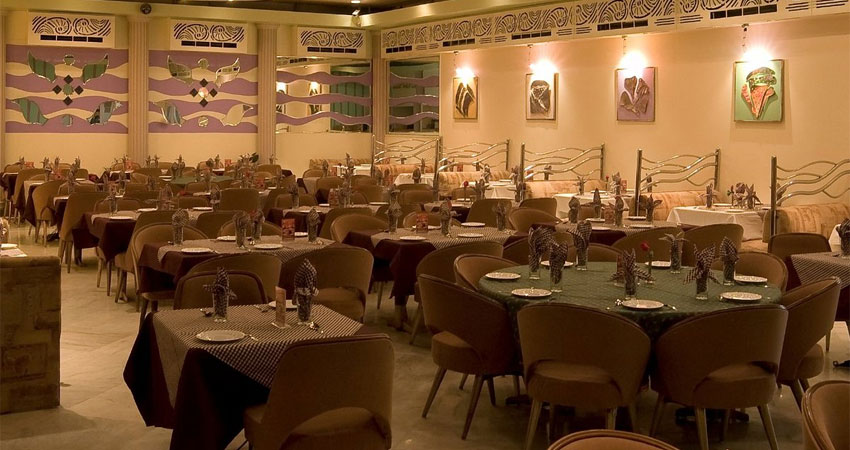
Start with the oldest name on this list by a wide margin. When Maharaja Sawai Jai Singh II laid out his new capital in 1727, he invited traders and craftsmen from surrounding towns to settle it, and among them was a family of halwais — sweet-makers — who opened a small shop in Johari Bazaar. That shop never really closed. It picked up the name Laxmi Misthan Bhandar around 1949, added a hotel above the sweet counter in 1954, and is today run by the ninth generation of the same family. Few businesses anywhere in the world can say that with a straight face.
The restaurant itself is comfortable enough for a proper sit-down meal — air-conditioned, table service, no compromise required — which makes it the easiest of these seven to fold into a morning of sightseeing near Hawa Mahal, just around the corner.
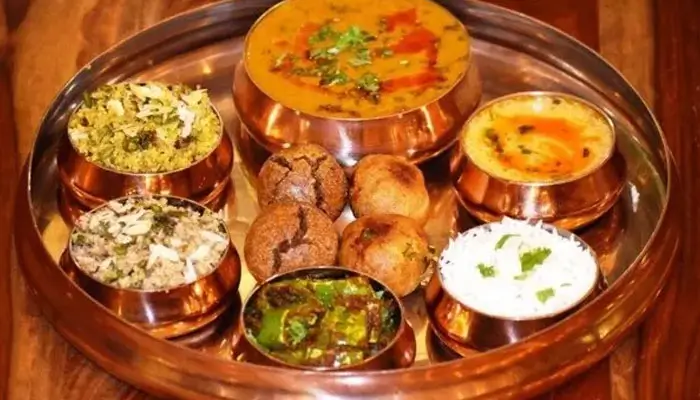
What to order: Skip the regular ghewar and go straight for the paneer version. It looks almost too delicate to eat — a pale honeycomb disc held together by little more than sugar and patience — but the moment your spoon breaks through, it collapses into something between a sweet and a cream. The rabri spooned over it is thick enough to leave a trail behind the spoon. If it's closer to lunch, let the staff walk you through the Rajasthani thali course by course; the dal-baati-churma alone is worth the wait, with ghee poured tableside while it still steams. A small box of mishri mawa travels well if you want something to carry back to the hotel.
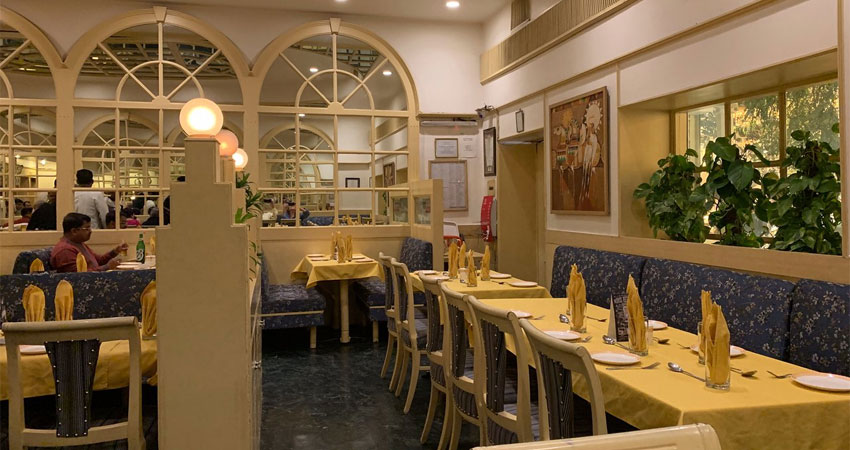
Niro's opened on the first of August, 1949, as Jaipur's first proper multi-cuisine restaurant, at a time when eating out here mostly meant home-style vegetarian food. Ved Pardal built his reputation on non-vegetarian Rajasthani cooking in a market that hadn't particularly asked for it, and it worked well enough that Niro's became the city's first fully air-conditioned restaurant in 1962 and introduced Chinese food to Jaipur in 1970. The dining room still carries that history — mirrored panels, a garden feel, murals by the artist Satish Gujral on the walls — and it's a genuine sit-down restaurant, reservation-free but comfortable, which makes it a natural dinner stop rather than a quick detour.
What to order: The laal maas isn't a dish to order lightly. It arrives a deep, almost brick red, the mutton fully surrendered after hours in that gravy, and the first bite carries more heat than the colour lets on — have a roti ready before you take it, not after. A missi roti does more to balance the chilli than a plain naan would, thanks to its faint bitterness from the gram flour. If you're travelling with someone who doesn't eat meat, the paneer tikka holds its own, and the Niro's special dessert — a curious, satisfying mix of sponge, cream and a solitary cherry — is worth ordering just to watch the table's reaction when it lands.
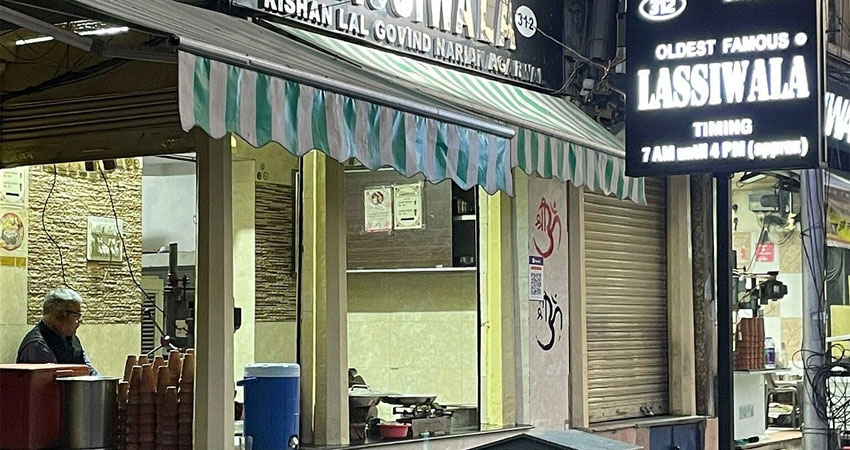
There is exactly one original Lassiwala — shop number 312 on MI Road — and it's been run by the same family since Kishanlal Agarwal set it up in 1944. Several shops nearby have quietly borrowed the name over the decades to catch the overflow, so it's worth knowing which door you're actually walking into. This is a five-minute stop, no seating to speak of, cash only, and usually sold out by early-to-mid afternoon — build it into a morning rather than an after-lunch stroll.
What to order: There's really only one decision — sweet or salted — and the sweet version is the better introduction. It comes in a rough clay kulhad, cold enough to fog faintly in the heat, with a slab of malai sitting on top like a lid. Don't stir it in immediately. Take the first few sips of the lassi underneath, then let the malai fold in on its own. Drink standing, the way everyone around you will be, and hand the kulhad back when you're done. It's a small, unglamorous ritual, and it's one of the more memorable five minutes you'll spend in the city.
Rawat Mishthan Bhandar — Station Road, Sindhi Camp, decades-old institution
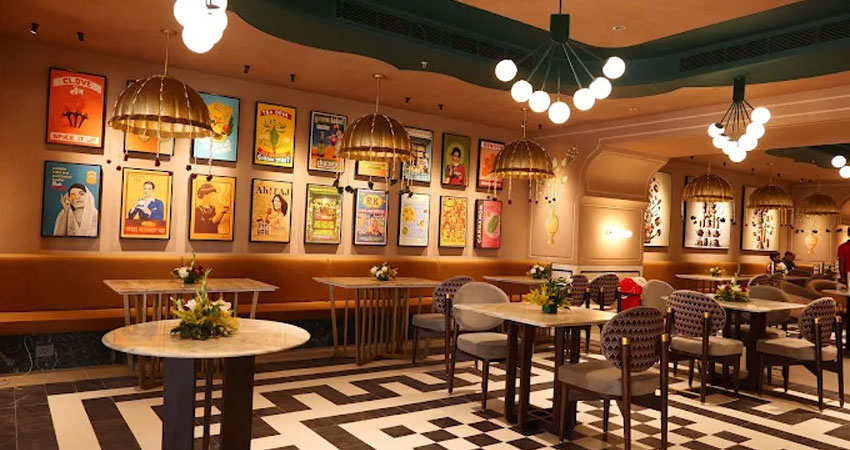
Rawat has been serving the neighbourhood near Jaipur's railway station for several decades, and it built its name on a single item: the pyaz kachori, a deep-fried, onion-stuffed pastry that has since become something close to a symbol of Jaipur street food in its own right. This is a stand-and-eat stop, not a restaurant — busy, a little chaotic at peak hours, entirely worth it.
What to order: Get the pyaz kachori the moment it comes out of the oil, not five minutes later once it's cooled and turned slightly chewy — the difference is real. It should shatter faintly as you break it open, releasing that sharp, oniony steam, before the two chutneys go on. Follow it with a mawa kachori while you're still standing there — a sweet version filled with thickened milk, cardamom, mace and nutmeg — and let yourself be surprised that a shop built around chilli can also do something this purely sweet. Because it sits five minutes from the station, it also makes a genuinely useful first or last stop if you're arriving or departing by train.
Surya Mahal — MI Road, since 1954
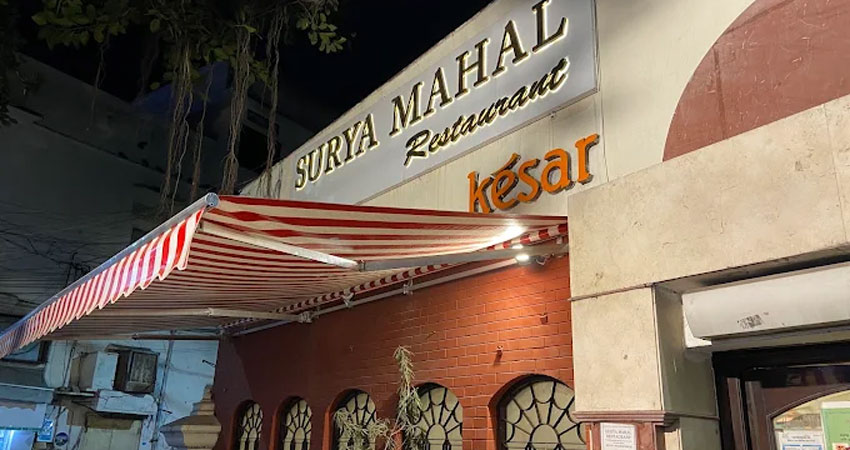
Tucked into the same stretch of MI Road as Lassiwala and Niro's, Surya Mahal has been serving vegetarian food since 1954 to the kind of loyal, unhurried regulars only a restaurant this old accumulates. Nothing about the room is trying to impress anyone — plain décor, close-set tables, staff who've clearly been doing this for decades — and that's precisely its value: a proper sit-down meal that shows you what an ordinary, well-loved Jaipur restaurant actually looks like, rather than a version dressed up for visitors.
What to order: The Rajasthani thali is the reason to sit down here. It arrives as a small production — gatte ki sabzi in its tangy yoghurt gravy, a kadhi thinner and sharper than the North Indian version you may know, dal-baati cracked open at the table, and a garlic chutney you'll likely ask for more of. This is the kind of meal a Jaipur household actually eats. Finish with moong dal halwa if it's available that day; it's rich enough that sharing one plate between two people is usually plenty.
Bhagat Mishthan Bhandar — since 1957
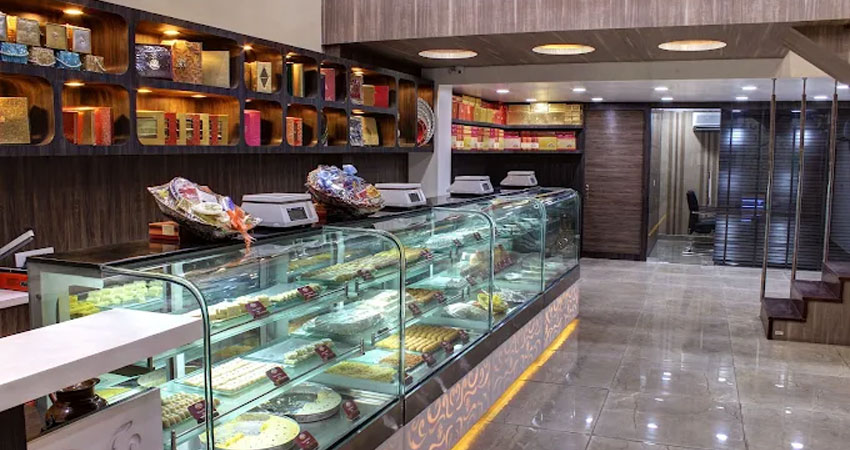
Bhagat built its name on one sweet above all others: the laddu, in nearly every form Rajasthani sweet-making allows for. What began as a single shop has grown into a small chain — MI Road, Vaishali Nagar — without the recipes drifting from what made the original popular. It's the easiest stop on this list to combine with an afternoon of shopping, and the most practical if you're looking to bring something home for a gift rather than an experience.
What to order: The motichoor laddu is the benchmark — not overly sweet, not so dense it turns heavy after two bites, each tiny boondi pearl still holding its shape rather than melting into paste. For something more indulgent, the mewa laddu, dense with cashew and almond, makes a better gift box than a solo snack. Buy a small mixed box rather than committing to one variety; these keep well for a day or two, making them one of the easier Jaipur sweets to carry home without worry.
Doodh Misthan Bhandar (DMB) — since 1955
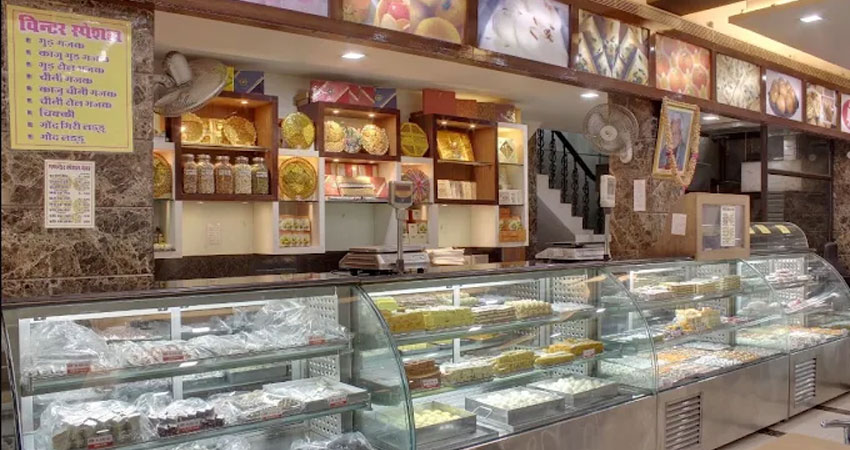
DMB leans entirely into milk-based sweets, the way LMB leans into ghewar — it's the specialty the whole shop is built around. Over the decades it's grown from a sweet counter into a fuller restaurant, without ever losing the mithai shop that made its name. If your only reference for Rajasthani sweets so far has been flour-and-syrup preparations like ghewar, this is worth the contrast.
What to order: This is the place to try a proper rabri or milk cake, since DMB's identity is built around getting the reduction exactly right — that slow, patient cooking-down of milk until it turns dense and deeply sweet without help from added sugar syrup. It's a heavier, slower sweetness than ghewar's, closer to caramel, and it lingers longer on the tongue. A good stop to close out a day that's otherwise been all about the flour-based sweets elsewhere on this list.
None of these seven were ever built with a visitor in mind. They came up quietly, one generation at a time, to feed a city that was hungry long before anyone thought to call it a tourist destination — and they've simply kept at it, largely unbothered, while everything around them changed shape, changed hands, changed names. That patience is usually the surest sign you've found something real, and it's precisely the kind of thing a five-star itinerary, however excellent, was never designed to hand you on its own. Ask your guide to build one or two of these into your Jaipur day — not instead of the forts and palaces, but alongside them.
Laxmi Misthan Bhandar (LMB) in Johari Bazaar is considered the oldest food establishment in Jaipur, having been founded in 1727 - the same year Jaipur city was established. It has been run by the same family for nine generations.
The original Lassiwala is located at Shop No. 312 on Mirza Ismail (M.I.) Road, Jaipur. Beware of imitators in the same area - the authentic shop clearly displays 'Since 1944' on its signboard.
At LMB, try the Ghewar, Pyaaz Kachori, and Rajasthani Thali. At Niros, the Butter Chicken and Seekh Kebabs are legendary. At Lassiwala, the thick, creamy lassi in a Kulhad is unmissable. At Indian Coffee House, try the filter coffee and keema dosa. At Gulab Ji's, the masala chai with bun maska is a classic combination.
Lassiwala typically opens around 7:00 AM and closes by 1:00 PM, as the owners believe the quality of curd deteriorates as the day progresses. Arriving before 11:00 AM is strongly recommended to avoid missing out.
Ghewar is a traditional Rajasthani dessert made from refined flour (maida) fried in ghee and soaked in sugar syrup, often topped with malai or mawa. It is particularly popular during festivals like Teej and Raksha Bandhan. LMB in Johari Bazaar is the most famous place to eat Ghewar in Jaipur.
Most of these heritage food joints are very affordable. A visit to Lassiwala costs about Rs. 60-100 per person. Gulab Ji's chai costs Rs. 10-30 per cup. Indian Coffee House meals are Rs. 150-250. LMB sweets and meals range from Rs. 300-500. Niros is relatively premium at Rs. 600-800 per person for a full meal.
Indian Coffee House is a chain of cooperative cafes that originated as an act of resistance against British colonial rule. The workers who were dismissed from British-owned coffee plantations formed a cooperative society and established the chain. The Jaipur outlet, opened in 1962, has been a hub for intellectuals, students, and locals ever since.
Niros serves both vegetarian and non-vegetarian food. It is particularly famous for its non-vegetarian dishes like Butter Chicken and Seekh Kebabs, but also offers excellent vegetarian options including Paneer Tikka, Dal Makhani, and Rajasthani Thali.
Yes. Most of these iconic eateries - Lassiwala, Indian Coffee House, and Niros - are clustered around M.I. Road, which is centrally located and easily accessible from most hotels. LMB is in the Old City area (Johari Bazaar), a short auto-rickshaw or taxi ride from M.I. Road.
Most of these joints remain open on public holidays and are especially busy during Rajasthani festivals like Teej, Diwali, and Gangaur. LMB in particular sees very high footfall during festive seasons. It is advisable to visit early on such days.
Absolutely. Jaipur has a wonderfully diverse food scene that caters to all palates. Foreign tourists often rank Jaipur's heritage food joints among their most memorable India experiences. Vegetarian options are widely available. Tourists should be aware of hygiene standards and may want to stick to reputed establishments like the ones featured in this article.
October to March is the best time to visit Jaipur overall, including for food tourism. The cooler weather makes walking through the old city markets and food lanes much more comfortable. Winter is also when local festivals occur, bringing special seasonal delicacies to the market, including festival-specific sweets at LMB.