Your Travel Partner
SINCE 1989
Your Travel Partner
SINCE 1989
A private India tour for two people offers a very different experience from travelling with a large escorted group. A couple, two friends, siblings or any two travelers can move through India with their own chauffeur-driven vehicle, stay in hotels selected for their preferred comfort level and use professional private guides only where specialist knowledge adds genuine value. There is no coach full of passengers determining the morning departure, no need to wait for a group at every monument and no requirement to follow exactly the same sightseeing pace as strangers.
For international travelers, this style of travel can be particularly useful in India because the logistics change considerably from one destination to another. Delhi is a vast capital with busy urban traffic and historical sites spread across different parts of the city. Agra is focused heavily around Mughal heritage and the Taj Mahal. Jaipur introduces Rajasthan's forts and royal architecture. Jodhpur and Udaipur can then be connected by private road transportation, while destinations such as Varanasi or Mumbai are often better linked by air when time matters.
With only two passengers, the journey can remain highly flexible. The travelers can choose a comfortable vehicle without paying for a large coach, share the cost of professional guides and use one hotel room if they are comfortable sharing. This can make private travel surprisingly sensible when compared with premium small-group packages, particularly once the value of private transportation and individualized sightseeing is considered.
The quality of the journey still depends on the details. The cheapest vehicle may not be comfortable enough for several long road sectors. A hotel described simply as “five-star” may not be in the location the travelers expect. A driver is not automatically a professional guide, and sightseeing mentioned in an itinerary does not necessarily mean monument admission has been included.
Travel Plan can coordinate a private India holiday for two using a chauffeur-driven vehicle, professional guides, selected hotels and airport transfers according to the route. Before booking, two travelers should understand where private travel provides the greatest value, what realistic costs look like and which services should be confirmed in writing.
For two international travelers, the private service can begin immediately after arrival. The driver or arrival representative receives the flight information beforehand and handles the confirmed airport pickup. Instead of searching for transportation after a long international journey, the guests move directly from the airport toward their hotel in the vehicle assigned to them.
The first day should reflect the arrival time. Travelers landing early after an overnight flight may technically have enough hours for sightseeing, but that does not mean a full day of monuments is sensible. Allowing time for hotel check-in, rest and a lighter first afternoon can make the following days substantially more enjoyable.
Once sightseeing begins, the chauffeur and local guides perform different functions. The chauffeur remains responsible for transportation while a professional guide joins in cities where detailed interpretation has been requested.
Suppose two travelers take a classic route from Delhi to Agra, Jaipur, Jodhpur and Udaipur. They can have a private car and driver in India for the road portion, while a Delhi guide meets them for sightseeing in the capital. The following day or after another night in Delhi, the chauffeur drives them to Agra. A professional Agra guide can then join them for the Taj Mahal and Agra Fort.
When they continue to Jaipur, the same road vehicle can remain with them while another local guide handles Amber Fort, City Palace, Jantar Mantar and other selected sightseeing. Jodhpur and Udaipur can follow in a similar way.
This structure gives the two travelers continuity without requiring a full-time guide to accompany them everywhere.
The chauffeur becomes particularly useful between sightseeing days. If the travelers want to stop for a meal during an intercity drive, they can do so at an appropriate place. If they need a washroom break, there is no group timetable preventing it. If they want to depart at 9:00 rather than 8:00 on a day without fixed reservations, that may be possible according to the day's route.
There are still practical limits. Hotel check-in times, monument opening hours, domestic flights, safari reporting times and long driving distances cannot simply be ignored because the tour is private. Flexibility should mean sensible adjustment, not an unrealistic promise that every service can be changed at any moment.
The same principle applies to guides. Two travelers may want intensive historical explanations at the Taj Mahal but prefer more independent time at a market. A private guide can adapt more easily than someone responsible for a large group.
Couples can also have private time without the guide or driver accompanying every activity. A leisurely dinner, spa appointment or free afternoon at a palace hotel does not require professional escorting.
This combination of support and independence is one of the main advantages of a private tour of India for a couple or two travelers.
Discover India together with a personalised travel itinerary, private driver, expert local guides, and carefully selected hotels. Enjoy a comfortable and memorable journey designed around your interests, travel style, and budget.
Two passengers do not automatically need the smallest available car.
Vehicle choice should reflect luggage, journey length and the amount of road travel included. A sedan may be entirely suitable for airport transfers, local sightseeing or a relatively short journey when both travelers carry modest luggage. The calculation changes when two international guests arrive with two large suitcases, cabin baggage and perhaps additional camera equipment.
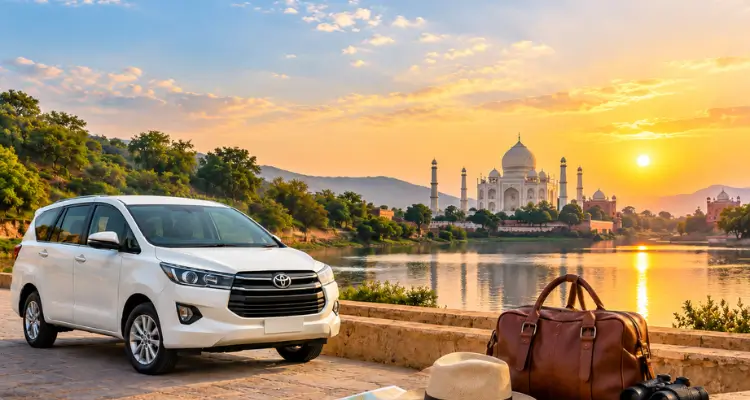
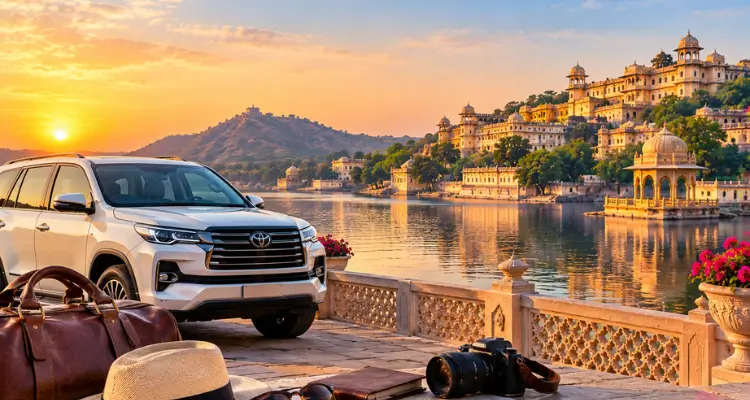
For a longer India tour with private driver for two, an Innova-class vehicle is often a practical choice. The additional cabin space can make repeated four- to six-hour drives more comfortable, while luggage can usually be handled more easily than in a compact sedan.
Travelers seeking a more premium road experience can request a luxury sedan or higher-category vehicle where available. The choice should still be made according to the route. A prestigious badge may be appealing, but usable space and seating comfort can matter more after several hours on the road.
The chauffeur is even more important than the vehicle.
During a Rajasthan road journey, two travelers may spend many days with the same driver. Professional behavior, punctuality, safe driving and familiarity with tourist routes therefore matter enormously.
The chauffeur should know the confirmed hotels and the principal road sectors. Appropriate stops for meals and washrooms should be selected with international guests in mind. The vehicle should be clean and maintained properly, and air conditioning should function reliably.
Travelers should also check how operating expenses are treated. Fuel, parking, tolls, state-related road charges where applicable and driver allowances may be incorporated into the quoted vehicle cost. The quotation should state this clearly so guests are not repeatedly asked to pay unexpected transport charges during the journey.
Driver working hours need to remain realistic as well. A chauffeur who has completed a long intercity drive should not be expected to remain available without limit through the night and then start another lengthy journey before dawn. Safe travel requires adequate rest.
Two travelers should also understand that the chauffeur is not automatically a licensed or professional sightseeing guide. Drivers often have substantial practical knowledge and may help with simple local information, but this is different from receiving detailed historical interpretation from a trained guide.
That separation becomes particularly important at destinations such as Delhi, Agra and Jaipur.
A properly structured private chauffeur tour in India therefore uses the driver for what the driver does best—safe, consistent transportation—while bringing in professional guides when deeper destination knowledge is required.
Hiring a private guide for only two people creates a highly personal sightseeing experience. There is no need to stand at the back of a large group or listen to explanations aimed at twenty different people. The guide can speak directly to the two guests and adjust the amount of detail according to their interests.
Delhi is a destination where this can make a substantial difference. The city contains monuments and neighborhoods connected with very different historical periods. A knowledgeable private Delhi guide can explain those connections while the chauffeur handles movement between the sites.
The guide can also adjust the emphasis. Travelers particularly interested in Mughal history may want more time around Old Delhi and Humayun's Tomb. Architecture enthusiasts may want detailed explanations at Qutub Minar. Photographers may prefer additional time at visually interesting locations and less continuous commentary.
Agra is another city where private guiding is worthwhile for first-time visitors. The Taj Mahal may be instantly recognizable, but its architectural and historical context is much richer than the standard photograph suggests. A professional guide can explain the Mughal background, symmetry of the complex, decorative craftsmanship and relationship with the wider history of Agra.
Two travelers also have more freedom to determine the rhythm of the visit. They can listen to an explanation, spend time photographing the monument and then continue when ready rather than moving because a group leader has announced the departure time.
Jaipur adds Rajput history and monumental architecture. Amber Fort, City Palace and Jantar Mantar are distinct enough that good guiding can prevent the day from becoming a repetitive series of buildings.
Jodhpur's Mehrangarh Fort and Udaipur's City Palace can similarly benefit from professional interpretation.
Not every day needs a guide.
Intercity travel days, resort stays and free evenings generally do not require one. Some repeat visitors may want guiding only at a few major monuments.
Using local guides selectively can therefore give two travelers access to expertise without creating the feeling of being accompanied continuously.
Foreign-language guides can also be requested. French, Spanish, German, Italian and guides speaking other languages may be available in major destinations, subject to availability. Fees can differ from English-speaking guide rates, and early confirmation is useful when a specific language is essential.
Shopping preferences should be communicated clearly. Travelers interested in jewellery, carpets, textiles, marble inlay, miniature painting or other crafts may appreciate specialist visits. Travelers who do not want shopping should be able to spend that time elsewhere.
A personal guide for two people in India should make the sightseeing more relevant to the guests, not make the itinerary feel more controlled.
Two-person travel provides considerable flexibility with accommodation because only one room may be required when the travelers are comfortable sharing. This can make high-quality hotels more accessible than they would be for a family needing two or three rooms.
The hotel budget can be distributed strategically across the route.
Delhi has a broad premium-hotel market, so two travelers can select accommodation according to location and desired service level. A couple arriving after a long flight may value a comfortable room, reliable dining and a smooth first evening more than elaborate resort facilities.
Agra presents a different decision because hotel location can have a stronger relationship with the main sightseeing experience. Travelers with a substantial budget may choose premium accommodation associated with views toward the Taj Mahal, while others may prefer a good five-star hotel and allocate more money to later destinations.
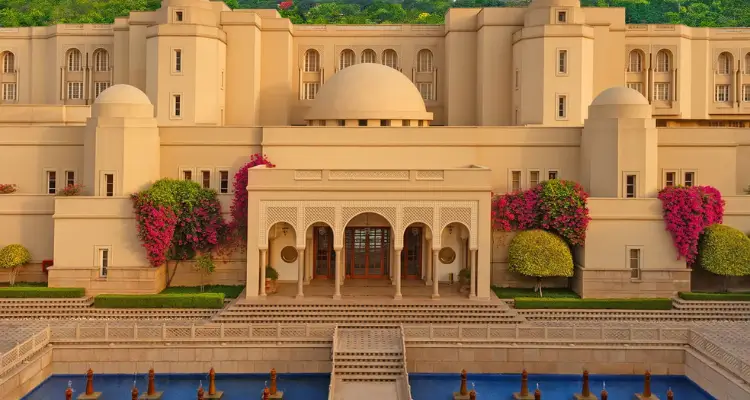
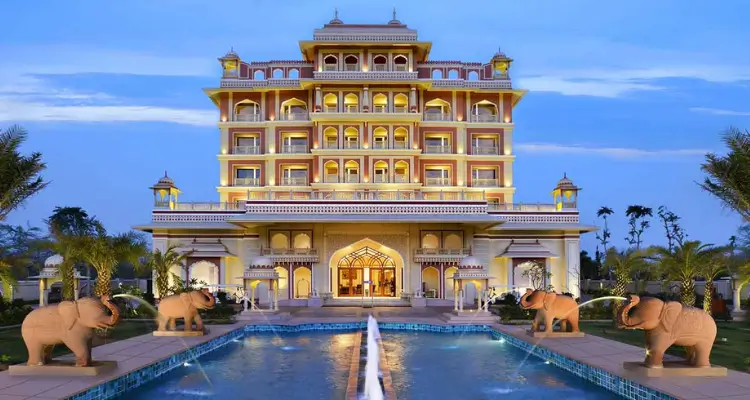
Jaipur offers an especially wide range of styles. Modern luxury hotels can provide extensive facilities and contemporary rooms, while palace properties create a stronger connection with Rajasthan's royal heritage.
For couples taking a special trip, a palace stay may be worth prioritizing. Two friends travelling primarily for sightseeing may prefer a well-located five-star hotel and use the savings for other parts of the journey.
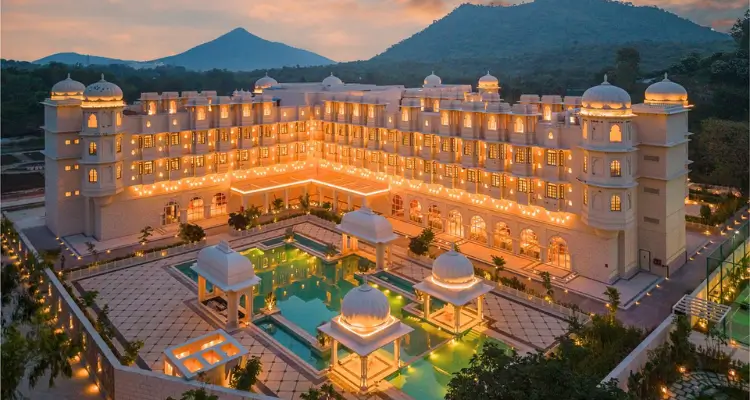
Udaipur is another destination where accommodation can justify a larger share of the budget. Lakeside luxury properties can become part of the experience rather than merely a base for sightseeing. Travelers staying at a premium resort should leave enough free time to enjoy it.
Jodhpur also provides heritage and luxury options, while wildlife destinations such as Ranthambore introduce lodge-style accommodation.
The phrase luxury hotel in India should never be accepted as the only description in an expensive quotation. Travelers should receive the actual hotel name and, where relevant, room category.
Bed configuration also matters for two people. A couple may request one king or double bed, while friends or relatives may require twin beds. This should be stated before hotel confirmation rather than addressed after arrival.
Breakfast inclusion should be checked, as should any half-board arrangements at resorts or wildlife lodges.
Travel Plan can combine different hotel standards within the same private itinerary. Travelers do not need to select palace hotels everywhere simply because they want a premium journey. Spending heavily on one or two memorable properties and using strong five-star hotels elsewhere can provide a more balanced India luxury tour for two.
From iconic landmarks to cultural experiences and relaxing hotel stays, explore India at your own pace with private transportation and customised travel arrangements for two.
The cost of an India private tour for two people depends on accommodation more than almost any other factor. The same route can be relatively comfortable or exceptionally expensive depending on hotel and room selection.
For two travelers sharing one room, a private journey using good upscale accommodation, a chauffeur-driven vehicle and selected local guides can reasonably begin around US$300 to US$500 per person per day on a higher-side working budget.
A strong five-star private journey can move toward approximately US$500 to US$850 per person per day. At this level, travelers can expect better hotels, private road transportation, airport transfers and professional guiding according to the agreed itinerary.
A journey using celebrated palace hotels, premium suites, luxury resorts and high-end wildlife accommodation can reach approximately US$850 to US$1,500+ per person per day.
Ultra-luxury arrangements can exceed those figures considerably.
For two people travelling for 12 nights, an upscale private journey may therefore require roughly US$8,000 to US$12,000 for the couple, while a stronger five-star itinerary may fall around US$12,000 to US$20,000. A palace-heavy luxury journey can move beyond US$20,000, particularly when premium suites and expensive seasonal dates are selected.
These amounts should be used as broad budgeting ranges rather than fixed package prices.
One advantage for two travelers is that several expenses are shared. The private vehicle is being used by both passengers, as is the guide. A hotel room can also be shared. This means the per-person cost does not simply double when moving from one traveler to two.
Domestic flights are different because each passenger requires a ticket.
Monument admissions are also generally charged per traveler. The same applies to safari seats and many activities.
Hotel pricing can change substantially according to travel dates, and premium properties may become significantly more expensive during high-demand periods. Room category creates another major difference.
A quotation should therefore specify the actual hotel combination before travelers compare prices between operators.
A private tour is only as clear as the written quotation behind it. Before sending a deposit, two travelers should review the itinerary day by day rather than looking only at the total price.
The hotel names and number of nights should match the agreed route. If the quotation includes room categories, those should be checked as well. Bed configuration should be correct, particularly when two friends require twin beds rather than one double bed.
The vehicle category should be named. “Private air-conditioned car” is technically descriptive but does not tell the traveler whether a sedan, Innova-class vehicle or another category is being supplied.
The guide arrangement should identify the destinations where professional guiding is included.
Monument entrance fees should be listed as included or excluded. The same applies to domestic flights, train tickets, safari drives and special activities.
Meals need similar attention. Hotel breakfast may be included while lunches and dinners remain payable directly.
Payment terms and cancellation conditions should be read before money is transferred. High-end hotels, flights and wildlife services can have different cancellation rules, and charges can become stricter closer to arrival.
Travelers should also have appropriate contact details for assistance during the journey.
A private India tour package for two should provide structure without making the guests feel trapped by the itinerary. Fixed reservations need to be respected, but ordinary sightseeing days can retain a degree of flexibility.
Travel Plan can coordinate these components under one itinerary so that the two guests know which hotels, transportation and guide services are confirmed before they begin their journey.
A good upscale private journey can reasonably begin around US$300–US$500 per person per day, while a strong five-star trip can reach approximately US$500–US$850 per person per day. Palace hotels and premium luxury arrangements can exceed US$850–US$1,500 per person per day.
Yes. Two travelers can share the cost of a chauffeur, vehicle and professional guides while retaining complete privacy. Couples, friends, siblings and other two-person bookings can all use this travel style.
On road-based routes such as Delhi, Agra and Rajasthan, the same chauffeur can often remain with the travelers for multiple cities. Flights or other long-distance sectors may require a new vehicle and driver at the next destination.
No. Professional guides can be used selectively. Delhi, Agra, Jaipur and other historically important destinations are particularly suitable for guided sightseeing, while travel days and leisure days may require only the chauffeur.
A sedan can work for light luggage and shorter travel, but an Innova-class vehicle is often more comfortable for two international travelers completing multiple long-distance drives with large suitcases.
Yes. Twin bedding should be requested when the hotels are being confirmed. Availability can vary by property and room category, so the requirement should not be left until arrival.
Yes. Palace and heritage properties can be combined with conventional five-star hotels. Many travelers spend more on distinctive hotels in Jaipur or Udaipur while selecting different premium accommodation elsewhere.
It depends on the quotation. Breakfast is frequently included with hotel stays, while lunch and dinner may remain flexible. Wildlife lodges and certain resorts may use different meal arrangements.
Yes. Ranthambore can be combined with Delhi, Agra and Rajasthan. Safari reservations should be confirmed in advance, and wildlife sightings can never be guaranteed.
Yes. Travel Plan can coordinate a private India tour for two people with chauffeur-driven transportation, professional local guides, selected hotels, airport transfers and multi-city travel. Vehicle category, hotel level and major inclusions can be matched to the two travelers' preferred comfort and budget before confirmation.