Your Travel Partner
SINCE 1989
Your Travel Partner
SINCE 1989
Travelling through India as a family becomes considerably easier when transportation, hotels and sightseeing are arranged around the family's own pace. Parents travelling with young children may need later starts, shorter sightseeing sessions and frequent breaks. Families with teenagers often want more variety than a monument-heavy schedule. Multi-generational families may need spacious vehicles, carefully located hotels, elevators, easier walking arrangements and enough free time between longer touring days.
For these reasons, luxury India travel for families works best when privacy and flexibility are treated as necessities rather than optional upgrades.
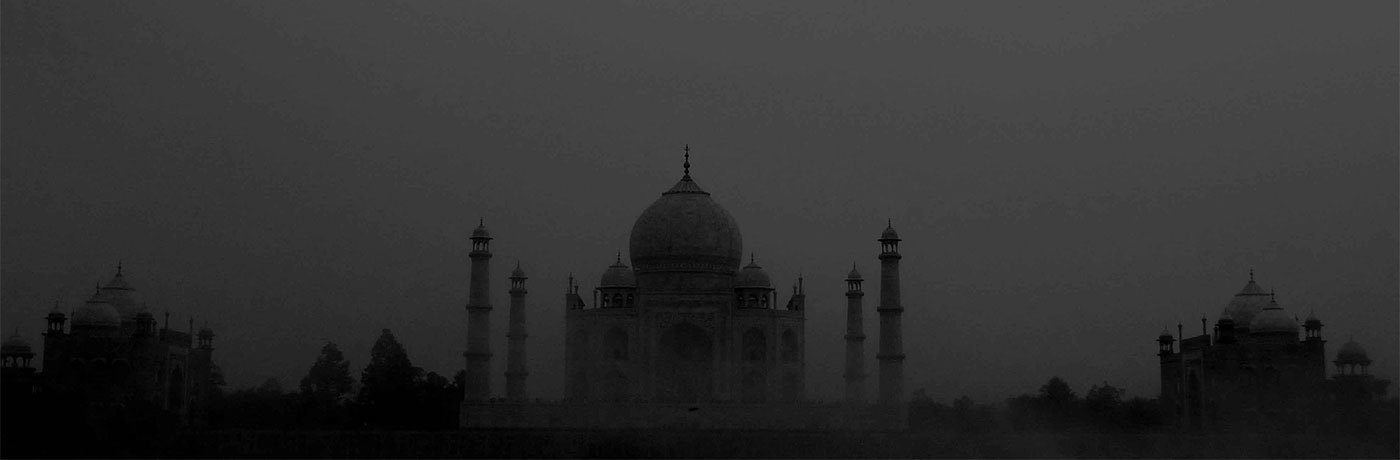
India offers an unusual combination of grand forts, royal palaces, wildlife reserves, historic cities, colourful markets, luxury hotels and family-friendly cultural activities. Delhi can introduce the family to different periods of Indian history, Agra brings the Taj Mahal, Jaipur combines forts and royal architecture, Ranthambore adds wildlife, while Udaipur provides a slower lakeside setting that can be particularly welcome after several active sightseeing days.
The challenge is deciding how much to include.
A family itinerary that looks impressive on paper can become exhausting if every morning begins with luggage collection and every afternoon involves another long transfer. Children rarely care that their parents managed to fit eight cities into twelve nights. They are more likely to remember seeing the Taj Mahal at sunrise, searching for a tiger in Ranthambore, swimming at a palace hotel or spending an afternoon somewhere without being hurried back into a vehicle.
A well-arranged private family tour in India should therefore combine major sights with realistic travel times, appropriate accommodation and enough flexibility to change the pace when the family needs it.
Travel Plan can coordinate private family journeys using chauffeur-driven transportation, selected hotels, professional guides and multi-city routing according to the ages of the travelers, preferred accommodation level and overall travel style.
The route is the foundation of a successful family holiday in India. Choosing too many destinations is one of the easiest ways to turn an expensive private trip into a tiring one.
For first-time international visitors, Delhi, Agra and Jaipur work naturally together. The cities offer very different attractions while remaining reasonably connected for private road travel. Families with additional time can continue into Rajasthan or add wildlife at Ranthambore.
Delhi deserves enough time to recover from the international flight as well as see the city.
Families arriving from North America or Europe should consider the effect of jet lag before scheduling a full day immediately after landing. A comfortable hotel, airport transfer and relatively light first day can make the following week much easier.
Sightseeing can then combine major historical sites with shorter, more varied experiences.
Older children and teenagers may appreciate the contrast between Old Delhi and New Delhi more than a continuous series of monuments. Markets, street scenes, food and daily city life can break up historical sightseeing.
Agra normally requires less time than Delhi or Jaipur for many families, but the Taj Mahal deserves an unhurried visit. Agra Fort adds historical context and can be included according to the family's energy level.
The drive toward Jaipur can incorporate Fatehpur Sikri when suitable. However, every possible stop does not need to be included simply because it lies on the route.
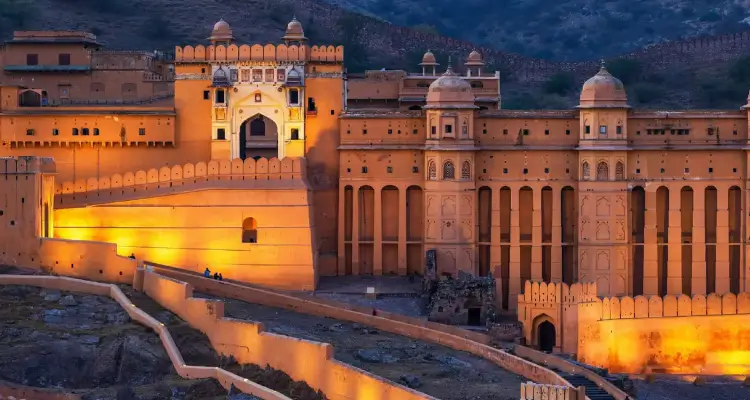
Jaipur can work particularly well for families because the city combines large-scale architecture with visual variety. Amber Fort, City Palace and Jantar Mantar offer very different settings, while local craft traditions can provide a break from conventional sightseeing.
The key is not attempting everything in one day.
Families continuing toward Ranthambore should understand that wildlife travel operates differently from city sightseeing. Safari drives generally involve fixed reporting procedures and can start early. Children who dislike early mornings may find repeated dawn safaris tiring, while wildlife-focused families may happily structure the entire stay around them.
Tiger sightings cannot be guaranteed.
The experience should therefore be presented honestly as an opportunity to enter a major wildlife habitat and look for tigers and other species rather than as a guaranteed tiger encounter.
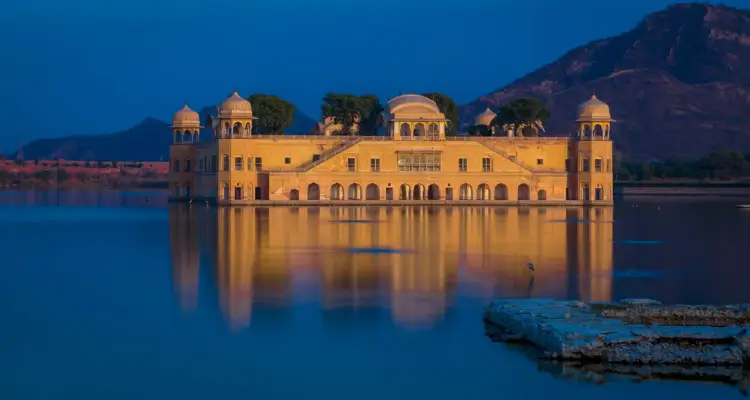
Udaipur can provide an excellent slower finish to a North India family route. After several cities and road sectors, a good lakeside or resort-style hotel allows the family to combine sightseeing with downtime.
Jodhpur can also fit well for families interested in forts and Rajasthan's desert landscapes. Jaisalmer is visually striking but sits farther west, so families should consider whether the additional travel is justified by the number of available nights.
A private India family itinerary should be willing to leave destinations out.
For a two-week journey, fewer well-chosen stops with two or three nights in several places will usually feel more comfortable than changing hotels almost every day.
Hotel selection for families requires more attention than simply choosing properties labelled five-star.
A beautiful romantic hotel designed primarily around couples may not be the most practical choice for parents with two children. Conversely, a large luxury hotel with multiple restaurants, a swimming pool, spacious grounds and flexible room arrangements may work exceptionally well even if it is less intimate.
For luxury family travel in India, room configuration should be checked before booking.
Parents should ask whether the proposed arrangement uses an extra bed, a sofa bed, connecting rooms, adjoining rooms or a suite. The terms “connecting” and “adjoining” should not be treated as identical. Connecting rooms normally have an internal door between them, while adjoining rooms may simply be located next to each other.
Availability can be limited.
Families who specifically require connecting rooms should request them early and understand whether the hotel can guarantee the arrangement or merely note it as a preference.
Children's ages matter because hotel occupancy rules vary. A room that accommodates two adults and one young child may not accept two adults and two teenagers.
The quotation should therefore be based on the actual ages of the children rather than simply stating “family of four.”
Hotel location matters too.
In Delhi, a centrally positioned hotel can reduce daily driving. In Agra, travelers may prioritize proximity or views toward the Taj Mahal. In Jaipur and Udaipur, families spending several nights may prefer resort facilities and more outdoor space.
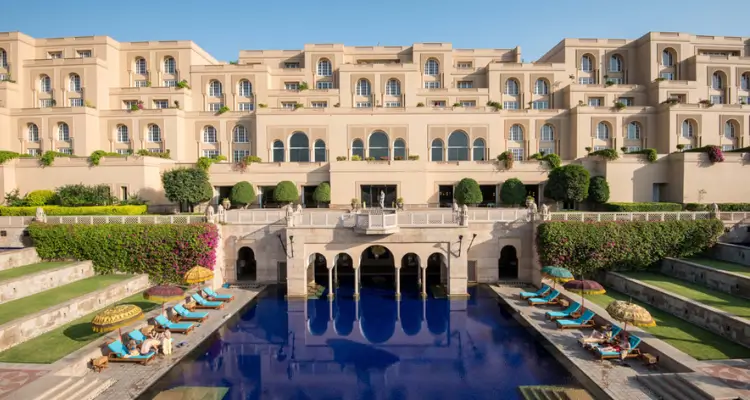
The Oberoi Amarvilas in Agra is known for its proximity to the Taj Mahal and views toward the monument, making it a premium option for families who want the Taj to be central to the stay.
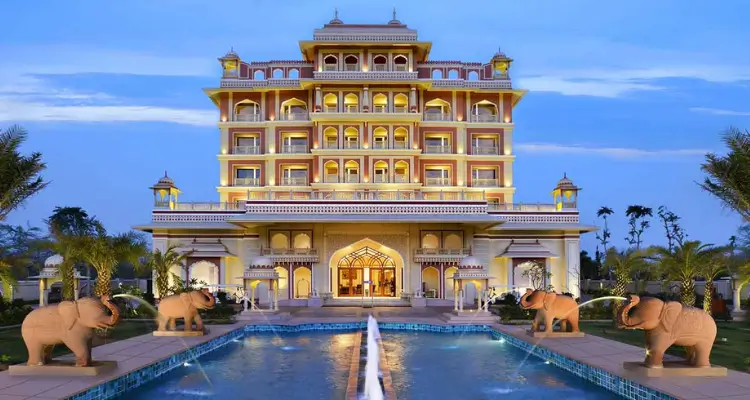
Jaipur offers major luxury hotels and palace properties, including Rambagh Palace. Udaipur has properties such as The Oberoi Udaivilas and Taj Lake Palace, along with numerous other premium hotels.
Families should select these properties for the right reasons.
A palace hotel can create a memorable stay for older children interested in royal history, but parents with very young children may care more about room layout, pool access, food options and how easily the family can move around the property.
Dining flexibility deserves attention.
Young children may not want elaborate Indian meals every evening. Premium hotels generally provide broader dining choices, but parents should still mention allergies and dietary restrictions before arrival.
Breakfast inclusion is particularly useful for families. Starting each morning with a hotel breakfast before meeting the driver avoids having to locate food immediately after leaving the property.
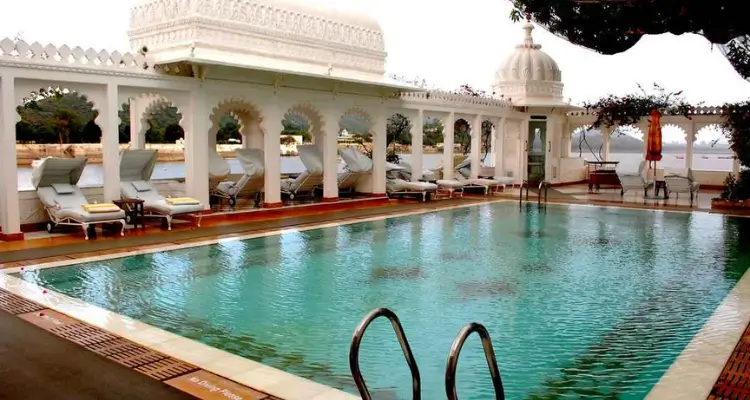
Swimming pools can become surprisingly important on family journeys. After several hours visiting forts and monuments, children may be far happier returning to the hotel pool than visiting another attraction.
A well-designed luxury family vacation in India recognizes that this downtime is part of the holiday rather than wasted sightseeing time.
Laundry is another practical consideration on longer journeys. Families travelling for two weeks can reduce luggage by using hotel laundry or reliable local laundry arrangements during the trip. Premium hotel laundry can be expensive, so travelers who care about cost should check charges beforehand.
Hotel changes should also be limited where possible. Packing several suitcases every morning can quickly become the least enjoyable part of family travel.
Transportation can determine whether a family enjoys a multi-city India journey.
A private chauffeur in India for families provides a consistent vehicle for road sectors, allows luggage to remain together and gives parents more control over departure times and rest stops.
Vehicle size is crucial.
A sedan may be sufficient for two adults travelling lightly, but it is rarely the ideal choice for a family carrying several full-size suitcases. An Innova-class vehicle can provide substantially better space for a smaller family, while larger groups may require a Tempo Traveller or another suitable multi-passenger vehicle.
The correct question is not simply how many seats a vehicle has.
Ask how many passengers plus suitcases can travel comfortably.
Children may also need suitable child-restraint arrangements depending on age and parental requirements. Families wanting a specific child seat should request it before arrival rather than assuming that every vehicle carries one as standard.
For longer routes, the ability to stop is one of the major advantages of private transportation.
A family travelling from one Rajasthan city to another can take a washroom or meal break when needed instead of following a group coach schedule. If a child becomes tired, departure can sometimes be moved slightly later where the day's arrangements allow.
The chauffeur should know the route, hotel locations and appropriate stops.
Safe, calm driving matters enormously. A premium vehicle has little value if the person behind the wheel makes the passengers uncomfortable.
Parents should also understand the difference between a driver and a guide.
A private driver in India manages road transportation. A professional guide joins the family for sightseeing and provides detailed explanations of history, architecture and culture.
For children, the right guide can make a significant difference.
A guide who delivers a continuous lecture filled with dates may lose younger travelers quickly. Someone who can turn Amber Fort, the Taj Mahal or a historic market into stories and questions can hold their attention much more effectively.
Parents can tell the operator the children's ages and interests before guides are assigned.
A teenager interested in photography might want more time for pictures. A child fascinated by animals may respond well to wildlife and nature-related context. Another family may care about food or sport.
Private guiding allows these differences to be accommodated more easily than a large group tour.
The cost of a private family tour in India depends on family size, room configuration, hotel standard, route and transportation.
Family pricing also behaves differently from pricing for a couple because several costs are shared.
A private vehicle costs approximately the same whether it carries two or several passengers within its capacity. A guide's fee can also be shared across the family. Hotel accommodation, however, can become considerably more expensive when two rooms are required.
For a family seeking comfortable private travel with good hotels, a sensible higher-side working budget can begin around US$800 to US$1,500 per family per day, depending on family size and inclusions.
A strong five-star journey using two rooms, private chauffeur services, professional guides and premium hotels can reasonably move toward approximately US$1,500 to US$2,500 per family per day.
High-end palace hotels, suites, luxury wildlife lodges and premium room configurations can push the daily cost to US$2,500 to US$4,000 or more for the family.
These figures are broad budgeting references rather than fixed rates.
For example, a family of four taking a 12-night private India journey might spend approximately US$15,000 to US$30,000+ depending on accommodation. A journey using leading palace hotels and premium suites can go substantially beyond this.
Domestic flights can increase the total, particularly if four or five seats are required.
Wildlife can also increase the budget because safari stays may involve premium lodges and several game drives.
A family quotation should clearly show the number of rooms being priced and the occupancy.
It should also identify the vehicle category.
If a quote appears dramatically cheaper than another, check whether one company has priced a single family room while another has included two rooms. Check hotel names, meal basis, guide services and admission fees as well.
A proper family tour quotation for India should make these differences understandable.
Travel Plan can adjust accommodation and transportation levels to the family's budget. A family might choose palace hotels in Jaipur and Udaipur while using comfortable five-star hotels elsewhere, or spend more on wildlife and less on city accommodation.
The best family journeys mix history with movement, wildlife, food, colour and free time.
Delhi can introduce children to contrasting parts of a huge city rather than becoming a list of monuments. Agra has the immediate visual impact of the Taj Mahal. Jaipur's forts and astronomical instruments provide different kinds of sightseeing. Ranthambore changes the rhythm completely by putting the family into a wildlife environment.
Rajasthan's craft traditions can also work well when the activity is genuine and age-appropriate.
Block printing, textiles and traditional art can be interesting when presented as a cultural activity rather than a forced shopping visit.
Parents should make their shopping preferences clear beforehand.
Food is another opportunity. Families interested in Indian cuisine can try regional dishes while keeping enough flexibility for children who want simpler meals. A knowledgeable guide or operator can recommend appropriate restaurants according to the family's preferences.
Do not underestimate the value of an empty afternoon.
Children who have spent the morning at a fort may need a swimming pool more than another palace. Teenagers may want time at the hotel, particularly during a long trip.
The itinerary should also avoid repeated very early starts.
Sunrise at the Taj Mahal can be worthwhile. An early wildlife safari can be worthwhile. Scheduling early departures every day is different.
A private family holiday in India should use flexibility intelligently. Major fixed arrangements can remain in place while less important sightseeing is adjusted around the family's energy.
That flexibility often becomes more valuable than any single luxury feature.
Yes. Private transportation, quality hotels and carefully paced sightseeing can make India very comfortable for families. The route should reflect the children's ages and avoid excessive hotel changes.
There is no universal number, but fewer destinations with longer stays are generally more comfortable than changing hotels every night. Delhi, Agra, Jaipur, Ranthambore and one or two additional Rajasthan destinations can already create a varied journey.
An Innova-class vehicle can work well for smaller families, while larger groups may need a Tempo Traveller or larger private vehicle. Luggage capacity should be checked as carefully as seating capacity.
Many luxury hotels have connecting or adjoining room arrangements, but availability can be limited. Families should request the required configuration early and check whether it is guaranteed.
A strong private five-star family journey can commonly require around US$1,500–US$2,500 per family per day, depending on family size, number of rooms and route. Palace hotels and premium suites can increase the cost substantially.
Yes, particularly when the guide can adapt explanations to the children's ages and interests. A private guide can shorten or modify the sightseeing pace more easily than a guide leading a large group.
Yes. Agra and Ranthambore can be incorporated into the same North India journey. Safari reservations should be arranged ahead, and families should remember that tiger sightings are never guaranteed.
Free time is highly valuable, especially on journeys longer than a week. Pool time, relaxed meals and unstructured afternoons help prevent sightseeing fatigue.
Premium hotels and established restaurants can generally accommodate many dietary requirements when informed in advance. Serious allergies should be communicated clearly to the operator and hotels before arrival.
Yes. Travel Plan can coordinate luxury family travel in India with suitable hotels, private chauffeur-driven vehicles, professional guides, airport transfers and multi-city routing. Accommodation and transportation can be selected around family size, children's ages, luggage requirements and preferred comfort level.