Your Travel Partner
SINCE 1989
Your Travel Partner
SINCE 1989
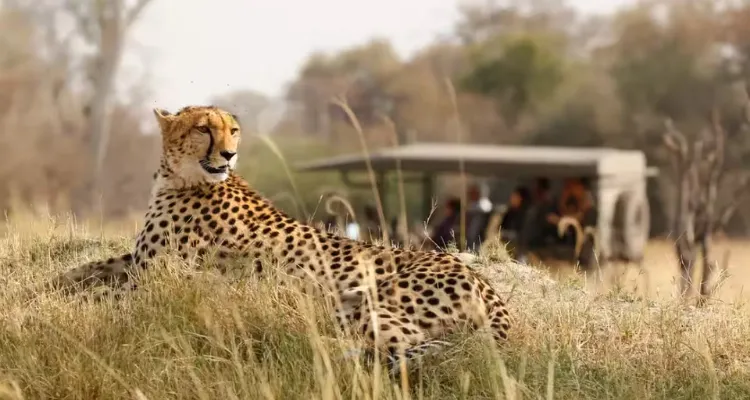
For about seventy years, India had no wild cheetahs at all. The last of the country's native cheetahs disappeared in the middle of the 20th century, and for generations the animal survived only in old hunting paintings and royal records. Then, in a bold and much-debated conservation project, cheetahs from Namibia and South Africa were flown to Kuno National Park in Madhya Pradesh, and more have since arrived from Botswana. Cubs have been born on Indian soil, several cats now roam free across the grasslands, and the park has opened a dedicated Kuno cheetah safari for visitors. For international travellers already heading to Ranthambore for tigers, Kuno sits surprisingly close, just across the state border. It is tempting to add it to the route. This guide explains, honestly, what a cheetah safari at Kuno involves today: how Kuno safari booking works, which gates and zones are used for cheetah viewing, what it costs, how likely you are to actually see a cheetah, and how to combine Kuno with Ranthambore in a way that makes sense for a luxury private trip rather than a long, tiring detour.
Kuno National Park lies in the Sheopur district of northern Madhya Pradesh, close to the Rajasthan border. The core park covers around 750 square kilometres, with a larger buffer area around it, and the landscape is a mix of open grassland, dry deciduous woodland, rocky plateaus and the valley of the Kuno River, which runs through the middle of the park. For decades it was a quiet sanctuary known mainly to Indian naturalists. It was originally prepared as a second home for the Asiatic lion, and villages were relocated out of the core for that purpose, which left wide grassy clearings that turned out to suit cheetahs well.
Project Cheetah began with eight cheetahs from Namibia, followed by twelve from South Africa a few months later. The early phase was difficult. Several adults and cubs died from infections, heat and injuries, and the remaining cats spent long periods in large fenced enclosures while scientists learned how they adapted to Indian conditions. Over time the project stabilised. More cheetahs were released into the open forest, cubs were born and raised in the wild, a second population was started at Gandhi Sagar Wildlife Sanctuary further south in Madhya Pradesh, and a new group of nine cheetahs arrived from Botswana. Recent official figures put India's total cheetah population at around sixty animals, the large majority of them in and around Kuno, with many of them born in India.
For visitors, the most important change came when the forest department launched a formal cheetah safari, with dedicated routes through the areas where free-ranging cheetahs are most often found. Before that, tourists could visit Kuno but had almost no chance of seeing the cats, which were mostly in closed enclosures. Today the cheetahs that move through the tourist zones are wild animals with satellite collars, tracked by monitoring teams, and they range far and wide. Some have wandered into neighbouring districts and even across into Rajasthan.
That freedom is good news for conservation, but it shapes what you can expect. Kuno is not a fenced viewing park where cheetahs can be found on demand. It is a large, open landscape, and the cats are few in number compared with the tigers of Ranthambore or the leopards of Jhalana. Some safaris see cheetahs on a grassland edge or resting under a tree. Many see none. When the cheetah safari first opened, local reports suggested that sightings in the tourist zone happened roughly once a week, and while numbers have grown since, the honest position is that cheetah sightings at Kuno are possible but not guaranteed.
Kuno also has plenty of other wildlife, and a visit is more rewarding if you go for the whole park rather than one animal. Leopards are present in good numbers, along with striped hyenas, jackals, sloth bears, wolves in the outer areas, large antelope, spotted deer, wild boar and several hundred species of birds. The ruins of Palpur Fort on the banks of the Kuno River are atmospheric, and the riverside stretches are beautiful in the soft morning light. Tigers dispersing from Ranthambore have occasionally been recorded in Kuno, which says something about how close the two landscapes really are.
Make your Indian wildlife adventure memorable with carefully planned safari arrangements, comfortable accommodation and private transfers. Discover Kuno's remarkable landscapes with personalised travel assistance.
Kuno has three main tourist gates, and it is important to know which one you are booked into, because they are far apart by road. Tiktoli gate is the long-established main entrance on the western side, about 15 kilometres from the village of Sesaipura on the Shivpuri to Sheopur highway. The western zone accessed from Tiktoli covers the river corridor, the grasslands around Palpur Fort and some of the most scenic parts of the park. It is the gate most visitors from the Rajasthan side have traditionally used.
When the dedicated Kuno cheetah safari launched, the forest department designated Ahera gate and Peepalbawadi gate as the main entry points for cheetah viewing, because free-ranging cheetahs had been released into those areas. Ahera lies on the eastern side, approached from the Pohri and Shivpuri direction, and the zone beyond it is a mix of raised scrub plateau and open views across the grassland. Peepalbawadi, on the northern side, leads into mixed woodland and quieter trails that are excellent for birdwatching. Gate arrangements and the zones used for cheetah viewing can change from season to season as cheetahs move or new animals are released, so always confirm the gate when you book.
Each gate has a fixed daily quota of vehicles, and every vehicle must follow set routes with a registered forest guide on board. Driving off-track or chasing a cheetah is not allowed, and guides will not do it. If monitoring teams know that a cheetah is near a particular route, the guide may head that way, but there is no radio-led chase of the kind sometimes seen in African private reserves. This is a good thing for the animals and for the long-term success of the project.
Safari timings follow the season. In the cooler months from October to February, morning drives usually run from around 6:30 to 10:30 and afternoon drives from around 2:30 to 5:30, although some recent listings show slightly longer morning windows. In the hotter months from March to June, mornings begin earlier, around 5:45, and afternoon drives end later, around 6:45 in the evening. Afternoon drives have been closed on Wednesdays at all gates, so avoid scheduling your visit around a Wednesday afternoon. The core tourism zones close every year from 1 July to 30 September for the monsoon, and heavy rain has occasionally delayed the reopening into October because flooded tracks inside the park need repair.
For international travellers coming from Ranthambore, Tiktoli is usually the most practical gate because it sits on the Sheopur side, closest to Rajasthan. Ahera and Peepalbawadi involve a longer drive around the park towards Shivpuri. If your heart is set on the cheetah zones specifically, it may make more sense to stay near the eastern side for a night or two rather than attempting a long round trip in a single day. A good operator will check the current gate assignments for cheetah viewing just before booking, since this is the single detail most likely to change.
Safari permits for Kuno are sold through the Madhya Pradesh Forest Department online portal, at forest.mponline.gov.in, which is the same official system used for Kanha, Bandhavgarh and other parks in the state. You choose the park, the gate, the date and the morning or afternoon slot, then enter the details of each visitor. Every permit is tied to specific names, so foreign visitors need their passport details at the time of booking, and the same passport must be shown at the gate. Permits are not transferable and cannot be changed to a different person later.
The fees structure combines a forest entry permit, the cost of the safari vehicle and a guide fee. When the dedicated cheetah safari launched, the published figures were around Rs.4,500 for an open safari jeep taking up to six visitors, and around Rs.1,200 for visitors entering in an approved private vehicle. Older published breakdowns showed a forest permit of around Rs.750, a vehicle charge of around Rs.2,250 and a guide fee of around Rs.360. Fees for foreign nationals in Madhya Pradesh parks are typically higher than for Indian citizens, and rates are revised from time to time, so it is sensible to budget around Rs.6,000 to Rs.9,000 for a private jeep for one safari, roughly 70 to 100 US dollars, including permit, vehicle and guide, and to confirm the exact current amount when booking.
For a private trip, most luxury travellers book a whole jeep for their party rather than sharing with strangers, which gives more space, better photography angles and the freedom to linger at a sighting. A private naturalist from your lodge or tour operator can usually join in addition to the mandatory forest guide, subject to seat availability. Expect to pay Rs.4,000 to Rs.8,000 per safari for an experienced private naturalist, who will add a great deal to the experience by interpreting tracks, bird calls and animal behaviour.
Kuno's tourist numbers are still modest compared with the big tiger parks. In recent seasons only a few thousand visitors a year have come, sometimes fewer than twenty a day in quieter weeks. That means permits are usually easier to find than at Ranthambore, though the cheetah gates have limited quotas and weekends, Christmas and the Indian winter holidays fill first. Booking four to eight weeks ahead is comfortable for most dates, and earlier for peak holidays.
There are a few practical rules worth knowing. Children are allowed on safaris, though very young children may struggle with early starts and long, bumpy drives. Drones are banned. Loud music, feeding animals and getting out of the vehicle are strictly prohibited except at designated points. Carry your original passport on every safari. Bring layers for winter mornings, which can be near freezing in an open jeep in December and January, and a scarf or buff for dust. A camera with a long zoom lens of at least 400 millimetres is useful, because even a good cheetah sighting is often at some distance across open grass.
Visiting India from abroad? Organise your Kuno safari with advance planning, passport details, accommodation and transport assistance. Prepare confidently for a distinctive wildlife experience in India.
Ranthambore National Park and Kuno are closer than most maps suggest, separated by the Chambal River and the state border. By road, the drive from Sawai Madhopur to the Tiktoli side of Kuno is usually around 150 kilometres and takes roughly three and a half to four hours. The route crosses into Madhya Pradesh towards Sheopur, then continues east towards Karahal and Sesaipura. Roads have improved, but some stretches are narrow and pass through small towns and farmland, so the drive is slower than the distance suggests. Reaching Ahera or Peepalbawadi takes longer, as they lie on the far side of the park.
The question is how to fit this into a trip in a way that is comfortable. Attempting a day trip from Ranthambore, leaving before dawn for a morning safari at Kuno and returning the same evening, is technically possible but exhausting, with seven or eight hours of driving for a single three or four hour drive in the park. It also means missing your Ranthambore safaris that day. We do not recommend it.
A much better approach is to give Kuno its own overnight stay. A sensible pattern is two or three nights at Ranthambore for tiger safaris, a morning drive to Kuno in time for lunch and an afternoon safari, a full next day with morning and afternoon safaris, and then an onward drive. From Kuno, travellers can continue to Gwalior, about four hours away, with its spectacular hilltop fort, palaces and the Jai Vilas Palace museum. Gwalior has a domestic airport and fast trains to Delhi and Agra, and Orchha and Khajuraho lie further on for those continuing into central India. Alternatively, travellers can return west to Sawai Madhopur and continue by train or road to Jaipur.
For Ranthambore itself, safari permits are booked separately through the Rajasthan Forest Department, and fees were raised again recently. Foreign visitors now pay roughly Rs.3,025 per person for a seat in a six-seat open jeep and around Rs.2,400 per person in a larger open-top shared bus. A private jeep for a couple, booked as an exclusive vehicle, costs considerably more, often Rs.20,000 to Rs.30,000 per safari including all seats, permits and a naturalist. Tiger sightings in Ranthambore's better zones are frequent enough that two to four safaris give most visitors a good chance.
Seen together, the two parks make a powerful pairing. Ranthambore gives the classic tiger experience among old fort walls and lakes, and Kuno adds the rare chance to see the world's fastest land animal in an Indian landscape, along with a quieter, wilder feel and far fewer vehicles. For travellers whose main dream is a tiger, Ranthambore should come first and receive the most safaris. Kuno works best as an addition for those with a strong interest in conservation, photography or simply the story of the cheetah's return, and who are comfortable with the chance of not seeing one.
Accommodation near Kuno is still simple compared with the luxury lodges around Ranthambore, and this is one of the most important points for international travellers to understand before adding it to an itinerary. There is no luxury lodge on the scale of Aman-i-Khás or SUJÁN Sher Bagh at Kuno. Options include forest department rest houses inside and around the park, including the scenic rest house near Palpur Fort, which must be booked through the park office and offers basic rooms. Madhya Pradesh Tourism runs a small property at Sesaipura near Tiktoli gate with around ten air-conditioned rooms, where full-board stays have been priced from around Rs.3,000 per person per night. A handful of private lodges and simple eco-resorts have opened around Sesaipura and the outer villages as interest in the cheetahs has grown.
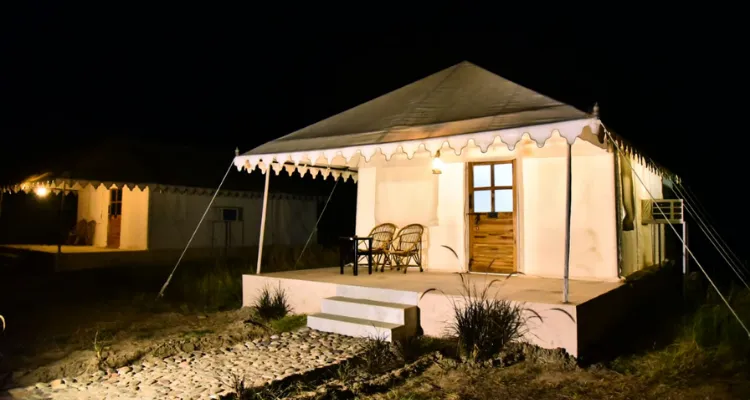
During the main winter season, Madhya Pradesh Tourism also runs the Kuno Forest Retreat, a seasonal luxury tented camp at the village of Ranipura in Sheopur district. It typically operates from mid-November to early March and offers furnished tents with private bathrooms, safaris, stargazing, yoga and evening cultural programmes. For international travellers who want a degree of comfort close to the park, it is usually the best option when it is running, and it should be booked well in advance through its own website.
The best time to visit Kuno is from October to March. Days are pleasant and dry, the grass begins to thin as winter goes on, and cheetahs are easier to spot in the open. November, February and early March are especially good. December and January bring cold mornings and occasional fog in this part of India. From April to June the heat is intense, regularly crossing 42 degrees Celsius, but animals gather near the remaining water, which can improve sightings for those who can tolerate the conditions. The park is closed during the monsoon from July to September.
What a realistic Kuno visit looks like is worth stating plainly. If you take three safaris over two days, there is a fair chance of seeing a cheetah, but no guarantee. Even a good sighting may be at a distance, of a cat resting in the shade, and the classic chase across open grass is extremely rare. Facilities near the park are simple, roads are slower than in Rajasthan, and the experience feels more like a visit to a frontier conservation project than a polished safari destination. For many travellers that is exactly the appeal. For others, the time is better spent on another Ranthambore safari or a night in Gwalior.
A thoughtful private tour operator will check the latest news before confirming a Kuno add-on: which gates are being used for cheetah viewing, whether recent sightings have been reported, whether the Kuno Forest Retreat is open for your dates, and how road conditions look after the monsoon. With that information, the decision becomes simple. If the timing and conditions are right, a night or two at Kuno can be one of the most memorable parts of a wildlife trip in India, because very few people anywhere have watched a cheetah walk through an Indian grassland.
Yes, a dedicated cheetah safari now runs through the zones where free-ranging cheetahs are released. Sightings are possible but never guaranteed, because the cheetahs are few and range across a large open landscape.
Permits are booked through the Madhya Pradesh Forest Department portal at forest.mponline.gov.in, choosing the gate, date and morning or afternoon slot. Foreign visitors need passport details and must carry the original passport to the gate.
Ahera and Peepalbawadi gates have been designated for cheetah viewing, while Tiktoli is the main western gate near Sesaipura. Gate arrangements can change each season, so confirm them before booking.
A shared open jeep for up to six people was priced at around ₹4,500 when the cheetah safari launched. With higher foreign rates, a guide and a private vehicle, budget roughly ₹6,000 to ₹9,000 per safari and confirm the current fee when booking.
In winter, morning drives run from around 6:30 to 10:30 and afternoon drives from around 2:30 to 5:30, with earlier mornings in summer. Afternoon drives have been closed on Wednesdays.
The core tourist zones close every year from 1 July to 30 September for the monsoon. Heavy rain has occasionally delayed reopening into October.
The drive from Sawai Madhopur to the Tiktoli side of Kuno is roughly 150 kilometres and takes about three and a half to four hours. The eastern gates take longer to reach.
It is possible but very tiring, with seven or eight hours of driving for one safari. Staying one or two nights near Kuno is far more rewarding and gives you two or three chances to see cheetahs.
The seasonal Kuno Forest Retreat tented camp at Ranipura is the most comfortable choice when it operates from mid-November to early March. Otherwise, options are simple forest rest houses, the MP Tourism property at Sesaipura and a few small private lodges.
October to March is the most comfortable period, with November, February and early March especially good. April to June is very hot but animals gather at water, which can help sightings.