Your Travel Partner
SINCE 1989
Your Travel Partner
SINCE 1989

Walk down MI Road in Jaipur on a winter afternoon and you pass more gemstones in ten minutes than most people see in a lifetime. Behind modest shopfronts and glass doors sit trays of emeralds, rubies, sapphires, spinels and tanzanites, many of them cut a few streets away by families who have done this work for generations. Jaipur is one of the world's great centres for coloured gemstone cutting, and its jewellers have served royal courts since the city was founded in the early 18th century. For a visitor with a serious budget, this is a genuine opportunity to buy something beautiful at a fair price, often with design work you will not find anywhere else. It is also a city where a small number of people make a living from trusting foreigners. This guide covers how to buy fine jewellery in Jaipur with confidence: which trusted jewellery houses have earned their reputation, how certified gemstones and laboratory reports work, the classic Jaipur gem scam to avoid, what you will pay in GST, and the export paperwork and shipping arrangements that get your purchase home safely.
Jaipur's jewellery story begins with its founder, Maharaja Sawai Jai Singh II, who invited skilled jeweller families from across northern India to settle in his new city. They worked for the court, and their descendants still run some of the most respected houses in the country. Over the following centuries the city became the main cutting and trading hub for coloured gemstones in India. Rough emeralds from Colombia, Zambia and Brazil, rubies and sapphires from East Africa and Southeast Asia, and a wide range of semi-precious stones arrive here to be sorted, cut, polished and sold. A great many of the emeralds set in jewellery around the world have passed through a Jaipur workshop at some stage.
That depth of trade is the reason buying here makes sense. Dealers and craftsmen have access to an enormous range of stones, so you can choose from many emeralds of similar size and see the differences side by side, which is very hard to do in a boutique in London or New York. Labour for setting and finishing is far cheaper than in Europe or North America, which means a hand-made piece in 18 carat gold with good stones can cost noticeably less than a comparable piece at home. Many visitors commission a ring or pendant on the first day of their stay and collect it, finished, before they leave.
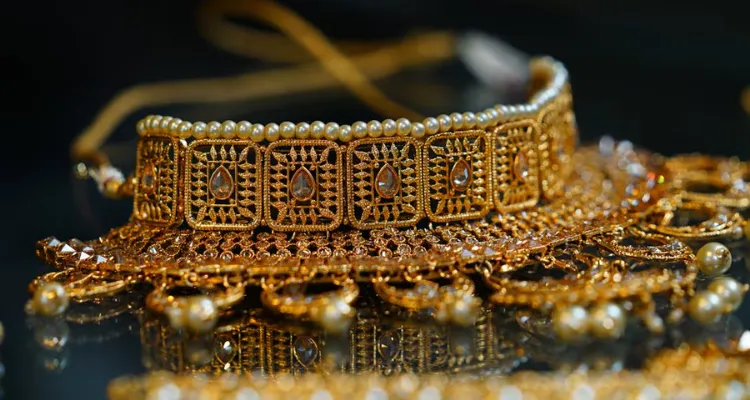
The city is also home to distinctive traditional techniques. Kundan is the ancient art of setting stones in burnished strips of highly refined gold foil, without claws. Meenakari is coloured enamel work, often applied to the back of a piece so that the hidden side is as beautiful as the front. Polki jewellery uses uncut or flat-cut diamonds backed with foil to catch the light. A Jaipur kundan necklace with enamelled reverse and polki diamonds is something of a signature, and the finest examples are works of art in their own right. Many international buyers, however, prefer contemporary designs with cleaner settings, and the best houses are equally skilled in both styles.
It helps to be clear about what you want before you walk in. Some people come for a single important stone, such as a two to three carat emerald or a fine unheated sapphire, to be set at home by their own jeweller. Others want a finished piece with local character. Still others are interested in good quality semi-precious jewellery, such as tourmaline, aquamarine or garnet earrings, at a price that does not demand a laboratory report. Each of these needs a slightly different approach, and the right house for one may not be the right house for another.
Price expectations should be realistic. A well-made pair of semi-precious gold earrings from a reputable shop might cost Rs.25,000 to Rs.80,000, roughly 280 to 900 US dollars. A good emerald ring in 18 carat gold with a centre stone of one to two carats usually starts around Rs.150,000 to Rs.400,000, about 1,700 to 4,500 US dollars, and climbs steeply with colour and clarity. Exceptional stones and statement kundan pieces can run into the tens of thousands of dollars. Anyone offering a "fine emerald" of several carats for the price of a nice dinner is not offering a fine emerald.
Discover Jaipur's exquisite jewellery traditions, precious gemstones and timeless designs. Explore exceptional craftsmanship, distinctive collections and luxury shopping experiences during your unforgettable journey through Rajasthan.
The most famous name in the city is The Gem Palace on MI Road, run by the Kasliwal family. The family has been associated with the Jaipur court since the 18th century, and the business has traded under the Gem Palace name since the mid-19th century. Its rooms are lined with antique pieces, cut stones and contemporary designs, and its clients have included royalty, film stars and collectors from around the world. Prices range from a few hundred dollars for small items to many millions for museum-quality pieces. The house still cuts stones from rough and uses traditional hand methods, and it is known for enamelling the reverse of its pieces. A related family brand, Munnu The Gem Palace, carries the design legacy of the late Munnu Kasliwal and is known for bold, modern takes on traditional forms.
Amrapali Jewels was founded in Jaipur by two history graduates, Rajiv Arora and Rajesh Ajmera, and grew from a small silver and tribal jewellery business into an internationally known brand. Its range runs from affordable silver to serious gold and diamond pieces, and its designs are inspired by historic Indian jewellery. The founders also created the Amrapali Museum on Ashok Marg in C-Scheme, which displays around 800 pieces of traditional Indian jewellery and silver objects across two floors. A visit to the museum before shopping is an excellent way to train your eye and learn the vocabulary of styles.
Surana Jewellers traces its roots to the early 18th century as jewellers to the Jaipur court and is especially respected for kundan and enamel work set with polki diamonds in high-carat gold. Bridal and occasion jewellery is a large part of its business, and its larger pieces are serious investments. For simpler, fixed-price shopping, Rajasthali, the state government emporium on MI Road, sells crafts and some silver and semi-precious jewellery at marked prices, which takes the haggling and uncertainty out of small purchases.
The houses listed above work quite differently from the smaller gem shops near Johari Bazaar and the Hawa Mahal. At an established house you can expect a quiet private room, a consultation without pressure, clear written pricing, a proper tax invoice and, for important stones, a certificate from a recognised laboratory. Many will happily send a stone out for independent testing at your request. Commissions are normal: the house will sketch a design, show you a selection of stones, quote a price and finish the piece in anywhere from two days to several weeks, depending on complexity. A deposit of 30 to 50 percent is usual for custom work.
Smaller dealers in the old city can sell honest stones at good prices, and the wholesale trade around Johari Bazaar is the heart of the city's gem economy. The difficulty for a visitor is telling the honest from the opportunistic in a single afternoon. A sensible rule is to buy anything important from a house with a long, verifiable reputation, and to keep smaller, unplanned purchases to amounts you would be comfortable losing.
One practical point about guides and drivers: in Jaipur, some drivers and guides are paid a commission by shops for bringing in customers, sometimes as much as a quarter of the bill. That cost ends up in your price. A good private tour operator will take you only where you ask to go and will not steer you anywhere. If a driver insists on a particular "government approved" gem shop, politely decline and name the house you want to visit.
A gemstone certificate is only as reliable as the laboratory that issued it. In Jaipur, the most important local name is the Gem Testing Laboratory run by the Gem and Jewellery Export Promotion Council, the trade body set up by the Government of India. For close to five decades it operated from the Rajasthan Chamber Bhawan on MI Road. It has since moved to a much larger, upgraded facility of around 10,000 square feet on the campus of the Indian Institute of Gem and Jewellery in the Sitapura area, and the council describes it as the largest coloured gemstone certification facility in the country. It identifies stones, separates natural from synthetic material, tests pearls and checks diamonds, and it has been expanding into origin reports for rubies, sapphires and emeralds. Fees for a basic identification report are modest, usually a small fraction of the value of a good stone, and turnaround can be fast. Ask the jeweller or your tour operator to confirm current charges and timings before you submit anything.
For diamonds, the names most recognised internationally are GIA, the Gemological Institute of America, which runs laboratory operations in Mumbai, and IGI, the International Gemological Institute, whose reports are widely used across the Indian trade. A GIA certificate or IGI certificate for a diamond records carat weight, colour, clarity and cut, and usually includes a laser inscription on the girdle that matches the report number. For important coloured stones, buyers at the very top end sometimes prefer reports from Swiss laboratories such as Gübelin or SSEF, and Gübelin has run temporary testing sessions in Jaipur for the trade. These reports are expensive and take time, so they make sense mainly for stones worth many thousands of dollars.
What a report proves matters as much as who wrote it. A basic identification report confirms what the stone is, whether it is natural or synthetic, and whether it has been treated. For emeralds, the key question is the degree of oil or resin filling in fractures, which almost all emeralds have to some extent. Reports usually describe this as none, minor, moderate or significant, and the price should reflect it. For rubies and sapphires, the key question is heat treatment and, increasingly, whether glass or other substances have been used to fill cracks. Glass-filled rubies look impressive and are very cheap to produce, but they are worth only a tiny fraction of an untreated stone and can be damaged by ordinary cleaning.
Always check that the certificate matches the stone in front of you. The report should list exact weight to two decimal places, measurements in millimetres and a photograph. Weigh the stone on the jeweller's scale in your presence and compare. You can also verify reports from GIA and IGI online by entering the report number on their official websites, which takes a minute on your phone. If a report cannot be verified, or comes from a laboratory you cannot find any independent information about, treat it as decoration rather than evidence.
A useful approach for a significant purchase is to agree the price subject to independent testing. Pay a deposit, ask for the stone to be sent to the GJEPC laboratory or another recognised lab, and complete the purchase when the report confirms what you were told. Reputable houses accept this without fuss. Any seller who becomes evasive at the mention of independent testing has given you all the information you need.
Explore Jaipur's distinguished jewellery boutiques and exceptional gemstone collections. Enjoy personalised shopping experiences, discover elegant designs and find distinctive treasures during your India holiday.
The best-known trap in the city is so well documented that it appears in travel advisories and guidebooks, and yet it still catches people every season. It usually begins with a friendly young man who strikes up conversation near the City Palace, the Hawa Mahal, Johari Bazaar or a café popular with backpackers. He is polite, well dressed and often speaks good English, French or Spanish. After a while he mentions that his family is in the gem trade and invites you for tea at the shop. There, the conversation turns to business. Because of export limits, he explains, the family cannot send more stones abroad this year. If you carry a parcel of gems home as personal luggage, a partner company in your country will buy them for several times the price, and you will share the profit.
You are asked to pay for the stones yourself, usually by credit card, as a sign of good faith or to cover export duty. Sometimes you are shown letters from earlier "partners" and references in your own language. The stones are typically coloured glass, synthetics or very low-grade material, and the buyer abroad does not exist. The certificates printed on the spot come from unknown private bodies. Victims have lost anything from a few hundred dollars to tens of thousands. The Jaipur gem export scam depends entirely on the promise of easy profit, and the simplest protection is to remember that no legitimate jeweller needs a tourist to carry stones through customs.
Other, milder traps are worth knowing too. Some shops quote prices in a vague way, then add charges for "certification", "polishing" or "export tax" at the end. Some sellers swap a good stone shown during negotiation for a lesser one when the piece is packed. Some describe a stone loosely, calling a pale green beryl an emerald or a spinel a ruby. Others sell gold jewellery described as 18 carat that is actually lower. To avoid all of these, insist on a written invoice that names the stone, its weight, any treatment and the gold purity, watch the packing, and pay by credit card rather than cash so that you have some recourse if something goes wrong.
Gold purity in India is regulated through BIS hallmarking. Hallmarked gold jewellery carries the Bureau of Indian Standards mark, the purity grade such as 22K or 18K, and a unique six-character identification code that can be checked through the government's BIS Care app. Most reputable Jaipur jewellers sell hallmarked gold, and it is a useful check on the metal even when you are relying on a lab report for the stone.
If you do feel you have been cheated, report it promptly to the Rajasthan Tourist Police, who have booths near major monuments, and to your card issuer. Recovering money is difficult once you have left India, so the time to be cautious is before you pay. A calm "I need to think about it" is always acceptable in a good shop, and an honest seller will still be there the next morning.
Every legitimate jewellery sale in India should come with a GST tax invoice. The rate on gold, silver, jewellery and precious stones is 3 percent of the sale value, which is much lower than the 18 percent applied to hotels and restaurant services. The invoice should show the seller's GST number, your name, a full description of each item, the gross and net weight of the gold, the carat weight and type of each stone, the price and the tax. Keep the original, keep a photograph of it on your phone, and keep any laboratory reports together with it. These documents are your proof of value for customs, insurance and any future resale.
Indian tax law includes a provision for foreign tourists to reclaim GST on goods carried out of the country, and there has been talk for years of refund counters at airports. In practice, a working tourist refund system has not been reliably available, so it is safest to assume the 3 percent is a cost you will not recover. On a large purchase, the alternative is to have the jeweller ship the item to you abroad as a formal export, which is zero-rated for GST, as described in the next section.
Leaving India with jewellery you have bought is straightforward if your paperwork is in order. Carry all jewellery in your hand luggage, never in checked bags, and have the invoices ready. Indian customs officers at Jaipur, Delhi or Mumbai may ask about high-value items, especially large quantities of gold, and a clear invoice from a registered seller answers the question quickly. Wearing a valuable piece through the airport is fine, but you should still carry its invoice.
The more significant step is arriving home. Each country has its own duty-free allowance for goods bought abroad, and jewellery above that limit must be declared. The allowance is around 800 US dollars per person for most travellers returning to the United States, around £390 for the United Kingdom, and around €430 for travellers arriving by air into the European Union, though rules and limits change and you should check your own country's current figures before you fly. Above the allowance you pay import duty and often sales tax or VAT on the declared value, so a UK resident bringing home a Rs.400,000 emerald ring would normally pay 20 percent VAT and possibly duty on the amount above the allowance. Declaring honestly with an invoice is always cheaper than being caught with an undeclared item, which can lead to seizure and fines.
A final practical step is insurance. Most home insurance policies cover jewellery only up to a modest limit unless an item is specifically listed. Before you leave Jaipur, ask the jeweller for a detailed valuation document in addition to the invoice, photograph the piece next to its report, and send copies to yourself by email. Your insurer at home will usually want these when you add the item to your policy.
For major purchases, many visitors choose to have the jeweller ship jewellery abroad rather than carry it. Indian customs rules now allow gem and jewellery exports by courier, and the larger Jaipur houses regularly send insured parcels to clients overseas. When a piece is sent as a formal export, the jeweller files the export documents, the sale is zero-rated for GST, and the parcel travels with a commercial invoice and packing list addressed to you. High-value items usually travel with specialist insured carriers for valuables, such as Malca-Amit or Brink's, rather than ordinary parcel services. Delivery to Europe or North America typically takes five to ten working days.
Shipping costs depend on value, because insurance is the main expense. As a rough guide, sending a piece worth Rs.300,000 to Rs.1,000,000 abroad with full insurance through a specialist carrier might cost Rs.15,000 to Rs.45,000, around 170 to 510 US dollars, although the jeweller may include it in the price for larger orders. When the parcel reaches your country, you will normally be asked to pay import duty and VAT or sales tax before delivery, exactly as if you had carried it yourself. The advantage is that you are not carrying a valuable item through several airports, and the item is fully insured from the shop to your door.
Before agreeing to shipping, confirm a few details in writing. Ask which carrier will be used and whether the insurance covers the full invoice value. Ask whether the price includes duties and taxes at the destination, which is rare, or excludes them, which is normal. Ask for the tracking number as soon as the parcel leaves Jaipur. Pay by credit card, and if the item is custom-made, pay the deposit by card too. A reputable house will be completely open about all of this.
Timing custom work around your trip takes a little thought. A simple ring setting with an existing stone can often be finished in two or three days. A new design with multiple stones, or a kundan and enamel piece, can take two to six weeks. The easiest approach is to visit jewellers on your first full day in Jaipur, agree a design and deposit, and then continue to Ranthambore, Udaipur or Jodhpur while the piece is made. A fitting or final inspection can be arranged on your return through the city, or the finished piece can be shipped. Many travellers also order by email or video call after they get home, once they have built a relationship with a house they trust.
The best days for jewellery shopping are weekdays outside major festival periods, when the senior family members are more likely to be available. Most established houses open from around 10:30 in the morning to 7:30 in the evening, and some close on Sundays, so it is wise to call ahead. Allow at least two to three unhurried hours for a serious purchase. A private tour operator can book appointments with the houses you want to see, arrange a visit to the Amrapali Museum or a gem-cutting workshop beforehand, and keep the rest of the day free, so the decision never feels rushed.
Yes. Jaipur is one of the world's main cutting and trading centres for emeralds, so the range is large and prices are often lower than abroad. Buy important stones from an established house and ask for a laboratory report that states the level of oil or resin treatment.
Long-established names include The Gem Palace and Munnu The Gem Palace, Amrapali Jewels and Surana Jewellers. For small fixed-price purchases, the government emporium Rajasthali on MI Road is reliable.
The Gem Testing Laboratory run by the Gem and Jewellery Export Promotion Council tests coloured stones, pearls and diamonds from its facility in Sitapura. Reputable jewellers will send a stone there for you before you complete a purchase.
Many diamonds sold by good Jaipur houses already carry GIA or IGI reports, which you can verify online with the report number. GIA operates laboratory services in Mumbai, so new reports can be arranged but take extra time.
A friendly stranger invites you to a shop and proposes that you buy gems and carry them home to resell to a partner company at a large profit. The stones are worthless and the buyer does not exist, so never buy gems as an investment or agree to carry them for anyone.
GST on gold jewellery, silver and precious stones is 3 percent of the sale value. It should appear clearly on a proper tax invoice that also lists the seller's GST number.
The law provides for it, but a dependable tourist refund system at Indian airports has not been in regular operation. For large purchases, having the jeweller ship the item abroad as an export removes GST from the invoice.
Yes, if its value exceeds your country's duty-free allowance, which is around 800 US dollars for the United States and around £390 for the United Kingdom. Carry the invoice and declare it on arrival.
Yes. Established houses regularly ship insured parcels abroad through specialist carriers. Expect delivery in about a week and import duty or VAT to be collected in your country before delivery.
A simple setting can be ready in two or three days, while detailed kundan or multi-stone pieces take two to six weeks. Order early in your stay, then collect on your return or have it shipped.