Your Travel Partner
SINCE 1989
Your Travel Partner
SINCE 1989
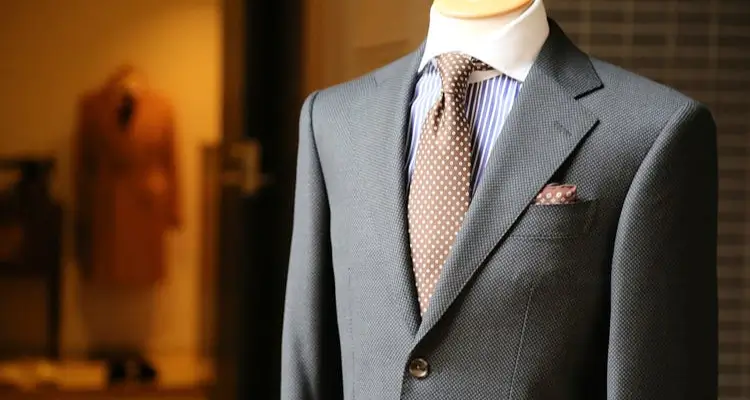
There is a particular pleasure in standing in a small fitting room in Jaipur while a tailor with a tape measure around his neck chalks lines onto a half-finished jacket. Outside, the traffic hums and someone is pouring tea in tiny glasses. Inside, it is quiet, careful work, and the jacket on your shoulders is being shaped for you alone. Bespoke tailoring in India is one of the best-value luxuries a traveller can enjoy. A made-to-measure suit in fine wool costs a fraction of what it would in London, New York or Sydney, and the craft behind it goes back generations, with family workshops that once dressed royal households. Jaipur is famous for the closed-collar Jodhpur jacket and for wedding wear, while Delhi has tailors who trained in the British tradition and work with imported cloth. This guide covers who to visit, what to order, how much to pay for a custom suit in Jaipur or Delhi, what a sherwani actually is, how many fittings to expect, whether a 48-hour turnaround is realistic, and how to ship it all home safely.
Rajasthan has a long tailoring history tied to its royal families. The princely states of Jaipur, Jodhpur and Udaipur kept court tailors who made riding breeches, formal coats and ceremonial outfits for rulers, nobles and visiting British officers. The Jodhpur jacket, a fitted, closed-neck coat that buttons up to the collar, grew out of that world and is now worn at weddings, state dinners and smart evenings across India. It looks crisp and elegant, and it photographs beautifully. Many visitors leave Rajasthan with one in navy, black or ivory.
Jaipur is a natural place to order. The city is the textile capital of the state, known worldwide for block-printed cotton, fine silks and hand embroidery, and it has a large community of skilled tailors, cutters and embroiderers. Wedding season keeps them busy from October to February, and many workshops are used to working quickly and to a high finish. One well-established name is Jodhpur Tailors in Jaipur, a family business founded by Shankarlal Chouhan, who designed clothing for Rajput royal families. Over the decades the workshop has dressed Maharaja Bhawani Singh of Jaipur and political figures, and it is known for Jodhpur-style closed-collar suits, riding breeches, Western suits and sherwanis. It also takes orders online and ships within India and abroad.
Delhi offers a different strength. The capital has tailors who learned their trade in the British tradition and work with Italian and English cloth for business suits and dinner jackets. The best-known is Vaish at Rivoli, near the Rivoli cinema in Connaught Place, run by three generations of the Vaish family. Both the grandfather and the father trained at a tailoring academy in London, and the house has worked with visiting Italian master tailors to refine its methods. It is a genuine bespoke tailor rather than a quick-turnaround shop, with several fittings, a paper pattern cut for each client and careful handwork. Reviews from international clients regularly praise the fit and the quality of the cloth.
Delhi also has designer labels for those who want a high-fashion version of traditional dress. Raghavendra Rathore, the Jodhpur-born designer who made the closed-collar jacket fashionable again, has a store in DLF Emporio in Vasant Kunj, a short drive from the airport. His house offers made-to-measure and bespoke pieces, with consultations, fittings and handwork done in India. Prices are at the top of the market, but the cut and finishing reflect that.
The case for having clothes made here is simple. Labour costs are much lower than in Europe or North America, the fabric choice is wide, and skilled hands are easy to find. The catch is that quality varies widely, from superb to disappointing. Choosing well, giving the tailor enough time and knowing what to check at each fitting make all the difference.
Experience India's tailoring heritage in Jaipur and Delhi. Choose distinctive fabrics, personalised designs and expert craftsmanship to create custom garments that reflect your style and individuality.
The fabric decides how a garment looks, feels and ages, so it is worth spending real time on this step. For a tailored suit in India, most good tailors keep books of imported cloth from English and Italian mills, as well as fabric from well-known Indian mills such as Raymond, Siyaram's and Arvind. Pure wool in a medium weight, around 260 to 300 grams per metre, suits most climates and travels well. Lighter wools, wool and linen blends, and pure linen are better for warm countries. For a winter evening suit or a closed-collar jacket, wool flannel, velvet and tweed look rich and hold their shape.
Be careful with labels. Some tailors describe blends as pure wool, and a polyester mix can look convincing in a shop under bright lights. Ask to see the selvedge, the woven edge of the cloth where mills often print their name and composition. A reputable tailor will show this happily. Good tailors will also point you towards fabrics that suit your skin tone, the climate at home and the occasion, rather than pushing whatever is most expensive.
Most visitors order one of five kinds of garment. A two-piece or three-piece suit in navy, charcoal or mid-grey is the most practical and the easiest to wear at home. A Jodhpur-style closed-collar suit, with a fitted jacket and matching or contrasting trousers, is the classic Rajasthan order and works for weddings and formal dinners. A sleeveless waistcoat-style jacket, often in silk or textured wool, is a light layer that looks smart over a shirt. Custom shirts in Egyptian cotton, linen or fine poplin are inexpensive and quick, and many travellers order several. Finally, a sherwani is the grand option for weddings.
A sherwani is a long, fitted, knee-length coat that buttons from neck to waist, traditionally worn by grooms and male guests at Indian weddings and formal occasions. It is usually paired with slim trousers or loose drawstring trousers, a long stole over one shoulder and, for grooms, a turban or a decorative brooch. Sherwanis come in silk, raw silk, brocade, velvet and wool. Many carry embroidery in metallic gold or silver thread, beading or self-coloured stitching. A simpler sherwani in ivory, beige or deep blue with modest embroidery suits a foreign guest at an Indian wedding, while heavy hand embroidery and jewel tones are usually reserved for the groom.
Details make the garment yours. Discuss lapel width, the number of buttons, side vents or a single back vent, trouser break, cuff style, lining colour and pocket shapes. Bring photographs of suits you like, or a favourite jacket from home for the tailor to study. Monograms inside the lining are a nice touch and usually cost very little.
Prices depend on three things: the fabric, the level of handwork, and the reputation of the tailor. The ranges below sit on the realistic side for quality work in Jaipur and Delhi. Cheaper offers certainly exist in tourist markets, but they rarely deliver a garment worth keeping.
Designer houses sit above these figures. A designer closed-collar jacket or sherwani can cost several hundred thousand rupees, especially with velvet, hand embroidery or bespoke detailing. International luxury brands that offer made-to-measure in Delhi, usually in malls such as DLF Emporio, charge prices closer to European levels.
The cost of a sherwani in India comes mostly from the embroidery. Metallic thread work done by hand can take a team of craftsmen weeks, and the price rises with the density of the design. A machine-embroidered piece looks good from a distance and costs much less, but it lacks the depth and texture of hand stitching. Ask the tailor to show you both, side by side, and the difference becomes clear at once.
A few practical points about paying. Most tailors take an advance of 30 to 50 percent when you order, with the balance on collection. Credit cards are widely accepted at established tailors, although smaller workshops may prefer cash or UPI bank transfers, which are difficult for foreigners. GST of 5 or 12 percent applies to clothing depending on the price band, and it should be shown on the invoice. Always get a written order slip listing the fabric, style details, price, advance paid and delivery date.
Haggling is common in markets, but it is less appropriate at a reputable tailor with fixed prices. A fair discount for ordering several pieces at once is reasonable to ask for. Be wary of anyone offering a very low price with a promise of imported wool and a two-day finish; one of those three things is usually not true.
Transform your style with custom-made clothing tailored to your measurements. Explore fabric choices, personalised details and professional fittings for a wardrobe that feels uniquely yours.
Time is the most important ingredient in a good garment, and it is the one travellers usually have least of. Knowing how the process works makes it much easier to fit tailoring into a tour of Rajasthan.
A true bespoke suit involves a paper pattern cut for your body, a first fitting with the jacket loosely basted together with white thread, a second fitting with sleeves and collar attached, and a final fitting before finishing. Top houses in Delhi often ask for four or five fittings. This normally takes two to four weeks, and sometimes longer for complex orders. A made-to-measure suit adapts an existing pattern to your measurements and usually needs two fittings. Done well, it takes five to ten days. A shirt needs only one fitting and can often be ready in two or three days.
So is a 48-hour suit possible? In many Jaipur and Delhi workshops, yes, a suit can be finished in about two days, and travellers on short trips do it often. The trade-off is that the tailor will work largely by machine, use a standard pattern adjusted for your size, and fit you once, perhaps twice. The result can be very respectable, especially for a simple navy suit in a forgiving fabric, but it will not have the shape or finish of a garment made over two weeks. Rush orders usually carry an extra charge of 20 to 40 percent. For a closed-collar jacket, which needs a sharp fit at the neck and chest, three to four days is a more sensible minimum. A hand-embroidered sherwani cannot be rushed at all: the embroidery alone takes weeks.
The smartest approach is to order on the first day of the tour. Many Rajasthan routes begin in Delhi, continue to Agra and Ranthambore, and end in Jaipur, or the reverse. A traveller who visits a tailor on arrival in Jaipur can have a first fitting before leaving for Jodhpur or Udaipur and a final fitting on the way back through. In Delhi, ordering on the first afternoon and collecting at the end of the trip gives the tailor a full week or more, which is enough for excellent made-to-measure work.
Fittings matter, so treat them seriously. Wear the shoes and shirt you will wear with the suit. Stand naturally rather than straightening up. Check that the collar sits flat on the back of your neck without a gap, that the shoulders do not dimple, that you can lift your arms without the whole jacket riding up, and that the trousers fall cleanly. Sit down, walk around and reach forward. Point out anything that pulls or feels tight; a good tailor wants to hear it. Ask for final collection at least a day, ideally two or three, before you fly so there is time to correct any last details.
Some tailors will visit your hotel for measurements and fittings, which saves time between sightseeing. Luxury hotels in Jaipur and Delhi can often arrange this, and your tour operator can schedule it around fort visits and drives.
Many travellers do not want to carry a suit carrier through several flights and road trips, especially if the order finishes after they have left a city. Fortunately, shipping custom clothes from India is straightforward with established tailors. Most offer to send finished garments abroad by courier, usually DHL, FedEx or UPS, with tracking and delivery in around four to eight working days to Europe, North America or Australia. Expect to pay roughly Rs.4,000 to Rs.9,000 for a suit, about 45 to 100 US dollars, depending on weight and destination. India Post's international parcel service is cheaper but slower and less predictable for valuable items.
Shipping does have a few costs that travellers forget. Your home country may charge import duty and sales tax on clothes sent from India, calculated on the declared value. The courier usually collects these on delivery. Rules and thresholds differ widely: the United States, the United Kingdom, the European Union, Canada and Australia each have their own limits. Ask the tailor to declare the true value and keep your invoice. Under-declaring may seem tempting, but it can cause delays, fines or problems with insurance claims if the parcel is lost.
If you choose to carry your clothes, ask the tailor for a proper suit carrier with a wide hanger, tissue paper in the sleeves and a separate bag for the trousers. Hand luggage is safest for a sherwani with heavy embroidery, since checked bags can be crushed or delayed. Many luxury hotels offer pressing and steaming, which helps restore a jacket after a long drive. Avoid ironing embroidered panels directly; turn them inside out or use a cloth between the iron and the fabric.
For future orders, keep a record of your measurements. Good tailors will store your pattern and measurements on file, so that you can reorder shirts or a second suit by email after you get home. Many will also send fabric swatches by courier. Raghavendra Rathore's house, for example, offers virtual consultations and remote measuring for clients abroad, and Jodhpur Tailors takes orders online with guidance on measuring. This makes your first visit the start of a relationship rather than a one-off purchase.
A final word on care. Fine wool needs rest between wears, a good wooden hanger and the occasional steam rather than frequent dry cleaning. Silk sherwanis should be stored flat or on a padded hanger in a breathable cotton cover, away from damp and direct sunlight. Metallic thread embroidery can tarnish if stored in plastic. Treated well, a garment made in Jaipur or Delhi will last for many years, and every time you wear it, you will remember the small fitting room, the chalk lines and the quiet care that went into it.
Yes, many Jaipur tailors can finish a simple suit in about two days, often for a rush charge of 20 to 40 percent. Expect one or two fittings and a standard pattern adjusted to your size, rather than full bespoke work.
A good made-to-measure suit in imported wool usually costs ₹40,000 to ₹90,000. Full bespoke work from a top Delhi house can cost ₹60,000 to ₹150,000 or more.
A sherwani is a long, fitted, knee-length coat that buttons from neck to waist, worn by grooms and male guests at Indian weddings. It is usually paired with slim trousers and a stole, and often decorated with metallic thread embroidery.
A simple silk sherwani with light embroidery usually costs ₹30,000 to ₹70,000. A heavily hand-embroidered groom's sherwani can cost ₹100,000 to ₹350,000 or more.
Jodhpur Tailors in Jaipur is a long-established family workshop that has dressed members of the Jaipur royal family. It makes Jodhpur-style suits, Western suits, riding breeches and sherwanis, and ships abroad.
Vaish at Rivoli in Connaught Place is one of Delhi's most respected bespoke houses, run by three generations of a family trained in London. Expect several fittings over two weeks or more.
A made-to-measure suit usually needs two fittings over five to ten days. Full bespoke work needs three to five fittings and normally takes two to four weeks.
Yes. Established tailors ship by DHL, FedEx or UPS, usually arriving in four to eight working days. Shipping a suit typically costs ₹4,000 to ₹9,000, and import duty may be charged at home.
Medium-weight pure wool from English, Italian or good Indian mills suits most climates. Choose linen or light wool for warm countries, and ask to see the cloth's selvedge to confirm the composition.
Choose a reputable tailor, give them as much time as possible, confirm the fabric composition and get a written order slip. Be cautious of very low prices combined with promises of imported wool and an instant finish.