Your Travel Partner
SINCE 1989
Your Travel Partner
SINCE 1989
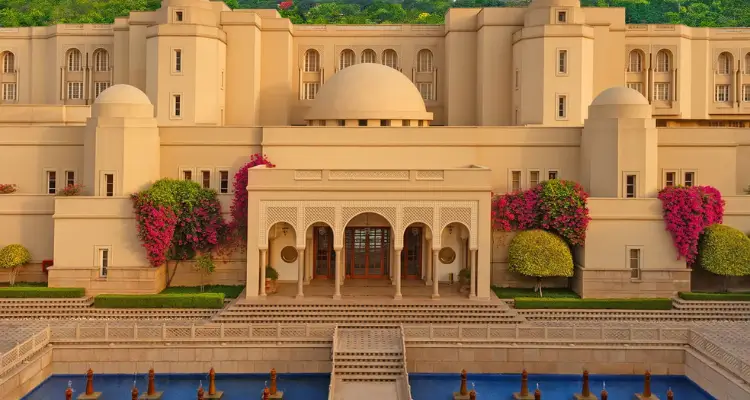
It isn't often that a five-star hotel serves deep, regional Indian food and actually does justice to it. An Awadhi food festival we attended at ITC Rajputana, Jaipur did exactly that, and the meal stayed with us long after the plates were cleared. This post revisits that experience and doubles up as a guide to Awadhi cuisine itself: what it is, the dishes you must try, and where you can taste Lucknow's royal food today, in Jaipur and beyond.
Awadhi cuisine was born in the royal kitchens of the Nawabs of Awadh, centred on Lucknow. Its defining technique is dum pukht, slow cooking in a sealed handi so the ingredients cook in their own steam and juices. The result is food that whispers rather than shouts. Where some regional cuisines rely on heat and punch, Awadhi food leans on aroma: saffron, kewra, rose water, mace and cardamom, layered over meats and vegetables until everything turns silken.
The other hallmark is refinement. Legend has it that the melt-in-the-mouth galouti kebab was created for an ageing Nawab who had lost his teeth but not his appetite. That story tells you everything about this cuisine's obsession with texture.
The spread at ITC Rajputana balanced vegetarian and non-vegetarian dishes beautifully, which is rarer than it should be at Awadhi tables.
We began with the shorbas. The paya shorba was deep and gelatinous in the best way, while the badaam ka shorba proved that vegetarians lose nothing here; it was creamy, nutty and quietly luxurious. Our tip: order the kebabs alongside and eat them together. One kebab in particular, a fried patty of hung yogurt and reduced milk, had a soft, slightly gummy bite with a mild sour undertone that paired superbly with the soup.
Then came the classics: quorma, qaliya and salan, each slow-cooked until the meat gave way at the touch of a spoon. If your only memory of Lucknow's food is a hurried biryani, a meal like this will either bring that trip flooding back or convince you to book one.
If you are new to this cuisine, build your first meal around these:
Vegetarians should look for subz galouti, dum ke aloo, badaam ka shorba and paneer preparations cooked in the same patient style.
In Jaipur: ITC Rajputana remains one of the city's most reliable addresses for serious Indian food, and the hotel regularly hosts regional cuisine festivals through the year, so keep an eye on its dining calendar and social pages for the next Awadhi or Mughlai pop-up. Its acclaimed restaurant Peshawri, famous for North-West Frontier cooking and the legendary Dal Bukhara, makes a fine consolation any day of the week. Several standalone Mughlai restaurants around MI Road and the old city also serve kormas and kebabs in a related style.
In Lucknow: Nothing beats the source. Plan a food walk through Chowk and Aminabad for tunday-style galouti kebabs, old-school biryani houses and makhan malai in winter. Frankly, one festival meal in Jaipur is all the persuasion you need.
Elsewhere: ITC's flagship Awadhi restaurant, Dum Pukht in Delhi, is widely regarded as the benchmark for this cuisine in a luxury setting.
That afternoon at ITC Rajputana taught us that great regional food festivals do more than feed you; they hand you a reason to travel. If an Awadhi festival comes to a hotel near you, go hungry and start with the shorba. And if it doesn't, well, Lucknow is only a short flight from Jaipur.