Your Travel Partner
SINCE 1989
Your Travel Partner
SINCE 1989
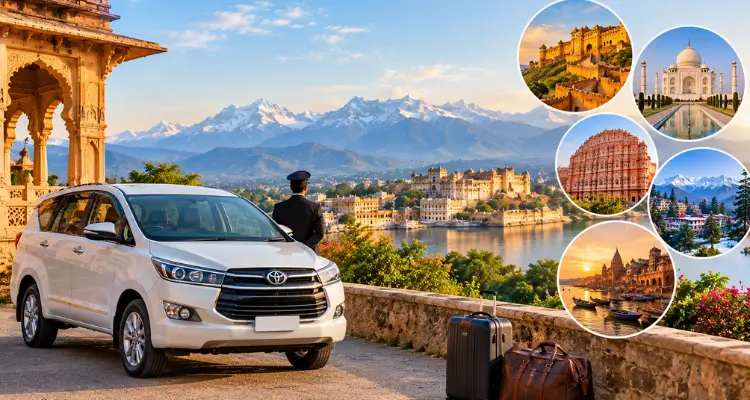
A North India private tour with driver gives international travelers the freedom to move between some of India's most important cultural destinations without following the timetable of a large group tour. Delhi, Agra and Jaipur can form the core of a relatively compact first journey, while travelers with additional time can continue through Rajasthan, include a wildlife stay at Ranthambore, travel into the Himalayan foothills or connect with Varanasi using an appropriate combination of road and air travel.
The advantage of having a private chauffeur is not simply that a car waits outside the hotel. The greater benefit is continuity. On a road-based itinerary, travelers can leave their luggage in the vehicle during transfers, depart at an agreed time, take suitable breaks and travel directly between their selected hotels. A professional driver can remain with the guests through several road-connected destinations, while specialist local guides join for sightseeing in individual cities.
This arrangement is particularly suitable for couples, families and small private groups who want more control over the pace of the journey. A couple may want a slower route with premium hotels and three-night stays in selected cities. A family may require a larger vehicle and shorter sightseeing days. Travelers interested in history may want professional guides in almost every major destination, while repeat visitors may prefer smaller heritage towns and fewer conventional attractions.
North India is far too large to treat every famous destination as part of one continuous road circuit. Delhi, Agra, Jaipur and much of Rajasthan connect naturally by road. Varanasi generally requires a different transportation decision. Himalayan destinations can involve long mountain journeys, and Central Indian wildlife reserves may require flights or trains combined with private transfers.
Travel Plan can coordinate a private North India tour with chauffeur, selected accommodation, professional local guides and domestic connections where required. The strongest journey uses a private car where it adds comfort and flexibility while avoiding unnecessarily long drives merely for the sake of keeping the same vehicle throughout the holiday.
For a first visit, Delhi, Agra and Jaipur provide one of the most practical foundations for a private North India itinerary. These three destinations are different enough to create variety, yet close enough geographically to be combined without repeated domestic flights.
Delhi is usually the natural starting point because of its international air connections. Travelers arriving after a long international flight should give themselves enough time to recover before beginning an intensive sightseeing program.
Two or three nights can work well for many visitors.
Delhi deserves to be treated as a destination rather than simply an airport gateway. The city contains historical layers that span different dynasties and periods, and a professional guide can help make sense of the transition between Old Delhi, Mughal monuments and the broader architecture of New Delhi.
A private Delhi tour with driver and guide allows travelers to move between areas efficiently while the guide handles the historical interpretation.
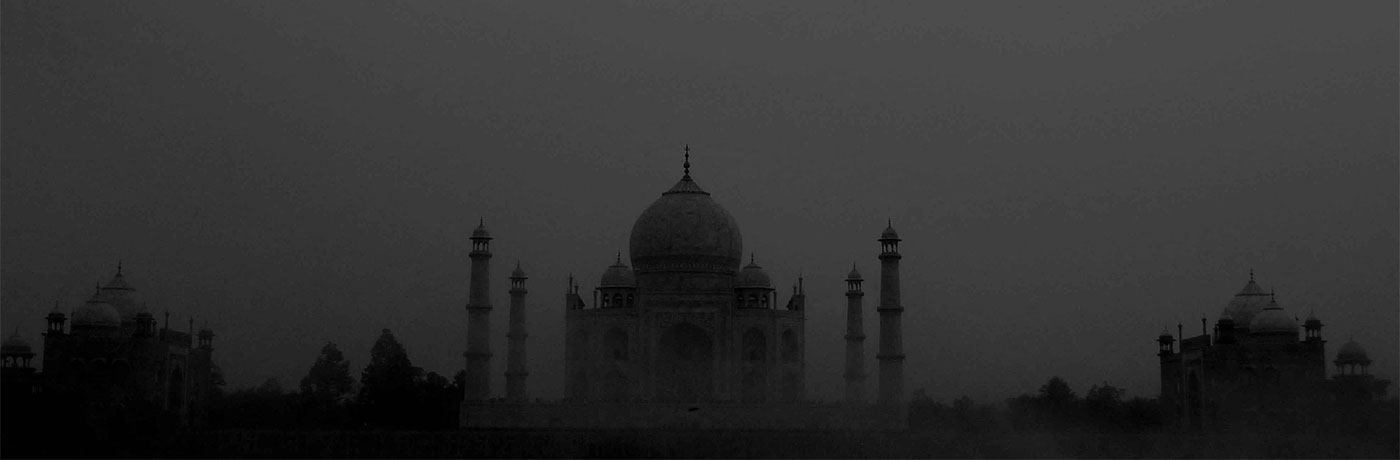
After Delhi, the private chauffeur can continue toward Agra. The Taj Mahal is the principal reason many international visitors include the city, but Agra Fort and other Mughal sites can add considerable depth to the stay.
One night is sufficient for travelers with a tight schedule, but two nights can provide a more relaxed experience. Guests selecting a high-end hotel may also want enough time to enjoy the property rather than checking in late and leaving immediately after the next morning's sightseeing.
The road route can then continue to Jaipur.
Depending on the confirmed schedule and travelers' interests, Fatehpur Sikri can be incorporated between Agra and Jaipur. It should be treated as a significant historic site rather than an obligatory stop inserted into every itinerary.
Jaipur generally deserves at least two nights. Three nights can work better for travelers wanting a more comfortable pace.
Amber Fort, City Palace and Jantar Mantar provide the principal heritage experiences, but Jaipur also offers craft traditions, markets, food and accommodation that can justify additional time.
This creates the classic Golden Triangle private tour with driver, but private travel allows the route to extend far beyond the standard three-city package.
Travelers with seven or eight nights may decide that Delhi, Agra and Jaipur are enough. Guests with 12 to 16 nights can continue into Rajasthan or add wildlife without turning the holiday into a sequence of hurried overnight stops.
The number of cities should always be secondary to the quality of time available in each destination.
Discover North India at your own pace with a private tour designed around your budget, preferred hotels and travel interests. From Delhi's historic landmarks and Agra's iconic Taj Mahal to Jaipur's royal heritage, enjoy the convenience of private transportation and personalised sightseeing arrangements.
Rajasthan is a natural extension of a North India road journey because Jaipur connects comfortably with several important destinations farther west.
Jodhpur and Udaipur create one of the strongest combinations.
Jodhpur introduces the imposing Mehrangarh Fort and a historic urban landscape very different from Jaipur. The fort deserves enough time for both its architecture and collections, and a professional local guide can provide detailed context.
Two nights can work well for many travelers.
Udaipur then changes the character of the journey. Its lakes, palace architecture and surrounding landscape make it one of the best places in North India to slow the pace.
For travelers selecting a premium lakeside hotel or resort, three nights can be particularly worthwhile. Spending heavily on accommodation and then remaining inside the property for only a few waking hours rarely represents good value.
The road journey between Jodhpur and Udaipur can sometimes incorporate Ranakpur, allowing an important architectural stop to become part of the transfer rather than requiring a separate excursion.
Jaisalmer can be added for travelers with more time. Its western location makes it a significant extension, so it should not be forced into a short Rajasthan private driver tour.
Travelers interested in desert landscapes, sandstone architecture and an overnight camp experience may consider the additional distance worthwhile. Others may prefer to use those nights for a slower stay in Jodhpur and Udaipur.
Pushkar and smaller heritage towns can also be incorporated according to the traveler's interests.
A private chauffeur provides particular value here because travelers are not restricted to destinations with airports or convenient railway schedules. Historic towns and countryside properties can be added when they fit geographically.
The road route should still remain coherent. Backtracking hundreds of kilometres simply to include another famous hotel or monument undermines the advantages of private travel.
A well-structured Rajasthan extension can finish in Udaipur, from where travelers may use a domestic flight for the next distant section of the journey.
Alternatively, the road itinerary can be designed to return toward Delhi when international departure requirements make that preferable.
Ranthambore is one of the most practical wildlife additions to a private North India tour because it can fit into a broader cultural journey through Agra and Rajasthan.
The wildlife section needs to be treated differently from normal city sightseeing.
A private chauffeur can bring travelers to the lodge, but the touring vehicle does not simply drive into the national park. Safari entry operates according to the reserve's applicable permit and authorized vehicle arrangements.
Travelers should therefore distinguish between the chauffeur service and the safari service.
A two-night Ranthambore stay can provide a short introduction to the reserve. Three nights are more suitable for travelers who genuinely want wildlife to form a significant part of the holiday.
Several safari drives are preferable to relying on one opportunity.
Tiger sightings can never be guaranteed. The reserve is a natural habitat, not a controlled attraction. A responsible operator can arrange safari access according to availability and applicable rules, but cannot promise where a wild tiger will be at a particular time.
This uncertainty is precisely why multiple drives can be valuable.
One safari may produce deer, birdlife, crocodiles, monkeys and signs of tiger movement. Another may provide a direct tiger sighting. A later drive may offer a completely different experience.
Accommodation can range from comfortable hotels to sophisticated wildlife lodges. Guests selecting an expensive lodge should give themselves enough time to enjoy it between safaris.
Wildlife mornings can begin early, and open safari vehicles can feel surprisingly cool at certain times. Afternoon drives can produce very different temperatures. Clothing should therefore be adaptable.
Ranthambore can be placed into several North India routes according to the wider sequence. The exact order should be based on road connections and confirmed safari access rather than inserting the park randomly between cities.
For travelers who want a much more wildlife-intensive journey, other tiger reserves can be considered. These may require flights, trains and longer road transfers, making them better suited to guests for whom wildlife is one of the main reasons for visiting India.
One of the most important aspects of a custom North India tour is knowing when not to use the private chauffeur for the entire distance.
Varanasi is the clearest example.
It is one of India's most significant cultural destinations, but its location does not mean every Rajasthan traveler should be driven there after completing a long western road journey.
Domestic air travel can save substantial time.
A traveler might complete Delhi, Agra, Ranthambore and Rajasthan by private road vehicle, then fly to Varanasi from the most practical available airport according to the confirmed itinerary. Another private transfer and local guide can receive the guests after arrival.
This keeps the journey private without wasting a large amount of holiday time on an unnecessary road sector.
Varanasi deserves adequate time. Its importance cannot be reduced to a single evening visit to the riverfront.
A professional local guide can be particularly valuable because the city combines living religious traditions, historical layers, narrow streets and river activity in a way that can be difficult for a first-time visitor to interpret independently.
A private boat experience on the Ganges can form part of the visit according to local conditions and arrangements.
The Himalayan foothills introduce another set of considerations.
Destinations in Uttarakhand or Himachal Pradesh may involve mountain roads where distance is a poor predictor of travel time. A route that looks relatively short on a map can require many hours.
The vehicle and chauffeur should therefore be appropriate for mountain travel.
Travelers also need to consider altitude, weather and seasonal access depending on the destination. A hill journey should not simply be attached to a Rajasthan itinerary without allowing enough days for the transition.
Private travel makes such combinations possible, but good routing remains essential.
The same principle applies when a North India journey is combined with Mumbai or South India. A domestic flight usually provides a much better transition than attempting to drive across huge sections of the country.
Private travel should maximize comfort, not maximize the number of kilometres covered by car.
Make travelling between North India's iconic destinations more comfortable with private transportation and a flexible itinerary. Plan your sightseeing, hotel stays and intercity journeys around your preferred schedule, whether you're visiting for a week or planning a longer holiday.
The quality of the vehicle becomes increasingly important as the number of road sectors grows.
A traveler completing only Delhi airport to hotel may spend less than an hour in the car. Someone taking a North India road trip with private driver through Delhi, Agra, Jaipur, Jodhpur and Udaipur will spend many hours in the vehicle over several days.
For one or two travelers with light luggage, a sedan may be sufficient.
For two international travelers carrying full-size suitcases and cabin bags, an Innova-class vehicle can often provide greater comfort and luggage practicality.
Families and small private groups require more careful selection. A vehicle may technically contain enough passenger seats while providing insufficient space for everyone's luggage.
Larger groups can use an appropriately sized private vehicle rather than attempting to divide passengers and bags awkwardly.
Luxury sedans and premium SUVs can be arranged on suitable routes for travelers who want a higher vehicle category. The decision should still account for luggage and long-distance comfort rather than prestige alone.
The chauffeur should be experienced with multi-city touring.
A good private driver in North India needs to be punctual, professional and familiar with long road sectors. The vehicle should be clean and air-conditioned, and sensible stops should be incorporated on longer drives.
The chauffeur should not be expected to function as a professional monument guide.
Drivers often possess useful practical knowledge, but detailed interpretation of Delhi's history, Mughal Agra, Jaipur's royal heritage or Varanasi's religious traditions is better handled by professional guides.
Keeping the roles separate allows each person to concentrate on their expertise.
Travelers should also confirm whether fuel, tolls, parking, chauffeur allowance and relevant interstate expenses are included in the quotation.
A premium chauffeur service should not produce unexpected daily arguments over routine road expenses.
Working hours matter as well. A driver completing a long road journey needs adequate rest before the next day's service. An itinerary that repeatedly requires late-night arrivals followed by pre-dawn departures is neither comfortable for the traveler nor sensible for the chauffeur.
North India offers enormous variety in accommodation, and the hotel strategy can have as much influence on the final cost as the route itself.
Delhi provides sophisticated city hotels suited to international travelers. Guests can select according to location, service level, restaurants and the amount of time they expect to spend at the property.
Agra introduces another consideration: the relationship between the hotel and the Taj Mahal. Certain premium accommodation options command high prices because of location, views and overall experience.
Travelers should check the exact room category rather than assuming that every room in a luxury Agra hotel has the same view.
Jaipur, Jodhpur and Udaipur bring heritage and palace accommodation into the journey.
A luxury North India private tour can include former royal residences, high-end resorts and modern five-star properties. There is no requirement to use the same hotel style throughout.
Indeed, mixing accommodation can make the journey more interesting.
A traveler could use a sophisticated city hotel in Delhi, a premium property in Agra, a palace hotel in Jaipur, a heritage stay in Jodhpur and a lakeside resort in Udaipur.
Ranthambore can then introduce a wildlife lodge.
The room category should match the traveler's priorities. A couple celebrating an anniversary may care about a suite, private terrace or view. A family may value connecting rooms and swimming facilities. Senior travelers may prioritize lifts and convenient room access.
Hotel location also affects daily travel.
A remote resort can be excellent for relaxation but may increase driving time when the traveler intends to spend every day sightseeing in the city. Conversely, guests seeking quiet surroundings may prefer exactly that separation from the urban centre.
Breakfast is commonly included in many hotel arrangements, but travelers should verify the meal basis. Wildlife lodges and remote properties may operate differently.
The best accommodation choice is therefore not always the most expensive one. It is the property that fits the way the traveler intends to use that destination.
Professional guides can significantly improve a private North India journey because the region contains several layers of history that are difficult to interpret through monuments alone.
Delhi is an obvious example. A traveler can photograph Humayun's Tomb or Qutub Minar without a guide, but professional interpretation can connect the monuments with the broader development of the city.
Agra benefits from detailed Mughal context. Understanding the Taj Mahal's architectural features, historical setting and relationship with other Mughal sites can turn a famous photograph into a more meaningful visit.
Jaipur introduces Rajput history, palace culture and astronomical traditions.
Jodhpur and Udaipur each bring their own dynastic histories and architectural identities.
Varanasi requires an entirely different type of guiding because the visitor is encountering not only monuments but living religious traditions and a complex urban environment.
A North India private tour with guide and driver does not require one guide to travel through every city. Destination specialists can meet the guests locally while the chauffeur provides transportation continuity.
This can keep the journey private without creating unnecessary escort costs.
Travelers who want a full-time escort can choose that structure instead, particularly on complex multi-region itineraries.
Foreign-language guides may be available in major destinations, but travelers should request them early. Availability for French, German, Spanish, Italian and other languages may vary between cities.
Guides should also respect the traveler's interests.
Someone fascinated by architecture may want detailed historical discussion. A family may prefer a more engaging and concise presentation. A photographer may want additional time at selected viewpoints.
Private guiding should adapt to the guests rather than reproduce exactly the same sightseeing speech for every visitor.
The cost of a North India private tour with driver depends primarily on duration, hotel category, route, vehicle, guide services and whether domestic flights or wildlife safaris are included.
For two international travelers sharing one room, a quality upscale journey with private chauffeur transportation, selected guides and good accommodation can reasonably be budgeted at approximately US$300 to US$500 per person per day on a higher-side basis.
A stronger five-star journey can move toward approximately US$500 to US$850 per person per day.
Travelers choosing palace hotels, premium suites, high-end wildlife lodges and luxury vehicle categories can spend approximately US$850 to US$1,500+ per person per day.
At the highest level, signature suites and highly exclusive services can push the figure beyond these ranges.
For a seven-night Delhi–Agra–Jaipur journey, a couple might reasonably budget approximately US$5,000 to US$8,000 for an upscale private experience, depending on the hotels and inclusions.
A stronger five-star version can move toward approximately US$8,000 to US$12,000+ for two travelers.
A 12- to 14-night journey incorporating Rajasthan can range around US$10,000 to US$16,000 for a quality upscale trip and approximately US$15,000 to US$24,000+ for stronger five-star travel.
Palace-heavy itineraries can move considerably above these levels.
These figures are broad budgeting references, not fixed quotations.
Vehicle-only travel costs much less than a complete package because hotel accommodation forms a substantial part of the overall price.
Professional guides, monument tickets, domestic flights and safari drives may be included or charged separately depending on the booking structure.
Hotel seasonality can also create significant differences.
The best way to compare two North India private tour packages is therefore to examine the actual hotels, room categories, vehicle, guide services, entrance fees and internal transportation rather than comparing only the final number.
A complete quotation should first make the route easy to understand. Travelers should know exactly how many nights are spent in each destination and how they will move between cities.
The vehicle category should be specified. If the traveler has requested an Innova-class vehicle or a premium SUV, that should appear in the service details.
Fuel, tolls, parking and chauffeur expenses should be clearly addressed.
Hotels should be named, and room categories should be shown when they materially affect the experience or price.
Professional guide services should identify the cities where they are included.
Monument entrance fees should be clearly marked as included or excluded.
If the itinerary contains Varanasi or another destination requiring a domestic flight, the quotation should explain whether airfare is included. Baggage allowances should also be considered for international travelers carrying larger suitcases.
Ranthambore or another wildlife destination requires even greater detail. Travelers should know how many safari drives are included rather than merely seeing the words “wildlife stay.”
Airport transfers should cover the relevant arrival and departure points.
Travelers should also understand payment and cancellation conditions before sending a deposit, particularly when the itinerary contains expensive palace hotels, flights or safari arrangements.
Local assistance during the journey is another important element. The traveler should know whom to contact if a flight changes, a hotel issue occurs or a road disruption requires an adjustment.
Travel Plan can combine these services into a private North India itinerary so the traveler is not separately coordinating drivers, guides, hotels and transfers after arriving in the country.
The value of the arrangement lies in having the individual pieces operate as one coherent journey.
Seven to nine nights can work for Delhi, Agra and Jaipur at a comfortable pace. Approximately 12 to 16 nights provides much more scope for Rajasthan or Ranthambore, while longer journeys can include Varanasi or additional regions without excessive rushing.
Delhi, Agra and Jaipur form a practical first-time route. Travelers with more time can continue to Ranthambore, Jodhpur and Udaipur or use a domestic flight to include Varanasi.
The same chauffeur can often remain with travelers across continuous road sectors such as Delhi, Agra and Rajasthan. Distant destinations reached by air may use a different private vehicle after arrival.
An Innova-class vehicle is often comfortable for two travelers carrying full-size luggage and completing several long road sectors. A sedan may be sufficient for lighter luggage or shorter routes.
For two travelers, an upscale journey can reasonably be budgeted around US$300–US$500 per person per day. Strong five-star travel may reach approximately US$500–US$850 per person per day, while palace and luxury itineraries can exceed US$850–US$1,500 per person per day.
The two services have different purposes. The chauffeur handles transportation, while professional local guides provide historical and cultural interpretation. Guides can be particularly valuable in Delhi, Agra, Jaipur, Jodhpur, Udaipur and Varanasi.
Yes. Ranthambore fits naturally into several Delhi, Agra and Rajasthan routes. Safari access should be arranged separately according to availability and applicable park procedures, and tiger sightings cannot be guaranteed.
For many international travelers, a domestic flight is more comfortable when connecting Varanasi with a distant Rajasthan destination. The most appropriate connection depends on the final route and available transport options.
Yes. Jaipur, Jodhpur, Udaipur and other Rajasthan destinations offer heritage and palace accommodation. Travelers can combine these properties with modern five-star hotels and wildlife lodges rather than using one hotel style throughout.
Yes. Travel Plan can coordinate a North India private tour with driver, selected hotels, professional local guides, airport transfers, Rajasthan road transportation, wildlife arrangements and domestic connections where required. The route can be matched to the traveler's available time, interests, preferred hotel level and desired pace.