Your Travel Partner
SINCE 1989
Your Travel Partner
SINCE 1989
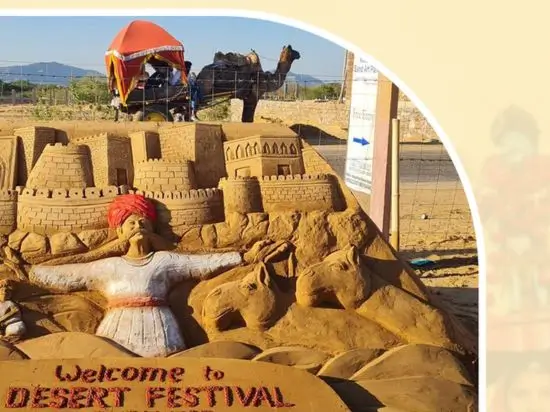
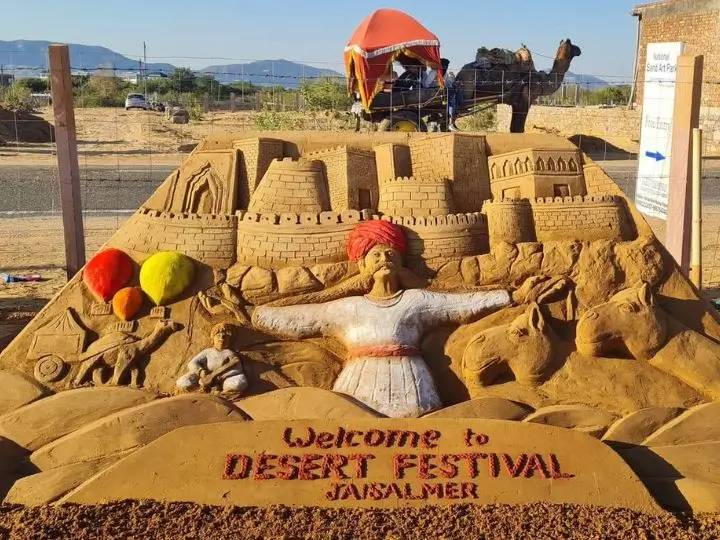
Jaisalmer, with its golden sandstone fort rising from the Thar Desert, already looks like something out of a story even on an ordinary day. For three days each February, the city and its surrounding dunes become the setting for the Desert Festival - known locally as Maru Mahotsav - a celebration of Rajasthani desert culture that culminates in one of the most striking finales of any festival in the country.
Organised by the Rajasthan government, the Desert Festival is considerably smaller and more focused than some of the larger events on this list, but what it lacks in scale, it makes up for in setting - few festivals anywhere combine cultural performance with a backdrop quite like the golden dunes of the Thar Desert at sunset.
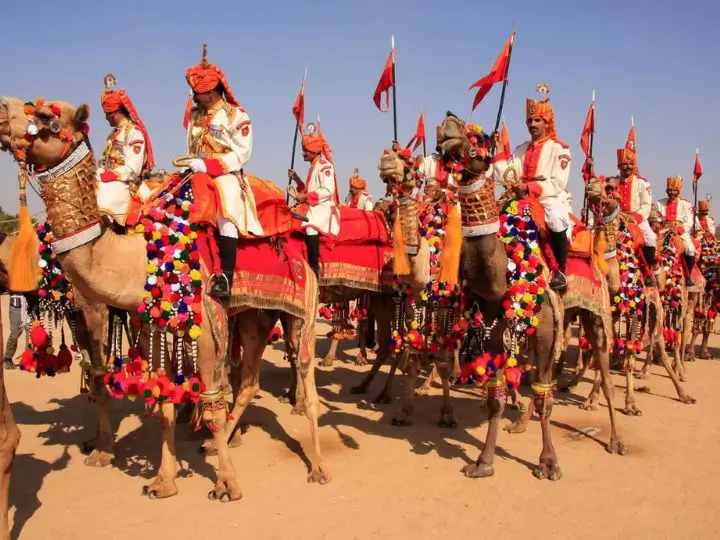
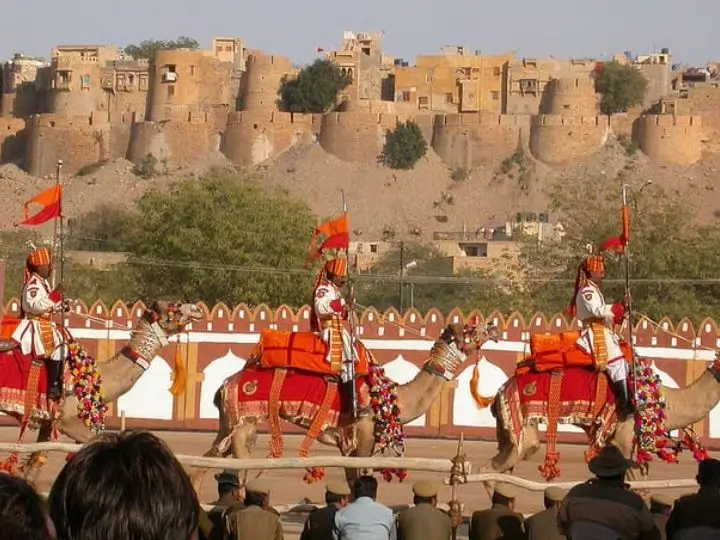
The festival opens with a procession through Jaisalmer, featuring decorated camels, folk performers, and local dignitaries, setting the tone for the days that follow. Over the course of the festival, a series of competitions and performances take place - some genuinely competitive, others more playful and crowd-pleasing.
Camel-related events feature heavily, as you’d expect given the setting - camel races, camel decoration competitions, and displays of the kind of skill and showmanship that comes from communities who’ve lived alongside these animals for generations. Alongside this, more lighthearted competitions - turban-tying contests and moustache competitions among them - add a sense of festivity and good humour that runs through much of the event.
Folk music and dance performances take place throughout the festival, showcasing the distinctive musical traditions of Rajasthan’s desert communities - instruments and vocal styles that are specific to this region and not commonly heard elsewhere.
If there’s a single moment that defines the Desert Festival, it’s the grand finale, held at the Sam Sand Dunes outside Jaisalmer. As the festival draws to a close, the dunes themselves become the venue - performances continue against the backdrop of the desert landscape, with the timing often coinciding with sunset, when the dunes take on the warm golden tones that have made this area one of Rajasthan’s most photographed locations.
For many visitors, this finale is the highlight of the entire festival - not just for the performances themselves, but for the setting. Watching folk dancers perform against rolling sand dunes, with the sky shifting through shades of orange and pink as the sun sets, is the kind of experience that’s difficult to replicate through description alone.
It’s worth spending time on Jaisalmer itself, separate from the festival. The city’s fort - Sonar Quila, or the Golden Fort - is one of the few “living forts” in India, meaning a significant residential population still lives within its walls, alongside palaces, temples, and a maze of narrow streets that have remained largely unchanged for centuries.
Beyond the fort, Jaisalmer is known for its havelis - elaborately carved mansions built by wealthy merchant families, with intricate sandstone facades that rival the fort itself in craftsmanship. Patwon Ki Haveli, a cluster of five such mansions, is among the most visited, showcasing the kind of detailed stonework that this region has been known for over centuries.
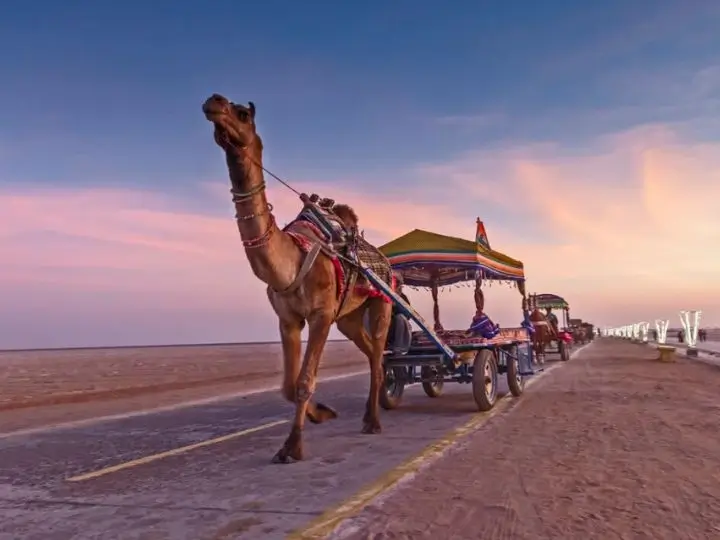
Beyond the festival’s organised activities, the surrounding desert offers experiences that many visitors build into their time in Jaisalmer regardless of festival timing. Camel safaris into the dunes - ranging from short excursions to overnight camps under the stars - are among the most popular, offering a quieter, more personal experience of the landscape than the festival’s organised events.
The Khuri sand dunes, somewhat less visited than Sam, offer an alternative for travellers seeking a slightly quieter desert experience, often combined with stays in desert camps that range from simple to genuinely luxurious, with traditional Rajasthani hospitality, folk music, and dining under open skies.
Jaisalmer’s surroundings hold a few genuinely unusual sites that occasionally surprise visitors. Kuldhara, a centuries-old abandoned village not far from the city, has developed a reputation - whether deserved or not - as one of India’s most “haunted” locations, its empty stone structures and the story of its sudden abandonment generations ago making it a popular, if slightly eerie, stop for curious travellers.
The Tanot Mata temple, near the India-Pakistan border, holds particular significance given its location and the stories associated with it from past conflicts - a site that combines religious significance with a sense of place that’s quite different from anywhere else in Rajasthan.
February in Jaisalmer offers some of the most comfortable weather of the year - daytime temperatures are warm but not extreme, while evenings remain cool, particularly out in the desert where temperatures can drop noticeably after dark. This makes it a genuinely pleasant time to be in the region, festival or not, though the Desert Festival adds a specific reason to time a visit for these particular days.
Given that the festival is relatively short - three days - and timed around the full moon, exact dates shift slightly from year to year. For travellers planning around the festival specifically, confirming dates closer to the travel period, once officially announced, is sensible, as the precise schedule for the finale and other events tends to be released only a few months in advance.
Jaisalmer sits at the far western edge of Rajasthan, making it a natural endpoint - or starting point - for a broader Rajasthan itinerary. A common routing combines Jaipur, Jodhpur, and Jaisalmer, with the Desert Festival providing a natural highlight toward the western end of the journey, often followed by a night in a desert camp before continuing on or beginning the return journey.
Given the festival’s relatively compact timing, it can work well either as a focused two-to-three day visit specifically for the festival, or as part of a longer exploration of western Rajasthan that happens to coincide with these dates.
Compared to events like Pushkar or Rann Utsav, the Desert Festival is genuinely smaller in scale - fewer crowds, a shorter duration, and a more contained set of activities. For some travellers, this is precisely the appeal: an opportunity to experience Rajasthani desert culture and the dramatic setting of the Thar Desert without the scale and intensity of the region’s larger festivals.
The combination of Jaisalmer’s golden architecture, the surrounding dunes, and a festival specifically designed to showcase local culture against that backdrop makes for an experience that, while smaller, leaves a strong impression - particularly for travellers who make it to the Sam Dunes finale as the sun goes down.
If the Jaisalmer Desert Festival appeals to you, we can build a private Rajasthan itinerary timed around the festival dates, combining Jaisalmer’s fort and havelis, a desert camp experience, and the festival’s events including the Sam Dunes finale - alongside other Rajasthan destinations such as Jodhpur and Jaipur if you’d like a longer journey. Share your travel dates, and we’ll put together a tour around this festival.
Find the answers to all of our most frequently asked questions
The 2027 edition runs from 18 to 20 February, a three-day festival timed around the full moon.
The grand finale at the Sam Sand Dunes, featuring folk performances against the backdrop of the desert at sunset.
Camel races, camel decoration competitions, turban-tying and moustache contests, and folk music and dance performances.
Yes - it’s one of India’s few “living forts,” with a residential population continuing to live within its walls.
Havelis are elaborately carved merchant mansions; Patwon Ki Haveli, a cluster of five such buildings, is among the most notable.
Yes - camel safaris into the Sam or Khuri dunes are popular and can be combined with festival days.
A centuries-old abandoned village near Jaisalmer with a reputation for being haunted, popular among curious travellers.
Yes - it’s one of the most comfortable months, with warm days and cool evenings, festival or not.
The Desert Festival is smaller and shorter, offering a more contained experience of Rajasthani desert culture without Pushkar’s scale and crowds.
Yes - a common routing covers Jaipur, Jodhpur, and Jaisalmer, with the festival as a highlight toward the western end of the trip.
Yes - camps ranging from simple to luxurious are available near the Sam and Khuri dunes, often combined with festival attendance.
Share your travel dates, and a private Rajasthan itinerary built around the festival, including desert camp stays, can be arranged.