Your Travel Partner
SINCE 1989
Your Travel Partner
SINCE 1989

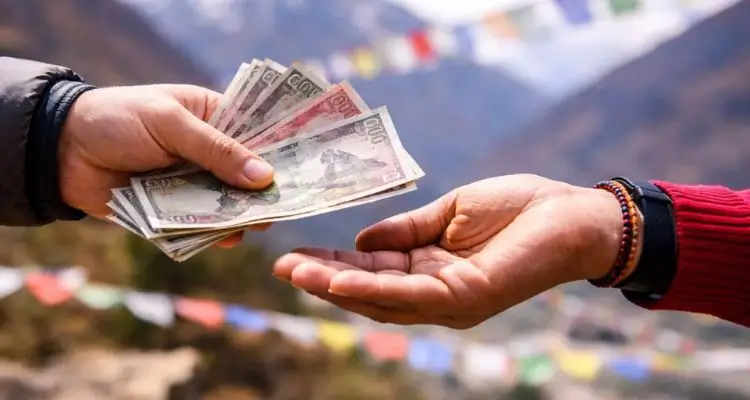
Foreign tourists travelling in India do not need to carry their entire holiday budget as cash. Hotels, established restaurants, larger shops and many tourism businesses accept electronic payments, while ATMs are widely available in major cities. Cash, however, is still useful for smaller purchases, gratuities, local markets, minor entrance expenses and situations where a card terminal or digital payment method is unavailable. The practical question is therefore not whether visitors need cash, but how much cash to carry in India without creating an unnecessary security risk.
For most foreign travellers, carrying approximately $100–$200 equivalent in local currency per person as accessible spending money is normally enough for routine daily situations, provided hotels and major tour services have already been prepaid or can be paid electronically. A couple on a private tour can comfortably keep around $200–$300 equivalent between them, replenishing it from an ATM or authorized currency exchange when required rather than carrying $1,000 or $2,000 in a wallet.
The amount changes according to travel style. A couple staying in premium hotels with a prepaid private India tour package may use surprisingly little cash because accommodation, private driver, airport transfers and some sightseeing services have already been paid. Their cash is mainly used for driver and guide tips, small purchases, casual food and occasional local expenses. A backpacker using smaller guesthouses, local transport and inexpensive restaurants may use cash more frequently even though the total daily budget is lower.
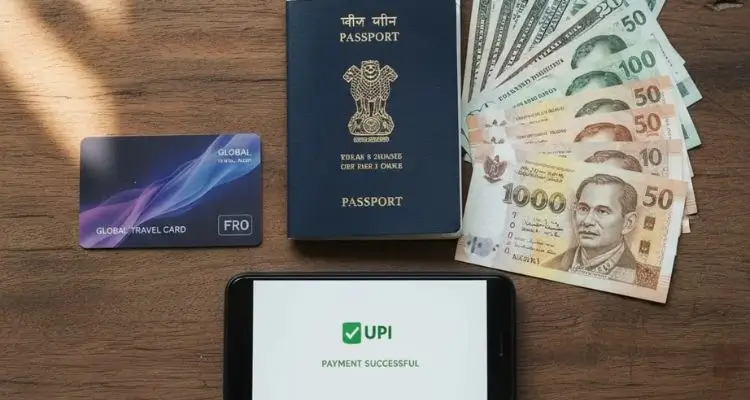
India's payment environment is also highly digital. The Unified Payments Interface (UPI) is used extensively for everyday transactions, and the Reserve Bank of India has introduced facilities intended to allow eligible foreign visitors to use UPI through prepaid payment instruments at participating international airports and other supported arrangements. Availability and onboarding conditions can change, so foreign visitors should verify the current service when they arrive rather than assume their normal overseas banking app will automatically work with every Indian QR code.
International Visa and Mastercard cards are accepted at many hotels, established restaurants and larger stores, but foreign travellers should still carry more than one payment method. A card can be declined, a terminal can fail, an overseas bank can block an unfamiliar transaction or a merchant may simply prefer another form of payment. The safest arrangement is a combination of local cash, at least two cards and access to emergency funds rather than dependence on a single wallet, card or mobile application.
The correct daily amount depends heavily on what has already been paid before the trip begins. A traveller who has prepaid hotels, breakfast, private car and driver will need much less day-to-day cash than someone paying every expense independently. For this reason, calculating cash according to the total holiday price is not useful. The traveller should calculate only those expenses that are likely to require local payment.
For a comfortable international visitor with hotels and major transportation already arranged, approximately $30–$60 equivalent per person per day is a useful cash-access budget rather than an amount that must actually be spent. Two travellers can therefore keep access to around $60–$120 per day for minor expenses while continuing to use cards wherever practical.
This can cover small tips, bottled drinks, inexpensive snacks, local purchases and occasional cash-only expenses. If lunch and dinner are being paid independently, two people eating at good tourist-oriented restaurants can spend approximately $40–$80 per day combined, although many of those restaurants will accept cards.
A premium traveller may spend considerably more overall without needing much more physical cash. A $250 hotel dinner can be placed on the room or paid by card. A $400 hotel room can be prepaid online. A $1,500 private-driver booking can be settled electronically according to the operator's payment terms. Carrying large amounts of currency therefore does not automatically make a luxury trip easier.
For a couple on a ten-day private India holiday, keeping approximately $250–$400 equivalent readily available in local currency and replenishing it when necessary can be more sensible than withdrawing the entire expected cash budget on the first day. Travellers who know that they will make significant cash purchases can adjust accordingly, but valuable shopping should preferably use secure and documented payment methods whenever possible.
The important distinction is between the cash you may spend during the complete trip and the cash you should physically carry at one time. Those numbers do not need to be the same.
Cash remains valuable because not every payment occurs in a hotel, major restaurant or organized tourism business. Small transactions happen throughout a normal sightseeing day, and carrying some local currency prevents travellers from depending on a card for every minor purchase.
Tipping is one obvious example. A private driver who has spent ten days with a couple can be tipped electronically in some circumstances, but cash in local currency is often simpler. Hotel porters and housekeeping staff are also easier to tip with smaller notes.
Local markets are another common cash-use situation. Many established shops accept digital payments, but small vendors may be more comfortable with local payment methods that foreign tourists cannot always access. Cash provides a straightforward alternative.
Small food purchases, bottled water and roadside stops can also be easier with cash, particularly during long Rajasthan drives away from major city centres.
Public toilets, minor parking-related services and other low-value transactions may require small denominations.
Some smaller restaurants and independent businesses can technically accept digital payments but may experience network or terminal problems. Having local currency prevents a small technical problem from interrupting the day.
Cash can also be useful when bargaining for inexpensive souvenirs in markets, although travellers should still understand the approximate value of what they are buying before negotiating.
The key is to carry useful denominations rather than only large notes. A wallet containing nothing except high-value notes can be inconvenient when paying a small amount.
For major hotel expenses, reputable restaurants, premium shops and established tourism businesses, paying by card can be more convenient than carrying large amounts of currency.
International credit cards also provide a clear transaction record, which can be useful when reviewing holiday spending later.
Hotels are one of the most obvious places to use cards. Room upgrades, restaurant bills, spa services and other incidental expenses can usually be placed on the room and settled together at checkout at established properties.
Higher-value shopping should also favour traceable payment methods. If a foreign traveller buys expensive jewellery, textiles, artwork or another valuable product, a proper invoice and secure electronic payment are preferable to handing over a large amount of cash without documentation.
Travellers should still ask about card charges before completing expensive purchases. Some businesses may apply additional fees or use currency-conversion options that change the final cost.
When a terminal asks whether the traveller wants to pay in local currency or their home currency, the displayed conversion should be examined carefully. Dynamic currency conversion can sometimes use a less favourable rate than allowing the card issuer to perform the conversion.
Foreign tourists should also tell their bank about international travel when required by the card provider and ensure that overseas transactions are enabled.
A travel credit card with low foreign transaction fees can save meaningful money over a two-week trip, particularly when hotels and restaurants are paid individually.
ATMs can be one of the easiest ways to obtain local currency, particularly for travellers who do not want to arrive with large amounts of foreign cash.
Major Indian cities such as Delhi, Mumbai, Jaipur, Agra, Jodhpur and Udaipur have numerous bank ATMs. Smaller towns may have fewer reliable options, so travellers beginning a long road journey should obtain sufficient cash before leaving a major city.
Foreign cards can work at many ATMs, but acceptance depends on the network, issuing bank and individual machine. A card that works at one bank's ATM may occasionally fail at another.
Withdrawal limits can also apply. The Indian bank operating the ATM may impose a per-transaction limit, while the traveller's home bank can have its own daily withdrawal limit.
Fees deserve attention. The local ATM operator may charge a fee, and the traveller's own bank may add a foreign withdrawal or currency-conversion charge. Making several very small withdrawals can therefore become unnecessarily expensive.
At the same time, withdrawing an excessive amount simply to reduce fees creates a security problem.
A sensible approach is to withdraw enough for several days of expected cash spending rather than enough for the complete holiday.
For two travellers on a private Rajasthan tour, withdrawing approximately $200–$300 equivalent at a time, subject to ATM limits and actual needs, can be practical.
Whenever possible, use an ATM attached to or located inside a bank, hotel, airport or other controlled environment rather than an isolated machine late at night.
After withdrawing money, put it away before leaving the ATM area rather than counting a large stack of notes openly.
UPI in India is a real-time digital payment system that allows payments between participating accounts and services. QR-code payments are common in Indian shops, restaurants, taxis and countless small businesses, making UPI one of the most visible parts of daily payment life.
Foreign visitors often notice local customers scanning a QR code and completing a transaction within seconds. This can create the impression that any international phone can immediately do the same thing, but access is more complicated for visitors who do not have a normal Indian bank account.
Facilities for eligible international travellers have been introduced through supported prepaid-payment arrangements. The exact availability, onboarding points, identification requirements and supported services can change, so travellers should check the current facility at their arrival airport or through an authorized provider.
A foreign tourist should not structure the complete holiday around the assumption that every QR code will work with an overseas banking application.
If a visitor successfully activates a supported UPI payment option for foreign tourists, it can be extremely useful for small purchases because many merchants already accept UPI.
Cash and cards should still remain available as backups.
This is particularly important during intercity road travel. A roadside restaurant may accept UPI perfectly for local customers while an international visitor's payment arrangement fails because of account or network limitations.
UPI should therefore be treated as an additional convenient payment method rather than the only source of money.
Bringing some foreign currency as a backup can be reasonable, but carrying the entire holiday budget in USD is unnecessary and creates additional risk.
A visitor may bring approximately $200–$500 in clean foreign banknotes as emergency backup depending on personal preference and trip duration, then use cards and ATMs for ordinary spending. There is little benefit in walking around with several thousand dollars in physical cash when major expenses can be paid through more secure methods.
Foreign currency should be exchanged through legitimate authorized channels. Airports are convenient but may not always offer the most attractive effective rate after margins and fees. Hotels can also provide exchange services in some cases, though rates vary.
Authorized foreign-exchange businesses and banks are preferable to informal street exchanges.
Travellers should retain receipts where required and follow applicable currency regulations.
The exchange rate should also be considered in practical terms. A shop saying “we accept dollars” does not necessarily mean the traveller is receiving a favourable conversion rate. Paying in local currency usually makes the real price easier to understand.
USD amounts in a travel budget are useful for international visitors, but routine spending inside India is normally easier in local currency.
A private Delhi Agra Jaipur tour is relatively easy to manage without carrying large amounts of cash because the route passes through major tourist cities with extensive banking and payment infrastructure.
For two people with hotels and private transportation already prepaid, approximately $200–$300 equivalent in local currency at the beginning of the route can be enough for ordinary cash expenses. The travellers can replenish it later if required.
Driver tipping should be considered separately. For a five- to seven-day Golden Triangle trip, a couple may budget approximately $80–$120 equivalent for a good private driver at the end of the journey.
Private-guide tips across Delhi, Agra and Jaipur can add approximately $40–$75 total.
Hotel porter and housekeeping gratuities can add another modest amount.
Lunches, dinners and major shopping can normally be paid by card at established businesses, reducing the need for additional cash.
This means a couple does not need to begin a seven-day Golden Triangle journey with $1,000 in their wallet simply because the total holiday spending will exceed that amount.
Rajasthan requires slightly more attention because long road sectors can take travellers through smaller towns where international card acceptance is less predictable.
A couple using a private car and driver in Rajasthan can keep approximately $250–$400 equivalent in local currency available during the trip, replenishing it in major cities such as Jaipur, Jodhpur or Udaipur when needed.
This does not mean the entire amount should sit in one wallet.
Some can remain securely stored while the travellers carry only the amount needed for the day.
Roadside meals and small purchases may be easier with cash. Local markets can also create more cash spending than a large-city itinerary.
A fourteen-day Rajasthan journey may involve a driver gratuity of approximately $175–$250 equivalent for excellent service, but this can be set aside separately and given at the end.
Foreign visitors staying at premium hotels can use cards for most large expenses.
Travellers heading towards Jaisalmer or smaller locations should obtain enough local currency before a long transfer rather than depending on finding the perfect ATM during the journey.
Tipping becomes easier when travellers create a small separate gratuity budget.
For a seven-day private trip, two people can allow approximately $175–$275 total for all tips at a comfortable premium level.
For ten days, approximately $225–$350 provides a generous working budget.
For fourteen days, approximately $300–$500 can cover driver, guides, hotel staff and restaurant gratuities without forcing travellers to search for cash at the end of the journey.
These are budgets, not mandatory spending targets.
The driver's tip is normally the largest individual amount and can be kept separately until the final day.
Smaller denominations are useful for hotel porters and housekeeping.
A traveller who mixes the entire gratuity budget into ordinary spending may reach the final day and discover that only large notes remain.
Separating it removes that inconvenience.
Carrying all cards and cash in one wallet creates an unnecessary single point of failure.
A traveller can keep one primary card in the daily wallet and a second card securely stored elsewhere. Couples can divide cards between them rather than allowing one person to carry every payment method.
Emergency cash should also be separate from everyday spending money.
Passports, large amounts of cash and spare cards should not be left casually inside a sightseeing vehicle. A trusted private driver can look after normal luggage, but high-value personal items should remain under the traveller's control.
At hotels, a room safe can be useful when used appropriately, although travellers should still keep track of what they have stored before checkout.
A small amount of local currency can be kept in an easily accessible part of the wallet for low-value purchases. This prevents travellers from displaying a large bundle of money every time they buy water or leave a small tip.
Public counting of cash should be avoided.
When withdrawing from an ATM, complete the transaction, secure the card and money, and then leave the area.
These are simple habits, but they reduce unnecessary risk considerably.
A declined card does not automatically mean anything fraudulent has happened. Overseas security systems can block unfamiliar transactions, a terminal can have a network issue or the merchant's machine may not support a particular international card.
Try another card rather than repeatedly entering the same transaction.
If the payment is important, contact the card issuer through its official channel.
Do not allow an unknown person to take the card away to “fix” the problem.
If an ATM retains the card, contact the bank responsible for the ATM and the card issuer.
This is another reason to carry at least two independent payment methods.
A foreign traveller with one card and no cash can turn a small technical problem into a serious inconvenience.
A traveller with two cards, some local currency and access to emergency funds can usually continue the day normally.
Large tourism payments deserve a different approach from everyday spending.
A private India tour package costing $4,000–$8,000 should not normally require the traveller to arrive carrying the entire amount in cash.
A professional tour company should provide clear payment terms before arrival. A deposit may be required to confirm hotels and transportation, with the balance payable according to the booking conditions.
Card payments, bank transfers or other documented electronic methods can provide useful transaction records.
Travellers should ask about payment fees and currency conversion before transferring a significant amount.
If a driver service is booked independently, the traveller should know how much has been prepaid and how much remains due.
Cash payments should receive appropriate documentation for significant amounts.
The traveller should never be pressured into withdrawing an unusually large amount of cash unexpectedly because an operator failed to explain payment terms before the trip.
Emergency money should be separate from the normal daily budget.
A foreign traveller can keep access to at least $300–$500 equivalent per person through a combination of spare card capacity and emergency funds rather than necessarily carrying that amount physically.
For a couple, having access to $600–$1,000 equivalent beyond ordinary daily spending provides a useful cushion for an unexpected hotel night, transport change, medical consultation or replacement travel arrangement.
This is not money that should sit inside a wallet.
The objective is access.
Travel insurance is also important because emergency medical costs can exceed any sensible amount of cash a tourist would carry.
Emergency funds should therefore complement insurance and backup cards rather than replace them.
Find the answers to all of our most frequently asked questions
For most foreign visitors, approximately $100–$200 equivalent per person in local currency is a useful amount to have accessible at one time. Travellers can withdraw more when needed rather than carrying the complete holiday budget.
A couple can usually keep around $200–$300 equivalent readily available, increasing this to approximately $250–$400 during longer Rajasthan road travel when more small cash transactions may occur.
Yes. International cards are accepted at many hotels, established restaurants, larger shops and tourism businesses. Carry a second card and some cash because acceptance is not universal.
Many foreign cards work at Indian bank ATMs, subject to the issuing bank, network compatibility and withdrawal limits. Local and home-bank fees may apply.
Eligible international visitors may be able to access supported UPI-based prepaid payment facilities, but availability and onboarding conditions can vary. Visitors should verify the current service after arrival rather than depend on UPI as their only payment method.
A modest amount such as $200–$500 in foreign currency can provide emergency backup, but carrying the complete trip budget in USD cash is unnecessary for most travellers.
Cash in local currency is convenient for drivers, guides, hotel porters and housekeeping staff. Larger private-driver gratuities can normally be given once at the end of the journey.
If hotels and private transportation are prepaid, two travellers can usually manage by keeping approximately $250–$400 equivalent available at a time and replenishing it when necessary. Total spending can be much higher without needing to be held as physical cash.
No. Keep a primary card and daily cash accessible while storing a backup card and emergency funds separately. Couples can divide payment methods between them.
Use a documented payment method with clear booking terms, keep receipts or transaction records and confirm any card or transfer charges beforehand. Avoid carrying thousands of dollars in physical cash solely to pay a large tour balance.