Your Travel Partner
SINCE 1989
Your Travel Partner
SINCE 1989
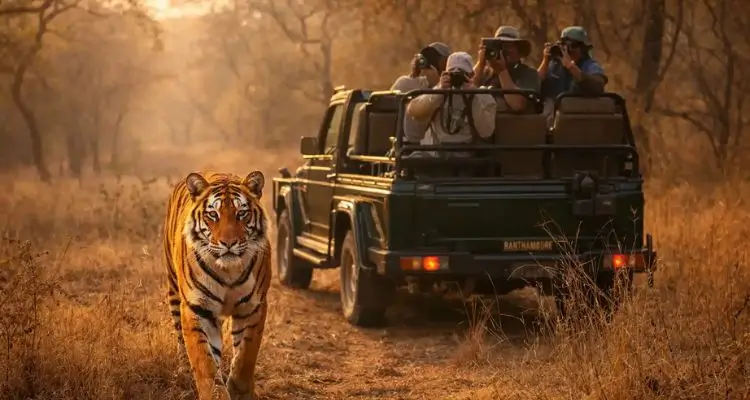
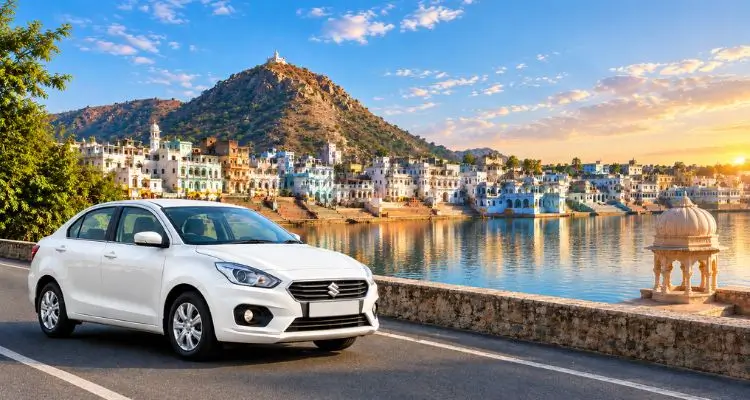
Travelling from Jaipur to Ranthambore by private car is one of the most practical ways to connect Rajasthan's capital with its best-known tiger reserve. Most visitors travelling to Ranthambore stay in or around Sawai Madhopur, the gateway town for Ranthambore National Park, and the journey from Jaipur is short enough to complete comfortably in half a day when traffic and road conditions are favourable.
The Jaipur to Ranthambore distance by road is approximately 175–190 kilometres, depending on the Jaipur pickup point, the route used and the location of the hotel or wildlife resort near Sawai Madhopur. A normal road journey generally takes around 3.5–4.5 hours. Travellers should not rely only on the kilometre figure because parts of the journey pass through smaller towns and mixed local traffic where average speeds are lower than on an expressway.
For international visitors wanting a reliable Jaipur to Ranthambore private car, a professionally arranged one-way sedan can reasonably be budgeted at around $120–$155. A Toyota Innova may cost approximately $145–$185, while an Innova Crysta from Jaipur to Ranthambore can cost around $165–$210. Premium SUVs can move beyond $230, while larger group vehicles can cost approximately $260–$350+ depending on seating configuration, luggage and operating requirements.
The transfer itself is straightforward. The more important issue is timing it correctly around the safari.
Ranthambore safaris operate in scheduled morning and afternoon periods rather than continuously throughout the day. Reporting times change through the season as daylight changes. A traveller who books an afternoon safari and then leaves Jaipur too late can create a serious problem because the safari vehicle will not wait indefinitely for a delayed private transfer.
For that reason, the best Jaipur to Ranthambore taxi booking is not simply the cheapest vehicle. It is a transfer scheduled around the traveller's confirmed safari, hotel location and reporting point.
The Jaipur to Ranthambore road distance is generally around 175–190 kilometres. Travellers staying on the outskirts of Jaipur may see a slightly different distance from visitors leaving from the old city or a hotel near Jaipur Airport.
Under normal conditions, approximately 3.5–4.5 hours is a realistic driving range.
The journey does not feel like a continuous high-speed motorway trip. Traffic leaving Jaipur can be slow, and sections closer to Sawai Madhopur involve mixed road conditions, local vehicles, motorcycles, animals and town traffic.
A driver familiar with the route will normally choose the road according to current conditions rather than following a map application blindly.
For travellers without a safari on the arrival day, leaving Jaipur around 8:00–9:00 AM works comfortably. Passengers can have breakfast at their hotel and reach the Ranthambore area around lunchtime or early afternoon.
They can then check into the wildlife resort, have lunch and rest before beginning safari activities the following morning.
If an afternoon safari is booked on the arrival day, a much earlier departure is sensible. Leaving around 6:00–7:00 AM creates a better safety margin.
The exact departure time should be based on the safari reporting time supplied for the travel date.
This is one route where arriving two hours early is far preferable to arriving fifteen minutes late.
The Jaipur to Ranthambore taxi price varies according to the vehicle, pickup location, final resort, luggage, one-way or round-trip service and any waiting requirements.
For international travellers wanting a clean tourist vehicle and professional driver, premium-side budgeting can look like this:
|
Vehicle Category |
Suitable For |
Approximate One-Way Price |
|---|---|---|
|
Comfortable Sedan |
1–2 travellers |
$120–$155 |
|
Premium Sedan |
1–3 travellers |
$135–$170 |
|
Toyota Innova |
2–4 travellers |
$145–$185 |
|
Toyota Innova Crysta |
2–5 travellers |
$165–$210 |
|
Premium SUV |
2–5 travellers |
$230–$300+ |
|
Tempo Traveller |
Small groups |
$260–$350+ |
|
Luxury Chauffeur Vehicle |
Premium travellers |
$325–$550+ |
These are budgeting figures for private tourist transportation rather than the cheapest local taxi rates.
The quote should state whether fuel, road tolls, applicable vehicle taxes and driver expenses are included.
Travellers should also provide the exact Ranthambore hotel name. Wildlife resorts are spread across different parts of the Sawai Madhopur and Ranthambore area. “Drop at Ranthambore” is less precise than providing the actual property.
If the same driver remains with the travellers for two or three nights and later continues towards Jaipur, Agra, Bundi or another destination, the pricing structure may differ from a simple one-way transfer.
In that situation, requesting one Rajasthan private car and driver quotation for the complete route is generally more useful than purchasing every sector separately.
Train travel is a genuine alternative because Sawai Madhopur is an important railway station and is served by trains from Jaipur.
Depending on the service selected, the rail journey itself can be quicker than travelling by road. Tickets can also cost considerably less than a private vehicle.
The difference is convenience.
A train passenger must leave the Jaipur hotel, reach the railway station with luggage, locate the correct platform, board the train and then arrange transportation from Sawai Madhopur station to the wildlife resort.
For younger independent travellers with light baggage, this can be perfectly manageable.
A private car from Jaipur to Ranthambore collects passengers directly from the hotel and takes them to the entrance of the resort.
This is particularly valuable for senior travellers, families, first-time visitors to India and passengers carrying several large suitcases.
A private car also provides complete departure-time flexibility. The traveller is not forced to select a safari according to whichever train happens to arrive at a convenient hour.
The train can win on price and sometimes journey time. The private vehicle wins on door-to-door convenience and schedule control.
Ranthambore is not a destination where visitors should casually arrive and expect to enter the national park whenever they want.
Safaris operate in morning and afternoon shifts, and reporting and entry times vary according to season and daylight.
The official Rajasthan forest tourism system manages safari booking arrangements, and travellers should verify current timings and permit details for their actual date. Popular safari inventory can become limited, particularly during high-demand travel periods.
This has a direct effect on the Jaipur to Ranthambore travel time.
Suppose a traveller has an afternoon safari with a reporting requirement around early afternoon. Leaving Jaipur at 9:30 AM because a map suggests a journey of under four hours is risky. A traffic delay, meal stop or hotel check-in issue could result in missing the safari.
A better approach is to arrive in Ranthambore well before the required reporting time.
If the safari is the main reason for visiting, protecting that booking is more important than spending an additional hour at the Jaipur hotel in the morning.
Travellers arriving on the same day as an afternoon safari should also have lunch arrangements in mind. Waiting for a full restaurant meal after arrival can consume valuable time.
A morning Ranthambore safari on the same day as departure from Jaipur is generally not practical.
Morning safari reporting can occur very early, depending on the season. Reaching Ranthambore from Jaipur before dawn would require leaving the city in the middle of the night.
This is unnecessarily tiring and creates additional road-safety concerns.
Travellers who want a morning safari should arrive in Ranthambore the previous day and stay overnight.
An afternoon safari is much easier to combine with a Jaipur departure, provided the car leaves early enough.
Even then, the safest arrangement is often to travel from Jaipur one day, check into the resort and begin safaris the following morning. This removes road traffic from the safari equation entirely.
For travellers with limited time, a same-day afternoon safari can work. The itinerary simply needs a substantial buffer.
One night is possible, but it gives travellers very little margin.
A more comfortable visit is two nights, allowing time for at least two safari opportunities.
For example, travellers can drive from Jaipur to Ranthambore, stay overnight, take a morning safari, rest during the middle of the day, take another afternoon safari and depart the following morning.
This arrangement also gives visitors two chances to experience different parts of the park.
Wildlife sightings can never be guaranteed. Ranthambore is a natural habitat, not a zoo. A tiger may appear prominently during one safari and remain completely out of sight during another.
Booking multiple safaris improves the overall wildlife experience but still does not guarantee a tiger sighting.
Travellers with a strong wildlife interest may stay three nights and take several drives, while visitors primarily adding Ranthambore to a Golden Triangle journey often find two nights sufficient.
The Jaipur to Ranthambore private transfer therefore needs to be considered together with the number of safaris rather than as an isolated taxi booking.
Safari pricing varies according to vehicle type, visitor category, booking method and current government fees.
The two principal shared safari vehicle types are generally the Gypsy, a smaller open vehicle, and the Canter, a larger open vehicle carrying more passengers.
For international travellers, a practical higher-side budget of approximately $40–$70 per person for a shared safari provides a reasonable allowance once applicable permit and vehicle components are considered. Exact official prices should be checked for the travel date because fees can change.
Private or exclusive safari arrangements, where available through legitimate channels, can cost substantially more. Travellers may encounter prices of $200–$400+ per vehicle depending on the arrangement, vehicle type and booking circumstances.
Extremely expensive unofficial promises should be treated carefully.
No legitimate operator can guarantee a tiger sighting.
The safari permit should also not be confused with the Jaipur to Ranthambore taxi cost. The road transfer, wildlife permit, safari vehicle, naturalist or guide components and hotel accommodation can all be separate expenses.
A traveller comparing package prices should check exactly which of these items are included.
Many travellers prefer a Gypsy because the vehicle is smaller and carries fewer passengers.
This can make the wildlife experience feel more personal and can provide better positioning on some tracks.
However, a Canter safari can still provide an excellent experience. It covers the national park in a larger open vehicle and can be a practical choice when Gypsy availability is limited.
The quality of a safari depends on many factors beyond vehicle size: the allocated zone, wildlife movement, guide, weather, timing and simple luck all matter.
Travellers should not cancel a Ranthambore visit solely because their preferred vehicle type is unavailable.
If a specific vehicle category is important, the safari should be booked well before the road transfer.
The private car to Ranthambore only gets travellers to the resort. It does not replace the official safari vehicle used inside the protected area.
Ranthambore is divided into safari zones, and vehicles follow the zone allocated according to the permit and current booking system.
Travellers often become obsessed with obtaining a particular zone because online discussions identify some areas as “best for tigers.”
Wildlife movement changes constantly.
A zone that produced excellent sightings last week may be quiet on a particular morning, while another zone may unexpectedly produce a memorable encounter.
The sensible approach is to treat each safari as a wildlife experience rather than a guaranteed tiger appointment.
Multiple safaris can also expose travellers to different landscapes within the reserve.
Visitors may encounter deer, monkeys, crocodiles, wild boar, numerous bird species and other wildlife even when a tiger is not visible.
Ranthambore's scenery, ruined structures and fort landscape also distinguish it from many other tiger reserves.
Travellers should therefore avoid evaluating an entire safari solely by whether a tiger walked beside the vehicle.
A sedan works well for one or two travellers with moderate luggage.
The journey is shorter than Jaipur–Jodhpur or Jaipur–Jaisalmer, so a couple does not automatically need a larger vehicle.
An Innova Crysta Jaipur to Ranthambore transfer is useful when passengers carry large international suitcases or want additional cabin space.
The upgrade can cost approximately $35–$60 over a sedan.
Families may find the extra room particularly useful.
The private road vehicle should not be confused with the safari vehicle. Even if travellers arrive in a large SUV, they normally transfer to the authorized vehicle assigned for the wildlife safari.
Larger groups travelling together can use a Tempo Traveller between Jaipur and Ranthambore and then use the safari vehicles arranged under their permits.
Before booking, provide the operator with the passenger count and approximate luggage quantity.
The road journey itself requires very little special preparation, but passengers should keep important items accessible.
Carry drinking water, essential medication, passport or identification, phone charger or power bank and a light snack.
Do not bury medication inside a large suitcase in the luggage compartment.
If an afternoon safari is scheduled immediately after arrival, safari clothing should also remain easily accessible. Travellers may not have enough time to completely unpack at the hotel.
Neutral, comfortable clothing is suitable for the park. Bright fashion choices are unnecessary for wildlife viewing.
Winter morning safaris can feel surprisingly cold in an open vehicle. Warm layers, a jacket and head covering can be important.
In warmer periods, sun protection becomes more important.
Dust is also part of an open-vehicle safari. Sunglasses and a light scarf can be useful.
The Ranthambore accommodation market ranges from straightforward hotels to luxury wildlife resorts.
Some properties are close to Sawai Madhopur town, while others sit farther out towards the national park.
This affects transfer time and safari logistics.
When requesting a Jaipur to Ranthambore cab, provide the exact hotel name rather than simply saying Sawai Madhopur.
Luxury resorts may be located outside the central town, adding additional road time after travellers technically reach Sawai Madhopur.
The hotel can also help clarify safari pickup arrangements. Depending on the permit and vehicle system, travellers may need to report at a designated point or may receive pickup according to the confirmed arrangement.
Do not assume every safari vehicle automatically collects every guest directly from every hotel.
Ask for this information before arrival, especially if a safari is scheduled on the same afternoon as the Jaipur transfer.
Yes. Ranthambore Fort is a major historic site within the broader protected landscape and can be visited separately from a wildlife safari, subject to current access arrangements.
The fort stands dramatically above the surrounding terrain and provides a completely different experience from the game drives.
Visitors should expect walking and steps.
The fort also contains active religious sites, so respectful dress and behaviour are appropriate.
Monkeys can be present around parts of the route. Travellers should avoid carrying food openly and should not attempt to feed wildlife.
A fort visit can work well during the middle of the day between morning and afternoon safari periods, but travellers should consider energy levels. Two game drives plus a substantial fort visit can create a demanding day.
For visitors staying only one night, safari time should normally take priority.
Ranthambore can fit into a Golden Triangle itinerary in more than one direction.
Some travellers follow Jaipur–Ranthambore–Agra, while others travel Agra–Ranthambore–Jaipur depending on the wider route.
The road journey from Ranthambore towards Agra can take approximately 5–6+ hours, depending on the exact route and traffic.
This means travellers should be careful about taking a morning safari and immediately scheduling an important Agra activity later that day.
A morning safari can finish relatively late after return to the resort, breakfast or check-out. The onward road journey then occupies much of the remaining day.
The Taj Mahal should not be scheduled close to closing time after such a transfer.
A private driver makes the route possible, but sensible sequencing remains essential.
Travellers continuing deeper into Rajasthan can move from Ranthambore towards Bundi rather than returning to Jaipur.
Bundi is known for its palace, fort landscape, stepwells and historic old-city atmosphere.
This route is particularly useful for travellers eventually heading towards Udaipur because it avoids unnecessary backtracking.
A Rajasthan car and driver itinerary might therefore follow Jaipur–Ranthambore–Bundi–Udaipur rather than Jaipur–Ranthambore–Jaipur–Udaipur.
The correct sequence depends on the complete trip.
This is why travellers should show the operator their entire itinerary before purchasing isolated one-way taxi transfers. A route that looks logical city by city can become inefficient when viewed across the whole state.
The confirmation should state the exact Jaipur pickup location and the Ranthambore hotel or resort.
The vehicle category should be written clearly.
Ask whether fuel, tolls, taxes and driver expenses are included.
If the driver is remaining in Ranthambore and continuing with the travellers later, this should appear in the multi-day itinerary.
The number of passengers and approximate luggage quantity should be provided.
If an afternoon safari is booked, tell the transport operator the reporting time. Do not simply request a morning pickup and assume everything will fit.
The driver should receive enough information to schedule a realistic departure.
Travellers should also obtain driver contact details before the journey.
Payment terms and cancellation conditions should be understood before paying a deposit.
For a one-way Jaipur to Ranthambore private taxi, tipping is voluntary.
International travellers can consider approximately $8–$12 equivalent for good professional service.
If the driver provides excellent assistance, handles substantial luggage and coordinates carefully around a safari reporting time, approximately $12–$20 equivalent can be appropriate.
Although the budgeting figures are expressed in USD, local currency is generally more convenient for gratuities.
When the same driver is accompanying travellers throughout a longer Rajasthan tour, tipping once at the end of the complete driving service is easier.
Find the answers to all of our most frequently asked questions
The Jaipur to Ranthambore distance is approximately 175–190 kilometres, depending on the exact pickup and hotel locations.
Travellers should normally allow approximately 3.5–4.5 hours.
A premium sedan can cost approximately $120–$155 one way, while an Innova Crysta may cost around $165–$210.
Yes, provided the vehicle leaves Jaipur early enough. Build a substantial buffer around the confirmed safari reporting time because road delays can occur.
This is generally impractical because morning safari reporting can be very early. Staying in Ranthambore the previous night is considerably more comfortable.
A train can be faster and cheaper on suitable services. A private car provides hotel-to-hotel transportation, luggage convenience and complete departure-time flexibility.
Two nights works well for many first-time visitors because it allows time for multiple safari opportunities without making the itinerary excessively long.
No. Wildlife safaris use authorized safari vehicles according to the park's permit system. The road-transfer car takes travellers to their hotel or relevant destination outside the safari route.
No. Ranthambore is a natural wildlife habitat, and no legitimate driver, hotel or safari operator can guarantee a tiger sighting.
Normally not. Private road transportation and Ranthambore safari permits are separate services unless a complete package explicitly states that both are included.