Your Travel Partner
SINCE 1989
Your Travel Partner
SINCE 1989
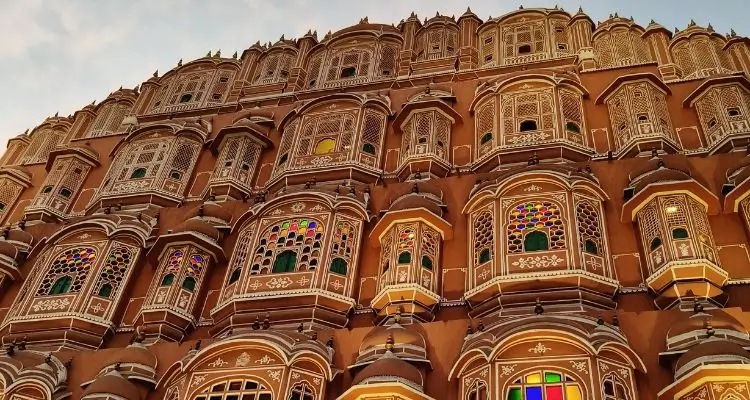
Standing gracefully in the heart of Jaipur's bustling old city, Hawa Mahal (Palace of Winds) is much more than a beautifully photographed monument. It represents the artistic brilliance of Rajput architecture, the royal traditions of Rajasthan, and the cultural identity that has made Jaipur one of India's most celebrated heritage destinations. Instantly recognizable by its distinctive honeycomb façade and rows of delicately carved windows, Hawa Mahal Jaipur welcomes millions of visitors every year who come to admire one of the world's most unique palace structures.
Unlike many royal palaces built for lavish ceremonies or royal residences, Hawa Mahal served a remarkably different purpose. Constructed for the women of the royal household, the palace allowed them to observe everyday life, vibrant festivals, religious processions, and grand royal parades without being seen by the public. This thoughtful architectural concept perfectly reflected the traditions of the Rajput courts while demonstrating extraordinary innovation centuries ahead of its time.
Today, Hawa Mahal (Palace of Winds) remains one of Jaipur's most photographed landmarks and an essential stop on nearly every Jaipur sightseeing tour, Golden Triangle Tour, and Rajasthan tour package. Visitors come not only to appreciate its stunning pink sandstone façade but also to explore its elegant interiors, panoramic viewpoints, intricate lattice windows, historical galleries, and fascinating architectural design that continues to inspire architects and historians worldwide.
Whether you are planning your first journey to Rajasthan or creating a customized luxury holiday across India, understanding the history, architecture, visitor information, ticket prices, opening hours, nearby attractions, and tour options will help you make the most of your visit to one of India's most iconic monuments.
The story of Hawa Mahal Jaipur begins during the reign of Maharaja Sawai Pratap Singh, one of Jaipur's visionary rulers and a respected patron of architecture, literature, and the arts. Inspired by both Rajput traditions and the architectural elegance of Krishna's crown, he commissioned the construction of Hawa Mahal in 1799, creating what would eventually become one of India's most recognizable architectural masterpieces.
Unlike the grand palaces designed for royal banquets or political gatherings, Hawa Mahal was conceived with a very specific purpose. During that period, women belonging to the royal family followed the traditional Purdah system, which restricted them from appearing publicly before strangers. Despite these customs, the queens and princesses wished to witness the vibrant life unfolding outside the palace walls. Jaipur was already known for its colorful festivals, royal processions, religious celebrations, camel caravans, bustling bazaars, and ceremonial events that transformed the city's streets into spectacular displays of culture.
To accommodate these traditions while preserving privacy, the palace was designed with hundreds of finely carved windows known as Jharokhas. These intricately crafted openings allowed cool air to circulate throughout the building while enabling royal women to observe the city's daily activities without being visible from the streets below.
The responsibility for transforming this remarkable vision into reality was entrusted to architect Lal Chand Ustad, whose design remains one of the finest examples of Rajput architecture blended with subtle Mughal influences. Rather than constructing a massive palace complex, he created an elegant five-story façade that appears almost weightless despite its impressive height. Every curve, balcony, and decorative element contributes to a harmonious design that has captivated visitors for more than two centuries.
Interestingly, many first-time visitors expect Hawa Mahal to resemble a traditional royal palace with expansive courtyards and ceremonial halls. Instead, they discover an architectural marvel that functions more as an elaborately decorated extension of the adjacent City Palace Complex. This distinctive design makes Hawa Mahal unlike any other palace in Rajasthan or elsewhere in India.
Over the centuries, the monument has survived political transitions, changing dynasties, and urban development while remaining one of Jaipur's defining symbols. Today it stands not merely as a historical building but as a living reminder of Rajasthan's artistic excellence, royal heritage, and cultural traditions that continue to attract travelers from every corner of the world.
The name "Palace of Winds" perfectly captures both its architectural ingenuity and its practical function. The continuous flow of air through hundreds of small windows naturally cools the interior, creating a remarkably pleasant environment even during Rajasthan's warmer months. Long before modern air conditioning, this passive cooling system demonstrated an extraordinary understanding of climate-responsive architecture that continues to impress architects and engineers today.
For travelers exploring Jaipur, visiting Hawa Mahal (Palace of Winds) is not simply about viewing a historic monument. It is an opportunity to step into a remarkable chapter of Rajasthan's royal history where architectural beauty, cultural traditions, engineering innovation, and artistic craftsmanship come together to create one of India's most treasured landmarks.
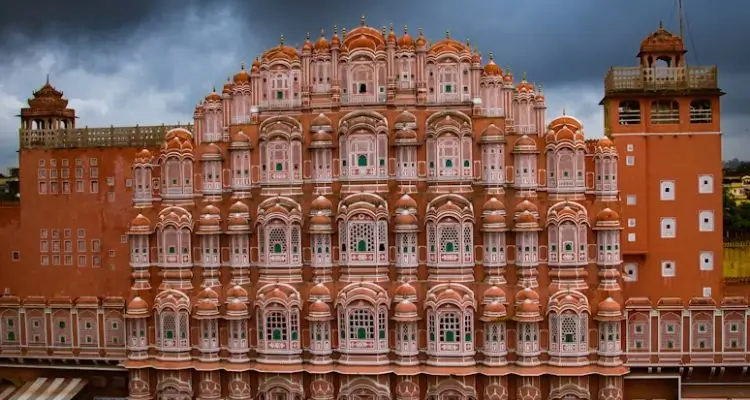
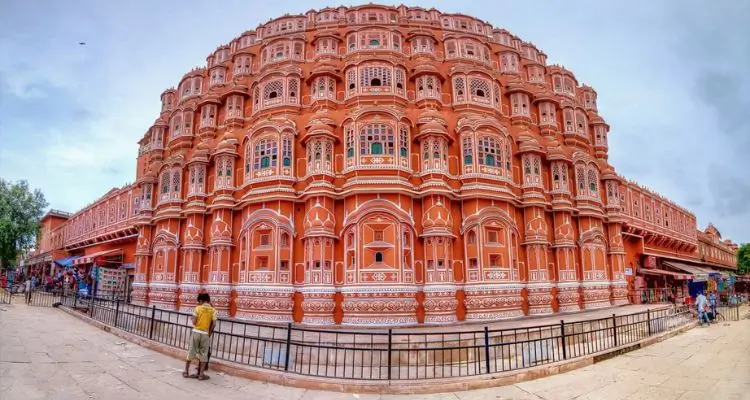
The architectural brilliance of Hawa Mahal (Palace of Winds) sets it apart from every other monument in Rajasthan. While Jaipur is home to magnificent forts, sprawling palaces, and beautifully preserved heritage buildings, none possesses the instantly recognizable façade that has become synonymous with the Pink City itself. Built entirely from red and pink sandstone, the monument perfectly complements Jaipur's distinctive architectural character, earning its place as one of the city's most photographed landmarks.
At first glance, visitors are often surprised to discover that the palace appears much larger from the outside than it does once they step inside. This illusion is intentional. The building was designed primarily as an elevated viewing gallery rather than a conventional royal residence. Rising gracefully across five stories, its curved façade resembles the crown of Lord Krishna, reflecting the deep spiritual devotion of Maharaja Sawai Pratap Singh, who commissioned its construction.
The exterior is composed of 953 intricately carved windows, or Jharokhas, arranged in a perfectly balanced honeycomb pattern. Each window is framed with delicate lattice screens, ornamental arches, floral motifs, and finely detailed stone carvings that demonstrate the exceptional craftsmanship of Jaipur's artisans. These decorative elements are not merely aesthetic additions; they also perform practical functions by filtering sunlight, allowing natural ventilation, and preserving privacy.
One of the most fascinating aspects of Hawa Mahal Jaipur is that the building was constructed without the massive foundations commonly associated with large stone monuments. Despite its impressive height and intricate façade, the palace remains remarkably stable due to its carefully engineered pyramidal structure. This architectural achievement continues to attract historians, engineers, and architecture students from around the world who study its innovative design.
Unlike many palaces that emphasize grand halls and lavish interiors, Hawa Mahal celebrates elegance through simplicity. Narrow corridors connect multiple levels, while gently sloping ramps replace traditional staircases in several sections of the building. This unique layout allowed royal women, often dressed in elaborate attire, to move comfortably between floors without difficulty.
Natural light plays another important role in the palace's architectural appeal. As sunlight passes through the delicate latticework, intricate patterns of light and shadow continuously shift across the walls and corridors throughout the day. During the early morning hours, the pink sandstone glows with warm golden tones, creating an atmosphere that feels almost magical. This is one reason photographers consistently recommend visiting shortly after sunrise when the façade is illuminated by soft natural light.
The upper floors provide panoramic views overlooking Jaipur's historic streets, bustling markets, nearby temples, and surrounding hills. From these elevated viewpoints, visitors gain a deeper appreciation for the thoughtful urban planning that made Jaipur one of India's earliest planned cities. Looking outward through the beautifully carved windows, it becomes easy to imagine members of the royal family quietly observing festivals, royal processions, and daily life unfolding below centuries ago.
Although the façade attracts most attention, every corner of the building reveals subtle artistic details. Delicate stone brackets, miniature domes, decorative balconies, and finely sculpted arches collectively showcase the extraordinary level of craftsmanship achieved by Rajasthan's master artisans. Even after more than two centuries, the precision of these carvings remains remarkably well preserved.
Today, Hawa Mahal (Palace of Winds) continues to inspire architects across the world because it demonstrates how beauty and functionality can coexist in perfect harmony. Long before modern environmental design became fashionable, its creators successfully developed a naturally ventilated structure capable of remaining comfortable even during Rajasthan's intense summers. This timeless combination of engineering, aesthetics, and cultural significance explains why Hawa Mahal remains one of the finest examples of sustainable historical architecture anywhere in the world.
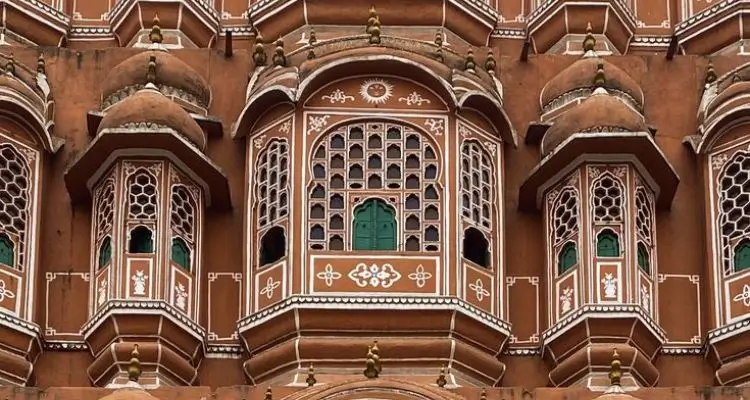
Among the many remarkable features of Hawa Mahal Jaipur, none attracts more curiosity than its 953 beautifully crafted Jharokhas. These small windows are not simply decorative elements added to enhance the palace's appearance—they represent one of the most intelligent architectural solutions developed during Rajasthan's royal era. Every window was carefully positioned to balance privacy, comfort, ventilation, and visibility while reflecting the social customs of the time.
During the late eighteenth century, women belonging to Rajput royal families generally followed the tradition of Purdah, which limited their public visibility. Although queens, princesses, and other women of the royal household were deeply interested in observing religious ceremonies, festive celebrations, royal parades, and everyday life in Jaipur, appearing openly before the public was considered inappropriate according to court traditions.
The architects behind Hawa Mahal (Palace of Winds) solved this challenge through an ingenious design. The hundreds of finely carved Jharokhas allowed members of the royal family to look outward toward the busy streets while preventing pedestrians below from seeing inside. From behind these elegant lattice screens, royal women could witness grand processions, colorful festivals, elephant parades, military ceremonies, and local markets without compromising their privacy.
Beyond cultural considerations, these windows performed an equally important environmental function. Jaipur experiences extremely warm temperatures during much of the year, making indoor comfort a significant architectural challenge long before electricity or mechanical cooling systems existed. The narrow openings of the 953 Jharokhas were designed to channel passing breezes through the palace. As air moved through the small lattice openings, it accelerated naturally, creating a cooling effect throughout the interior spaces.
This phenomenon, similar to what modern engineers describe as the Venturi Effect, transformed Hawa Mahal into an early example of climate-responsive architecture. Even on hot summer afternoons, the continuous movement of fresh air helped maintain comparatively comfortable indoor temperatures. This natural cooling system ultimately inspired the monument's famous name—Palace of Winds.
Each Jharokha also contributes to the palace's extraordinary visual identity. From a distance, the carefully repeated windows create a harmonious honeycomb pattern that gives the façade remarkable depth and texture. Rather than appearing repetitive, the subtle variations in carving, arch design, and ornamental details showcase the extraordinary skill of Jaipur's stone craftsmen.
Visitors often assume the number 953 carries symbolic or religious significance, but historians generally agree that the large number primarily reflects the building's functional purpose. Providing numerous viewing points ensured excellent visibility from every level while maximizing natural airflow across all sections of the structure.
Standing behind these windows today offers one of the most memorable experiences inside Hawa Mahal Jaipur. Looking through the delicate stone lattice toward the bustling streets below, visitors gain a rare perspective that closely resembles what members of the royal household would have experienced centuries earlier. The sounds of city life drift upward while soft daylight filters through the intricate carvings, creating an atmosphere that feels remarkably unchanged despite the passage of time.
The 953 Jharokhas remain far more than an architectural curiosity—they embody the creativity, engineering excellence, and cultural traditions that have made Hawa Mahal (Palace of Winds) one of India's most celebrated heritage monuments. Their timeless design continues to inspire architects, historians, and travelers alike, proving that exceptional architecture is often born from solving practical challenges with elegance and imagination.
.webp)
Many first-time visitors arrive at Hawa Mahal (Palace of Winds) expecting to find vast royal apartments, grand ceremonial halls, and luxurious living quarters similar to those inside Jaipur's City Palace or Amber Fort. However, Hawa Mahal offers a completely different experience. Rather than serving as the primary royal residence, the monument was designed as an elegant extension of the City Palace, functioning as a sophisticated observation gallery for the women of the royal household. This unique purpose makes the visit remarkably different from other palaces across Rajasthan.
Upon entering through the rear entrance connected to the City Palace complex, visitors immediately notice the peaceful atmosphere that contrasts sharply with the lively streets outside. While the famous pink sandstone façade dominates photographs taken from the road, stepping inside reveals beautifully maintained courtyards, graceful corridors, decorative arches, and open spaces that showcase traditional Rajput architecture in a more intimate setting.
The first courtyard welcomes visitors with carefully restored architectural details that reflect the craftsmanship of eighteenth-century Jaipur. Soft pink sandstone, elegant pillars, carved doorways, and ornamental balconies create a refined environment where every corner reflects artistic precision. Unlike many crowded heritage monuments, the interior feels calm and spacious, encouraging visitors to slow down and appreciate the finer architectural details.
One of the most interesting aspects of exploring Hawa Mahal Jaipur is the unusual circulation system inside the building. Instead of relying entirely on staircases, the upper floors are connected through a series of gently sloping ramps. These ramps were thoughtfully designed so that members of the royal family, often dressed in elaborate traditional attire, could move comfortably between levels without difficulty. Even today, this design makes exploring the palace surprisingly convenient for visitors of different ages.
As guests continue upward, each level presents a slightly different perspective of Jaipur's historic center. Narrow passageways lead to beautifully carved balconies where the famous Jharokhas frame stunning views of the city below. Standing behind these lattice windows allows visitors to experience exactly what royal women once enjoyed centuries ago. Looking outward through the delicate stone screens while remaining hidden from public view creates a fascinating connection to the palace's original purpose.
Several chambers display historical photographs, archaeological artifacts, and exhibits explaining the construction, restoration, and cultural significance of Hawa Mahal (Palace of Winds). Although the museum is relatively compact, it provides valuable context for understanding how the monument functioned within Jaipur's royal court. Ancient sculptures, traditional paintings, decorative objects, and historical documents help visitors appreciate the broader heritage of the region.
One of the highlights of the visit is reaching the uppermost floors, where panoramic views extend across Jaipur's Pink City. From these elevated balconies, travelers can admire bustling markets, colorful rooftops, temple spires, historic streets, and distant hills that surround Rajasthan's capital. During the early morning hours, soft sunlight bathes the city in warm golden hues, making this one of the finest viewpoints for photography.
Visitors also gain a unique appreciation for the remarkable engineering behind the palace's natural ventilation system. Even on warmer days, gentle breezes continue flowing through the hundreds of lattice windows, demonstrating why the building became known as the Palace of Winds. Feeling this naturally cooled environment firsthand offers a deeper understanding of the ingenuity behind Rajasthan's traditional architecture.
Unlike museums where exhibits remain behind glass, Hawa Mahal Jaipur allows visitors to experience history through movement, light, architecture, and carefully preserved spaces. Every balcony, window, corridor, and courtyard contributes to an immersive journey into Rajasthan's royal past, making the visit rewarding even for travelers who have already explored many other historical monuments across India.
Planning your visit at the right time can significantly enhance your experience at Hawa Mahal Jaipur. Since the monument attracts visitors throughout the year, arriving during quieter hours allows more time to appreciate its architecture, enjoy panoramic views, and capture beautiful photographs without large crowds.
The monument generally welcomes visitors every day of the week, including weekends and most public holidays.
| Day | Timings |
| Monday | 9:00 AM – 5:00 PM |
| Tuesday | 9:00 AM – 5:00 PM |
| Wednesday | 9:00 AM – 5:00 PM |
| Thursday | 9:00 AM – 5:00 PM |
| Friday | 9:00 AM – 5:00 PM |
| Saturday | 9:00 AM – 5:00 PM |
| Sunday | 9:00 AM – 5:00 PM |
The final ticket sale usually takes place some time before closing, so visitors are advised to arrive well in advance to allow sufficient time for exploration.
Although the interior opens at 9:00 AM, many photographers prefer reaching the surrounding streets shortly after sunrise. During these early hours, the eastern sunlight beautifully illuminates the famous pink sandstone façade, creating ideal conditions for photography before traffic and crowds increase.
The quiet atmosphere of the morning also makes it easier to appreciate the intricate carvings and observe the monument without interruption. Travelers interested primarily in architectural photography often spend time outside the palace before entering once ticket counters open.
Late afternoons offer another pleasant visiting window, particularly during the cooler months. The softer light enhances the warm colors of the sandstone while creating a comfortable environment for walking through the monument.
Visitors should keep in mind that official opening hours may occasionally change due to conservation work, government notifications, national holidays, or special events. Checking the latest information before visiting is always recommended, particularly during major festivals when Jaipur receives exceptionally high tourist numbers.
The Hawa Mahal ticket price remains one of the most affordable heritage experiences in Rajasthan, making it accessible for both domestic and international travelers. Considering the monument's historical importance, architectural uniqueness, and central location within Jaipur, the entry fee offers excellent value.
The following ticket prices serve as the latest general guideline for visitors during the 2026–27 travel season.
| Visitor Category | Approximate Entry Fee |
| Indian Citizens | 50 – 100 per person |
| Foreign Nationals | 200 – 300 per person |
| Children (subject to government policy) | Concessional rates may apply |
| Professional Camera / Video Equipment | Additional charges may apply if applicable |
Entry fees are subject to revision by the Archaeological Survey of India or the Rajasthan Government. Visitors are encouraged to verify the latest ticket prices before arrival.
Tickets can usually be purchased directly at the entrance ticket counter. In many cases, online ticket booking options may also be available through authorized government tourism or heritage portals, allowing visitors to reduce waiting time during busy travel periods.
Travelers booking Jaipur sightseeing tours, Golden Triangle tours, or Rajasthan holiday packages through reputable tour operators often find monument entry tickets already included within their itinerary. This allows guests to enjoy a seamless sightseeing experience without purchasing individual tickets at each attraction.
Many premium Private Jaipur Tour Packages also include hotel pickup, an experienced English-speaking guide, air-conditioned transportation, monument tickets, and flexible sightseeing schedules, making them particularly convenient for international visitors exploring Jaipur for the first time.
For travelers interested in visiting several heritage sites within Jaipur on the same day, certain combined heritage tickets may also be available depending on current tourism policies. These passes can provide additional value by covering multiple monuments under a single ticket.
Whether visiting independently or as part of a Luxury Rajasthan Tour Package, the modest entry fee makes Hawa Mahal (Palace of Winds) one of the highest-value cultural attractions in Jaipur.
Although Hawa Mahal (Palace of Winds) welcomes visitors throughout the year, the overall experience varies considerably depending on the season and even the time of day. Choosing the right month and visiting during favorable hours can make sightseeing more comfortable while allowing travelers to appreciate the monument's remarkable architecture under ideal lighting conditions.
The most pleasant period to visit Hawa Mahal Jaipur falls between October and March, when Rajasthan enjoys cooler temperatures and clear skies. During these months, daytime sightseeing becomes far more comfortable, making it easier to explore the palace, nearby attractions, and Jaipur's historic streets without the intense summer heat. The comfortable weather also encourages leisurely walks through the surrounding bazaars, where visitors can browse traditional handicrafts, textiles, gemstones, and local delicacies after completing their visit.
Among these months, November, December, January, and February are especially popular with international travelers. The mornings remain crisp, afternoons are comfortably warm, and evenings are ideal for experiencing Jaipur's vibrant cultural atmosphere. Since these months represent the peak tourist season, booking accommodations and guided tours well in advance is advisable, particularly for travelers visiting Rajasthan as part of a Golden Triangle Tour or a Luxury Rajasthan Tour Package.
Summer months, generally extending from April through June, bring considerably higher temperatures. Midday sightseeing can become challenging, especially during the afternoon when the sun is strongest. Travelers visiting during this period should ideally explore the monument immediately after opening hours and carry sufficient drinking water, sun protection, and comfortable footwear.
The monsoon season introduces occasional rainfall that refreshes Jaipur's landscape and softens the city's colors. While showers are usually brief, the combination of cloudy skies and cleaner surroundings offers a different photographic perspective that some visitors appreciate. Tourist numbers are also lower during this period, allowing for a quieter experience inside the monument.
Beyond seasonal considerations, the time of day plays an equally important role. Early morning is widely regarded as the finest time to admire the palace. Shortly after sunrise, the eastern sunlight gently illuminates the famous pink sandstone façade, creating warm golden tones that perfectly complement Jaipur's Pink City architecture. During these hours, traffic remains relatively light, allowing photographers to capture unobstructed views of one of India's most iconic landmarks.
Visitors who enter the monument shortly after opening also benefit from smaller crowds, making it easier to explore the corridors, balconies, and viewing windows at a relaxed pace. The upper floors remain pleasantly cool during the morning, providing comfortable conditions for enjoying panoramic views across the historic city.
Late afternoon offers another attractive visiting period. As the sun begins to descend, softer light enhances the architectural details of the palace while creating a pleasant atmosphere for sightseeing. Although the façade no longer receives direct morning illumination, the surrounding streets and nearby heritage buildings become particularly beautiful under the gentle evening light.
For travelers hoping to combine Hawa Mahal Jaipur with nearby attractions such as City Palace, Jantar Mantar, Albert Hall Museum, or local markets, beginning the day at Hawa Mahal creates a well-balanced sightseeing schedule while avoiding the busiest hours.
Few monuments in India are photographed as frequently as Hawa Mahal (Palace of Winds), and it quickly becomes clear why. Its distinctive honeycomb façade, graceful symmetry, intricate sandstone carvings, and vibrant pink color create an architectural composition unlike any other heritage monument in the country. Whether you are a professional photographer or simply capturing memories during your holiday, Hawa Mahal offers exceptional opportunities throughout the day.
The most iconic photographs are usually taken from across the main road, where the complete five-story façade can be viewed without obstruction. From this angle, visitors can appreciate the remarkable symmetry created by the 953 Jharokhas, miniature balconies, domed pavilions, and decorative arches that define the monument's unique identity.
Early morning remains the preferred time for photography. As the rising sun illuminates the eastern side of the palace, the sandstone glows with rich shades of pink, gold, and orange. This soft natural lighting enhances the fine architectural details while reducing harsh shadows that appear later in the day. Professional photographers often arrive before the monument opens to capture the façade during Jaipur's quiet morning hours.
Inside the palace, photography becomes equally rewarding. Looking outward through the intricately carved lattice windows creates beautifully framed compositions overlooking Jaipur's colorful streets and bustling markets. The gentle interplay of natural light passing through the stone screens also produces fascinating patterns across corridors and walls, making every level of the building visually distinctive.
The upper floors provide panoramic views of Jaipur's historic center, allowing photographers to capture surrounding landmarks such as City Palace, Jantar Mantar, nearby temples, and the characteristic pink buildings that give Jaipur its famous nickname.
Travelers interested in portrait photography often choose Hawa Mahal as a backdrop because its delicate sandstone architecture complements both traditional Indian attire and contemporary travel photography. During quieter hours, visitors can comfortably capture elegant portraits without excessive crowds.
While casual photography is generally permitted, travelers using professional video equipment, commercial photography gear, or specialized filming equipment should verify current regulations and any applicable permit requirements before their visit.
One of the greatest advantages of visiting Hawa Mahal Jaipur is its location within the heart of the historic Pink City. Several of Jaipur's most celebrated attractions are situated within walking distance or only a short drive away, allowing visitors to create a full day of heritage sightseeing without spending excessive time traveling between monuments.
The magnificent City Palace lies immediately adjacent to Hawa Mahal and remains one of Jaipur's most important royal residences. Beautiful courtyards, museums, royal galleries, ceremonial gates, and historical collections provide fascinating insight into Rajasthan's royal legacy. Many visitors choose to explore both monuments together because of their historical connection.
Only a few minutes away stands Jantar Mantar, the remarkable astronomical observatory built by Maharaja Sawai Jai Singh II. Recognized as a UNESCO World Heritage Site, this extraordinary complex contains some of the world's largest stone astronomical instruments and continues to impress visitors with its scientific precision.
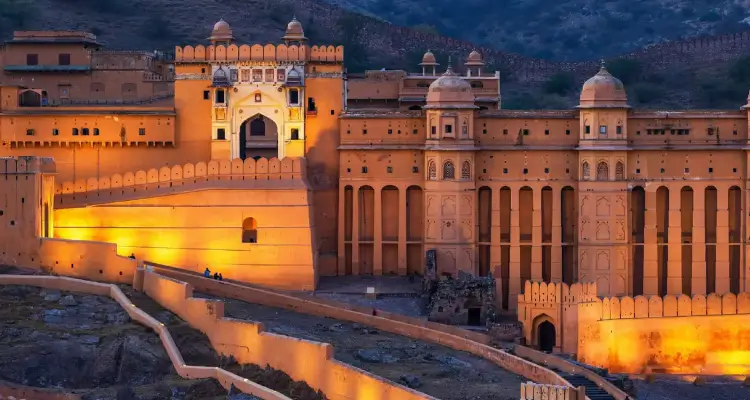
A short drive leads to the spectacular Amber Fort, perhaps Rajasthan's most famous hilltop fortress. Combining Hawa Mahal with Amber Fort creates one of Jaipur's most popular sightseeing experiences, allowing travelers to witness two very different expressions of Rajput architecture within the same day.
The nearby Albert Hall Museum offers another rewarding stop for travelers interested in history, archaeology, decorative arts, textiles, sculptures, and traditional craftsmanship. As Rajasthan's oldest museum, it provides valuable context for understanding the region's artistic heritage.
Just outside Hawa Mahal, the colorful streets of Johari Bazaar and Bapu Bazaar invite visitors to experience Jaipur's vibrant shopping culture. These historic markets are renowned for handcrafted jewelry, gemstones, block-printed textiles, embroidered fabrics, leather goods, traditional footwear, miniature paintings, marble handicrafts, and authentic Rajasthani souvenirs.
Food enthusiasts will also find numerous traditional restaurants and cafés serving local specialties within walking distance of the monument. Sampling authentic Rajasthani cuisine after exploring the palace adds another memorable dimension to the overall experience.
For travelers joining a Private Jaipur Sightseeing Tour or Jaipur Heritage Tour, these attractions are often combined into a carefully planned itinerary that maximizes sightseeing while minimizing travel time.
Located in the center of Jaipur's historic Pink City, Hawa Mahal is one of the easiest monuments to reach regardless of how travelers arrive in Rajasthan.
Visitors flying into Jaipur International Airport can reach the palace in approximately thirty to forty-five minutes, depending on traffic conditions. Prepaid taxis, private transfers, app-based cab services, and chauffeur-driven vehicles are readily available at the airport, providing convenient access to the city center.
Travelers arriving by train at Jaipur Junction Railway Station will find Hawa Mahal approximately six kilometers away. Auto-rickshaws, taxis, and local transportation options operate throughout the day, making the journey quick and straightforward.
Those traveling by road from Delhi, Agra, Udaipur, Jodhpur, or other cities in Rajasthan can comfortably reach Jaipur via excellent national highways. Private chauffeur-driven vehicles remain the preferred choice for international visitors because they offer flexibility, comfort, and convenient hotel pickup services.
Most Jaipur City Tours, Golden Triangle Tours, and Luxury Rajasthan Tour Packages include Hawa Mahal as one of the primary sightseeing attractions. Travelers booking organized tours generally benefit from hotel pickup, air-conditioned transportation, experienced English-speaking guides, monument entry assistance, and carefully planned itineraries that include nearby heritage sites.
Because the monument is situated within Jaipur's busy old city, parking near the entrance can occasionally become limited during weekends and peak tourist seasons. Visitors traveling independently may therefore find taxis or guided sightseeing tours more convenient than driving personal vehicles.
Whether arriving independently or through a customized itinerary, reaching Hawa Mahal (Palace of Winds) is simple, making it one of the most accessible and rewarding heritage attractions in Rajasthan.
For most international travelers, visiting Hawa Mahal (Palace of Winds) is not an isolated sightseeing experience—it forms part of a broader journey through Rajasthan's royal heritage. As one of Jaipur's defining landmarks, the monument is included in nearly every well-designed Rajasthan Tour Package, making it an essential destination for anyone wishing to understand the history, architecture, and cultural traditions of the Pink City.
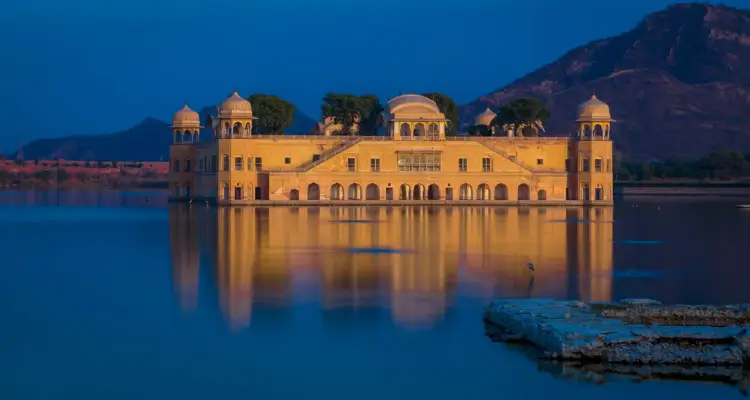
One of the most popular options is the Private Jaipur Sightseeing Tour, which allows visitors to explore Hawa Mahal alongside the city's most celebrated monuments in a single day. These tours typically include visits to Amber Fort, City Palace, Jantar Mantar, Jal Mahal, and the vibrant bazaars of Jaipur. Traveling with a professional English-speaking guide enriches the experience by providing historical context, architectural insights, and fascinating stories that often remain unknown to independent visitors.
The internationally renowned Golden Triangle Tour also features Hawa Mahal Jaipur as one of its signature attractions. Connecting Delhi, Agra, and Jaipur, this classic itinerary introduces travelers to three of North India's most iconic destinations. Guests can admire the grandeur of the Taj Mahal, experience Delhi's rich historical heritage, and discover Jaipur's royal architecture, with Hawa Mahal serving as one of the highlights of the Rajasthan segment.
Travelers seeking a more immersive cultural holiday often choose Luxury Rajasthan Tour Packages, which extend beyond Jaipur to include destinations such as Udaipur, Jodhpur, Jaisalmer, Pushkar, Ranthambore National Park, and Bikaner. These carefully curated itineraries combine heritage hotels, private transportation, expert guides, and authentic cultural experiences while ensuring a relaxed travel pace.
Photography enthusiasts frequently select customized Jaipur Heritage Tours that begin at sunrise, allowing ample time to capture the magnificent façade of Hawa Mahal (Palace of Winds) under ideal lighting conditions before continuing toward Amber Fort and other architectural landmarks. These specialized tours often include additional stops at panoramic viewpoints, traditional artisan workshops, and local markets that showcase Jaipur's artistic heritage.
Travelers with limited time may prefer a Same Day Jaipur Tour, particularly those arriving from Delhi or nearby cities. These itineraries focus on Jaipur's most important monuments while maximizing sightseeing efficiency. Despite the shorter schedule, Hawa Mahal consistently remains one of the primary attractions because of its historical significance and distinctive architecture.
For visitors celebrating special occasions such as honeymoons, anniversaries, or milestone birthdays, customized Luxury India Tour Packages often combine Jaipur with destinations such as Udaipur, Kerala, Goa, or Varanasi. These personalized itineraries provide greater flexibility, premium accommodation, private guides, and exclusive experiences tailored to individual preferences.
Booking a professionally organized itinerary also offers practical advantages. Hotel transfers, monument entry arrangements, experienced local guides, comfortable transportation, and carefully planned schedules allow travelers to focus entirely on enjoying Rajasthan rather than coordinating logistics.
One of the greatest advantages of modern travel is flexibility. While many visitors experience Hawa Mahal Jaipur through fixed itineraries such as the Golden Triangle Tour, others prefer designing a completely personalized journey that reflects their own interests, travel pace, and preferred destinations.
Because Jaipur enjoys excellent road, rail, and air connectivity, Hawa Mahal (Palace of Winds) can easily be incorporated into a wide variety of customized India holidays. Travelers beginning their journey in Delhi often spend two or three nights in Jaipur before continuing toward Agra, Ranthambore, Jodhpur, Udaipur, or Jaisalmer. This route creates a well-balanced introduction to Rajasthan while allowing sufficient time to appreciate Jaipur's remarkable architectural heritage.
Visitors interested in wildlife frequently combine Jaipur with Ranthambore National Park, where tiger safaris provide an exciting contrast to the region's royal monuments. Others continue toward Udaipur, famous for its romantic lakes and magnificent palaces, or Jodhpur, whose impressive Mehrangarh Fort dominates the skyline of the Blue City.
Luxury travelers often extend their Rajasthan holiday with destinations beyond the state. Kerala's tranquil backwaters, Goa's coastal resorts, Varanasi's spiritual traditions, Mumbai's cosmopolitan atmosphere, and the Himalayan landscapes of northern India all complement a Jaipur itinerary beautifully. This flexibility allows travelers to experience India's remarkable diversity within a single vacation.
Families traveling with children may prefer slower-paced itineraries that include additional leisure days, interactive cultural experiences, elephant conservation programs, traditional craft workshops, or heritage hotel stays. Couples celebrating honeymoons often select luxury boutique properties where personalized dining experiences and spa treatments complement their exploration of Jaipur's historical attractions.
Another advantage of customized travel is the ability to adjust sightseeing according to individual interests. Architecture enthusiasts may spend several hours studying the intricate façade of Hawa Mahal, while photographers often schedule multiple visits at different times of the day to capture changing light conditions. History lovers frequently request extended guided tours that explore the monument's connection to Jaipur's royal family and urban planning.
Rather than following rigid schedules, personalized itineraries allow every traveler to experience Hawa Mahal (Palace of Winds) in a way that best matches their own travel style. This flexibility transforms a simple sightseeing stop into a meaningful cultural experience that becomes one of the highlights of a Rajasthan holiday.
Hawa Mahal (Palace of Winds) is famous for its stunning five-story pink sandstone façade featuring 953 intricately carved Jharokhas, which allowed royal women to observe city life while maintaining complete privacy.
The monument was commissioned by Maharaja Sawai Pratap Singh in 1799, and it was designed by the renowned architect Lal Chand Ustad.
The palace earned its name because the hundreds of lattice windows create continuous natural airflow, keeping the interior cool even during Rajasthan's warmer months.
The monument features 953 beautifully carved Jharokhas, making it one of the most distinctive architectural landmarks in India.
The monument is generally open daily from 9:00 AM to 5:00 PM, although visitors should verify current timings before planning their visit.
The Hawa Mahal ticket price varies according to visitor category. Indian citizens and foreign nationals have separate entry fees, which are periodically updated by the Rajasthan Government and the Archaeological Survey of India.
Most visitors spend 60 to 90 minutes exploring the monument, although photography enthusiasts and architecture lovers often choose to stay longer.
Nearby attractions include City Palace, Jantar Mantar, Amber Fort, Albert Hall Museum, Johari Bazaar, and Bapu Bazaar, making it easy to combine several landmarks into one sightseeing itinerary.
Yes. Hawa Mahal Jaipur is included in almost every Jaipur Sightseeing Tour, Golden Triangle Tour, Private Rajasthan Tour, and Luxury Rajasthan Tour Package.
The most rewarding experience combines an early morning visit, a knowledgeable local guide, nearby heritage attractions, and a customized Jaipur City Tour that allows sufficient time to appreciate the monument's remarkable history, architecture, and cultural significance.