Your Travel Partner
SINCE 1989
Your Travel Partner
SINCE 1989
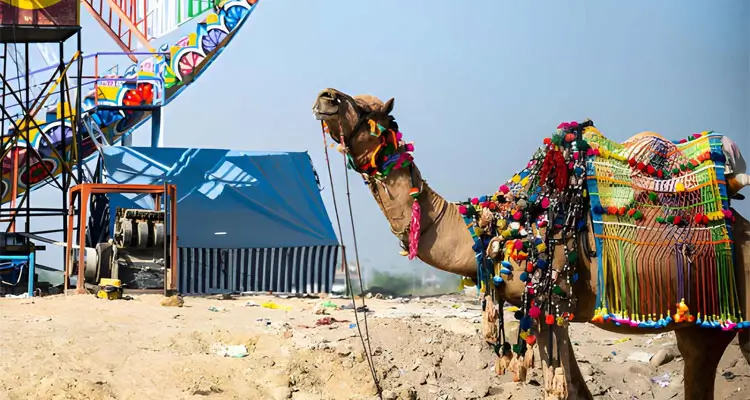
Ask anyone who's actually stood on the dunes outside Pushkar during fair week, and they'll tell you the same thing: photos don't do it justice. There's a particular smell to it — dust, marigold, roasting corn, camel — that no brochure can capture. We've been sending travellers to this fair for years now, and it still catches people off guard, in a good way.
It started, quite plainly, as a cattle market. Herders from across Rajasthan would walk their camels and horses for days to reach Pushkar and sell them here, and that trading tradition hasn't gone anywhere — you'll still see it happening in the open ground just past the edge of town, where deals get closed with nothing more than a handshake and a lot of shouting. Somewhere along the way, though, the fair grew a second layer. It now runs alongside Kartik Purnima, the full moon considered most sacred at Pushkar Lake, when pilgrims arrive to bathe in the ghats and wash away their sins. So you end up with this odd, wonderful overlap: livestock trading on one side of town, temple bells and holy dips on the other, and somehow it all works.
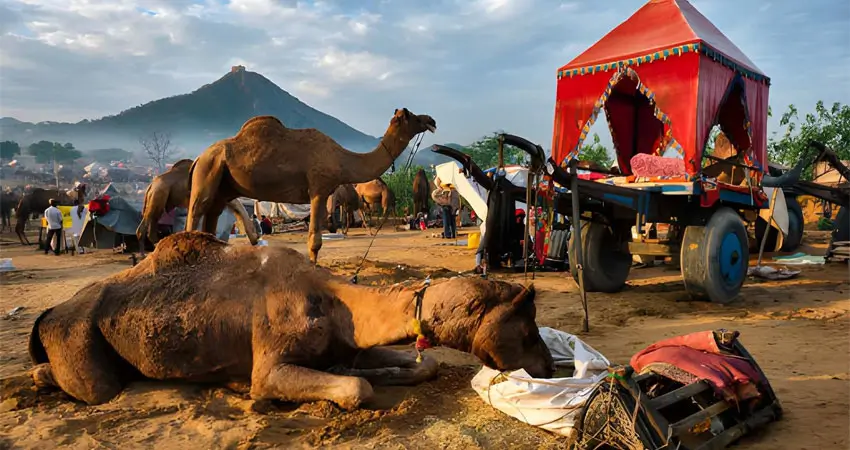
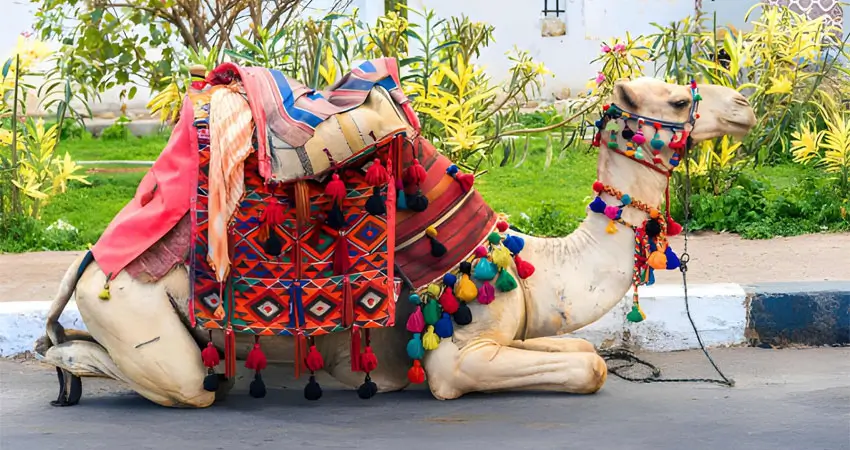
Mornings belong to the animals. Camels get bathed, decorated, sometimes shaved into patterns down their flanks, and led out for trading or racing. If you're an early riser, this is the part worth catching — it's chaotic, a little dusty, and completely genuine.
By afternoon the fairground itself opens up properly. There's a moustache competition that draws a serious crowd (yes, really), plus tug-of-war between local teams and whichever tourists get roped in, turban-tying contests, and camel decoration judging that gets surprisingly competitive. None of it is staged for visitors. It's been happening this way for generations; you're just lucky enough to be watching.
Evenings slow things down. Folk singers set up, fires get lit, and stalls sell kachori and jalebi that frankly taste better eaten standing in the sand than they would anywhere else. We always tell guests: don't rush this part. Sit, eat, watch.
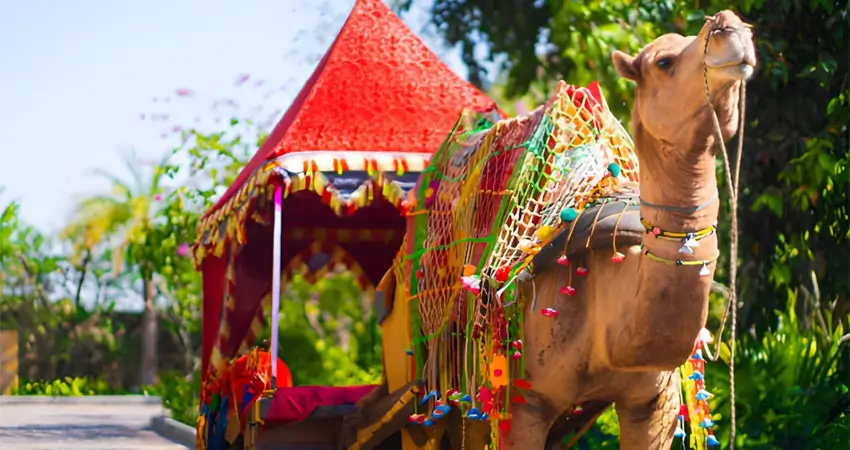
Rajasthan already has plenty going for it — forts, palaces, that whole desert-kingdom aesthetic people come for. But the fair gives you something the monuments can't: a look at how people actually live and celebrate, right now, not three hundred years ago. It's one thing to walk through Amber Fort and imagine the past. It's another to stand in a crowd of a thousand people cheering on a camel race.
That said, a fair this size isn't always easy to navigate on your own — the crowds are real, the heat can be a lot, and finding a good vantage point takes local knowledge. This is where a properly arranged private Rajasthan holiday earns its keep. Our team times the day around the fair's actual rhythm, gets guests into position before the crowds build, and then pulls them back out to a comfortable desert camp or heritage property once the sun's gone down. You get the immersion without spending the whole trip exhausted, which is really the point of doing India through luxury India tours in the first place.
Dates move every year with the lunar calendar, so the fair usually lands somewhere in October or November — always worth double-checking before you book flights. Rooms in Pushkar go fast once the season's confirmed, everything from basic guesthouses to the more elaborate tented camps that spring up just for fair week.
If you're coming from outside India, we'd honestly steer you toward a private India tour rather than trying to piece this together solo. It saves you the headache of transport, timing, and knowing where you're actually allowed to stand for the good photos. Pushkar also sits close enough to Jaipur and Ajmer that it's easy to fold into a longer Rajasthan route.
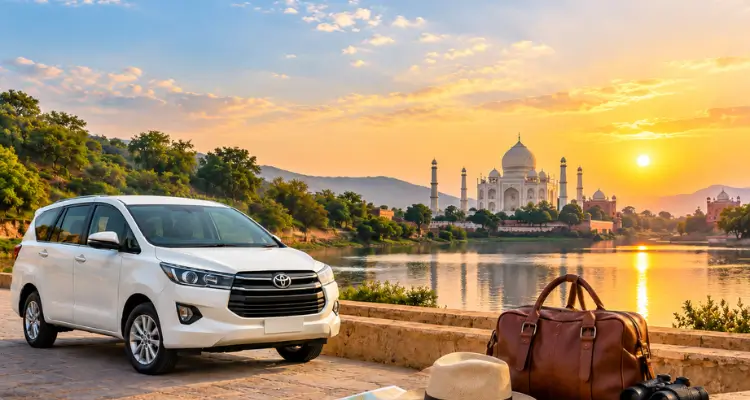
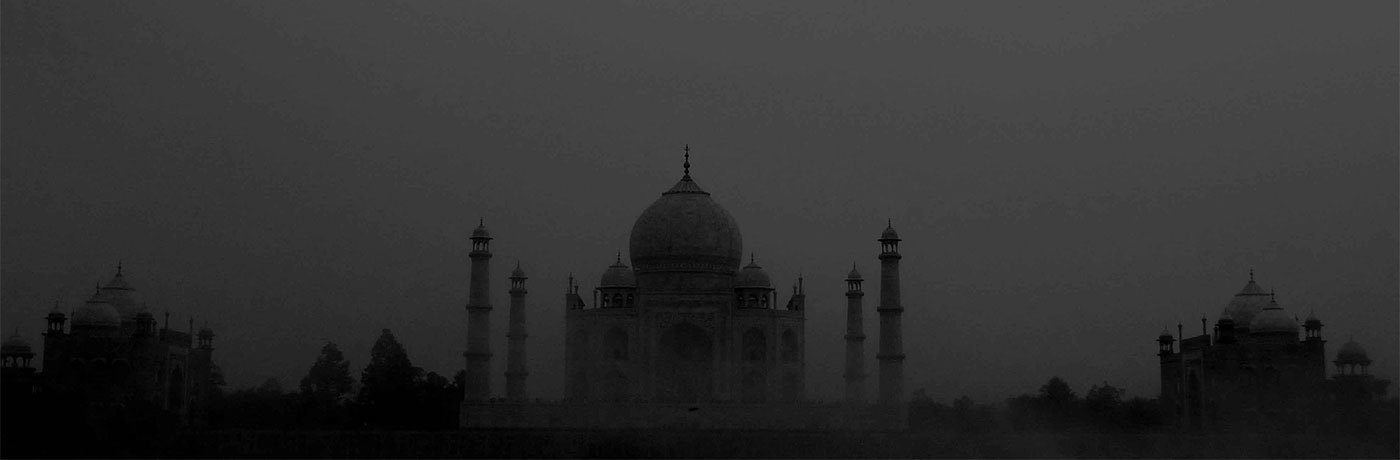
A good number of our first-time visitors combine the fair with a customised Golden Triangle tour — Delhi, Agra, Jaipur, and then a detour out to the desert for Pushkar. It works well as a route: sunrise at the Taj Mahal, a few days wandering Jaipur's palaces, then the noise and colour of the fair to close things out. Planning that kind of route yourself is doable, but it eats up time, which is usually why people hand it over to someone who's driven it before.
The Pushkar Fair rewards people who slow down for it. Go for the camels if that's what draws you, or the temple, or just the chance to see something that hasn't been repackaged for tourists yet — either way, give it more than a rushed afternoon. It's one of those trips people end up talking about years later, usually starting the story with "you won't believe the smell."