Your Travel Partner
SINCE 1989
Your Travel Partner
SINCE 1989
Most long-haul flights into Delhi land either late at night or in the grey hours before dawn, and the first thing you want after immigration is a calm room, a proper shower and a bed that feels like a reward. In the capital, four names come up again and again when travellers ask for the best: The Leela Palace New Delhi, ITC Maurya, Taj Palace and The Oberoi, New Delhi. All four are genuinely five-star, all four sit in the leafy diplomatic heart of the city, and all four will look after you very well. The differences are in the details: how close you are to the airport, how large the rooms feel, whether you want a famous dinner on your doorstep or a quiet rooftop pool, and how much you are willing to pay in peak season. This guide compares the four side by side, with honest notes on Delhi luxury hotel rates, signature restaurants such as Bukhara and Dum Pukht, spas, room categories and the kind of traveller each one suits, so you can book the right one for your first and last nights in India.
All four hotels are in New Delhi proper, the orderly, tree-lined part of the city built around wide avenues, roundabouts and government buildings. That matters more than it might seem. Old Delhi, with its narrow lanes and markets, is wonderful to visit but tiring to stay in, while the southern suburbs and Aerocity are convenient for flights but feel removed from everything else. The Diplomatic Enclave in Chanakyapuri, where three of these hotels stand, is the quietest, greenest and safest-feeling address in the capital, with embassies behind high walls on every side.
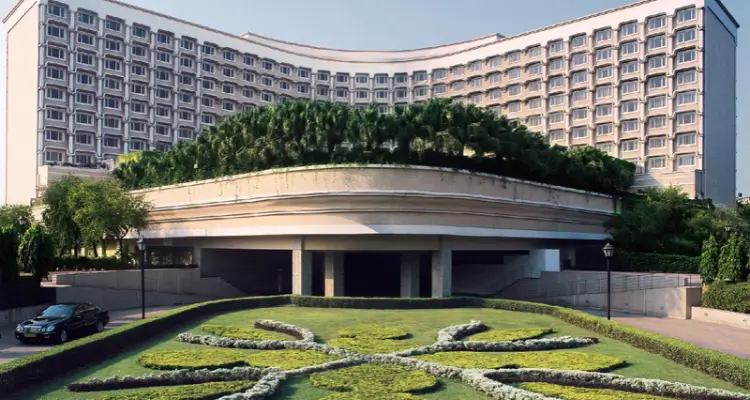
Taj Palace is the closest of the four to Indira Gandhi International Airport, at roughly 13 kilometres on Sardar Patel Marg. At night, the drive can take as little as 20 to 25 minutes. During the morning and evening rush it usually takes 35 to 50 minutes. The hotel sits in large landscaped grounds of around six acres, which gives it a resort-like feeling unusual for a city hotel, and it is a short drive to Khan Market, Lodhi Garden and India Gate.
ITC Maurya is almost next door, also on Sardar Patel Marg in the Diplomatic Enclave, about 14 kilometres from the airport. Driving times are much the same as for the Taj Palace. Its back faces the wooded Delhi Ridge, so many upper-floor rooms look out over a surprising expanse of green. It is particularly handy for anyone with meetings at embassies or in central government offices.
The Leela Palace New Delhi is also in Chanakyapuri, close to the diplomatic missions and only a few minutes from the President's Estate and the grand ceremonial avenue leading to India Gate. Allow 25 to 45 minutes from the airport depending on traffic. Of the four, it has the most central feel for sightseeing in the colonial-era heart of the capital, and the drive to Humayun's Tomb or Connaught Place is short.
The Oberoi, New Delhi sits on Dr Zakir Hussain Marg, overlooking the Delhi Golf Club and with Humayun's Tomb and the Sunder Nursery gardens just across the road. It is the furthest from the airport at roughly 20 kilometres, and the drive usually takes 30 to 50 minutes. In return, it has the best position for walking-distance culture: a morning visit to Humayun's Tomb before the crowds, or an evening stroll through Lodhi Garden, is easy from here. Khan Market is about five minutes away by car.
In practical terms, there is very little difference in airport time between the three Chanakyapuri hotels, and the Oberoi adds perhaps ten minutes. What matters more is the time of day you land. A flight arriving at 2 in the morning will reach any of the four in under half an hour. One landing at 6 in the evening on a weekday can take an hour whichever you choose. If your onward route heads to Agra on the Yamuna Expressway, or to Jaipur on the main highway, all four are well placed, although the Oberoi and the Leela make the southern exit towards Agra slightly easier. For the Gatimaan Express or Vande Bharat trains from Hazrat Nizamuddin station, the Oberoi is closest, roughly ten to fifteen minutes away at dawn.
The four hotels feel very different once you step through the doors, and this is often what decides the booking. The Leela Palace New Delhi is the most opulent. It was built in a palace style inspired by Lutyens' Delhi, with marble floors, gilded details, chandeliers, large mosaic panels in the central courtyard and original art by well-known Indian painters on the walls. It has around 250 rooms and suites, and they are among the largest in the city. The entry Grande Deluxe rooms start at roughly 50 square metres, and many have a separate dressing area and deep soaking tub. Above them sit Royal Premier rooms, the Royal Club floors with their own lounge and butler service, and a long list of suites, some with private plunge pools. The top Presidential Suite is well over 4,800 square feet. There is also a heated rooftop swimming pool with a view across the diplomatic quarter.
ITC Maurya is a grand, slightly old-school hotel with a strong personality. Its lobby has a dramatic domed ceiling painted with a large mural, and the interiors draw on the art of the ancient Mauryan empire. It has roughly 430 rooms across several wings. Standard Executive Club rooms are compact, often around 27 to 30 square metres, so many travellers choose to step up to the Towers rooms or the newer ITC One rooms, which come with butler service, a dedicated lounge and more generous space. The suite collection is famous, including the Grand Presidential Suite used by visiting heads of state. The look is rich wood, deep colours and heavy fabrics rather than minimalist calm.
Taj Palace has around 400 rooms and has been steadily renovated in recent years. The rooms range from crisp contemporary design to more classic styles with Indian touches. Standard Superior and Deluxe rooms are around 30 to 35 square metres, with Taj Club rooms and a variety of suites above them. Many rooms look out over the landscaped gardens and the swimming pool. The hotel is very popular for conferences and state visits, so the public areas can be busy, but the rooms themselves are quiet and comfortable, and the pool garden is one of the most pleasant open spaces in any Delhi hotel.
The Oberoi, New Delhi is the smallest and most contemporary of the four, with around 220 rooms after a complete rebuild a few years ago. The design is clean and understated, with light wood, soft neutral colours, superb beds and huge windows. Most rooms face either the Delhi Golf Club or Humayun's Tomb, and the golf course views in particular are one of the most restful outlooks in any Asian capital. Room categories begin with Deluxe and Luxury rooms of around 45 to 50 square metres, moving up through Premier rooms, several suite types and the single Kohinoor Suite at the top. There is a large outdoor pool with a sun deck, and the overall feeling is closer to a calm private residence than a palace.
As a quick guide to the mood of each, the Leela feels like a grand modern palace, the Maurya like a characterful classic with famous dinners, the Taj Palace like a garden resort in the city, and the Oberoi like a sleek, quiet retreat. None is a wrong choice; it simply depends on whether you prefer ceremony, character, space or serenity at the start or end of your trip.
Food is where these four hotels compete most fiercely, and for many guests the restaurants are the main reason to choose one over another. ITC Maurya has the most famous dining room in India. Bukhara has served the food of the North-West Frontier for decades: lamb, chicken and fish cooked in clay ovens, huge rounds of flatbread, and the slow-cooked black lentils that appear on almost every table. There is no cutlery by tradition, diners wear checked aprons, and the low wooden tables and stone walls feel rustic in a refined way. Presidents, prime ministers and film stars have eaten here, and tables at dinner are hard to get without booking several days ahead. Expect to spend roughly Rs.12,000 to Rs.18,000 for two, before drinks and tax, which is about 135 to 205 US dollars.
The same hotel's Dum Pukht offers a completely different kind of Indian cooking. It is based on the royal kitchens of Lucknow, where food was sealed in pots and cooked slowly over low heat. The room is elegant and hushed, with blue and silver tones, and the menu features delicate kebabs, aromatic rice cooked with meat, and rich slow-cooked curries. Avartana, also at ITC Maurya, serves inventive South Indian tasting menus that surprise even well-travelled diners. Add the all-day Pavilion and Ottimo, the Italian restaurant with a terrace over the Ridge, and the Maurya is a fine choice for anyone who wants to eat seriously without leaving the building.
The Leela Palace New Delhi answers with its own strong line-up. Jamavar serves refined Indian dishes from across the country, from Kerala seafood to North Indian kebabs, in a dining room inspired by colonial-era elegance. Le Cirque, the French-Italian restaurant on the upper floor, has recently returned with a refreshed look and is a lovely place for a special dinner with city views. Megu offers modern Japanese cooking under a crystal Buddha and a suspended temple bell, and The Qube is the all-day glass-walled restaurant. The Library Bar, with its leather chairs, first-edition novels and fireplace terrace, is one of the most atmospheric bars in Delhi.
The Oberoi, New Delhi has quietly become one of the city's best places to eat. Omya serves modern Indian tasting menus with a creative touch, while Baoshuan, on the rooftop, is a stylish Chinese restaurant with food from several regions and a view over the golf course. Threesixty is the all-day restaurant, known for a very good breakfast, and the Oberoi Patisserie and Delicatessen downstairs is ideal for coffee and pastries. Cirrus9, the rooftop bar, opens at sunset and is a beautiful place for an evening drink.
Taj Palace offers more choice than any of the others. Loya celebrates the cooking of the northern hills and plains, from Kashmir to Punjab, with a glass-fronted kitchen where you can watch kebabs being grilled. Orient Express, set in a dining room designed like a luxury railway carriage, has been a Delhi institution for European fine dining for many years. Masala Art serves modern Indian food and Spicy Duck offers Sichuan and Cantonese dishes. The all-day restaurant and the Tea Lounge are useful for a relaxed meal between sightseeing trips.
If food is your priority, the Maurya wins on fame and history, the Oberoi on contemporary cooking, and the Leela and Taj Palace on variety. Non-residents can eat at all of these restaurants, so you can stay at one hotel and still book a dinner at Bukhara or Omya on another night.
A good spa is not a luxury after twelve hours in the air; it is the fastest way to reset your body clock. Each of the four hotels takes wellness seriously, but their styles differ. The Leela Palace New Delhi has an ESPA spa, one of the better-known spa brands in luxury hotels worldwide. Its treatment rooms are spacious and calm, it has steam and sauna rooms, a couples' suite and treatments designed specifically for men, which is unusual in India. The signature Royal Leela facial and the Kiziswedana ritual with two therapists working together are popular after long flights. The heated rooftop pool is the other big draw. It is open all year, and swimming there in the cool winter sunshine with the city spread out below is a lovely way to recover from jet lag.
ITC Maurya has Kaya Kalp, The Royal Spa, which combines Indian therapies based on Ayurveda with international massages and facials. The spa is large, with a salon, a fitness centre and an outdoor pool set among greenery. It is a solid, well-run spa rather than a destination in itself, and many guests use it for one good massage after arrival.
Taj Palace has a Jiva Spa, the Taj group's signature spa brand. Jiva treatments draw on Indian healing traditions, with oil massages, herbal scrubs and calming rituals, and the therapists are usually very skilled. The hotel's outdoor pool sits in a large garden, which feels particularly relaxing on a warm afternoon, and there is a 24-hour gym for anyone whose body clock has them awake at 3 in the morning.
The Oberoi, New Delhi has The Oberoi Spa, which offers treatments inspired by India and South-East Asia, along with a sauna and steam rooms. The atmosphere is serene and modern, with a strong emphasis on personalised treatments. Complimentary yoga sessions are offered most mornings, and the large outdoor pool with views across the golf course is one of the most beautiful in the city.
In terms of cost, a 60-minute signature massage at any of the four usually costs between Rs.7,500 and Rs.12,000 before tax, roughly 85 to 135 US dollars. A 90-minute ritual typically runs Rs.11,000 to Rs.18,000. Booking ahead is wise, especially in the evening between 6 and 9, which is when most guests who arrived that day want a treatment.
A few practical points make spa use easier. Many hotels offer a jet-lag treatment that combines a foot ritual with a scalp or back massage, which is ideal if you land in the afternoon and want to stay awake until a sensible bedtime. If you arrive early in the morning before check-in, ask whether the spa can offer you a shower and relaxation lounge while your room is being prepared. On departure days, late check-out is often limited in peak season, so booking a spa slot in the afternoon before a late flight can give you a place to rest and shower without paying for an extra night. Pool hours vary by season, and in December and January, when Delhi mornings are cold and foggy, only the heated rooftop pool at the Leela is truly pleasant early in the day.
Prices at all four hotels change from day to day, and they rise sharply between October and March, when the weather is best and the city hosts major conferences, weddings and diplomatic events. The figures below are realistic peak-season nightly rates for a standard room, booked directly or through a good agent, before the 18 percent tax that applies to hotel rooms at this level.
Suites at all four hotels can cost several times these figures, and the presidential suites run well beyond Rs.500,000 a night. During major summits or international events, some hotels close entire floors for official delegations, and rates for the remaining rooms can jump dramatically. The weeks around Christmas and New Year, and the busy wedding dates in November, December and February, are also expensive.
What the rate includes makes a real difference. At the Oberoi, breakfast is included in most rates. The Leela and Taj Palace usually offer room-only and breakfast-inclusive options, and the difference is around Rs.3,000 to Rs.5,000 per room per night. Club rooms at all four hotels add a lounge with breakfast, afternoon tea and evening drinks and canapés, and often an airport transfer. For travellers who would otherwise pay for breakfast, a couple of evening drinks and a hotel car, a club room is often better value than it first appears.
Airport transfers are worth considering carefully. Hotel cars cost roughly Rs.6,000 to Rs.12,000 each way in a luxury sedan, and more for a top-end German car or SUV. A private tour operator can arrange the same meet-and-greet with a clean, air-conditioned premium vehicle and a driver who stays with you for the whole stay, usually at a lower cost and with the advantage that the same driver and car can then take you to Agra or Jaipur.
When it comes to how to book, direct booking often brings small extras such as breakfast, room upgrades on availability or late check-out. Luxury travel agents and tour operators who work regularly with these hotels can also secure added value, including better room allocation and flexible cancellation. Always check the cancellation terms, as many peak-season rates are non-refundable or require 72 hours' notice. Members of Marriott Bonvoy can earn and redeem points at ITC Maurya, which is part of the Luxury Collection, and this can bring useful benefits for frequent travellers.
With so much in common, the best way to choose is to think about how you will spend your time in Delhi and what you want from your hotel. The Leela Palace New Delhi suits travellers who want a sense of occasion. Honeymooners, couples celebrating an anniversary and anyone who enjoys grand interiors, a rooftop pool and large rooms will feel at home here. It is also a good choice for a final night in India, when a bit of splendour feels like a fitting end to the trip. If you are arriving in winter, the heated rooftop pool is a strong reason on its own.
ITC Maurya suits food lovers and travellers who like a hotel with history and character. If eating at Bukhara and Dum Pukht is on your list, staying in the same building makes it simple to book and easy to stroll back to your room afterwards. Business travellers with appointments in the Diplomatic Enclave also find it very convenient. It is best to book the Towers or ITC One rooms for extra space and service, as the entry-level rooms are on the smaller side.
Taj Palace suits families, groups and anyone who wants space to breathe. The large gardens, outdoor pool and wide range of restaurants make it easy to spend a relaxed afternoon without leaving the hotel, and it is the closest of the four to the airport. That makes it particularly good for short stopovers or for travellers with early morning flights onward to Udaipur, Varanasi or Kerala. The Taj group's warm, polished service is a strong point, and its connections across India make it easy to stay in Taj hotels elsewhere on the same trip.
The Oberoi, New Delhi suits travellers who value calm, privacy and quiet modern design over grandeur. With fewer rooms than the others, it feels more personal, and the views over the golf course and Humayun's Tomb are wonderful. Its position is the best of the four for culture, with Humayun's Tomb, Sunder Nursery, Lodhi Garden and Nizamuddin all very close. It is a natural choice for travellers continuing to The Oberoi Amarvilas in Agra or The Oberoi Rajvilas in Jaipur, as service styles are consistent across the group.
A few combinations also work well. Many travellers stay at one hotel on arrival and another on departure, which lets you enjoy two different experiences and dinners. Some choose the Oberoi for culture-filled days at the start of a trip and the Leela for a celebratory final night. Others stay at the Taj Palace for an easy airport run and book a dinner at Bukhara on the same evening.
Whatever you choose, give yourself at least two nights in Delhi. The first night is for rest after the flight, and the second is for seeing the city with a private guide and driver: Humayun's Tomb, Qutub Minar, the old city lanes around Jama Masjid by cycle-powered three-wheeler, and India Gate at dusk. A good private tour operator can match the hotel to the rest of your route, arrange airport meetings and make dinner reservations at the restaurants that are hardest to book.
Taj Palace is the closest of the four, about 13 kilometres from Indira Gandhi International Airport. ITC Maurya is almost next door, while The Leela Palace and The Oberoi take roughly ten minutes longer in normal traffic.
Yes. Both restaurants at ITC Maurya welcome non-residents, but tables at dinner are in high demand, especially at Bukhara. Book several days ahead in peak season.
The Leela Palace New Delhi has a heated rooftop pool that is open all year. The Oberoi, New Delhi has a large outdoor pool overlooking the Delhi Golf Club, and Taj Palace has a pool set in landscaped gardens.
A Deluxe or Luxury room usually costs roughly ₹35,000 to ₹65,000 a night between October and March, before 18 percent tax. Suites cost considerably more.
At The Oberoi, New Delhi, breakfast is included in most rates. The other three hotels usually offer room-only and breakfast-inclusive rates, and club rooms at all four include breakfast in the lounge.
Taj Palace is usually the easiest for families, with large gardens, a spacious pool area, many restaurants and connecting rooms. Its closeness to the airport also helps with tired children after a long flight.
Yes. All four hotels have strict security at the gates and entrances, and the Diplomatic Enclave and surrounding areas are among the safest in Delhi. Hotel cars or a trusted private driver are recommended for evening outings.
All four are within 15 to 30 minutes of India Gate, Humayun's Tomb and Lodhi Garden by car. Old Delhi and Qutub Minar take around 30 to 45 minutes depending on traffic.
Booking two to three months ahead is sensible for October to March, and earlier for Christmas, New Year and major conferences. Rates rise and rooms sell out quickly during large international events.