
Your Travel Partner
SINCE 1989
Your Travel Partner
SINCE 1989

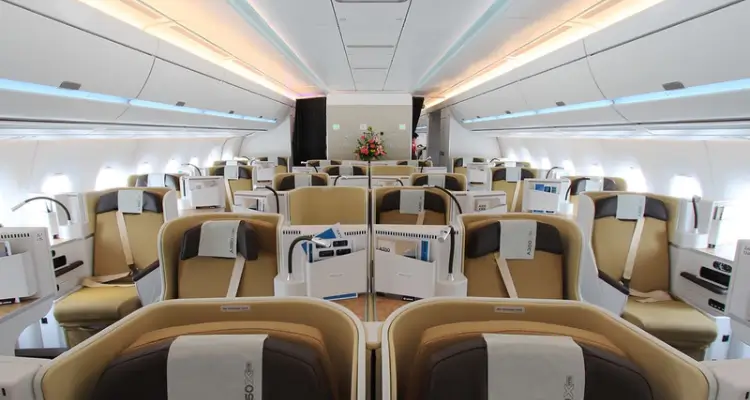
Most of our guests begin their India trip somewhere over Greenland, sixteen hours from home, with a flat bed, a blanket and a long night ahead. The flight is the single biggest piece of a luxury India holiday that we cannot arrange from Jaipur, and it shapes everything that follows: how rested you feel on the first morning, which city you land in, and how much of the first day is lost to sleep. Getting it right matters. The good news is that business class to India from the USA has never had more choice. There are true nonstops from New York, Newark, Chicago and San Francisco, and dozens of one-stop routings through Europe and the Gulf. The less good news is that the map keeps shifting. Airspace closures over Pakistan and parts of the Gulf, aircraft shortages and cabin refits have all reshuffled schedules recently. This guide sets out the best airlines to India in business class, the routes that are actually flying now, realistic fares, flight times, and the best arrival city for a Rajasthan or Golden Triangle tour, along with a few points and miles ideas that can save thousands of dollars.
Only three airlines currently fly nonstop between the United States and India: Air India, United and American. Each has a different seat, a different schedule and a slightly different personality, and the choice between them often comes down to which US city you live nearest.
Air India nonstop flights to the USA form by far the largest network. From Delhi, the airline flies to New York JFK, Newark, San Francisco and Chicago O'Hare, and from Mumbai it serves New York JFK and Newark. Frequencies have moved around a lot. A run of suspensions earlier this year, caused by high fuel prices and airspace restrictions, briefly cut Chicago and Newark, and Air India has been restoring most of these flights since the start of autumn. The Washington Dulles route has been suspended for some time, and the Mumbai and Bengaluru nonstops to San Francisco were dropped, leaving Delhi as the only Air India gateway to the Bay Area. Because Air India cannot fly over Pakistan, its flights to North America take a longer path, and some westbound return flights from Delhi stop briefly for fuel, sometimes in Kolkata or in Europe. These are technical stops: you stay on the aircraft, but the trip home can run two to four hours longer than the schedule suggests.
United Polaris to Delhi operates daily from Newark, departing in the evening and arriving in Delhi late the following night. The return, UA83, leaves Delhi just before midnight and lands in Newark at dawn, which suits travellers who want to sleep the entire way home. United's Mumbai service has not returned to the timetable, so for now Delhi is the only United nonstop city. Polaris is a reliable, private product with direct aisle access from every seat, good bedding from Saks Fifth Avenue and access to the Polaris lounge at Newark, one of the better business class lounges in the country.
American Airlines Delhi flights run daily from New York JFK on the Boeing 787-9, in a season that runs from late summer through the end of March. The westbound flight from Delhi to JFK is scheduled at around 17 hours, one of the longest flights American operates. Its business suites have privacy doors, and the airline's Flagship lounge at JFK is a calm place to start.
Flight times on the nonstops are long in both directions. New York to Delhi usually takes 14 to 15 hours eastbound, while Delhi to New York takes 15 to 17 hours westbound. San Francisco to Delhi is roughly 16 hours, and Chicago to Delhi around 15. Mumbai adds about an hour and a half compared with Delhi from the East Coast. These numbers stretch whenever airspace closures force longer routings, so check the actual scheduled duration when you book.
Delta has announced its intention to return to India with a nonstop from Atlanta to Delhi once it receives its new Airbus A350-1000 aircraft, but no start date has been confirmed. Travellers in the Southeast still need a connection for now, usually through New York, Europe or the Gulf.
The great advantage of a nonstop is simplicity. One check-in, one security line, no risk of a missed connection, and one long night of sleep. The disadvantage is that the cabin on some older aircraft may not match the price, and a single delay leaves you few alternatives. For a short, high-value trip of ten days or less, a nonstop on a good seat is almost always worth it.
The seat matters more than the menu on a 15-hour flight. A flat bed with direct aisle access, a door and a good mattress pad makes the difference between arriving ready for a palace hotel and arriving needing a full day in bed.
Air India business class is the most variable product of the group, so the aircraft type deserves attention. The best option is the Air India A350 business class suite, with a sliding door, direct aisle access, a large 4K screen and a comfortable flat bed. The airline has flown its A350s on Delhi to New York JFK and Newark, although assignments change. The legacy Boeing 777-300ER and older Boeing 787-8 cabins are tired, with worn seats, temperamental entertainment systems and older layouts. Air India is now spending around 400 million US dollars refitting these aircraft. The first refitted 787-8 has a 1-2-1 business cabin with 20 private suites, sliding doors, a 79-inch flat bed and a 17-inch screen. The 787 refit is due to finish next year, and the 13 Boeing 777-300ERs follow. Until then, it is worth checking a seat map before paying: a 1-2-1 layout with doors usually signals a new or refitted cabin, while a 2-3-2 or older 2-2-2 layout signals the old one.
United Polaris is consistent rather than spectacular. Every seat faces forward in a staggered 1-2-1 layout with aisle access, there is a good amount of storage, and the bedding, including a mattress pad, cooling gel pillow and a full-size duvet, is among the best on any US carrier. The newer Polaris Studio seats in the front row of some aircraft are larger and worth a small premium.
American Flagship Business on the 787-9 offers suites with privacy doors on the newer aircraft and a fully flat bed. Service is professional and efficient, and Flagship lounges at JFK and Flagship dining for eligible passengers make the departure experience comfortable.
The Gulf carriers raise the standard considerably, which is why many experienced travellers happily accept a stop. Qatar Airways Qsuite remains one of the finest business class seats in the world, with a closing door, a double bed option for couples in the centre seats and an excellent dine-on-demand menu. Qatar does not fit Qsuite on every aircraft, so check the aircraft for each sector. Emirates business class is strongest on its newer Boeing 777s with fully enclosed suites, and on the A380, which has an onboard lounge and bar. Older Emirates 777s have a 2-3-2 layout that is less private. Etihad business class on the Boeing 787 and A350 has direct aisle access and a solid flat bed, and its Abu Dhabi hub has a short, efficient connection.
The European airlines sit in the middle. Lufthansa Allegris, the airline's newer business seat, is a large improvement on its older product, though it is only on some aircraft. British Airways Club Suite has doors and aisle access on most long-haul aircraft. Air France and KLM business cabins are comfortable and quietly elegant, and Virgin Atlantic Upper Class is lively, with a bar area on some aircraft.
For couples who want to sit together and sleep well, Qsuite centre pairs and the middle pairs on Air India's A350 and refitted 787s are the best choices. Solo travellers usually prefer a window seat on any 1-2-1 cabin.
Most American travellers who do not live near New York, Newark, Chicago or San Francisco will fly one-stop business class to India, and many who do live near those cities choose it anyway for a better seat, a better fare or a chance to break the trip in half.
The Gulf hubs are the most popular. Emirates via Dubai serves Delhi, Mumbai, Bengaluru, Hyderabad, Chennai, Kolkata, Kochi and more from US cities including New York JFK, Newark, Boston, Washington Dulles, Chicago, Dallas, Houston, Los Angeles, San Francisco and Seattle. Qatar Airways via Doha has a similar spread of US gateways and deep coverage of India. Etihad via Abu Dhabi flies from New York JFK, Chicago, Washington Dulles, Boston and others, and it is one of the very few long-haul carriers with a direct flight from Abu Dhabi into Jaipur, landing in the heart of Rajasthan. The connections are usually short, often two to four hours, and the premium lounges in Doha and Dubai are among the best in the world.
There is an important caution for the Gulf routes right now. Renewed tension between the United States and Iran has led to airspace warnings over parts of the Gulf, and Emirates, Qatar Airways and Etihad have been running reduced schedules, with timings that can change after check-in. Their hubs remain open and most travellers are getting through, but it is wise to book a fare with flexible changes, carry travel insurance that covers disruption, and check flight status repeatedly in the days before departure.
Europe offers a different rhythm. Lufthansa via Frankfurt or Munich connects many US cities to Delhi, Mumbai, Bengaluru and Chennai. British Airways via London Heathrow has several daily flights to Delhi and Mumbai and also flies to Bengaluru, Hyderabad and Chennai. Air France via Paris, KLM via Amsterdam, Swiss via Zurich, Turkish Airlines via Istanbul and Virgin Atlantic via London all serve India as well. A European connection splits the trip into two flights of roughly eight or nine hours each, which many people find easier on the body than one 16-hour flight.
A favourite approach for longer holidays is a stopover in Europe or the Gulf. Two nights in London, Paris or Istanbul on the way out, or two nights in Dubai or Doha on the way home, breaks up the time difference and turns a long trip into part of the holiday. Qatar Airways and Emirates both sell discounted stopover hotel packages, and most European airlines allow a free stopover on a multi-city ticket for a modest change in fare.
Total travel time on a one-stop route from the East Coast usually runs 17 to 21 hours door to door, and from the West Coast 21 to 26 hours. The difference between a good connection and a poor one can be five or six hours, so look closely at the layover before booking. A connection of under 90 minutes in a large airport is risky, while one of over five hours is tiring unless you have a lounge you enjoy.
One small detail catches people out: on a one-stop route, keep both flights on the same ticket. Separate tickets mean that a delayed first flight can leave you stranded without protection, and that bags must be collected and checked again.
Where you land in India decides how the first days of your trip will flow. For most of our guests, who are heading to Jaipur, Agra, Udaipur and the rest of Rajasthan, the answer is clear: fly into Delhi for a Golden Triangle tour.
Delhi's Indira Gandhi International Airport, usually called IGI, is the main international gateway for the north of India and the hub for all the nonstop flights from the United States. The arrivals terminal is modern, the immigration lines for e-Visa holders are well signed, and the best airport hotels are a short drive away. From Delhi, Agra is around three and a half hours by expressway in a private car, and Jaipur is about five hours. That puts the whole Golden Triangle of Delhi, Agra and Jaipur within easy reach, and many routes simply loop back to Delhi for the flight home. Most nonstop flights from the US land in Delhi late at night or in the early hours, so we recommend a quiet first night at a hotel such as The Oberoi New Delhi, The Leela Palace New Delhi, the Taj Mahal Hotel on Mansingh Road or ITC Maurya, then a slow start on the first morning.
Flying into Jaipur directly is possible on a one-stop route. Etihad flies from Abu Dhabi to Jaipur, and several low-cost and Indian carriers fly to Jaipur from Dubai and other Gulf cities, though these are short-haul aircraft without a long-haul business cabin. Domestic flights from Delhi and Mumbai to Jaipur take around an hour. Landing in Jaipur suits travellers who have already seen Delhi or want to start with Rajasthan's palaces and forts straight away.
Mumbai makes sense for a trip that begins in Udaipur, Goa or the south, or for those who want a couple of days in Mumbai itself. Udaipur is roughly an hour and a quarter from Mumbai by air, and Jodhpur slightly less. From the US, Air India and United have served Mumbai nonstop, and every major European and Gulf carrier flies there. The new Navi Mumbai airport has opened but currently handles only a small number of short international routes, so long-haul passengers still land at the main Mumbai airport.
Bengaluru is the natural choice for a Kerala, Karnataka or wider South India trip, but not for Rajasthan. There is no nonstop from the US at the moment, though Lufthansa, British Airways, Air France, KLM, Emirates, Qatar and Etihad all connect to it with one stop.
A sensible pattern for many guests is an open-jaw ticket: fly into Delhi, travel by road through Agra and Jaipur to Udaipur, then fly home from Udaipur or Mumbai via a short domestic connection. This saves a long backtracking drive and costs little more than a simple return. Noida's new international airport, south of Delhi, is expected to add international flights over time and sits closer to Agra, but for now Delhi IGI remains the only practical long-haul gateway for the capital.
Business class fares to India from the USA vary widely with season, route and how the ticket is bought. As a broad guide, a round-trip business class fare from the East Coast to Delhi usually costs between 4,500 and 8,000 US dollars, roughly Rs.396,000 to Rs.704,000. Recently, a nonstop Air India business class fare between New York and Delhi was around 6,000 dollars round trip, while Emirates via Dubai on the same dates cost a little more, and some one-stop fares on Saudia and EgyptAir dropped as low as 2,500 to 3,400 dollars. West Coast and Midwest fares run a few hundred dollars higher. Peak-season travel in late December, around Diwali and through the main months of October to March often pushes fares toward the upper end.
The best time to book business class to India is usually three to six months out, when fare sales from the Gulf and European carriers appear most often. Qatar Airways in particular runs periodic business class promotions from the US, and these can bring round-trip fares down to the 3,000 to 4,000 dollar range. Flying mid-week, on a Tuesday or Wednesday, tends to be cheaper than a Friday or Sunday.
Points and miles can make a luxury trip much more affordable. Air India is a member of Star Alliance, so United MileagePlus, Aeroplan, Avianca LifeMiles and other Star Alliance programmes can book Air India and Lufthansa business class awards. Air India's own Maharaja Club recently cut its business class award prices between India and the US to 130,000 miles one way on routes including Delhi to New York JFK, Newark, Chicago and San Francisco, and Mumbai to Newark, which is worth comparing against partner prices. Qatar Airways Qsuite on points is bookable through British Airways and Qatar's own Avios, as well as American AAdvantage, and Avios transfer from several US credit card programmes. Emirates Skywards awards are available, though often with high fuel charges, while Etihad awards can be booked through Etihad Guest and some partner programmes.
A few booking habits help. Check the aircraft type and seat map before paying, especially on Air India. Choose a fare with free or low-cost changes, given the current state of Gulf and Pakistan airspace. Keep both legs of a one-stop route on one ticket. Upgrade with miles where possible on United and American, which can work well from premium economy. And book your Indian e-Visa in good time, because airlines check it at departure.
Once the flight is booked, a good local operator can take care of the rest: meeting you inside the airport, carrying bags to a private car, and having a cool towel and water waiting after the long trip.
Air India, United and American currently operate nonstop flights between the US and India. Air India serves New York JFK, Newark, Chicago and San Francisco from Delhi and New York routes from Mumbai, United flies Newark to Delhi, and American flies New York JFK to Delhi.
Eastbound from New York to Delhi usually takes 14 to 15 hours nonstop. Westbound from Delhi to New York can take 15 to 17 hours because of airspace closures and winds, and some return flights include a short fuel stop.
Qatar Airways Qsuite via Doha is widely considered the best, with a closing door and double bed option for couples. On a nonstop, Air India's A350 and refitted 787 suites, United Polaris and American's 787-9 suites are all good choices.
A round-trip business class fare from the East Coast to Delhi usually costs 4,500 to 8,000 US dollars. Sales on Gulf and European carriers can bring the price down to around 3,000 dollars.
Delhi is the best arrival city, with nonstop flights from the US and easy road access to Agra and Jaipur. Many travellers fly home from Mumbai or Udaipur to avoid backtracking.
Not nonstop. Etihad flies from Abu Dhabi to Jaipur, so a one-stop route through Abu Dhabi is possible, and domestic flights from Delhi or Mumbai to Jaipur take around an hour.
The Gulf hubs remain open, but Emirates, Qatar and Etihad are running reduced schedules because of airspace warnings in the region. Book a flexible fare, carry travel insurance and check flight status repeatedly before departure.
A nonstop saves time and removes the risk of a missed connection, which suits short trips. A one-stop route often offers a better seat, a lower fare and the option of a stopover in Europe or the Gulf.
Yes. Star Alliance programmes such as United MileagePlus and Aeroplan can book Air India and Lufthansa, while Avios and AAdvantage can book Qatar Airways. Air India's own programme prices US to India business class from 130,000 miles one way.
Yes. US citizens need an Indian e-Visa or regular visa before travel, and airlines check it at check-in. Apply online through the official Indian government portal at least a few weeks before departure.