Your Travel Partner
SINCE 1989
Your Travel Partner
SINCE 1989
Booking a private India tour directly with a local tour operator can give international travelers considerably more control over hotels, sightseeing pace, transportation and day-to-day arrangements than a fixed group holiday. It can also reduce the number of companies standing between the traveler and the people actually operating the journey in India.
The important word is directly.
A private journey across India can involve airport pickups, hotels, a chauffeur-driven vehicle, professional guides, monument visits, domestic flights, train tickets, wildlife reservations and several long-distance transfers. When an overseas travel agency sells such a holiday, some or all of these arrangements may eventually be passed to an Indian destination company. Booking directly can place the traveler in communication with the business coordinating those services on the ground.
That does not mean every local operator provides the same standard.
International travelers should check the company, written itinerary, hotel names, vehicle category, guide arrangements, payment terms, cancellation conditions and local support before sending money. A quotation that simply promises “luxury hotels, private car and sightseeing” is not detailed enough for an expensive multi-city holiday.
A reliable local India tour operator should be able to explain how the trip will work in practical terms. The traveler should know who will meet them at the airport, what vehicle will be used, where they will stay, which services are private, which meals are included and who to contact if something changes during the journey.
Travel Plan arranges private India travel around individual dates, destinations and comfort preferences. Whether booking through Travel Plan or comparing several Indian operators, travelers should use the same careful process before confirming a journey.
A local tour operator in India is generally closer to the actual delivery of ground services than a foreign retailer selling an India holiday. The company may arrange hotels directly or through contracted suppliers, allocate vehicles and chauffeurs, coordinate guides, handle airport transfers and respond to operational changes after the traveler arrives.
This shorter chain can be useful when a trip requires customization.
Imagine a couple from London requesting Delhi, Agra, Jaipur, Jodhpur and Udaipur. They want five-star hotels but prefer heritage properties where appropriate. They do not want shopping stops. They would like a private guide for major monuments, an Innova-class vehicle for road travel and a free afternoon in Udaipur.
A capable operator can work directly with those requirements.
The itinerary should state realistic road sectors rather than treating the cities as points on a map. Delhi to Agra is considerably easier by expressway than many longer Rajasthan sectors. Jaipur to Jodhpur and Jodhpur to Udaipur require substantial road time. The Udaipur sector can also be structured around a Ranakpur visit when suitable.
The advantage of direct communication is that the traveler can ask the person designing the trip why a particular routing has been recommended.
The same applies to hotels. If the client asks for luxury hotels in India, a good operator should not hide behind a star rating. The actual property names should appear in the proposal. A traveler may prefer The Oberoi Amarvilas in Agra because of its positioning near the Taj Mahal, a palace property in Jaipur for atmosphere and a lakeside luxury hotel in Udaipur for a slower end to the Rajasthan portion.
Those choices change the price substantially.
Direct booking can also make modifications easier. If the traveler decides that Jaisalmer creates too much road travel, the operator can remove it and redistribute nights. If the client wants Ranthambore, the company can explain the effect of safari availability and additional travel time.
Private travel should not mean simply choosing a pre-existing package and changing the passenger name.
Transportation deserves the same attention. For a couple with luggage, an Innova or similar larger vehicle can provide better comfort on a long road journey than a basic sedan. A family or private group may need a Tempo Traveller or another larger vehicle. Guests wanting a premium chauffeur experience can request an upgraded category.
The driver should have a clearly defined role. A professional private driver in India handles road travel and transfers. Professional local guides can then join in cities where detailed historical interpretation is valuable.
This operating model is particularly effective in Rajasthan and the Golden Triangle because several major destinations can be connected by private road transportation.
Direct booking does not remove the need for due diligence. It increases the importance of knowing exactly which company is responsible.
India's Ministry of Tourism publishes information related to recognition schemes for tourism service providers, while established tourism businesses may also hold memberships in trade bodies such as the Indian Association of Tour Operators. Travelers can check credentials claimed by an operator rather than relying exclusively on logos displayed on a website.
Company registration, a physical business identity, written terms and proper payment documentation are equally important. A polished website alone is not proof that every claim is genuine.
A private India tour cost should never be evaluated without reading the inclusions. Two itineraries of identical duration can differ by several thousand dollars while both being fairly priced because the underlying services are completely different.
For two international travelers, comfortable private touring with good accommodation can reasonably require a higher-side budget of approximately US$250 to US$450 per person per day, depending on destinations, season and inclusions.
A stronger five-star journey may fall around US$450 to US$800 per person per day, particularly when quality hotels, a private chauffeur-driven vehicle, professional local guides, airport transfers and selected paid services are included.
Premium palace hotels, luxury wildlife lodges, upgraded room categories, specialist escorts and business-class domestic flights can move a trip beyond US$800 to US$1,500 per person per day.
These are budgeting ranges, not fixed tariffs.
Suppose a couple requests a 12-night private holiday. One operator quotes US$6,000 for both travelers and another quotes US$10,000. The first response should not be that the cheaper operator is better.
The hotel names need to be compared first.
One proposal may use comfortable four-star properties. Another may include celebrated palace and luxury hotels. The room category may also differ. Breakfast may be included in one quotation while another includes dinner at selected locations.
Next compare transportation.
Is the vehicle private throughout the road journey? What category is being supplied? Are airport transfers included? Does the same chauffeur travel through Rajasthan or are transfers being subcontracted independently?
Then examine guiding.
A quotation may include a professional guide in Delhi, Agra, Jaipur, Jodhpur and Udaipur. Another may include only a driver and describe sightseeing as “included,” leaving the traveler to arrange guides separately.
Monument admission is another important variable. Entrance fees can be included or excluded depending on the operator's quotation structure. Neither approach is automatically wrong, but the traveler needs to know before comparing totals.
Domestic flights can create a large difference. A Delhi–Varanasi–Mumbai extension, for example, introduces airfare and airport transfers that do not exist on a purely road-based Golden Triangle journey.
Wildlife creates another layer. A stay near Ranthambore does not automatically mean a tiger safari is included. Safari reservations should be clearly identified.
A professional private India tour quotation should therefore state the hotel names, number of nights, meal basis, vehicle category, guide arrangements, airport transfers, major included activities and significant exclusions.
Payment schedules also deserve attention.
A company may request a deposit to secure hotels and other services, with the balance due later. The amount and timing depend on the booking and supplier conditions. High-demand hotels, safari reservations and special arrangements can require stronger advance commitments.
Travelers should avoid transferring a substantial amount to an unrelated personal account when they believe they are paying a registered tour business. The beneficiary details should correspond sensibly with the company or its documented payment arrangement.
Credit-card or secure online payment options can offer convenience, although processing charges may apply depending on the provider and transaction.
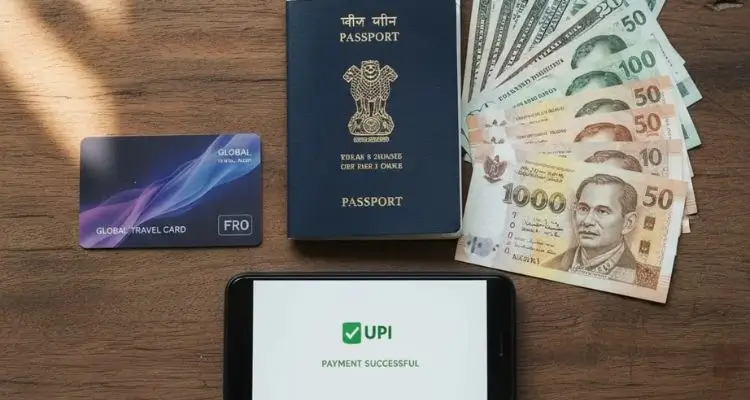
Currency should be clear too. If a quotation is issued in US dollars, pounds, euros or Indian rupees, the payment terms should explain how the final amount is handled. International travelers should also consider any foreign transaction or bank charges imposed by their own financial institution.
Before paying for a private tour of India, send the operator a direct set of practical questions. The quality of the answers can reveal almost as much as the itinerary.
Ask for the exact hotel names.
If a proposal says only “five-star hotel,” request the properties. If the company says hotels will be decided after payment, ask why. Availability can change, but a serious quotation should normally be based on identifiable accommodation or clearly defined alternatives.
Ask about room categories. This is particularly important for luxury hotels and heritage properties because the difference between entry-level and premium rooms can be significant.
Ask about the vehicle.
A phrase such as “private air-conditioned car” is not enough if vehicle comfort matters. Request the proposed category and determine whether luggage will fit comfortably.
Ask whether the vehicle remains with you during the road portion or whether each transfer is independently arranged.
Ask about the driver. Long-distance private touring requires someone experienced with intercity routes, hotel approaches and tourist destinations. The driver should not automatically be presented as a substitute for a professional city guide.
Ask where professional guides are included.
For first-time international travelers, private guides in Delhi, Agra and Jaipur can add considerable value. Rajasthan destinations such as Jodhpur and Udaipur can also benefit from knowledgeable local guides.
Ask whether shopping stops are optional.
India is famous for textiles, carpets, gemstones, jewellery, marble work and handicrafts, and many travelers genuinely enjoy seeing artisans and buying locally made products. Others do not want to shop at all. The operator should respect either preference.
Ask about daily timing.
A written itinerary may say “after breakfast drive to the next city,” but travelers should request approximate road duration for longer sectors. A day involving six hours of driving should not also be described as a full sightseeing day without a realistic explanation.
Ask about monument closures.
Major attractions can have weekly closures or operational restrictions. The Taj Mahal, for example, is ordinarily closed to general visitors on Fridays, making route timing important for Agra stays. Official Taj Mahal information confirms the Friday closure for general viewing.
Ask about support during the trip.
Who should be contacted if a domestic flight is cancelled, a driver is delayed or the hotel cannot locate the reservation? An operator selling a multi-city journey should provide a practical contact method.
Ask for cancellation conditions before paying.
Do not wait until a cancellation occurs to read them. Hotels, flights, wildlife reservations and other services can carry different penalties.
Finally, ask for the full list of inclusions and exclusions.
A company that answers these questions precisely gives the traveler something concrete to evaluate.
The process usually begins with an enquiry containing travel dates, number of guests, arrival city, departure city and broad interests. Providing useful information at the beginning produces a better proposal.
Instead of writing, “Send your best India tour,” an international traveler can say that two adults are arriving in Delhi, have around two weeks, prefer five-star accommodation, want Rajasthan and Agra, enjoy history, prefer a comfortable pace and require a private vehicle.
That immediately gives the operator something meaningful to work with.
The company can then propose a route. The traveler should read it carefully rather than focusing only on the price. Check the number of nights in each destination and identify long driving days.
Revisions are normal.
A custom private India tour may go through several versions before confirmation. A night can be added in Udaipur, a distant city can be removed, hotel standards can be increased or reduced and sightseeing can be adjusted.
Once the route is suitable, hotel availability should be checked. This stage is particularly important for premium properties because the preferred room category may sell out even when another room remains available.
The operator then provides the final quotation and booking terms.
After the required payment is made, written confirmation should follow. Depending on the trip, documentation may include hotel details, domestic transport information and service contacts.
Before departure, travelers should receive a usable final itinerary. It should show where they are staying and what major services have been arranged.
On arrival, the private-tour structure becomes practical rather than theoretical.
The traveler may be met at the airport and transferred to the first hotel. A guide can join the following morning for city sightseeing. When the road journey begins, the chauffeur handles the intercity transportation. Local guides can meet the guests in subsequent cities.
If the route includes a domestic flight, the driver can transfer guests to the airport and another local representative or driver can receive them at the next destination according to the confirmed arrangement.
This continuity is one of the main reasons travelers use an India-based private tour operator rather than assembling every service independently.
Travel Plan can handle this type of coordination for private travelers, couples, families and small private groups. Hotel standard, vehicle category, guide requirements and pace can be matched to the individual booking rather than forcing every traveler into the same format.
Direct booking can be appropriate when the traveler verifies the company, receives a detailed written itinerary, checks payment information and reads the booking terms. Company credentials and claimed tourism-industry affiliations should be independently checked where they influence the booking decision.
It can reduce layers of intermediary markup, but direct booking is not automatically the cheapest option. Hotel contracts, vehicle standard, guide quality and included services affect the final price. Compare equivalent services rather than headline totals.
For two travelers, comfortable private touring can commonly require approximately US$250–US$450 per person per day on a higher-side budget. Strong five-star travel can reach around US$450–US$800 per person per day, while premium luxury arrangements can exceed US$800–US$1,500 per person per day.
For a substantial private booking, the proposed hotel names should normally be identifiable before confirmation. Availability can change, so suitable alternatives may occasionally be necessary, but “five-star hotel” alone is not enough information for a serious comparison.
Many multi-city private tours, particularly in Delhi, Agra and Rajasthan, use a private car with driver. The exact vehicle category and sectors covered should be stated in the quotation.
A driver and guide perform different roles. Drivers handle transportation and road logistics. Professional guides provide detailed historical, cultural and architectural interpretation. International visitors often use both services.
Yes. Custom private travel should allow reasonable changes before confirmation, subject to availability and price. Destinations, number of nights, hotels, vehicle category and sightseeing can be adjusted according to the traveler's requirements.
Payment schedules vary according to the operator and services being reserved. Hotels, flights, wildlife reservations and premium arrangements can require advance deposits. The amount and due dates should be stated in writing before payment.
The operator should provide a local contact method for operational problems. Ask about this before booking. The advantage of using an on-ground company is that it can coordinate with drivers, hotels, guides and suppliers when changes are required.
Yes. Travel Plan can coordinate private India tours for international travelers, including chauffeur-driven transportation, selected accommodation, professional local guides, airport transfers and multi-city routing. Services and costs can be specified in the written quotation before confirmation so travelers know what has been arranged.