Your Travel Partner
SINCE 1989
Your Travel Partner
SINCE 1989
Ultra-luxury travel in India sits far above the standard formula of a five-star hotel, private car and sightseeing guide. At this level, the quality of a journey is determined by privacy, exceptional accommodation, personal service, comfortable pacing and the ability to remove unnecessary friction from almost every stage of travel.
India is particularly suited to this style of journey because some of its finest hotels are destinations in their own right. Former royal residences, lakeside palaces, secluded wilderness camps and architecturally distinctive resorts allow travelers to experience places that would be difficult to reproduce elsewhere. Delhi can provide polished metropolitan luxury before a traveler moves to Agra for a Taj Mahal-facing stay, Jaipur for a former royal palace, Ranthambore for an intimate wilderness camp and Udaipur for a lakeside property where the hotel deserves as much time as the city.
Transportation should operate at the same standard. A professional private chauffeur in India allows travelers to move according to their own schedule without dealing with local taxis, repeated vehicle changes or the logistics of unfamiliar road travel. Professional private guides can be added selectively for monuments and heritage cities, while airport representatives, domestic flights and specialist arrangements connect the longer distances.
The result is not a conventional tour with more expensive hotels. A carefully arranged ultra-luxury India tour should feel less crowded, more personal and substantially more flexible.
Travel Plan can coordinate this level of private travel around the guest's preferred destinations, accommodation style, pace and interests. The most important decisions are not simply which famous places to include, but where to stay, how much time to spend there and which private services genuinely improve the journey.
Accommodation is often the largest difference between ordinary five-star travel and ultra-luxury India travel. India has luxury hotels that are not merely places to sleep after sightseeing. Some occupy historic palaces, extraordinary lakeside estates or secluded natural settings and deserve to become part of the journey itself.
Jaipur provides one of the clearest examples.
Rambagh Palace began as a royal residence and later became the home of Jaipur's Maharaja. Taj now operates it as a palace hotel with grand rooms and suites, extensive grounds, restaurants and spaces retaining the character of its royal past.
For a traveler interested in royal Rajasthan, staying here creates a completely different experience from returning to a conventional business-style hotel after visiting City Palace and Amber Fort.
Udaipur offers another level of palace and lakeside luxury.
The Oberoi Udaivilas stands on the banks of Lake Pichola across a substantial landscaped estate. Its architecture, courtyards, gardens and water features draw heavily on the visual language associated with Rajasthan's palaces.
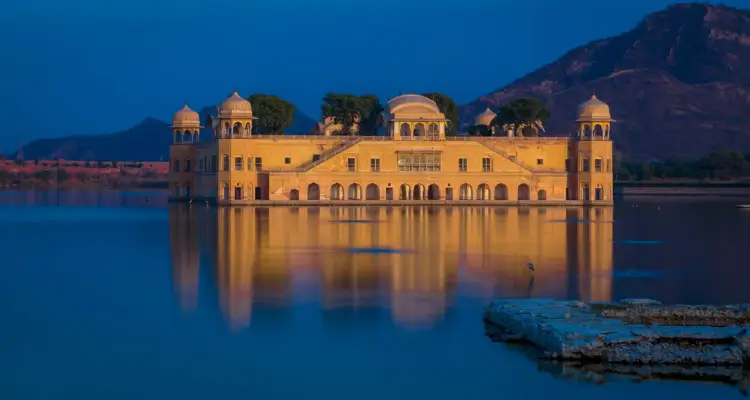
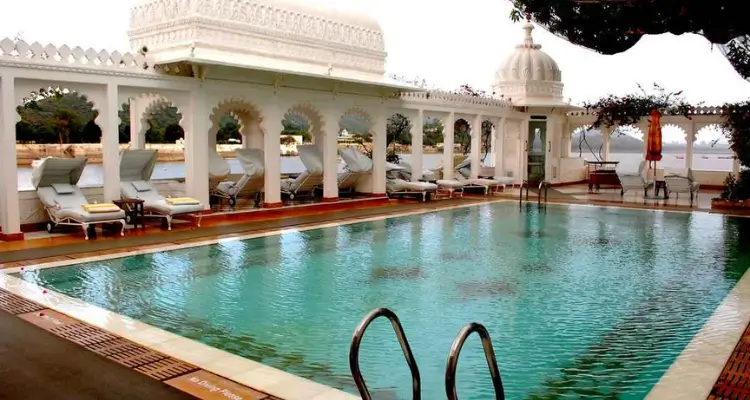
Taj Lake Palace provides a very different setting. Positioned on Lake Pichola, the historic palace hotel creates the impression of staying directly on the water, with the surrounding lake and city forming part of the atmosphere.
Guests do not necessarily need to choose the most expensive hotel in every city. The accommodation should match the destination.
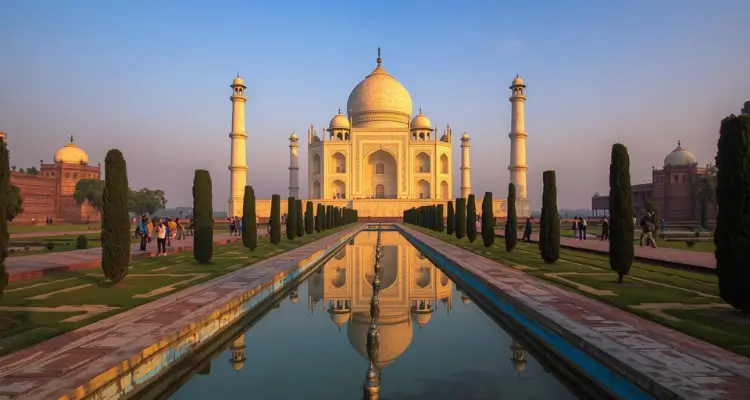
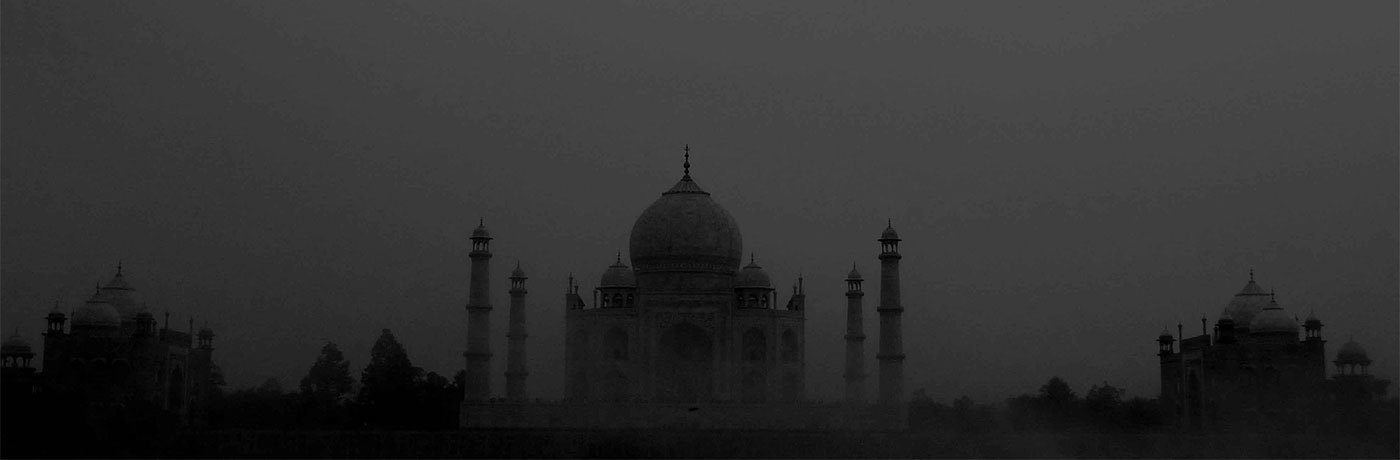
Agra is a good example. For travelers willing to pay a premium for location and atmosphere, The Oberoi Amarvilas is positioned approximately 600 metres from the Taj Mahal and is known for views toward the monument from its rooms and suites.
For someone visiting India primarily to see the Taj Mahal, the emotional value of waking up with the monument visible nearby may justify spending significantly more than at another five-star Agra property.
Ranthambore requires a different type of luxury.
Aman-i-Khás consists of tented accommodation in the wilderness near Ranthambore National Park. Aman describes the camp as a seasonal wilderness retreat serving as a base for wildlife excursions into the reserve.
That is very different from palace luxury, but it can belong naturally within the same high-end journey.
The critical mistake is using expensive hotels while giving travelers no time to enjoy them. A guest who reaches a palace at 8:00 p.m. and leaves at 6:00 a.m. has technically stayed there, but has received little of the value for which they paid.
An exclusive India holiday should include slower periods at exceptional properties. In Udaipur, for instance, two or three nights can allow time for private sightseeing alongside a quiet afternoon by the lake. At a wilderness property, multiple nights allow several safari opportunities rather than treating wildlife as a rushed overnight stop.
Room category matters as much as hotel choice.
Premium palace and luxury hotels can have several categories ranging from standard rooms to historic suites, private pool rooms and signature accommodations. Prices can differ by several times within the same property.
Travelers should therefore ask for the exact proposed room category before paying.
For high-end travel, “five-star hotel” is not a sufficiently detailed description.
A private chauffeur is one of the most practical luxuries available to travelers moving through North India and Rajasthan. The service removes repeated negotiations with taxis and gives guests a consistent transportation arrangement across several destinations.
A luxury chauffeur service in India should provide far more than a vehicle arriving outside the hotel.
The car should be immaculately maintained, air-conditioned and appropriate for the passengers and luggage. The chauffeur should be punctual, professionally presented, familiar with the route and experienced in serving international travelers.
Vehicle selection should prioritize actual comfort.
A premium Mercedes or BMW sedan may be desirable for airport transfers, formal occasions and selected city movements. For long road journeys, however, some travelers prefer a spacious premium SUV or MPV because the seating position and luggage capacity can be more practical.
The most expensive badge does not automatically create the most comfortable six-hour drive.
For a couple travelling between Delhi, Agra, Jaipur, Jodhpur and Udaipur, a high-quality Innova-class vehicle may offer excellent practical comfort. Guests wanting a more exclusive road experience can request premium SUVs or luxury sedans where suitable.
Travel Plan can match the vehicle category to the traveler's priorities rather than treating every road sector identically.
The chauffeur and guide should also remain separate roles.
A professional driver can know India extremely well and provide useful practical assistance, but a private tour guide in India is there to interpret history, architecture, culture and monuments in depth.
At the Taj Mahal, for example, a specialist Agra guide can explain the Mughal context, architectural symmetry, marble inlay work and the wider complex. In Jaipur, a knowledgeable guide can provide context at Amber Fort, City Palace and Jantar Mantar. Delhi requires an even broader historical range because the sightseeing can span several dynasties and periods.
Ultra-luxury travelers may also request foreign-language guides or a full-time accompanying escort.
An escort differs from local city guides because the same professional travels with the guests across multiple destinations. This can be useful for travelers who want continuous assistance with hotel check-ins, airports, daily coordination and communication.
It also increases the cost because the escort's travel, accommodation and professional fee must be considered.
Airport service deserves similar attention. After a long international flight, the first hour in India should not involve confusion over drivers and pickup points. Private airport reception and a pre-arranged transfer allow guests to move directly toward the hotel.
For domestic flights, the chauffeur or representative can handle the ground transfer to the terminal, with another team receiving the guests at the next destination according to the confirmed arrangements.
This is where a luxury India travel company earns its fee. The traveler should not have to coordinate several unrelated suppliers every day.
Ultra-luxury travel becomes interesting when private arrangements go beyond transportation and accommodation without turning the journey into a checklist.
India provides opportunities for carefully arranged cultural, culinary, wildlife and heritage experiences, but each should have a reason for being included.
Private dining is one example.
Luxury palace and resort hotels may offer special dining settings according to property policy, season and availability. A couple celebrating an anniversary may prefer a carefully arranged private dinner to another evening spent at a standard restaurant.
Such arrangements should be confirmed specifically rather than assumed.
Likewise, a luxury anniversary trip in India might include a special room setup, private dinner or other hotel-arranged touches, but the exact offering varies by property.
Wildlife can be another major component.
Ranthambore is particularly convenient for travelers combining Delhi, Agra and Rajasthan because it can be incorporated between major cultural destinations. For a genuinely wildlife-focused stay, guests should allow more than one safari opportunity.
Tiger sightings can never be guaranteed. Wild animals do not operate according to hotel or tour schedules.
The luxury element therefore comes from the quality of the lodge, smooth transfers, properly handled safari reservations and enough time to experience the reserve without pretending that wildlife itself can be ordered.
Aman-i-Khás and other premium wilderness properties can be considered for travelers seeking high-end accommodation around Ranthambore. India also has luxury safari lodges around other major reserves, making it possible to combine cultural touring with serious wildlife travel.
Private cultural activities should be equally selective.
A traveler interested in Indian cuisine may appreciate a high-quality private cooking interaction or chef-led experience. Someone interested in textiles may prefer an appointment with a respected artisan rather than a generic souvenir stop. Architecture enthusiasts may want more time with specialist guides instead of adding another city.
Luxury travelers should be particularly cautious about the phrase “exclusive experience.” Marketing descriptions can make ordinary activities sound private and rare.
Ask what is actually private.
Is the venue closed to other guests? Is the guide exclusive to the travelers? Is it simply a normal public activity with a private transfer? Is special access officially permitted?
A reputable operator should describe the service accurately.
The same applies to monument access. Famous heritage sites operate under official rules. Paying for a luxury journey does not give travelers permission to ignore security restrictions, opening hours or protected-site regulations.
What can be improved is the surrounding service: correct timing, knowledgeable guides, comfortable transportation and efficient ticket arrangements.
There is no useful single price for an ultra-luxury India vacation because accommodation can vary from a premium five-star room to a signature palace suite costing several times more.
For travelers seeking high-quality five-star private touring, approximately US$450 to US$800 per person per day can be a reasonable higher-side starting range for budgeting when two guests travel together.
At the ultra-luxury level, a more realistic working range can rise to approximately US$800 to US$1,500+ per person per day.
Journeys using celebrated palace hotels, premium suites, top wilderness lodges, luxury vehicles, specialist guides and high-end dining can exceed US$2,000 per person per day during expensive periods or when exceptional accommodation categories are selected.
These figures are not fixed package rates.
Consider accommodation alone. A premium suite at a celebrated palace hotel can cost more for one night than several nights at a good conventional five-star property. Seasonal rates also change significantly.
A two-week journey for a couple could therefore cost around US$20,000 to US$40,000 or considerably more, depending on hotel selection and inclusions. At the highest end, there is effectively no meaningful ceiling because signature suites, private aviation and extraordinary bespoke arrangements can move the cost into another category.
Travelers should ask for transparent pricing.
A proper quotation should identify hotels, room categories, meal basis, vehicle category, guides, airport transfers, domestic transportation and included experiences.
If a safari is included, the number of drives should be specified.
If private dining is included, the nature of the arrangement should be stated.
If a premium vehicle is promised, the category should be named.
If domestic flights are included, the travel class should be clear.
The point is not to make the quotation unnecessarily complicated. It is to ensure that the traveler understands what the high price is buying.
Travel Plan can structure a high-end private journey using different levels of accommodation rather than forcing the maximum price in every destination. Some travelers may choose a palace suite in Jaipur and Udaipur while using a more restrained luxury hotel in Delhi. Others may prioritize wildlife lodges and spend less on city accommodation.
That flexibility often creates a better trip than simply selecting the most expensive option everywhere.
A high-end private journey can commonly require around US$800 to US$1,500+ per person per day when premium accommodation, private transportation and specialist services are included. Exceptional palace suites, luxury wilderness stays and exclusive arrangements can push costs above US$2,000 per person per day.
Rambagh Palace in Jaipur and Taj Lake Palace in Udaipur are notable examples. Rajasthan also offers numerous heritage and palace-style properties at different luxury levels. The right choice depends on location, room category and the style of journey required.
The Oberoi Amarvilas is positioned approximately 600 metres from the Taj Mahal and is particularly known for views toward the monument from its rooms and suites.
Yes. Private chauffeur-driven travel in India is particularly practical across Delhi, Agra and Rajasthan. The same vehicle and chauffeur can often remain with guests across the road portion, depending on the confirmed arrangement.
Not necessarily. Luxury sedans are excellent for selected transfers and city travel, but spacious SUVs or premium MPVs can sometimes be more comfortable for long road sectors and substantial luggage. Vehicle choice should be based on practical comfort as well as prestige.
Yes. Ranthambore combines well with North India and Rajasthan travel. Premium wilderness accommodation and pre-arranged safari drives can be included, but tiger sightings cannot be guaranteed.
Many luxury properties offer special dining arrangements subject to availability, location, weather and hotel policy. Exact settings and charges should be confirmed with the property or tour operator before the stay.
Yes, if detailed cultural and historical interpretation matters. Premium transportation and hotels do not replace specialist knowledge. Professional private guides can add substantial value in Delhi, Agra, Jaipur, Jodhpur, Udaipur and other heritage destinations.
Two or three nights are often more satisfying than a rushed overnight stay when the property itself is an important part of the journey. The exact duration depends on the destination and total travel time available.
Yes. Travel Plan can coordinate ultra-luxury private travel in India with premium hotels, palace stays, chauffeur-driven transportation, professional guides, airport services, wildlife arrangements and special experiences according to the guest's route and preferences. Each major service can be identified in the quotation so the traveler knows what level of accommodation and private support has been arranged.