Your Travel Partner
SINCE 1989
Your Travel Partner
SINCE 1989
Choosing between a private driver in Rajasthan and travelling by train is one of the most important transportation decisions for foreign tourists. Both options can work extremely well, but they serve very different types of travellers. A train can be inexpensive, comfortable in the right class and a memorable part of an India journey. A private car costs considerably more, yet it provides direct hotel-to-hotel transportation, flexible departure times, easier luggage handling and the ability to stop at worthwhile places between Rajasthan's major cities.
The answer is therefore not that one option is always better. A traveller moving from Jaipur to Jodhpur with light luggage and a conveniently timed train may be perfectly happy using rail. A couple carrying two large international suitcases and travelling through Jaipur, Pushkar, Jodhpur, Udaipur and several smaller locations may find a Rajasthan car and driver dramatically easier because the vehicle remains with them for most of the trip.
Cost creates the clearest difference. A reserved railway ticket can cost only a fraction of a private intercity car. Even when foreign travellers use better air-conditioned classes, rail remains relatively inexpensive compared with private transportation. Indian Railways operates a formal fare system based on train, distance and class, and passengers can check current fares through the official Indian Railways Passenger Reservation Enquiry service rather than relying on an old blog fare.
For practical premium budgeting, two travellers can often allow roughly $25–$70 total for two reserved train seats or berths on many Rajasthan sectors, depending on the class and train, while a private sedan for the same broad intercity journey may cost approximately $120–$250, depending on the distance. An Innova Crysta may cost around $160–$300+. On very long sectors, private transport can cost considerably more.
But comparing only ticket price creates a misleading picture. Train passengers may still need a taxi from the hotel to the departure station, another taxi after arrival, porter assistance, food, luggage handling and perhaps a separate vehicle for an attraction that lies between the two cities. The private driver cost in Rajasthan is higher because it combines many of those transportation functions into one service.
For a foreign tourist, the more useful comparison is therefore total convenience, travel time, route suitability, luggage, comfort and what the traveller wants to do between destinations.
Train travel wins easily on basic transportation price. Indian Railways is designed to move enormous numbers of passengers across the country at prices far below what a private vehicle costs. Reserved air-conditioned classes provide foreign tourists with several levels of comfort, and the fare depends on train category, class, quota and distance. Because Indian Railways updates fares and train schedules, travellers should check their specific service through the official railway enquiry or authorized ticketing channel instead of assuming that a fare mentioned months earlier remains correct.
For two international travellers using a good reserved class, a useful higher-side budget for many medium-distance Rajasthan rail journeys is approximately $25–$70 for the two passengers combined. Premium or higher-category services can cost more, while ordinary reserved classes can cost significantly less. Add approximately $15–$30 for a private hotel-to-station transfer in the departure city and another $15–$30 after arrival, and the total practical transportation spend might fall around $55–$130 for two people on a straightforward rail day.
A private car with driver in Rajasthan sits at a different price level. Jaipur to Pushkar can cost around $90–$120 for a sedan one way. Jaipur to Jodhpur can reasonably cost approximately $150–$190, while an Innova Crysta can reach around $200–$250. Jodhpur to Udaipur can cost approximately $150–$190 for a sedan or around $200–$250 for an Innova Crysta. A much longer road sector such as Jaipur to Jaisalmer can reach approximately $250–$310 for a sedan and roughly $320–$390 for an Innova Crysta.
The price difference looks large when shown only as a ticket against a taxi. A couple may ask why they should pay $220 for a private car when a train might move them for $50. The reason becomes clearer when the complete day is considered. The private car collects them from the hotel lobby, takes their luggage directly, can stop for lunch whenever they want, may incorporate an attraction on the way and drops them at the next hotel entrance. The train requires the travellers to reach the station on time, manage luggage, locate their carriage, travel according to a fixed schedule and arrange another transfer after arrival.
A seven- or ten-day private-driver booking can also be more efficient than purchasing each road sector separately. For two international travellers, an Innova Crysta with driver for Rajasthan can reasonably cost around $110–$140 per active touring day when arranged as part of a sensible multi-day route. Seven days might therefore cost approximately $850–$1,100, while ten days could reach around $1,150–$1,500 depending on mileage and final drop.
If the same journey were completed mostly by train, transportation could cost several hundred dollars less. However, the travellers would need to build the itinerary around station locations and available services rather than only around the places they want to visit.
The cost decision becomes easier when the total holiday budget is considered. A backpacker spending $50 a night on hotels may reasonably consider a $200 private road transfer excessive. A couple spending $250–$400 per night on premium hotels may regard an additional $100–$150 for door-to-door private transportation as a relatively small improvement to the overall trip.
Neither decision is wrong. The value depends on travel style.
The strongest argument for a private driver in Rajasthan for foreign tourists is not luxury. It is simplicity. International travellers often arrive with larger luggage than domestic weekend travellers. Two people may have two full-size check-in suitcases, two cabin trolleys, personal backpacks and perhaps camera equipment. That amount of baggage is manageable in a private vehicle because it is loaded at one hotel and unloaded at the next. The same luggage can become inconvenient when it needs to move through railway entrances, security areas, platforms, stairways and crowded station exits.
Train travel is completely possible with large luggage, but passengers need to be more organized. Indian railway coaches provide luggage space within the passenger environment rather than airline-style checked luggage handling for ordinary travellers. A large suitcase therefore needs to be placed where it can remain reasonably secure without blocking other passengers. During an overnight journey, travellers also need to remain aware of valuables such as passports, money and electronics.
A private vehicle simplifies this. Large suitcases can remain in the boot or luggage area while passengers carry only a small day bag. When stopping for sightseeing between cities, main luggage stays in the vehicle while passports and valuables remain with the travellers.
This difference is especially noticeable for senior tourists. Railway stations can involve walking substantial distances, negotiating stairs or footbridges and moving quickly when platform changes occur. A healthy traveller may find this part of the experience interesting. Someone with mobility limitations may find it unnecessarily difficult.
A Rajasthan private car with driver picks passengers up at the hotel entrance. There is no station platform and no need to arrive forty-five minutes before departure simply to create a safety buffer.
Vehicle comfort depends on category. A sedan can be perfectly acceptable for two travellers, but an Innova Crysta is often a better choice for longer road journeys because it offers additional cabin and luggage space. Two people paying approximately $110–$140 per day for an Innova Crysta on a multi-day tour are buying a vehicle that will be used repeatedly, not simply one taxi ride.
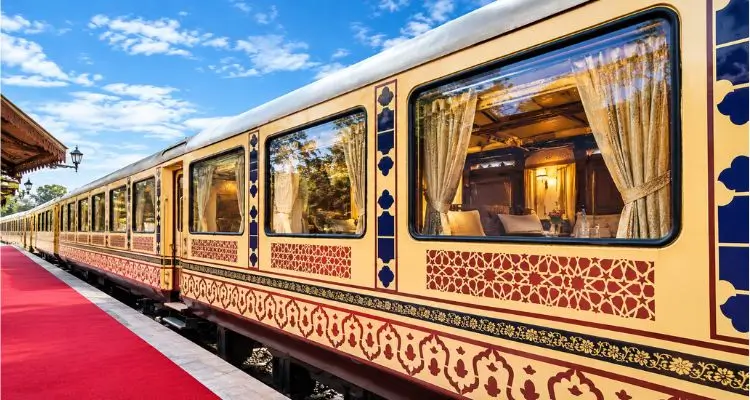
Train comfort depends heavily on class. Air-conditioned classes are much more suitable for foreign tourists than unreserved or crowded general travel. Overnight sleeper arrangements can save the cost of a hotel night and allow passengers to cover a long distance while sleeping, but sleep quality varies according to personal tolerance, railway movement, station announcements and other passengers.
For some people, that is part of the India experience. Others arrive at the destination tired and wish they had slept in a hotel.
Privacy is another difference. A private car is occupied only by the booked travellers and driver. Music, temperature and comfort stops can usually be adjusted within reason. A train is shared public transportation. The passenger gains cultural exposure and potentially interesting conversations but gives up privacy.
Families with young children may appreciate private-car flexibility because restroom or food stops can be made when needed. On a train, the facilities are fixed and the schedule belongs to the railway.
For travellers who require frequent restroom breaks, medication timing or a particular meal schedule, private road transportation is easier to adapt.
The practical question is therefore not whether trains are comfortable. Good reserved trains can be very comfortable. The question is whether the traveller values the predictability and private space of a chauffeur-driven Rajasthan tour enough to justify the additional price.
Travel time between Rajasthan cities should be compared door to door rather than station to station. A train timetable may show a five-hour rail journey while a private road journey takes six hours. On paper, the train is faster. But the passenger must still reach the station, arrive before departure, wait if the train is delayed, exit the destination station and travel to the hotel. A five-hour train journey can therefore become a seven-hour hotel-to-hotel day.
The opposite can also happen. A road journey may involve traffic, road construction or a long city exit, while a well-timed train moves efficiently between stations. For certain major-city pairs, rail can be an excellent choice.
Jaipur to Jodhpur is a good example of a route where both options can work. A private car generally requires around 5.5–6.5 hours. The driver collects passengers directly from the Jaipur hotel and delivers them to the Jodhpur hotel. A train may provide a similar or shorter station-to-station experience depending on the specific service. If the timetable suits the itinerary and passengers have manageable luggage, rail can be a very strong option.
Jodhpur to Udaipur creates a different situation. A private road transfer is particularly attractive because the journey can include Ranakpur Jain Temple, turning transportation into a sightseeing day. The driver leaves Jodhpur with the luggage, waits while the travellers visit Ranakpur and then continues to Udaipur. A railway journey cannot replicate this without additional road transportation. In this case, the car's value comes from what happens between the two cities rather than raw speed.
Jaipur to Pushkar is another route where the private car usually makes much more practical sense. Pushkar does not have the same simple major-station relationship that cities such as Jaipur and Jodhpur have. Travellers using rail normally work through nearby Ajmer and then require another road transfer. A direct private car takes approximately 2.5–3.5 hours from Jaipur and ends at the Pushkar hotel.
Jaipur to Ranthambore presents a more balanced choice. Sawai Madhopur is an important railway point, making train travel feasible. A good train can be fast, while a private car takes approximately 3.5–4.5 hours. The deciding issue may be safari timing. A private car can leave at the exact hour required by the confirmed afternoon safari, while train travellers need a service whose arrival fits the reporting schedule.
Jodhpur to Jaisalmer can also make rail attractive when a convenient direct service is running. However, services and routing can change, and route-search results do not always reflect a simple direct tourist connection. Current journey planners can even show indirect routings on particular dates, reinforcing the need to verify the exact train for the intended day rather than assume a permanent daily pattern.
This is why foreign tourists should avoid building a Rajasthan itinerary using generic statements such as “there is always a train.” Train availability is date-specific. Indian Railways provides official enquiry tools for current schedules and fares, and these should be checked before the route is fixed.
A private Rajasthan driver avoids most timetable problems. The vehicle leaves when passengers are ready, subject to a sensible driving schedule.
That flexibility becomes particularly useful on routes involving smaller heritage towns. Rajasthan contains many worthwhile locations that are far easier to integrate by road than by train. A traveller who wants only Jaipur, Jodhpur and Jaisalmer may use trains successfully. A traveller wanting Jaipur, Pushkar, Jodhpur, Ranakpur, Udaipur and Bundi will generally find a car far easier.
Rajasthan contains several transfers where the journey itself can become useful sightseeing. This is the area where a private car and driver in Rajasthan often provides value that train travel cannot match.
The Jodhpur–Udaipur sector is the clearest example. Ranakpur can be incorporated naturally between the cities. Travellers leave Jodhpur after breakfast, visit the Jain temple complex around the appropriate visitor period, have lunch and continue to Udaipur. The suitcases remain in the car throughout the day.
Agra–Jaipur, although partly outside Rajasthan, offers the same advantage through Fatehpur Sikri. A traveller using a private Golden Triangle vehicle can check out of Agra, visit the former Mughal capital and then continue to Jaipur without returning to Agra or managing luggage separately.
Jaipur–Jodhpur can incorporate Pushkar when the route and schedule are appropriate. A simple transfer becomes a full day with a meaningful stop rather than several hours of passive transportation.
These sightseeing possibilities change the economic comparison. Suppose two travellers pay $210 for a private Jodhpur–Udaipur transfer in an Innova Crysta. A train or other public transportation may cost far less, but the travellers who still want Ranakpur would then need to arrange another private vehicle, perhaps from Udaipur as a separate excursion. The lower transport price no longer represents the complete itinerary.
A private driver also helps with minor practical stops that do not justify a separate excursion. Travellers can stop for lunch in a suitable place, photograph a landscape, visit a small stepwell or take a short break in a town that would otherwise be difficult to reach.
This freedom should still be used intelligently. Having a private car does not mean every temple and fort visible on a map should be inserted into one transfer day. A Jaipur–Jaisalmer road journey already requires most of a day. Adding four sightseeing stops can make the journey exhausting.
The best private-driver itineraries use flexibility selectively. A meaningful two-hour Ranakpur visit is valuable. Ten five-minute stops simply make the day longer.
Train travel offers a different experience. The journey itself can be culturally interesting. Travellers watch Rajasthan pass outside the window, encounter local passengers and experience one of India's most important transportation systems. For some visitors, that is more memorable than a highway journey.
The decision therefore comes down to what the traveller wants from the transfer. If the goal is efficient destination-to-destination rail travel, a good train can be excellent. If the goal is to turn the road into part of the sightseeing itinerary, the private vehicle has a clear advantage.
Both trains and private cars can be used safely by foreign tourists when sensible precautions are taken, but the type of stress is different.
With train travel, the passenger is responsible for being at the correct railway station, finding the correct platform and carriage, protecting valuables and reacting to timetable changes. Major Rajasthan stations are used by large numbers of passengers, so the environment can initially feel intense for someone who has never travelled by Indian Railways.
This does not make rail unsuitable. Millions of journeys happen routinely, and foreign tourists use Indian trains successfully every day. Booking a reserved air-conditioned class, arriving early and keeping valuables secure removes many problems.
Passengers should use official railway information for train and fare checking. Indian Railways maintains passenger reservation enquiry services for fare and journey information.
A private driver shifts much of the logistical responsibility away from the traveller. The driver already knows the departure hotel and next destination. There is no platform to locate, and luggage does not move through a public terminal.
The safety issue then becomes driver quality.
Travellers should use a professional tourism driver rather than selecting solely on the lowest fare. Safe road behaviour, vehicle maintenance, adequate rest and realistic driving hours are crucial. A driver who repeatedly drives through the night after long sightseeing days is not providing a premium service.
Foreign visitors should not pressure drivers to beat navigation-app arrival times. Rajasthan roads contain trucks, motorcycles, animals, local traffic and changing road surfaces. A safe six-hour journey is better than an aggressive five-hour one.
Private cars also provide a more controlled environment for solo female travellers, senior visitors and families who prefer not to navigate stations late at night. This does not mean trains are inherently unsafe; it simply means the private-car experience involves fewer public transitions.
Rail can actually be preferable to road at night. An overnight reserved train may allow travellers to sleep while avoiding late-night highway driving. If the train schedule works and the passenger is comfortable with sleeper travel, this can be a strong choice.
The best transport choice therefore depends on the exact sector and time of day, not on an ideological preference for cars or trains.
For a couple visiting Rajasthan for ten to fourteen days, a private driver in Rajasthan often provides the strongest overall convenience, particularly if the route includes Pushkar, Ranakpur, Bundi or other stops outside simple railway corridors. Two people share the vehicle cost, making the per-person premium more reasonable. An Innova Crysta at approximately $120 per day works out to around $60 per person per day, which may be acceptable relative to the overall holiday budget.
A couple interested in Indian rail travel can still use a hybrid approach. There is no requirement to choose one method for the entire trip. They can use a private car across sectors where sightseeing stops matter and take a train where rail offers a particularly convenient service.
Senior travellers generally benefit more from private transportation because of the reduced walking, easier luggage handling and direct hotel access. An Innova Crysta can also provide easier entry and a more upright seating position than some sedans. The higher cost buys meaningful physical convenience rather than just prestige.
Families with children may appreciate the ability to stop for restrooms, food and unexpected needs. A private vehicle also eliminates the stress of getting several people and several bags onto the correct carriage at the same time.
Solo travellers face the opposite economic calculation. A private car costs nearly the same whether one passenger or two passengers sits inside. That makes trains significantly more attractive for someone travelling alone. A solo visitor can use trains for long city-to-city journeys and book local taxis or guides separately, dramatically reducing transportation cost.
However, solo travellers who value privacy, are carrying expensive equipment or are uncomfortable with station logistics may still prefer a driver.
Groups of four or more need to calculate differently again. Train tickets become more expensive as passenger numbers increase, while one larger private vehicle shares its cost among the entire group. A Tempo Traveller at $180–$220 per day divided among six passengers can be surprisingly competitive on a per-person basis, particularly once local transfers are considered.
Many foreign tourists assume they must choose either a completely private road trip or a completely railway-based journey. In practice, a Rajasthan tour using both private driver and trains can provide the best balance.
A traveller might use a private car for Jaipur–Pushkar–Jodhpur because Pushkar works naturally by road. Another rail sector could be used where a good direct service fits the schedule. The traveller can return to a private vehicle later for a route such as Jodhpur–Ranakpur–Udaipur, where sightseeing flexibility matters more.
Long overnight rail sectors can also replace exhausting road days. If a well-timed overnight train connects two distant points and the traveller is comfortable sleeping on board, it can save both a hotel night and a daytime travel day.
Private road transport can then be reserved for routes where it genuinely adds value.
This mixed strategy is particularly attractive for travellers who want to experience Indian Railways at least once without making every hotel change dependent on a train timetable.
The key is to select the train because it fits the itinerary, not merely because taking a train in India sounds essential. Likewise, a private driver should be used because the route benefits from road flexibility, not simply because private transport is easier to book.
Find the answers to all of our most frequently asked questions
Yes. Train travel in Rajasthan is usually much cheaper than hiring a private car. Two foreign travellers may spend roughly $25–$70 combined on many reserved rail sectors, while a private car between major cities can cost approximately $120–$300+, depending on distance and vehicle type.
For travellers carrying large luggage, visiting multiple cities and wanting hotel-to-hotel transportation, the additional cost can be worthwhile. A private driver is particularly valuable on routes where places such as Pushkar or Ranakpur can be visited between overnight destinations.
Reserved air-conditioned classes can be comfortable and are widely used by international visitors. Comfort depends on the train, class, journey duration and personal preference. Travellers should check the specific service and class before booking.
Not automatically. An Innova Crysta with driver provides privacy, luggage space and flexible stops, while a train costs much less and may be faster between certain stations. Couples on a premium multi-city holiday often value the car more, while budget-conscious travellers may prefer rail.
Routes involving Pushkar, Ranakpur, Bundi or multiple sightseeing stops generally work very well by private car. Jodhpur to Udaipur via Ranakpur is a particularly strong road journey because the temple can be visited during the transfer.
Major city-to-city sectors such as Jaipur–Jodhpur and other routes with convenient direct reserved services can work well by train. Travellers should check the exact current timetable because services can vary by date.
It is possible, but large luggage makes station access, boarding and storage less convenient. A private vehicle is considerably easier when travellers have several large check-in bags.
Often yes. Direct hotel pickup, reduced walking, easier luggage handling and flexible comfort stops can make a private car significantly easier for senior visitors.
Yes, and this can be an excellent approach. Use trains where a convenient service saves time or money, and use a private Rajasthan car and driver where road sightseeing and hotel-to-hotel flexibility provide more value.
Compare the complete door-to-door time, ticket and transfer costs, luggage requirements, train schedule and any attractions located between the two cities. Choose the train for efficient rail sectors and the private driver where flexibility, luggage convenience and en-route sightseeing justify the higher cost.