Your Travel Partner
SINCE 1989
Your Travel Partner
SINCE 1989
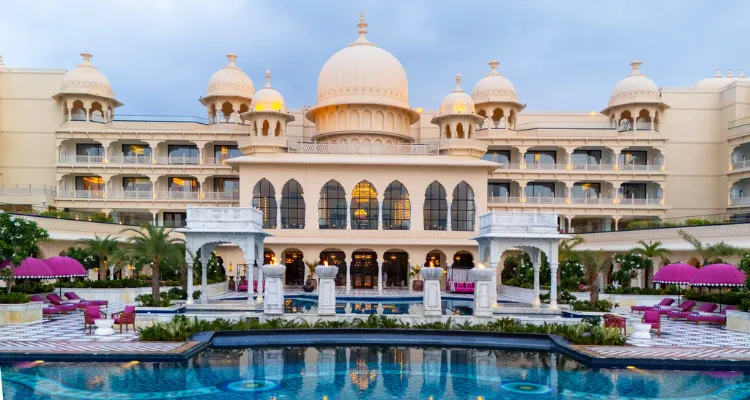
The Udaipur World Music Festival is a three-day music festival held every February in Udaipur, Rajasthan, expected on 9 to 11 February 2027. Morning concerts play at Manji Ka Ghat on Lake Pichola, sunset sets at Fateh Sagar Pal, and evening shows at Gandhi Ground, which needs a ticket. The best lake-view stays are Taj Lake Palace, The Oberoi Udaivilas and The Leela Palace Udaipur.
At a Glance
|
Detail |
Information |
|---|---|
|
Festival dates |
9 to 11 February 2027 (expected; confirm the official schedule in January) |
|
Organiser |
SEHER, presented by Hindustan Zinc with Rajasthan Tourism |
|
Morning venue |
Manji Ka Ghat, Lake Pichola, around 8 AM to 10 AM |
|
Afternoon and sunset venue |
Fateh Sagar Pal |
|
Evening venue |
Gandhi Ground (ticket needed for all ages in the latest edition) |
|
Artists |
Around 20 bands from more than 10 countries in recent editions |
|
Weather |
10 to 12°C at dawn, mid 20s°C in the afternoon |
|
Nearest airport |
Maharana Pratap Airport (UDR), Udaipur |
|
Best luxury hotels |
Taj Lake Palace, The Oberoi Udaivilas, The Leela Palace Udaipur |
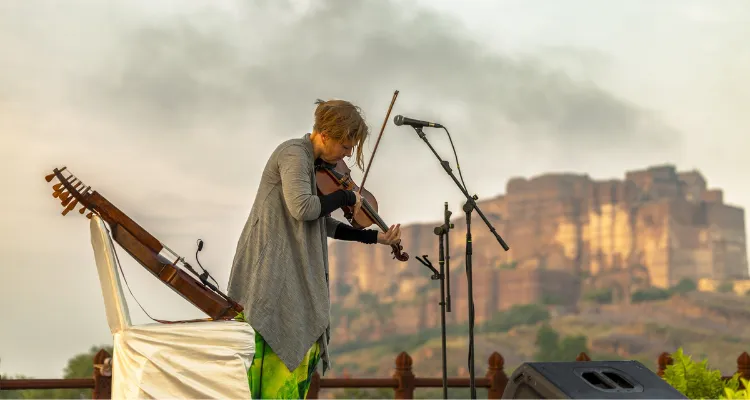
There is a moment on the Udaipur World Music Festival weekend that regulars wait for all year. The morning sun has just cleared the Aravalli ridge, the walls of the City Palace turn the colour of warm honey, and a single flute or a soft Sufi voice drifts across Lake Pichola from the stone steps of Manji Ka Ghat. Nobody talks. Boatmen rest their oars. A few hundred people sit on the ghat with chai in paper cups, and for an hour the whole lake seems to hold its breath. By night the same city is dancing in a packed ground to a Latin brass band or an electro-folk act from Europe. That swing from stillness to celebration, inside a single day, is what makes this festival unlike any other music weekend in India.
The Udaipur World Music Festival is an annual three-day world music festival in Udaipur, held every February and expected on 9, 10 and 11 February 2027. It is conceptualised by SEHER, presented by Hindustan Zinc as the Vedanta Udaipur World Music Festival, and supported by the Department of Tourism, Government of Rajasthan.
SEHER, the Delhi-based cultural organisation behind the festival, was founded by Sanjeev Bhargava, and the event now carries the full name Vedanta Udaipur World Music Festival, reflecting the long support of Hindustan Zinc. It runs every February, when winter in Rajasthan gives way to the first soft days of spring. Mornings are cool, afternoons are bright and comfortable, and evenings drop to a pleasant chill that calls for a light jacket. For international travellers, this is simply one of the finest weeks of the year to be in Rajasthan.
What sets it apart is the format. The festival describes itself as the only music festival in the country built around the three natural moods of the day. Mornings are meditative and gentle, held on the ghats beside the lake. Afternoons and sunset hours are romantic and soulful, held on the long promenade of Fateh Sagar Lake. Evenings are loud, joyous and high energy, held at Gandhi Ground. You are not standing in one muddy field for three days. You are moving through a living city, from lake to lake, with the music changing its character as the light changes.
"February is particularly appealing for visitors to Rajasthan, with comfortable sightseeing weather and a lively cultural calendar. Read more about the best time to plan a Rajasthan holiday before finalising your travel dates."
The line-up mixes international bands with Indian artists. Recent editions have brought in around twenty bands from more than ten countries, covering folk, indigenous music, jazz, flamenco, fusion and contemporary global sounds, alongside Indian classical, Sufi, Rajasthani folk and Indian indie acts. Past editions have even staged small welcome concerts at Maharana Pratap Airport and Udaipur Railway Station, so arriving guests are greeted with live music. Workshops with artists are also held in local schools, which tells you something about the spirit of the event. It is a festival for the city first, and visitors are welcomed into it.
For 2027, the festival weekend is expected on 9, 10 and 11 February 2027. SEHER announces the final schedule and the full artist list only a few weeks before the event, usually in January, so treat these dates as your working window and book flights and hotels early. Rooms in the best lake-view hotels sell out for this weekend well before the line-up is even published, because Udaipur in February is also peak wedding and honeymoon season.
There is also a cultural depth here that a casual concert-goer can miss. Udaipur was the capital of Mewar, ruled by the Sisodia dynasty, and the city has a long courtly tradition of music. Musicians once performed in palace courtyards and on lake pavilions for the Maharanas. When an Irish fiddler or a Malian kora player performs on a ghat facing the City Palace, it is not a random backdrop. It is a continuation of a very old Udaipur habit of pairing water, stone and music. Local audiences feel this, and you will notice how quietly respectful the morning crowds are compared with the joyful noise of the evening shows.
Make your festival visit unforgettable with luxury lakeside stays, private chauffeur services and personalised Udaipur sightseeing. Enjoy the music while we take care of your travel experience.
Morning concerts take place at Manji Ka Ghat on the western shore of Lake Pichola, roughly between 8 AM and 10 AM. Sit on the middle steps, five to eight rows up and facing the stage, and arrive by 7:30 AM for the best view of the City Palace behind the artists.
Manji Ka Ghat sits on the western shore of Lake Pichola, right beside the Ambrai area in the old Hanuman Ghat neighbourhood. From its steps you look straight across the water at the full sweep of the City Palace, with Jag Niwas, home of the Taj Lake Palace, floating to your right. In earlier editions the morning sessions here ran roughly from 8 AM to 10 AM, and you should expect a similar slot. This is where the meditative music lives: Sufi vocals, Indian classical ragas, gentle acoustic sets, folk lullabies and spiritual songs from different parts of the world.
The ghat has no chairs and no reserved seating. You sit on the stone steps, on a shawl or cushion if you bring one. The best spots are the middle steps facing the stage, about five to eight rows up. From there you hear the artists clearly, you see the palace behind the performers, and you are above the people who stand at the waterline. If you are a photographer, the left side of the ghat, looking toward the stage with the palace in the background, gives you the cleanest frame as the morning light hits the palace walls. Arrive by 7:30 AM. By 8 AM the steps fill quickly, especially on Saturday and Sunday.
Mornings in February can be as cool as 10 to 12 degrees Celsius at dawn, warming to the low twenties by the end of the set. Carry a light shawl, a bottle of water and some cash for chai. Vendors usually appear near the lanes behind the ghat. Shoes are generally worn on the ghat steps, but avoid sitting in the narrow area right beside the small shrine, as locals use it for prayer. Keep phone screens dim and calls silent. The audience here is attentive, and the artists often choose very soft pieces.
A thoughtful way to begin the day is to arrange a private boat on Lake Pichola after the concert. Boat services from the City Palace jetty and from Lal Ghat run through the day, and a private boat can be booked through your hotel. Gliding past Jag Mandir and the ghats while the music still hums in your ears is quietly unforgettable. If your hotel is on the lake, as the Taj Lake Palace and the Oberoi Udaivilas are, your hotel boat can drop you close to the ghat area and collect you afterwards, which saves you the narrow, crowded old-city lanes.
Breakfast after the morning set is part of the ritual. The rooftop restaurants around Ambrai and Lal Ghat serve coffee, poha, parathas and continental breakfasts with direct palace views. Ambrai Restaurant, run by Amet Haveli, sits right beside Manji Ka Ghat and is one of the most photographed dining spots in the city. It is busy on festival mornings, so ask your hotel concierge or your private guide to book a table a day earlier. Expect to spend around Rs.1,500 to Rs.2,500 per person for a relaxed breakfast with coffee at the better lakeside restaurants.
Fateh Sagar Pal hosts the afternoon and sunset sessions, with romantic and soulful music beside Fateh Sagar Lake. Reach at least 45 minutes before the first act and stand slightly off-centre near the lake wall for the best mix of stage and sunset.
Fateh Sagar Lake lies north of Lake Pichola, framed by low hills, and its long stone embankment is called the Pal. During the festival, the afternoon sessions take place here, with romantic, emotive and soulful sounds by the lakeside. Think Latin ballads, Portuguese fado, gypsy jazz, Persian or Turkish string music, Indian fusion and gentle folk. The stage usually faces the road with the lake behind the audience or alongside it, and as the sun sinks behind the hills on the far shore, the water turns pink and then deep blue.
Fateh Sagar Pal is a public promenade. Families, students and couples gather here on any normal evening, so festival afternoons get crowded fast. There is open ground and some standing room in front of the stage, with the embankment wall offering an elevated perch. The best place to stand is slightly to one side of the centre, near the lake wall, where you get both the stage and the water in view without the crush right at the front. If you want to sit, reach at least forty-five minutes before the first act.
The weather at this hour is the most comfortable of the day, usually in the mid twenties Celsius, with a breeze off the lake. Sunglasses and a cap help in the first hour. Once the sun is down, temperatures drop noticeably, so carry that light jacket. This is also a good moment to try the street food that Fateh Sagar is known for: corn on the cob, hot coffee, and the famous kulhad drinks. If you have a sensitive stomach, stick to sealed water and freshly cooked hot items.
Practical tip for luxury travellers: traffic around Fateh Sagar Pal on festival afternoons can be slow. Ask your private chauffeur to drop you near the Moti Magri side or the Rani Road end and walk the last part. Agree a clear pick-up point in advance, because mobile signals sometimes weaken in dense crowds. Your driver will know the side roads, and a good guide will move you from the Pal to Gandhi Ground for the evening without the stress of searching for taxis.
If you prefer something calmer, the hill above the lake is crowned by the Moti Magri memorial to Maharana Pratap, and the Saheliyon Ki Bari garden lies close by. Many visitors combine a short garden visit with the sunset set. Entry to Saheliyon Ki Bari is modest for Indians and higher for foreign nationals, roughly in the range of Rs.50 to Rs.100, and it usually closes around 7 PM.
Combine Udaipur's vibrant music celebrations with royal palace experiences, scenic lake views and exceptional hospitality. Let us design a seamless luxury getaway around your festival plans.
Yes. In the most recent edition, the evening concerts at Gandhi Ground needed a ticket for all ages, sold through the District platform. For the clearest sound stand near the sound desk in the middle of the ground, and for comfort choose the seated area.
Evenings move to Gandhi Ground, the largest venue of the festival, with a proper concert stage, lights and a big sound system. This is where the headline international acts and popular Indian bands play, and where the crowd dances. The music is high energy, contemporary and often pop-driven, and shows typically run for about four hours across the evening.
Entry has changed over the years, so read this carefully. In its early editions, the festival was free for the public at all venues. For the most recent edition, the Gandhi Ground evening concerts were listed on the District ticketing platform with a clear note that a ticket was needed for all ages, and the event was described as outdoor with both seated and standing areas. Morning and afternoon sessions at the ghats have generally remained open to the public. For the coming edition, check the official festival channels and the District app in January. Passes for Gandhi Ground can sell out, and some popular editions have reported sold-out tickets well before the weekend.
For the best view, decide first whether you want to sit or dance. If the ground offers a seated area, it is usually on one side or toward the back, with a slightly elevated angle. That is the right choice for older travellers, families with children and anyone who wants to watch the stage comfortably for four hours. If you want energy, the standing zone in front of the stage is where the magic happens, but it gets tightly packed by the time the headliner comes on. A good compromise is to stand near the sound desk in the middle of the ground. Sound engineers always mix for that spot, so the music is clearest there, and you have space to step out.
The ground has washrooms and food stalls, pets are not allowed, and the festival has been listed as child friendly. Keep valuables to a minimum. Carry a small cross-body bag, your phone, a printed or digital ticket, a light jacket and some cash. Large professional cameras may face restrictions, so if you want to photograph a show seriously, check the rules on the ticket page.
Getting out is the hardest part of the night. When the final act ends, thousands of people leave together. The smartest move is to leave ten minutes before the last song or wait twenty minutes after it ends. Arrange a fixed meeting point with your driver one or two lanes away from the main gate. A private car with driver for the full festival weekend, which you can book through a local operator such as Travel Plan Raj, costs roughly Rs.4,500 to Rs.7,000 per day for a premium sedan or Innova Crysta in Udaipur, and more for luxury cars such as a Mercedes or BMW.
The best hotels for the festival are Taj Lake Palace and The Oberoi Udaivilas, because both sit on Lake Pichola and run their own boats close to Manji Ka Ghat. The Leela Palace, Taj Fateh Prakash Palace and lakeside heritage havelis are strong alternatives.
Udaipur luxury hotel rates for a February weekend (approximate)
|
Hotel |
Location |
Rate per night |
|---|---|---|
|
Taj Lake Palace |
Island in Lake Pichola |
Rs.75,000 to Rs.1,50,000 |
|
The Oberoi Udaivilas |
West bank, Lake Pichola |
Rs.65,000 to Rs.1,20,000+ |
|
The Leela Palace Udaipur |
Lake Pichola |
Rs.45,000 to Rs.90,000 |
|
Taj Fateh Prakash Palace |
City Palace complex |
Rs.35,000 to Rs.65,000 |
|
Raffles Udaipur |
Udai Sagar Lake, 30 min away |
Rs.50,000 to Rs.90,000 |
|
Lakeside heritage havelis |
Lal Ghat and Ambrai |
Rs.12,000 to Rs.30,000 |
Where you stay shapes the whole weekend. The festival moves between Lake Pichola and Fateh Sagar, so a hotel on or near the lakes makes life easy. Rates below are realistic estimates for a February weekend and can be higher on festival dates and around big weddings.
Taj Lake Palace is the dream address. The white marble palace sits on Jag Niwas island in the middle of Lake Pichola and is reached only by boat. It was built in the 18th century as a royal summer retreat for the Maharanas of Mewar. Rooms here often run from around Rs.75,000 to Rs.1,50,000 per night for a standard luxury room in February, with suites going much higher. You can see Manji Ka Ghat across the water and reach it by the hotel boat.
"For travellers who want their accommodation to be part of the experience, explore some of Rajasthan's finest palace hotels, including the iconic Taj Lake Palace in Udaipur."
The Oberoi Udaivilas sits on the western bank of Lake Pichola, with domes, courtyards, pools and views of the City Palace. Many travellers consider it one of the finest hotels in Asia. February rates typically start around Rs.65,000 and rise above Rs.1,20,000 for rooms with semi-private pools. The hotel runs its own boat to the City Palace side, which is perfect for the morning concerts.
The Leela Palace Udaipur is also on Lake Pichola, with a striking lakeside setting and large rooms. Expect around Rs.45,000 to Rs.90,000 per night in peak February. Taj Fateh Prakash Palace, part of the City Palace complex, puts you right inside history with palace views over the lake, at roughly Rs.35,000 to Rs.65,000. For a smaller, more intimate stay, heritage havelis around Lal Ghat and Ambrai offer lake-facing rooms at roughly Rs.12,000 to Rs.30,000, and they are only a short walk from Manji Ka Ghat.
If you prefer seclusion away from the crowds, Raffles Udaipur stands on its own island on Udai Sagar Lake, around 30 minutes from the city, with February rates often between Rs.50,000 and Rs.90,000. RAAS Devigarh, an 18th century fort-palace about 45 minutes away in the Aravalli hills, is another serene option. Both work well if you intend to attend selected concerts and retreat to calm in between, with a chauffeur handling the drives.
Book early. For the festival weekend, three to four months ahead is wise for Taj Lake Palace and Oberoi Udaivilas. Minimum stays of two or three nights may apply. Always ask for a lake-facing room in writing, because the view is the reason you are paying the premium.
"If you prefer a quieter continuation after the festival, consider a five-day Udaipur and Mount Abu journey, combining the lakes and palaces of Mewar with the cooler Aravalli hill country."
Spend each morning at Manji Ka Ghat, each sunset at Fateh Sagar Pal and each evening at Gandhi Ground, and fill the gaps with the City Palace, a private boat on Lake Pichola and Jagdish Temple. A private car with driver ties the three venues together without stress.
Day one can start with the morning concert at Manji Ka Ghat, followed by breakfast at a lakeside rooftop. Late morning is ideal for a private guided tour of the City Palace, which opens around 9:30 AM, with tickets for foreign visitors around Rs.350 to Rs.400 for the main museum and extra fees for cameras and special galleries. After lunch and a rest, head to Fateh Sagar Pal for the sunset set, then move to Gandhi Ground for the evening show.
Day two is lighter. Skip the morning set if you danced late, or go for the second morning session if the artist line-up appeals. Visit Jagdish Temple, the large 17th century temple near the City Palace, and wander the craft lanes for miniature paintings and silver. In the afternoon, take a private sunset boat on Lake Pichola, then join the evening concert.
Day three can be a slow one. A morning concert, a long lunch at your hotel, a spa session, and the final night at Gandhi Ground make for a satisfying close. If you have an extra day, add a drive to Kumbhalgarh Fort and the Ranakpur Jain Temple, both around two to two and a half hours from Udaipur, or extend your journey to Jodhpur or to the leopard country around Jawai.
"Between festival performances, visitors can explore Udaipur's old city, including Jagdish Temple and its traditional evening aarti, which offers a different perspective on the city's cultural life."
A few small details make the weekend smoother. Keep a printed copy of your Gandhi Ground tickets in case mobile networks slow down near the gate. Carry small notes for chai, boat tips and street snacks, since many small vendors prefer cash even though UPI payments are common across India. Ask your hotel to pack a light breakfast box on the mornings you leave early for Manji Ka Ghat. And keep one evening free from the festival for a quiet dinner, perhaps a private candlelit table on a palace terrace or a rooftop facing the illuminated City Palace. After three days of music, that calm dinner often becomes the memory guests talk about most.
A private tour operator matters here more than you might think. The festival is spread across three venues in a busy city, timings shift at the last minute, and the best tables, boats and seats go to those who arrange them ahead. Travel Plan Raj, based in Jaipur and arranging private journeys for more than three decades, can tie together your hotel, chauffeur, guide, boat and restaurant bookings so that you simply move from one concert to the next.
"Visitors wishing to explore beyond the festival can extend their stay into a luxury Golden Triangle journey with Udaipur, combining Delhi, Agra and Jaipur with the lakeside heritage of Mewar."
Wed Nov 2026
Fri Nov 2026
The festival is held every February over three days. For 2027, it is expected on 9, 10 and 11 February 2027. The organisers, SEHER, confirm the final dates and full artist schedule a few weeks before the event, so check the official announcement in January before you finalise flights.
The morning sessions at Manji Ka Ghat and the afternoon sessions at Fateh Sagar Pal have generally been open to the public. For the most recent edition, the evening concerts at Gandhi Ground required a ticket for all ages through the District platform. Check the ticketing page in January, as passes can sell out.
The three venues are Manji Ka Ghat on Lake Pichola for meditative morning music, Fateh Sagar Pal for romantic and soulful afternoon and sunset sets, and Gandhi Ground for high-energy evening concerts.
Sit on the middle steps, around five to eight rows up and facing the stage. You will hear clearly and see the City Palace behind the performers. Photographers often prefer the left side for a clean frame with the palace. Arrive by 7:30 AM because the steps fill fast.
Yes. The festival has been listed as child friendly, and the morning sessions are calm and seated on steps. For older travellers, the seated area at Gandhi Ground and a private car with driver between venues make the weekend comfortable.
The Taj Lake Palace and The Oberoi Udaivilas are the most convenient luxury options because both have their own boats on Lake Pichola. Heritage havelis around Lal Ghat and Ambrai are also within walking distance of Manji Ka Ghat.
Book three to four months ahead for top lake-view hotels. February is also peak wedding and honeymoon season in Udaipur, so the best rooms disappear early, often before the artist line-up is announced.
Dress in comfortable layers. Mornings can be around 10 to 12 degrees Celsius, afternoons in the mid twenties, and evenings cool again. Carry a light jacket or shawl, comfortable shoes for walking, and sunglasses for the sunset sessions.
Phones and small cameras are usually fine at the ghat sessions. For the ticketed Gandhi Ground concerts, large professional cameras may be restricted, so read the rules on the ticket page before you carry heavy equipment.
The easiest way is a private car with driver for the full weekend, combined with a hotel boat on Lake Pichola for the morning sessions. Traffic slows down near Fateh Sagar and Gandhi Ground on festival evenings, so agree a pick-up point with your driver a lane or two away from the main gate.