Your Travel Partner
SINCE 1989
Your Travel Partner
SINCE 1989
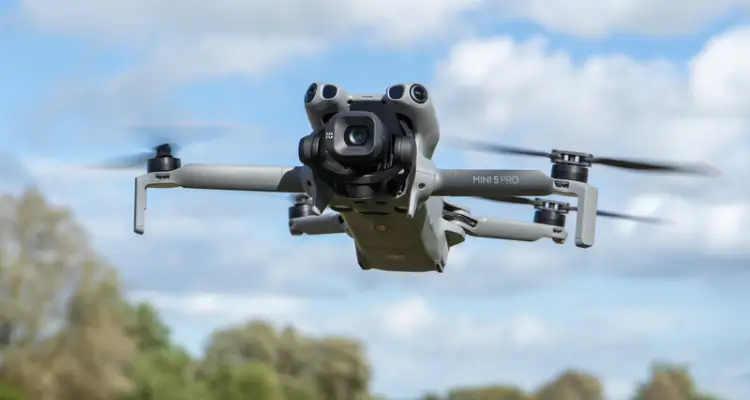
Every few weeks a traveller asks us the same hopeful question, usually with a photo of a small folding drone attached. They have seen the aerial clips of Amber Fort at dawn, the blue rooftops of Jodhpur, the desert dunes outside Jaisalmer, and they would love to fly their own. It is a fair wish. Rajasthan looks wonderful from above. The honest answer, though, is that bringing a drone to India as a foreign tourist is one of the few travel ideas we gently talk people out of. India does not ban drones outright, and the country has a modern drone law with an online system called Digital Sky. The trouble is that the rules were written for Indian owners, Indian pilots and Indian-made machines. A visitor arriving with a drone in hand luggage runs into import restrictions, registration forms that ask for Indian identity documents, and a long list of no-fly zones that covers almost every famous monument. This guide sets out what the current India drone rules actually say, what can happen at customs, why the Taj Mahal is completely off limits, and the legal alternatives that still give you beautiful aerial views of your trip.
The short answer is that it is very difficult, and for most leisure travellers it is not worth trying. Two separate sets of rules matter here. The first is about importing the drone itself. The second is about flying it once you are in the country. A traveller has to clear both, and the first hurdle is already high.
India's foreign trade authority, the Directorate General of Foreign Trade, issued a notification a few years ago that prohibits the import of ready-made drones. The ban covers drones brought in fully built, as well as kits meant for simple assembly. There are exceptions for research and development, defence and security agencies, but these are for organisations with government approval, not for holidaymakers. Drone components can still be imported, which helps Indian manufacturers, but a consumer drone from a well-known brand sitting in your camera bag counts as a finished product. The policy exists to support Indian drone makers and, just as much, for security reasons.
There is no special tourist category that lifts this ban. Some travel blogs and older forum posts suggest that you can simply declare the drone and carry on, and a few travellers report that they did exactly that. Others report the opposite. Experiences vary from airport to airport and from officer to officer, which is exactly why we advise caution. Rules on paper are what count if anything goes wrong, and on paper a drone import ban in India is in force.
Size does not create a loophole either. Many travellers assume that a small drone under 250 grams, the so-called nano drone category, is free of rules. In India it is still a drone in law. Nano drones do get lighter treatment once registered and flown by an eligible person, for example no need for a remote pilot certificate in many cases. They are still covered by the import restrictions and still bound by zone rules. A tiny drone flown near a fort or a palace is treated exactly the same as a large one.
It is also worth knowing that India's drone law is being reworked. The Ministry of Civil Aviation recently published a draft of a new civil drone bill that would replace the current rules with a fuller law and tougher penalties. At the time of writing it is still a draft. That means the details could shift again, and any traveller who is truly set on bringing a drone should check the official Digital Sky portal and the Ministry of Civil Aviation website close to departure, rather than relying on a blog post of any kind, including this one.
For most people the simple, safe approach is to leave the drone at home. That single decision removes the risk of a seizure on arrival, a long delay at the airport, a fine, or a very awkward conversation with police at a heritage site. The rest of this guide explains why, and what to do instead.
Leave drone worries behind and explore India's breathtaking destinations through photography, scenic viewpoints and guided experiences. Let us help you plan memorable moments without unnecessary complications.
India's current drone framework is set out in the Drone Rules notified by the Ministry of Civil Aviation and managed by the Directorate General of Civil Aviation (DGCA). Compared with the earlier regulations, these rules were a big simplification. They reduced the number of forms, cut fees, and introduced an online single window, the DGCA Digital Sky platform, where drones are registered, pilots are certified and flight permissions are requested. For Indian residents, flying a small drone for fun in a park in a green zone is now fairly straightforward. For visitors, the picture is very different.
Every drone that flies in India is expected to carry a Unique Identification Number (UIN) issued through Digital Sky. To get one, the owner fills in an online registration form. The forms currently ask for Indian identity details such as an Aadhaar number, an Indian passport or an Indian company registration. A foreign passport holder on a tourist visa usually has none of these. In practice, this means a visitor cannot register a drone in their own name. Without a UIN, the drone cannot legally fly, even in a green zone and even if it is tiny.
Pilots face a similar wall. Anyone flying a micro drone for commercial work, or any drone above the micro category, needs a Remote Pilot Certificate from a DGCA-approved training school. Those courses run for several days, take place in India and are aimed at Indian residents building a drone career. Foreign nationals can in theory work through an Indian company that holds the relevant approvals, but that is a business arrangement for film crews and survey firms, not something a holidaymaker can set up in a week.
The rules also set clear operating limits. In green zones, drones may usually fly up to 400 feet, which is about 120 metres, above ground level, without separate permission. Flights must stay within visual line of sight, by day, and away from crowds. Drones must not fly over moving vehicles, people who are not involved in the operation, or sensitive buildings. Penalties under the current rules can reach Rs.100,000, roughly 1,140 US dollars, for serious breaches. Separate criminal laws can also apply if a flight endangers safety or breaches security around protected sites.
Foreign film productions, documentary teams and large commercial shoots follow a separate route. They apply for a film visa and shooting permissions, often through the Ministry of Information and Broadcasting and the local state authorities, and work with a licensed Indian drone operator who handles the UIN, pilot and flight permissions. This takes weeks, sometimes months, and involves fees. It is the correct path for a professional shoot, but it is far beyond what a couple on a two-week Rajasthan tour needs. For leisure travellers, the lesson is simple: the Indian system assumes the drone and the pilot are Indian, and it does not yet offer a short-term tourist option.
Even for a fully registered Indian pilot, where a drone can fly depends on the Digital Sky airspace map. The map divides the whole country into three colours. Green zones are areas where flights up to 400 feet are allowed without asking anyone, as long as all other rules are followed. Yellow zones are controlled airspace, mostly around airports, where permission from air traffic control is required. Red zones are no-fly areas where a flight needs special permission from the central government. The map is updated regularly, and pilots are expected to check it before every flight rather than relying on memory.
Around airports, the yellow zone currently extends to roughly 12 kilometres from the airport boundary, with tighter limits closer in. Jaipur, Udaipur, Jodhpur, Jaisalmer, Agra and Delhi all have airports, several of them shared with the Indian Air Force, so large parts of these cities sit inside yellow or red zones. Military stations, cantonments, borders, government buildings, state assemblies and certain power and water installations are red zones too. In Rajasthan, the long border with Pakistan means that much of the far west near Jaisalmer and Barmer is highly sensitive. The sand dunes that look so tempting from the sky are often closer to restricted airspace than visitors realise.
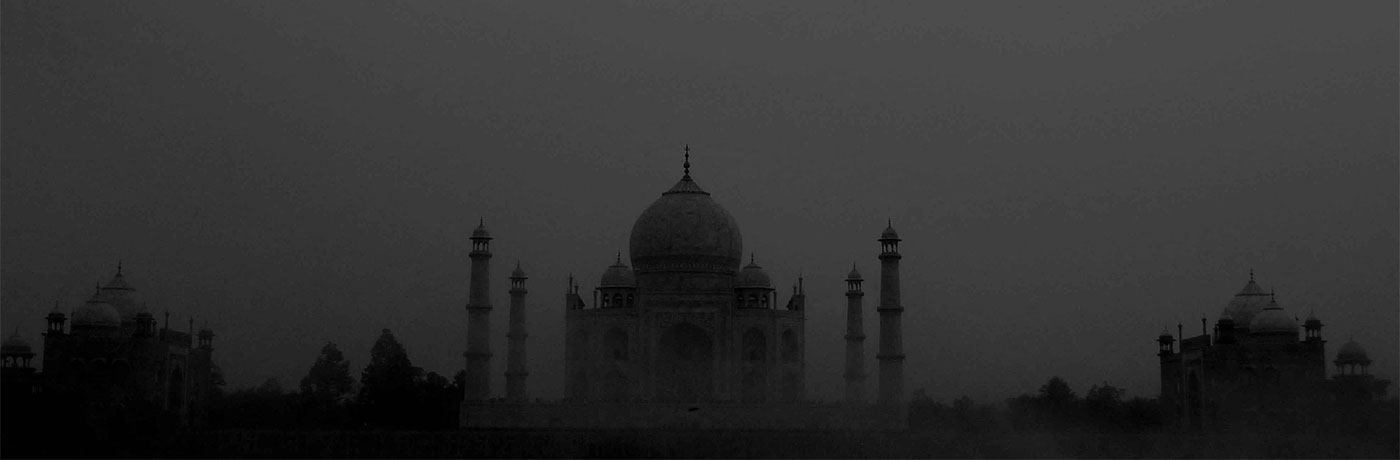
Heritage sites add another layer. Monuments protected by the Archaeological Survey of India do not allow drone flights without specific permission, and that permission is rarely granted for private use. The Taj Mahal drone ban is the strictest of all. The Taj is ringed by heavy security, and Uttar Pradesh Police have installed an anti-drone system that can detect drones across a wide radius and is used to bring down any drone that enters the protected perimeter around the monument. Mehtab Bagh across the river and the nearby viewpoints are covered by the same security concerns. Several foreign tourists have been detained and questioned for launching drones near the Taj over the years, and their drones confiscated. It is not a gamble worth taking on a once-in-a-lifetime trip.
In Rajasthan, the same caution applies to Amber Fort, City Palace in Jaipur, Mehrangarh Fort in Jodhpur, Jaisalmer Fort, Chittorgarh and the lake palaces of Udaipur. Some are protected nationally, some by the state, and many sit close to airports or military areas. Security staff at these sites are quick to spot a drone, and local police can and do take them away. Hotels also set their own rules. Many luxury palace hotels do not allow guests to fly drones on their grounds, both for privacy reasons and because their buildings fall under heritage protection.
The practical takeaway is that the places most visitors would want to film are exactly the places where drones are banned or tightly controlled. Even a perfectly legal drone in Indian hands rarely gets permission to fly over the Taj Mahal, Hawa Mahal or the Jaipur forts. That is why licensed professionals often build their shots around open countryside, private farmland and approved event venues rather than the monuments themselves.
Discover magnificent forts, historic monuments, colourful cities and beautiful landscapes. Enjoy thoughtfully planned private journeys with memorable sightseeing experiences across India's most captivating destinations.
Travellers who arrive in India with a drone usually meet the issue at the customs counter after collecting their bags at Delhi, Mumbai or Jaipur airport. X-ray scanners pick up drones easily, and officers are trained to look for them. What happens next can vary. In many cases, the drone is detained by customs and held at the airport against a receipt. The traveller may be allowed to collect it when leaving India from the same airport. In other cases, travellers report being asked to pay a fee, sign several forms or wait a long time while officers decide what to do. Older news reports describe customs disposing of drones that were never collected.
If you do decide to carry a drone, for example because you are passing through India on the way to another country where you intend to fly legally, there are a few sensible steps. Declare it honestly on arrival rather than walking through the green channel and hoping for the best. Carry the purchase invoice, the manufacturer's specification sheet and proof of your onward travel. Ask for a detention receipt if the drone is held, and keep a photo of it. Note that if you fly out of a different city, you may not be able to collect the drone at all, so route your exit through the same airport if you can. Customs storage charges are possible for long stays.
Airline rules apply on top of Indian customs rules. Drone batteries are lithium-ion and must travel in hand luggage, with terminals covered and within the watt-hour limits set by your airline. Spare batteries in checked luggage are not allowed on most carriers. Domestic Indian airlines such as IndiGo and Air India follow the same dangerous goods rules, and security at Indian airports can be strict about anything that looks unusual. Carrying a drone on domestic flights inside India adds more checkpoints where it can be questioned.
Travel insurance is another point people forget. Most policies will not pay for a drone confiscated by customs or police, because the loss comes from a breach of local rules. Some policies also exclude liability claims arising from drone flights entirely. If a drone falls on someone or damages a heritage building, the costs can be serious.
Our advice is to treat the drone the way you would treat any other restricted item. Unless you have a clear, legal reason to carry it through India and paperwork to back that up, it is far better to leave it at home. Every traveller we have seen arrive with a drone has ended up spending time worrying about it, and very few have flown it at all. That worry is not what anyone wants on holiday in India.
For travellers who really want aerial drone footage in India, the legal and practical route is to hire a local professional. India now has a growing industry of DGCA-certified drone pilots, many of them working with wedding photographers, film crews, hotels and real estate firms. A licensed operator owns registered drones with valid UINs, holds a Remote Pilot Certificate, carries insurance and knows how to apply for permissions on Digital Sky. Most importantly, they know which places can be filmed and which cannot.
In Jaipur, Udaipur and Jodhpur, drone pilots are common at destination weddings, and many work regularly with palace hotels. For a private family celebration, a vow renewal or a special birthday at a heritage hotel, the hotel's events team can usually recommend an operator they trust. Fees vary by city and season, but a professional drone operator for a half-day shoot typically costs Rs.20,000 to Rs.50,000, around 230 to 570 US dollars. A full day with edited footage, a second camera and a short film usually runs Rs.50,000 to Rs.120,000, about 570 to 1,360 US dollars. Wedding season, from November to February, is the busiest period and the most expensive.
The best results usually come from places where flying is easier to approve. Private estates, farm stays, countryside lodges, desert camps away from the border belt and hotel grounds outside the airport zones all work well. Sunrise over the Aravalli hills, a convoy of cars on a rural road, or a sundowner on the dunes outside a camp near Jaisalmer, where permitted, can all make lovely footage. The operator will check the Digital Sky map in advance, request yellow zone permission if needed and tell you honestly when a shot is not possible.
Ask the right questions before booking. A genuine operator will share their pilot certificate, the UIN of the drone being used, proof of insurance and examples of past work. They will explain which approvals are needed and how long they take. If someone promises to fly over the Taj Mahal, Amber Fort or City Palace for a small fee and no paperwork, treat that as a warning sign. An illegal flight can lead to the equipment being seized mid-shoot, and you may find yourself in the middle of the problem as the person who hired them.
A private tour operator based in Rajasthan can make the introductions, check the paperwork and fit the shoot into the day so that it does not clash with fort visits or travel time. This is often the simplest way to get a short aerial film of your trip without any of the legal risk.
The good news is that Rajasthan offers some of the finest views from above in India, without a drone in sight. The most memorable is a hot air balloon ride in Jaipur. Licensed operators such as Sky Waltz fly over the countryside near Amber, usually from around September or October until March, when the winds are calm and the mornings are clear. Flights take off just after sunrise and last about an hour in the air, drifting over villages, farmland, small temples and the outer walls of the old forts. The whole outing, including hotel pickup and the drive to the launch site, takes around four hours. Prices are usually around Rs.15,000 to Rs.26,000 per person, roughly 170 to 300 US dollars, depending on the package and transfers. Flights are weather-dependent and can be cancelled at short notice, so it helps to keep a backup morning free. Balloon flights are also offered at Pushkar during the winter camel fair, and occasionally in Udaipur and the countryside near Ranthambore.
Phones and cameras are welcome in the basket, which makes a balloon ride the closest thing to a legal drone shot. Wide-angle lenses work beautifully, and the slow pace gives time to frame each image properly.
Forts themselves are natural viewpoints. Nahargarh Fort sits on a ridge above Jaipur and gives a sweeping view over the pink city, especially at sunset. Jaigarh Fort looks down on Amber Fort and the lake below it. In Jodhpur, the ramparts of Mehrangarh Fort show the blue houses of the old city spread out like a map. Jaisalmer Fort's walls overlook the golden town and the desert beyond. In Udaipur, the Monsoon Palace on its hilltop is the classic sunset spot, with views across Lake Pichola and the City Palace.
Rooftop cafés and terraces are another simple option. In Jaipur, several cafés across the road from Hawa Mahal give direct views of the façade from above, which is how many of the famous postcard photographs are taken. Udaipur's lakeside hotels and restaurants have terraces looking straight across the water at the City Palace. These are relaxed, unhurried places to take photos, often with a cold drink and very little crowd.
Finally, professional photographers can be hired for a few hours in each city. A good photographer knows the best high angles at each fort, the right time of day for each viewpoint and the quiet corners where you can stand without a queue. Combined with a balloon flight and a few rooftop sunsets, the result is a set of images from above that tells the story of the trip just as well as any drone clip, and with none of the stress.
In practice, almost never. Drones must be registered on Digital Sky with a Unique Identification Number, and the registration forms require Indian identity documents, which foreign tourists do not have.
India prohibits the import of ready-made drones, with exceptions only for approved research, defence and security uses. A tourist's drone may be detained by customs on arrival and held until departure.
Nano drones under 250 grams get lighter rules for Indian owners, such as no remote pilot certificate in many cases. They are still covered by the import ban, registration requirements and zone restrictions.
No. Drone flights around the Taj Mahal are strictly banned, and police operate an anti-drone system that can bring down drones near the monument. Tourists who have tried have been detained and had their drones seized.
Digital Sky is the DGCA's online system for registering drones, certifying pilots and requesting flight permissions. It also shows the green, yellow and red zone map that every pilot must check before flying.
It is usually detained against a receipt and may be returned when you leave from the same airport. Keep the invoice and detention receipt, and do not expect to collect it if you fly out from another city.
Fines under the current Drone Rules can reach ₹100,000, and the drone can be confiscated. Flights near protected or sensitive sites can also lead to police questioning and criminal charges.
A half-day shoot usually costs ₹20,000 to ₹50,000, and a full day with edited footage around ₹50,000 to ₹120,000. Prices rise during the November to February wedding season.
Expect around ₹15,000 to ₹26,000 per person, including hotel transfers. Flights run roughly from September or October to March, take off just after sunrise and last about an hour.
Nahargarh Fort in Jaipur, the ramparts of Mehrangarh Fort in Jodhpur, the Monsoon Palace in Udaipur and the rooftop cafés facing Hawa Mahal all give wide views from above. A balloon flight near Amber is the closest legal option to a drone shot.